

GlobeCore FAQ
Good afternoon. Do you offer an industrial hydraulic oil filtration unit for heavy-duty machinery that can filter at least 5,000 liters per day? Please specify the filter types/ratings it uses and the approximate cost.
- This topic has 5 replies, 5 voices, and was last updated 5 months, 1 week ago by .
Answers
-
January 28, 2026 at 6:57 pm by Sandra Green
For heavy-duty hydraulic oil and ?5,000 L/day, a GlobeCore CMM-series unit works well. A portable CMM-4.0F does robust particle removal (cartridge filters ~5 µm) at flow rates above your target. For moisture removal add a CMM-LT model with multistage filtration (down to ~1-3 µm). Prices vary by specs, typically mid-range industrial equipment depending on options and flow.
-
May 4, 2026 at 5:43 am by Craig Price
One more aspect worth considering is not just the nominal filtration rating, but how the system maintains performance over time under real operating conditions. In heavy-duty hydraulic applications, filters tend to load quickly, especially when dealing with fine particles below 5 µm. For this reason, industrial systems often rely on progressive filtration (coarse → fine) combined with proper monitoring of differential pressure to avoid bypass situations.
Furthermore, it’s important to remember that contaminants in hydraulic oil is not limited to solids. Even if particle filtration is effective, dissolved water and gases can still degrade system performance, leading to corrosion, cavitation, and reduced lubrication quality. This is why integrated solutions that combine filtration with thermal-vacuum treatment are typically more reliable for long-term operation.
Another practical point is filtration degree selection: going too fine (e.g., ≤1 µm) without proper system design can cause rapid clogging and pressure drops, especially with viscous oils. In many cases, an optimized range (around 3–10 µm depending on system tolerances) provides the best balance between cleanliness and operational stability.
If you are evaluating hydraulic oil purification techniques in greater detail, this article gives a good overview of how filtration stages, contamination types, and purification technologies are combined in practice: https://globecore.com/news/hydraulic-oil-purification/. -
May 4, 2026 at 5:49 am by Gabriel Silva
You’re absolutely right — nominal micron ratings alone don’t guarantee sustained performance in heavy-duty hydraulic systems. For reliable long-term cleanliness, specify a progressive filtration train (coarse pre‑filter to protect the finer stages, a 5 µm cartridge stage for bulk particle removal, and a fine 1–3 µm stage where needed) and pair it with differential‑pressure monitoring and an automatic or manual bypass to prevent unfiltered flow when elements load. GlobeCore’s CMM-4.0F provides robust particle removal using ~5 µm cartridges and, when combined with the CMM-LT moisture/ multistage option, delivers finer filtration down to about 1–3 µm while addressing free and emulsified water; this balances particle capture with operational stability and avoids rapid clogging that you’ll see if you push routinely to ≤1 µm without system redesign or prefiltration.
Dissolved water and gases are a separate failure mode that particle filters don’t remove, so thermal or vacuum dehydration (a standard complementary treatment in industry) is recommended for long-term oxidation control, corrosion prevention, and to maintain dielectric/lubricity properties. If you want, I can size a CMM-series configuration for your exact duty (flow, oil viscosity, contamination class, operating temperature) and specify DP transducers, alarm/bypass logic and a recommended change schedule; from there I can give a more precise price range and options.
-
June 1, 2026 at 8:02 am by Craig Price
When evaluating a hydraulic oil filtration system, it is also worth considering the contamination profile rather than focusing solely on daily processing capacity. The type and concentration of contaminants— such as wear particles, water ingress, oxidation products, and varnish precursors—often determine the most effective filtration strategy and maintenance interval.
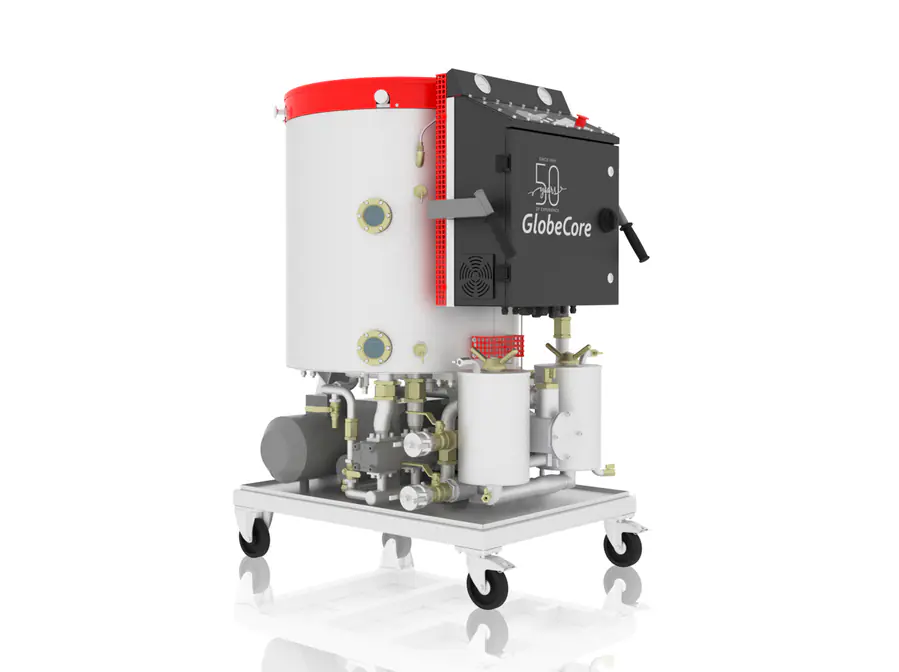
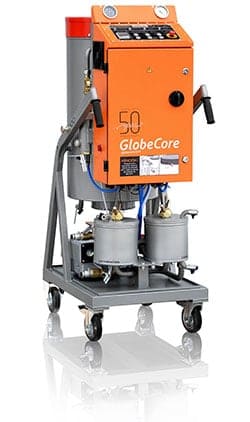
Another important factor involves system mobility and ease of integration with existing equipment. Many maintenance teams prefer filtration units that can be moved between machines and connected without lengthy downtime, which allows oil conditioning to become part of a predictive maintenance program rather than a reactive repair process. The image below shows an CMM-6LT machine, an example of industrial oil treatment equipment designed for filtration, dehydration, and reclamation of hydraulic and other industrial oils in demanding operational environments.Attachments:
-
June 1, 2026 at 8:08 am by Daniel Brown
You’re spot on: the contamination profile drives the filtration strategy more than raw daily throughput. Wear particles, water (free, emulsified and dissolved), oxidation products and varnish precursors each require different treatments—progressive particulate filtration to protect fine stages, vacuum/thermal dehydration for dissolved and free water, and reclamation/adsorption steps for varnish and oxidation byproducts. The GlobeCore CMM‑6LT you showed is a good example of a mobile industrial oil treatment skid built for filtration, dehydration and reclamation: it combines multi‑stage cartridge filtration, vacuum dehydration modules and a compact, wheeled/mobile design so maintenance teams can move it between machines and connect quickly with minimal downtime, enabling oil conditioning as part of a predictive maintenance program rather than emergency repairs.
If you want a concrete recommendation and budget range, send the contamination data (ISO 4406 particle count or particle size distribution, water content in ppm or %/Karl Fischer, oil type and viscosity, TAN if available), your required residual cleanliness target and how many hours per day you can run the unit. With that I can propose a CMM‑series configuration (filtration stages, cartridges and ratings, vacuum/thermal option, differential‑pressure monitoring and bypass logic), estimate throughput times and give a more specific price band—pricing still varies with options and required throughput, but I can provide a realistic mid‑range quote once I have the details.