

GlobeCore FAQ
Hi, I am looking for a 3-in-1 oil filter system for turbine oil (filtration, dehydration, and degassing). What GlobeCore equipment would be suitable?
- This topic has 3 replies, 4 voices, and was last updated 6 months, 2 weeks ago by .
Answers
-
March 27, 2026 at 3:47 pm by Haruto Tanaka
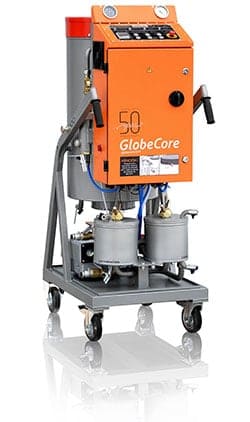
For turbine oil, the most suitable GlobeCore solution is a vacuum oil purification unit from the CMM series, which combines filtration, dehydration, and degassing in one system.
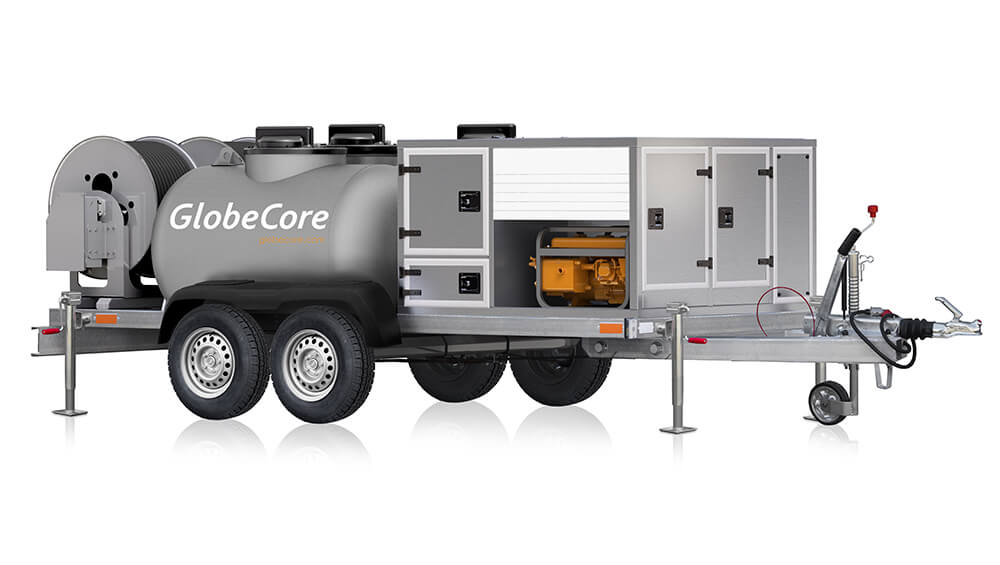
For compact and mobile use, you can consider the CMM-4/7, which is designed for on-site maintenance and medium oil volumes. If you need higher capacity or faster processing, models like CMM-6/7 or CMM-10 are more appropriate, providing deeper dehydration and higher throughput.
These units are specifically designed for turbine oil and allow you to remove water, gases, and solid contaminants in a single process, ensuring stable oil quality and reliable equipment operation. -
April 29, 2026 at 7:10 am by Craig Price
Another important factor to consider — especially for turbine oil systems — is how the purification process is physically implemented inside the plant, not just the fact that it combines three functions.
In CMM-type systems, the efficiency of filtration, dehydration, and degassing is achieved through a sequential thermal vacuum process. The oil is first pre-filtered and heated, and then enters a vacuum chamber where it is distributed in a thin film over special surfaces. This significantly increases the contact area, allowing moisture to evaporate and dissolved gases to be removed much more effectively under reduced pressure.
This design explains why such units outperform simpler filtration systems: instead of removing contaminants separately, they integrate multiple physical processes (filtration + heating + vacuum evaporation) into a single continuous cycle. In practice, this means that you achieve consistent oil quality in one pass, rather than requiring multiple treatment stages .
Another practical consideration is adaptability to different contamination levels. For example:
• Standard vacuum units handle typical moisture and gas content efficiently;
• specialized configurations (such as coalescing or enhanced dehydration systems) are used when oil contains high levels of water or emulsions.
Therefore, when selecting a 3-in-1 system, it’s not only about capacity (m³/h), but also about matching the internal process configuration to the actual condition of your turbine oil, because this has a direct impact on performance and operating costs.
For a more detailed explanation of turbine oil purification methods and how combined filtration, dehydration, and degassing systems are implemented in practice, you can review this article: https://globecore.com/oil-processing/turbine-oil-filtration/. -
April 29, 2026 at 7:16 am by 後藤 零
You’re exactly right about the importance of how the process is implemented. GlobeCore’s CMM-series units realize the filtration + dehydration + degassing “3‑in‑1” by a sequential thermal‑vacuum process: oil is pre‑filtered and heated, then spread as a thin film inside a vacuum chamber to massively increase surface area so dissolved water and gases evaporate under reduced pressure, and finally passes multi‑stage fine filtration (typically 3–4 µm cartridges) to catch particles and coalesced droplets. That integrated thin‑film vacuum approach is why CMM units outperform simple filter carts — one continuous pass removes free and dissolved water, gases and solids while keeping differential pressures low and extending cartridge life.
For turbine oil applications, the practical choices are the CMM‑4,0T or CMM‑4,0LT for compact all‑in‑one service and the CMM‑8LT when you need higher throughput and stronger dehydration (outlet temperatures up to about 90 °C). For on‑site or smaller jobs there are portable degassing carts (e.g., CMM‑4/7 or CMM‑0.6L), while heavily contaminated or emulsified oil may require enhanced configurations (coalescing stages or advanced dehydration) rather than a standard vacuum unit. Before selecting capacity (m3/h) pick a unit whose internal configuration matches the oil condition: get a particle count and water content (including emulsions) first, size for both throughput and contaminant load, and account for consumables and maintenance (cartridge changes, vacuum‑pump service). That approach minimizes operating cost while ensuring stable turbine‑oil quality in a single pass.