GlobeCore

  • Home
  • Products
    • Oil Regeneration
      • CMM-6RL Oil Regeneration Unit
      • CMM-10RL Transformer Oil Regeneration Plant
      • CMM-12R Oil Regeneration Systems
      • CMM-12R Oil Regeneration System (With Activated Bauxite)
      • CMM-8RSL/4000 Transformer Oil Regeneration Plant (With Fuller’s Earth)
      • USB-6 Oxidation Inhibitor injection unit
      • СММ-0,001U Laboratory Oil Filtration Unit
    • Oil Purification & Degassing Machines
      • CMM-0.6L Oil Degassing & Filtration Cart
      • СММur-1L mobile oil plant
      • CMM-1.0LT Transformer Oil Purification Unit
      • CMM-1H Oil Processing Unit
      • CMM-2.2LT Industrial Oil Purification Unit
      • CMM-4,0T Turbine oil filtration
      • CMM-4,0LT Transformer Oil Purification Unit
      • CMM-4/7 portable oil degassing unit
      • CMM-6LT Industrial Oil Purification Unit
      • CMM-6/7 Degassing Unit
      • CMM-8LT Oil Processing Unit
      • CMM-10 — Transformer Oil Purification Machine
      • CMM-15 Oil Degassing Plant
    • Oil Filtration Machines
      • CMM-1,0CF Unit for Removal of Water from Oil
      • CMM-2,0CF Unit for Removal of Water from Oil
      • CMM-1,2Fr Industrial oils filtration unit with self-cleaning filters
      • CMM-4,0F Oil filtration unit
    • Oil Drying Unit
      • ZP-130 Sorbent Cartridges
      • ZP-260 Sorbent Cartridges
    • Oil Heating
      • PPM Inline Oil Heater. Stream oil heating
    • Fuel Polishing
      • TOR-1 diesel fuel moisture content tester
      • CMM-6RL dark diesel fuel polishing machine
      • CMM-6RL dark heating fuel polishing machine
      • CMM-6RL low-viscosity marine fuel polishing machine
    • Online Transformer Dry-Out Systems
      • CMM-260C Online Transformer Dry-Out System
      • TOR-4 Online Transformer Dry-Out System
    • Online Transformer Monitoring Systems
      • TOR-5 Online Transformer Monitoring System
    • Transformer Maintenance
      • Mojave Heat (Sukhovey): Hot Air Dryer Unit
      • UVV Vacuum Cold Trap
      • US-6S Transformer vacuum furnace
      • LFD Low Frequency Heating Device
      • BV-3000 Transformer Evacuation System
      • BV-5000 Transformer Evacuation System
      • UVD Vacuum Oil Filling Unit
      • UVD-1000 Oil Filling and Transportation System
      • TSS Transformer Safety System
      • CMM-6RL Oil Regeneration Unit
      • CMM-10RL Transformer Oil Regeneration Plant
      • CMM-12R Oil Regeneration Systems
    • Vacuum Transformer Drying Ovens
      • US-6S Transformer vacuum furnace
    • Sorbent Processing
      • BRZ Zeolite Regeneration Block
      • BRPS Zeolite Regeneration Block
      • SSC-15 Zeolite Drying Cabinet
      • ZP-130 Sorbent Cartridges
      • ZP-260 Sorbent Cartridges
    • Instruments – Transformer Oil Testers
      • TOR-1 Oil Moisture Meter
      • TOR-2 Hydrogen and Moisture Analyzer for Transformer Oil Monitoring
      • TOR-3 (TOR-3 SL) Oil Tan Delta Tester
      • TOR-6 Transformer Oil Moisture and Particles Tester
      • TOR-7 Universal Transformer Oil Tester (moisture, gases, solid particles)
      • TOR-8 tester for residual gas content of insulating oil
      • TOR-60 (TOR-60 SL) Breakdown Voltage Tester
      • TOR-80 (TOR-80 LSL) Breakdown Voltage Tester
      • TOR-80A (TOR-80 ASL) Transformer Oils Breakdown Voltage Tester with Battery
      • TOR-100 (TOR-100 SL) Breakdown Voltage Tester
    • Wind Turbine Service
      • CMM-G wind turbine gearbox oil changer (with dimensions adapted to the customer’s trailer ones)
      • CMM-G Wind Turbine Gearbox Oil Changer
      • CMM-GL Wind Turbine Gearbox Oil Changer
      • CMM-0.6L Oil Degassing & Filtration Cart
      • CMM-4,0T Turbine oil filtration
    • Medical Equipment Maintenance
      • CMM-0.6 X-ray Transformer Oil Purifier
      • SSC-15 Zeolite Regeneration System for Oxygen Concentrators
      • AVSk-150 Hospital Wastewater Treatment Complex
    • Blending systems
      • USBL-1 Laboratory Blending System
      • USB-1 Fuel oil blending system
      • USB-5 high-speed mixing unit for production of sanitizers (0.15 – 0.3 m3/h)
      • USB-5 high-speed mixing unit for production of sanitizers (1.1 m3/cycle)
      • USB-6 Impeller Stirrer
      • Colloid Mill
      • Vortex Layer Devices
    • Colloid Mill
      • Colloid mills for food industry
        • CLM-100.3 Colloid mill
      • Colloid mills for bitumen emulsion production
        • CLM-0.25.1 Laboratory colloid mill
        • CLM-2/4 Colloid mill
        • CLM-16/25 Colloid mill
      • Colloid mills for bitumen modification
        • CLM-8/16 Colloid mill
        • CLM-10/20 Colloid mill
        • CLM-40.2 Colloid Mill
      • Colloid mills for different applications
        • CLM-100.2 Colloid Mill
        • CLM-200.2 Colloid Mill
    • Vortex Layer Devices
      • AVS-100 Mixing Machine. Vortex Layer Device
      • AVS-150 Chemical Mixing Machine
      • AVSp-100 Vortex Layer Device (Semi-Automated)
      • AVSp-150 vortex layer device (semi-automated)
      • AVSk-150 Wastewater Treatment Complex
    • Bitumen emulsion plant, Bitumen Emulsion Production
      • CLM-0.25.1 Laboratory colloid mill
      • USB-2 Bitumen emulsion unit 2 m3/hour production capacity
      • USB-2 Bitumen emulsion plant 8 m3/hour production capacity
      • FB Bitumen filter
      • USB-6 Impeller Stirrer
    • Bitumen Modification Plant. Modified Bitumen Production
      • USB-3 Bitumen modification laboratory system
      • USB-3 Continuous Bitumen Modification Unit (12 m3/hour)
      • USB-3 Bitumen modification unit 16 m3/hour production capacity
      • USB-4 Modified bitumen collection tank (USB-3)
      • USB-6 Impeller Stirrer
    • Laboratory system for Bitumen Emulsion Samples
      • CLM-0.25.1 Laboratory colloid mill
      • CLM-100.1 Bitumen Emulsion Laboratory System
      • USB-3 Bitumen modification laboratory system
    • Biodiesel Equipment
      • USB-1L Biodiesel laboratory equipment
      • USB-1 Biodiesel equipment
        • Filters
          • The filter GC Fine with a filtration factor β = 4000
        • Vacuum Pumps
          • GC Roots Vacuum Pumps
          • مضخات التفريغ GC Vane (مضخات دعم)
    • Custom Equipment
      • CMM-4R TRANSFORMER OIL REGENERATION MACHINE
      • CMM-1 MOBILE OIL PLANT
      • CMM-2.2 MOBILE OIL PLANT
      • CMM-4 MOBILE UNIT FOR POWERED TRANSFORMER OIL PROCESSING
      • CMM-12A DEGASSING UNIT
      • CMM-1CO CABLE OIL DEGASSING UNIT
      • CMM-5M INDUSTRIAL OIL PURIFICATION MACHINE
      • MCU ZEOLITE OIL DRYING UNIT
      • CMM-8RP Sorbent Reactivation Unit
      • BDK-3 CATALYTIC CONVERTER
      • CMM-600CF TRANSFORMER OIL FILTRATION AND REFILLING MACHINE
      • SN-1 PUMP ASSEMBLY
      • SBE-30 BITUMEN EMULSION COLLECTION TANK (UVB-1)
      • UVB-1 BITUMEN EMULSION UNIT 1 M3/HOUR PRODUCTION CAPACITY
      • UVB-1 EXTENSION 1 M3/HOUR PRODUCTION CAPACITY
      • INDUSTRIAL MIXER – COLLOID MILLS CLM-4 SMALL
      • BIG COLLOIDAL MILL CLM-18 GRINDING MACHINE
      • INDUSTRIAL MILL – GIANT COLLOIDAL MILL CLM-22
      • CMM-0.6 Clean Marine Oil Degassing Cart
      • Compressed Air Supply Unit UOV
    • Accessories & Components
  • Dealers
  • Tech School
    • Webinar Registration
  • News & Articles
  • History
  • Reviews
  • AskMe
  • Contacts
  • EN
    • FR
    • ES
    • PT
    • TH
    • VN
    • CN
    • HA
    • AZ
    • JP
    • DE
    • RO
    • Hun
    • Arabic
    • Ind
GlobeCore / Publications / Vacuum drying oven for power transformers

Vacuum drying oven for power transformers

Within the domain of electrical power distribution, the existence of moisture can be a significant concern for the stability and dependability of transformers. They play a crucial role in the distribution of electrical energy, and the presence of moisture can give rise to substantial issues that can detrimentally impact both the windings and the transformers as a whole.

Vacuum drying ovens for transformer windings

In repair workshops and service centers, vacuum drying ovens have become an indispensable component of the process of drying transformer windings. These ovens combine heating and vacuum to get rid of excess moisture and keep equipment running for a long time.
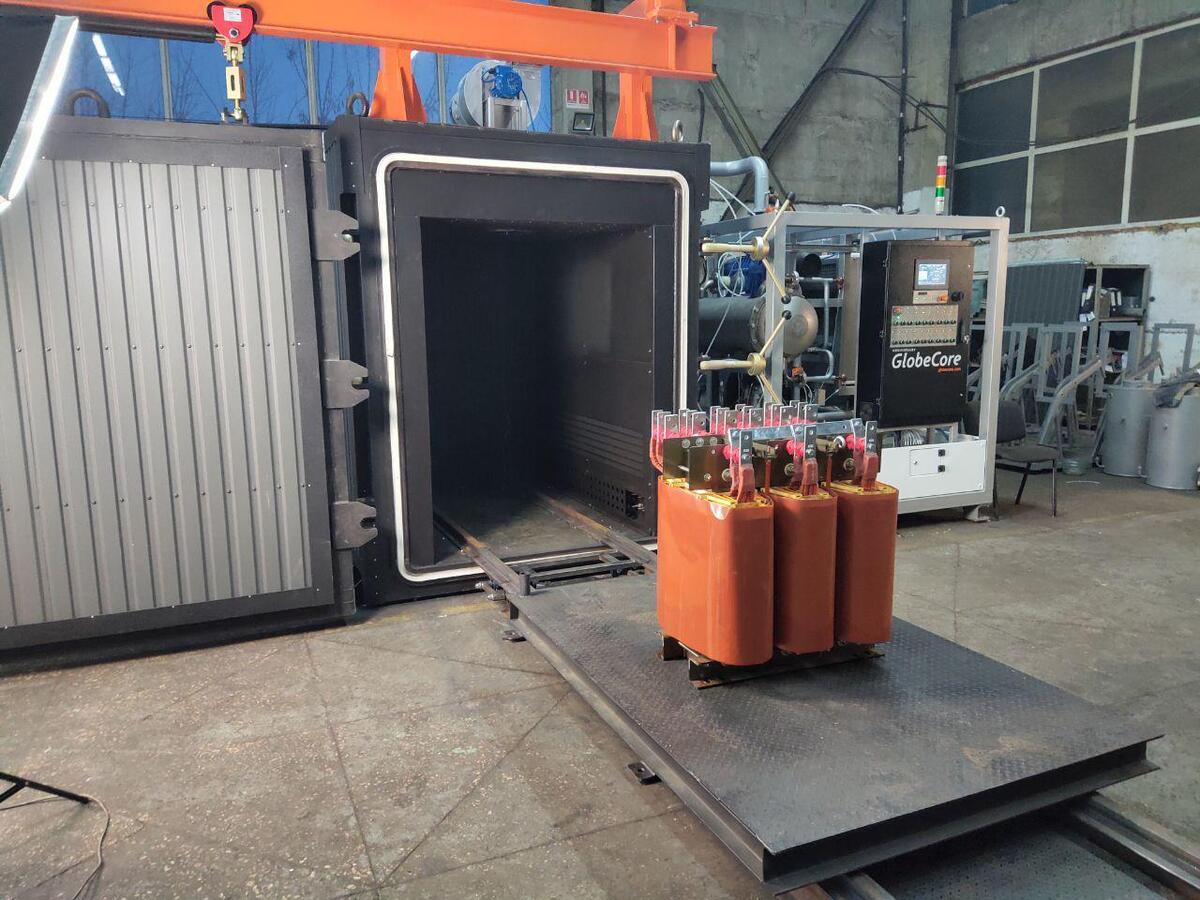
Vacuum drying oven for power transformers

Working principle

The operation of the vacuum drying oven for power transformer is simple but effective. At the heart of this process is the strategic alteration of the environment to effectively eliminate moisture.

As the vacuuming process unfolds, it elevates the saturated vapor pressure of water within the coil insulation material. Under the influence of increased pressure, moisture efficiently shifts from a liquid to vapor state, all at lower temperatures.

However, the main aspect of this process is the continuous application of heat, the temperature is systematically increased.  With each incremental rise in temperature, moisture within the insulation material undergoes a transition, converting into vapor.  By harnessing the power of pressure, the vacuum drying oven ensures that winding materials are exposed to lower temperatures, reducing the associated risks linked to higher heat.

Advantages of GlobeCore vacuum drying oven for power transformer
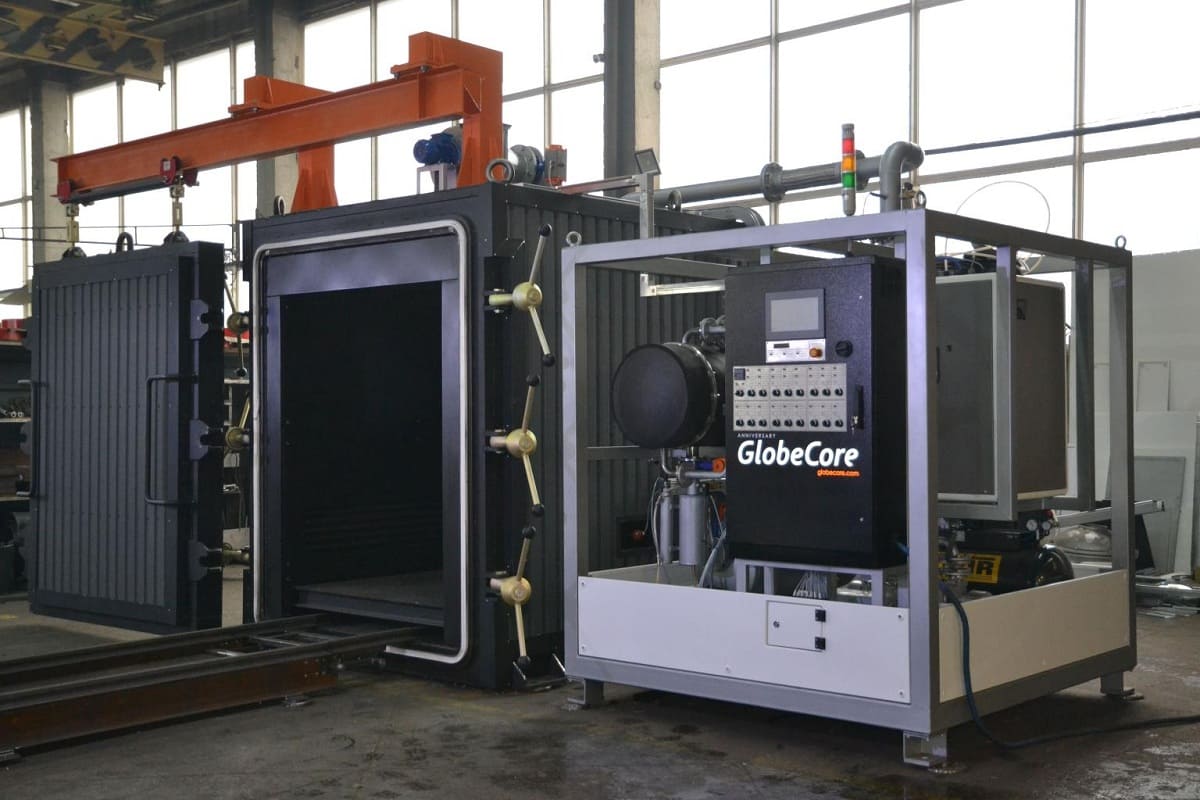
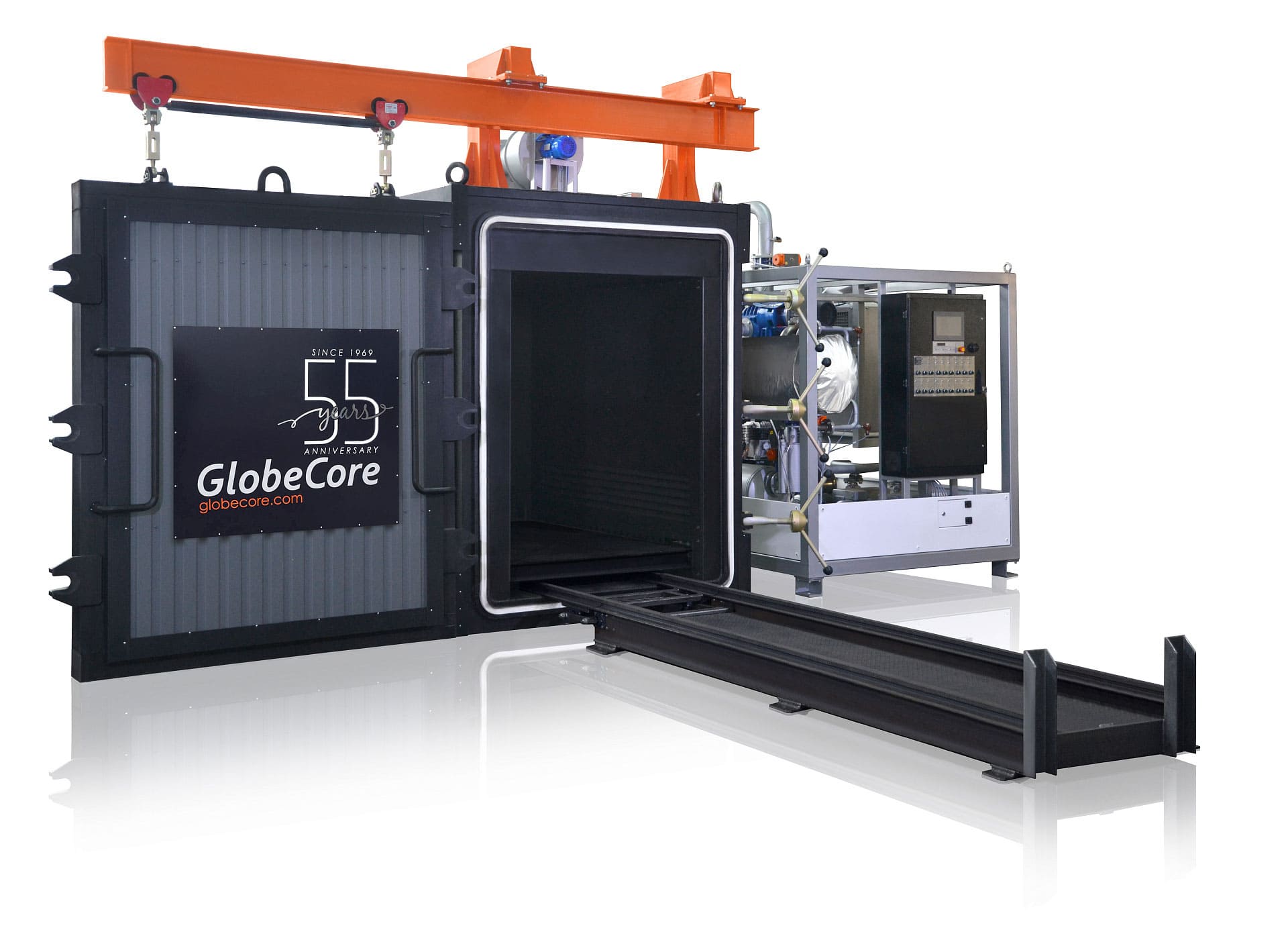
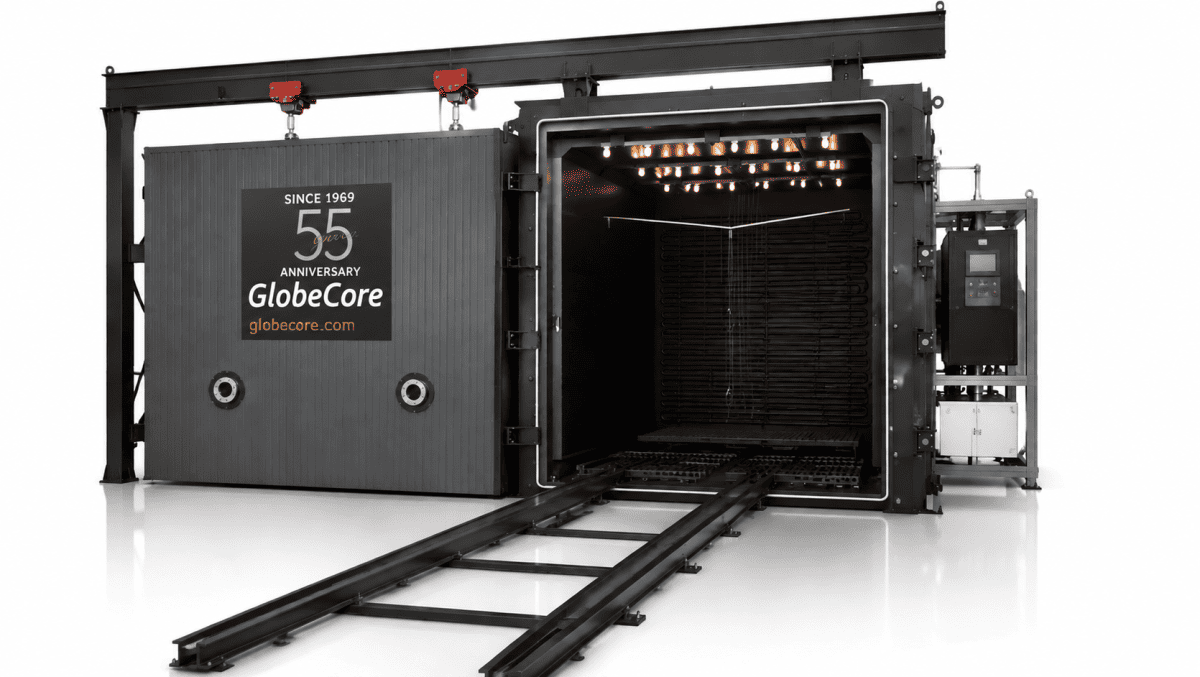
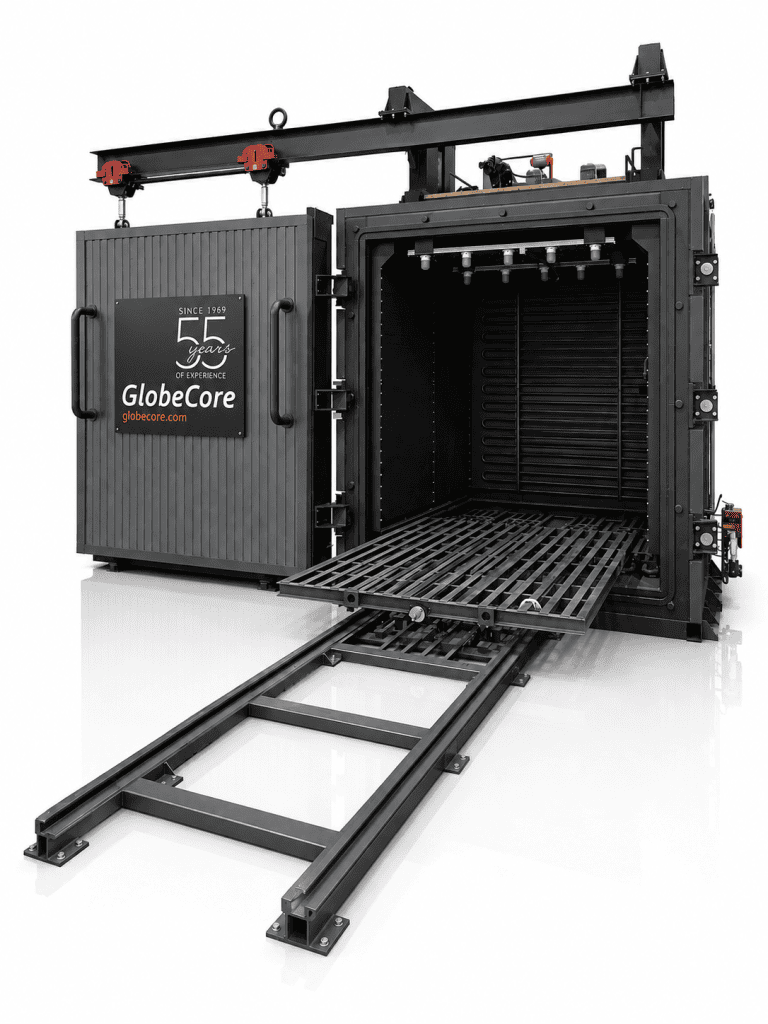
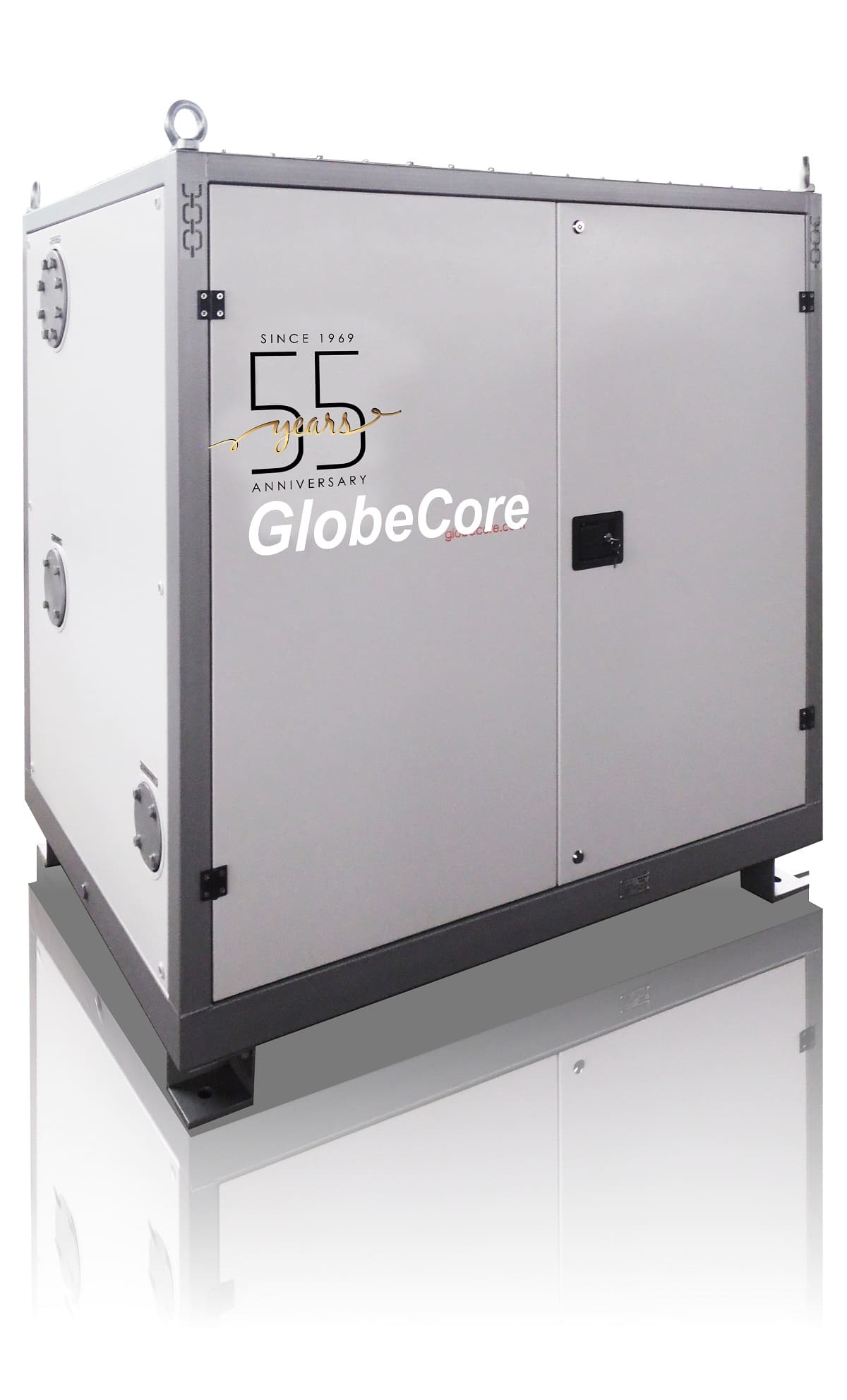
Vacuum drying oven for power transformersThe drying of transformers is a critical element in ensuring their dependability and extended operational life. GlobeCore provides a vacuum drying oven designed for power transformers, which can be tailored with customizable modifications to meet the precise needs of customers. This equipment takes into consideration various factors, including productivity, dimensions, installation site, loading methods, levels of automation, and more, thus delivering a bespoke solution tailored to each distinct application.

GlobeCore‘s vacuum drying oven for power transformer offer numerous advantages in this process:

  • Active moisture evaporation: vacuum ovens effectively remove moisture by increasing the pressure of water vapor, facilitating rapid moisture evaporation from insulating materials.
  • Optimal performance: vacuum ovens significantly reduce drying time while maintaining optimal process efficiency. This allows for quicker return of transformers to service after repair or maintenance.
  • Customization: GlobeCore’s vacuum ovens created to meet the specific needs of customers. It’s productivity, dimensions, loading methods, degree of automation, and other parameters can be adapted to individual requirements.

Integrated use of vacuum oven and low-frequency heater 

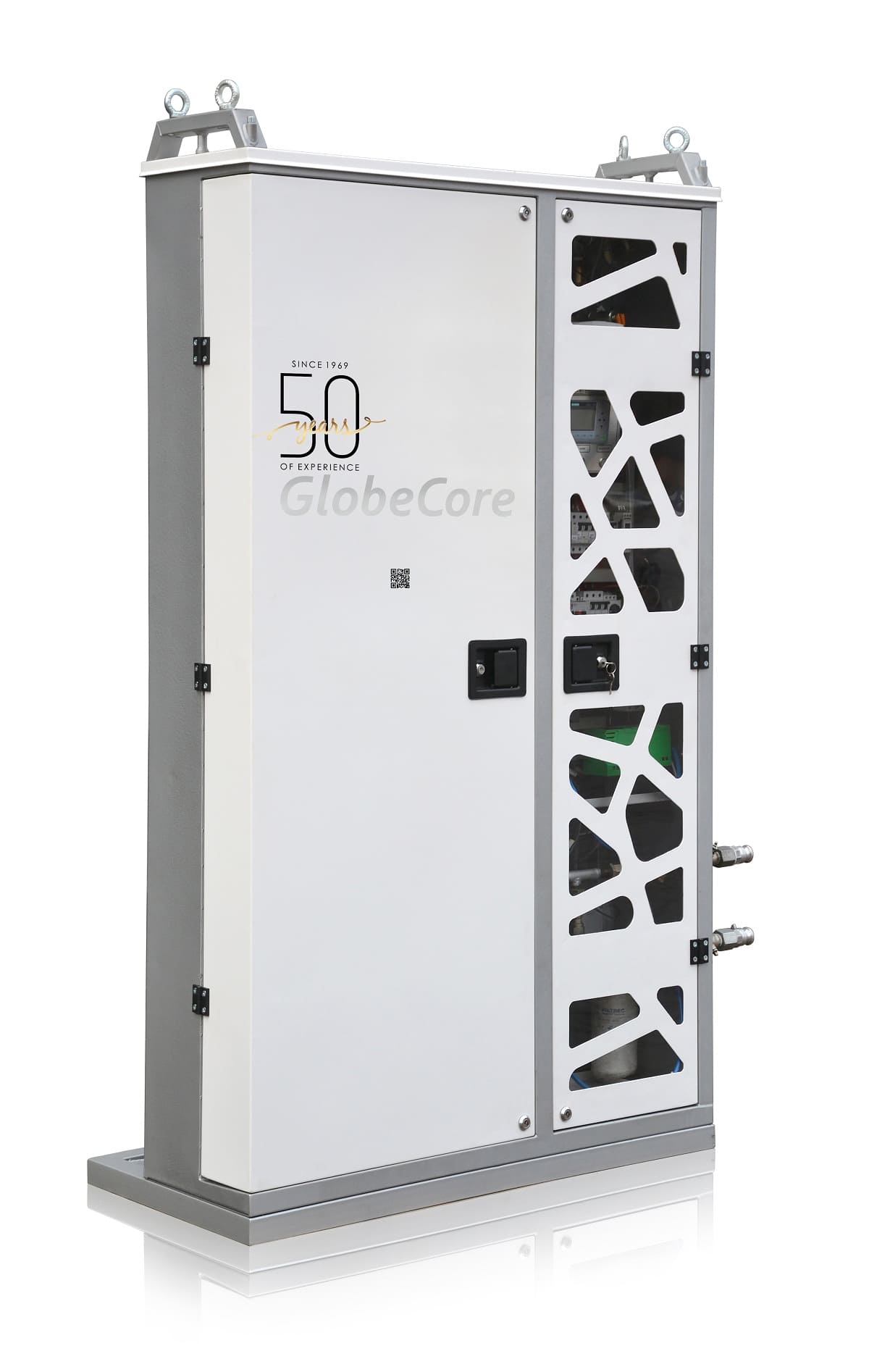
The combination of low-frequency heating with vacuum drying oven for power transformer prove to be highly effective for drying and maintaining optimal insulation conditions in windings.
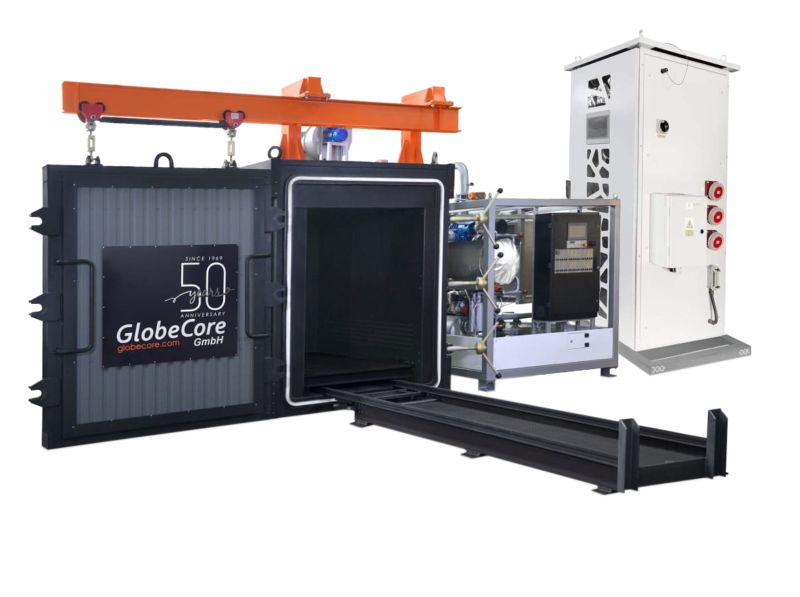
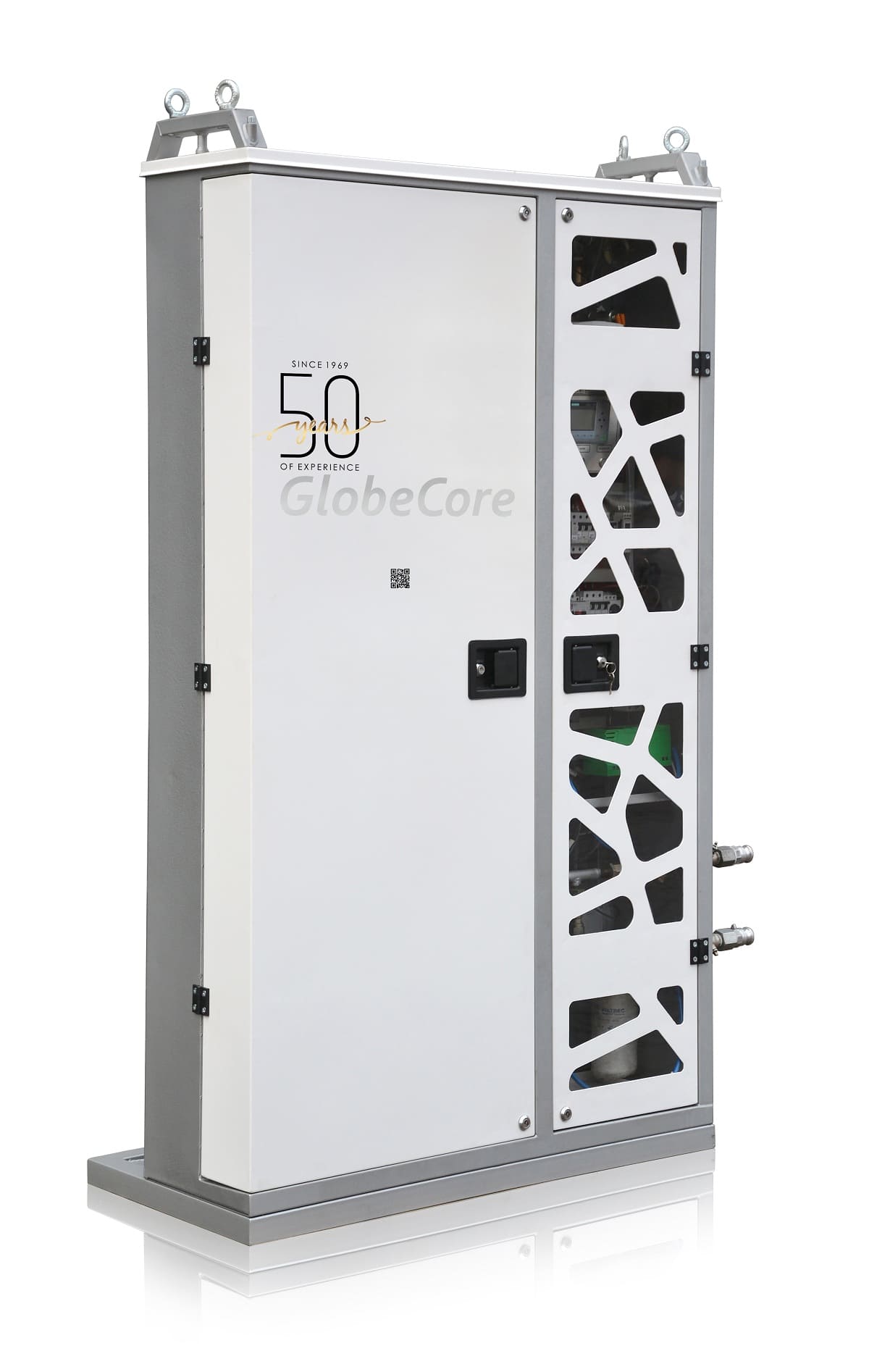
Vacuum drying oven for power transformersThe principle of low-frequency drying through transformer windings involves passing low-frequency current through the windings, generating heat and subsequently evaporating moisture. The synergy of these two effective methods yields the best results:

  1. Maximum efficiency: combining low-frequency heating and vacuum drying ensures a more uniform and thorough moisture removal process compared to using each method separately.
  2. Insulation safety: the vacuum process allows water vapor to evaporate at lower temperatures, reducing the risk of overheating windings and insulation damage.
  3. Reduction in drying time: the combined drying method can reduce drying time by up to 50% compared to using individual methods.
  4. Improved drying quality: vacuum facilitates moisture removal, while low-frequency heating promotes moisture movement, resulting in deep and high-quality moisture removal, thereby enhancing the dielectric characteristics of the materials.

The integrated strategy, uniting a vacuum oven with a low-frequency heater, represents the optimal method to guarantee the sustained and dependable performance of transformers in a dry condition. It is suitable for both older transformers requiring maintenance and newly manufactured transformers susceptible to moisture during production.

The approach, which combines a vacuum oven with a low-frequency heater are safeguarding the enduring and unwavering operation of transformers in an immaculate, moisture-free state. It is ideally suited for the maintenance of aging transformers and ensures the absolute absence of moisture for newly produced transformers.
Within the domain of electrical power distribution, the existence of moisture can be a significant concern for the stability and dependability of transformers. They play a crucial role in the distribution of electrical energy, and the presence of moisture can give rise to substantial issues that can detrimentally impact both the windings and the transformers as a whole.

Vacuum drying ovens for transformer windings

In repair workshops and service centers, vacuum drying ovens have become an indispensable component of the process of drying transformer windings. These ovens combine heating and vacuum to get rid of excess moisture and keep equipment running for a long time.
Vacuum drying oven for power transformers

Working principle

The operation of the vacuum drying oven for power transformer is simple but effective. At the heart of this process is the strategic alteration of the environment to effectively eliminate moisture.

As the vacuuming process unfolds, it elevates the saturated vapor pressure of water within the coil insulation material. Under the influence of increased pressure, moisture efficiently shifts from a liquid to vapor state, all at lower temperatures.

However, the main aspect of this process is the continuous application of heat, the temperature is systematically increased.  With each incremental rise in temperature, moisture within the insulation material undergoes a transition, converting into vapor.  By harnessing the power of pressure, the vacuum drying oven ensures that winding materials are exposed to lower temperatures, reducing the associated risks linked to higher heat.

Advantages of GlobeCore vacuum drying oven for power transformer

Vacuum drying oven for power transformersThe drying of transformers is a critical element in ensuring their dependability and extended operational life. GlobeCore provides a vacuum drying oven designed for power transformers, which can be tailored with customizable modifications to meet the precise needs of customers. This equipment takes into consideration various factors, including productivity, dimensions, installation site, loading methods, levels of automation, and more, thus delivering a bespoke solution tailored to each distinct application.

GlobeCore‘s vacuum drying oven for power transformer offer numerous advantages in this process:

  • Active moisture evaporation: vacuum ovens effectively remove moisture by increasing the pressure of water vapor, facilitating rapid moisture evaporation from insulating materials.
  • Optimal performance: vacuum ovens significantly reduce drying time while maintaining optimal process efficiency. This allows for quicker return of transformers to service after repair or maintenance.
  • Customization: GlobeCore’s vacuum ovens created to meet the specific needs of customers. It’s productivity, dimensions, loading methods, degree of automation, and other parameters can be adapted to individual requirements.

Integrated use of vacuum oven and low-frequency heater 

The combination of low-frequency heating with vacuum drying oven for power transformer prove to be highly effective for drying and maintaining optimal insulation conditions in windings.

Vacuum drying oven for power transformersThe principle of low-frequency drying through transformer windings involves passing low-frequency current through the windings, generating heat and subsequently evaporating moisture. The synergy of these two effective methods yields the best results:

  1. Maximum efficiency: combining low-frequency heating and vacuum drying ensures a more uniform and thorough moisture removal process compared to using each method separately.
  2. Insulation safety: the vacuum process allows water vapor to evaporate at lower temperatures, reducing the risk of overheating windings and insulation damage.
  3. Reduction in drying time: the combined drying method can reduce drying time by up to 50% compared to using individual methods.
  4. Improved drying quality: vacuum facilitates moisture removal, while low-frequency heating promotes moisture movement, resulting in deep and high-quality moisture removal, thereby enhancing the dielectric characteristics of the materials.

The integrated strategy, uniting a vacuum oven with a low-frequency heater, represents the optimal method to guarantee the sustained and dependable performance of transformers in a dry condition. It is suitable for both older transformers requiring maintenance and newly manufactured transformers susceptible to moisture during production.

The approach, which combines a vacuum oven with a low-frequency heater are safeguarding the enduring and unwavering operation of transformers in an immaculate, moisture-free state. It is ideally suited for the maintenance of aging transformers and ensures the absolute absence of moisture for newly produced transformers.
Within the domain of electrical power distribution, the existence of moisture can be a significant concern for the stability and dependability of transformers. They play a crucial role in the distribution of electrical energy, and the presence of moisture can give rise to substantial issues that can detrimentally impact both the windings and the transformers as a whole.

Vacuum drying ovens for transformer windings

In repair workshops and service centers, vacuum drying ovens have become an indispensable component of the process of drying transformer windings. These ovens combine heating and vacuum to get rid of excess moisture and keep equipment running for a long time.
Vacuum drying oven for power transformers

Working principle

The operation of the vacuum drying oven for power transformer is simple but effective. At the heart of this process is the strategic alteration of the environment to effectively eliminate moisture.

As the vacuuming process unfolds, it elevates the saturated vapor pressure of water within the coil insulation material. Under the influence of increased pressure, moisture efficiently shifts from a liquid to vapor state, all at lower temperatures.

However, the main aspect of this process is the continuous application of heat, the temperature is systematically increased.  With each incremental rise in temperature, moisture within the insulation material undergoes a transition, converting into vapor.  By harnessing the power of pressure, the vacuum drying oven ensures that winding materials are exposed to lower temperatures, reducing the associated risks linked to higher heat.

Advantages of GlobeCore vacuum drying oven for power transformer

Vacuum drying oven for power transformersThe drying of transformers is a critical element in ensuring their dependability and extended operational life. GlobeCore provides a vacuum drying oven designed for power transformers, which can be tailored with customizable modifications to meet the precise needs of customers. This equipment takes into consideration various factors, including productivity, dimensions, installation site, loading methods, levels of automation, and more, thus delivering a bespoke solution tailored to each distinct application.

GlobeCore‘s vacuum drying oven for power transformer offer numerous advantages in this process:

  • Active moisture evaporation: vacuum ovens effectively remove moisture by increasing the pressure of water vapor, facilitating rapid moisture evaporation from insulating materials.
  • Optimal performance: vacuum ovens significantly reduce drying time while maintaining optimal process efficiency. This allows for quicker return of transformers to service after repair or maintenance.
  • Customization: GlobeCore’s vacuum ovens created to meet the specific needs of customers. It’s productivity, dimensions, loading methods, degree of automation, and other parameters can be adapted to individual requirements.

Integrated use of vacuum oven and low-frequency heater 

The combination of low-frequency heating with vacuum drying oven for power transformer prove to be highly effective for drying and maintaining optimal insulation conditions in windings.

Vacuum drying oven for power transformersThe principle of low-frequency drying through transformer windings involves passing low-frequency current through the windings, generating heat and subsequently evaporating moisture. The synergy of these two effective methods yields the best results:

  1. Maximum efficiency: combining low-frequency heating and vacuum drying ensures a more uniform and thorough moisture removal process compared to using each method separately.
  2. Insulation safety: the vacuum process allows water vapor to evaporate at lower temperatures, reducing the risk of overheating windings and insulation damage.
  3. Reduction in drying time: the combined drying method can reduce drying time by up to 50% compared to using individual methods.
  4. Improved drying quality: vacuum facilitates moisture removal, while low-frequency heating promotes moisture movement, resulting in deep and high-quality moisture removal, thereby enhancing the dielectric characteristics of the materials.

The integrated strategy, uniting a vacuum oven with a low-frequency heater, represents the optimal method to guarantee the sustained and dependable performance of transformers in a dry condition. It is suitable for both older transformers requiring maintenance and newly manufactured transformers susceptible to moisture during production.

The approach, which combines a vacuum oven with a low-frequency heater are safeguarding the enduring and unwavering operation of transformers in an immaculate, moisture-free state. It is ideally suited for the maintenance of aging transformers and ensures the absolute absence of moisture for newly produced transformers.
Within the domain of electrical power distribution, the existence of moisture can be a significant concern for the stability and dependability of transformers. They play a crucial role in the distribution of electrical energy, and the presence of moisture can give rise to substantial issues that can detrimentally impact both the windings and the transformers as a whole.

Vacuum drying ovens for transformer windings

In repair workshops and service centers, vacuum drying ovens have become an indispensable component of the process of drying transformer windings. These ovens combine heating and vacuum to get rid of excess moisture and keep equipment running for a long time.
Vacuum drying oven for power transformers

Working principle

The operation of the vacuum drying oven for power transformer is simple but effective. At the heart of this process is the strategic alteration of the environment to effectively eliminate moisture.

As the vacuuming process unfolds, it elevates the saturated vapor pressure of water within the coil insulation material. Under the influence of increased pressure, moisture efficiently shifts from a liquid to vapor state, all at lower temperatures.

However, the main aspect of this process is the continuous application of heat, the temperature is systematically increased.  With each incremental rise in temperature, moisture within the insulation material undergoes a transition, converting into vapor.  By harnessing the power of pressure, the vacuum drying oven ensures that winding materials are exposed to lower temperatures, reducing the associated risks linked to higher heat.

Advantages of GlobeCore vacuum drying oven for power transformer

Vacuum drying oven for power transformersThe drying of transformers is a critical element in ensuring their dependability and extended operational life. GlobeCore provides a vacuum drying oven designed for power transformers, which can be tailored with customizable modifications to meet the precise needs of customers. This equipment takes into consideration various factors, including productivity, dimensions, installation site, loading methods, levels of automation, and more, thus delivering a bespoke solution tailored to each distinct application.

GlobeCore‘s vacuum drying oven for power transformer offer numerous advantages in this process:

  • Active moisture evaporation: vacuum ovens effectively remove moisture by increasing the pressure of water vapor, facilitating rapid moisture evaporation from insulating materials.
  • Optimal performance: vacuum ovens significantly reduce drying time while maintaining optimal process efficiency. This allows for quicker return of transformers to service after repair or maintenance.
  • Customization: GlobeCore’s vacuum ovens created to meet the specific needs of customers. It’s productivity, dimensions, loading methods, degree of automation, and other parameters can be adapted to individual requirements.

Integrated use of vacuum oven and low-frequency heater 

The combination of low-frequency heating with vacuum drying oven for power transformer prove to be highly effective for drying and maintaining optimal insulation conditions in windings.

Vacuum drying oven for power transformersThe principle of low-frequency drying through transformer windings involves passing low-frequency current through the windings, generating heat and subsequently evaporating moisture. The synergy of these two effective methods yields the best results:

  1. Maximum efficiency: combining low-frequency heating and vacuum drying ensures a more uniform and thorough moisture removal process compared to using each method separately.
  2. Insulation safety: the vacuum process allows water vapor to evaporate at lower temperatures, reducing the risk of overheating windings and insulation damage.
  3. Reduction in drying time: the combined drying method can reduce drying time by up to 50% compared to using individual methods.
  4. Improved drying quality: vacuum facilitates moisture removal, while low-frequency heating promotes moisture movement, resulting in deep and high-quality moisture removal, thereby enhancing the dielectric characteristics of the materials.

The integrated strategy, uniting a vacuum oven with a low-frequency heater, represents the optimal method to guarantee the sustained and dependable performance of transformers in a dry condition. It is suitable for both older transformers requiring maintenance and newly manufactured transformers susceptible to moisture during production.

The approach, which combines a vacuum oven with a low-frequency heater are safeguarding the enduring and unwavering operation of transformers in an immaculate, moisture-free state. It is ideally suited for the maintenance of aging transformers and ensures the absolute absence of moisture for newly produced transformers.
    Leave Your Request


    • Home
    • Products
    • Dealers
    • Tech School
    • Contacts

    ® Copyright by - 2025 © GlobeCore

    GlobeCore, Sadovskogo 14, Poltava, Ukraine, 36034

    This website uses cookies to improve your experience. By continuing to browse, you agree to our use of cookies. Read more in our Privacy Policy.