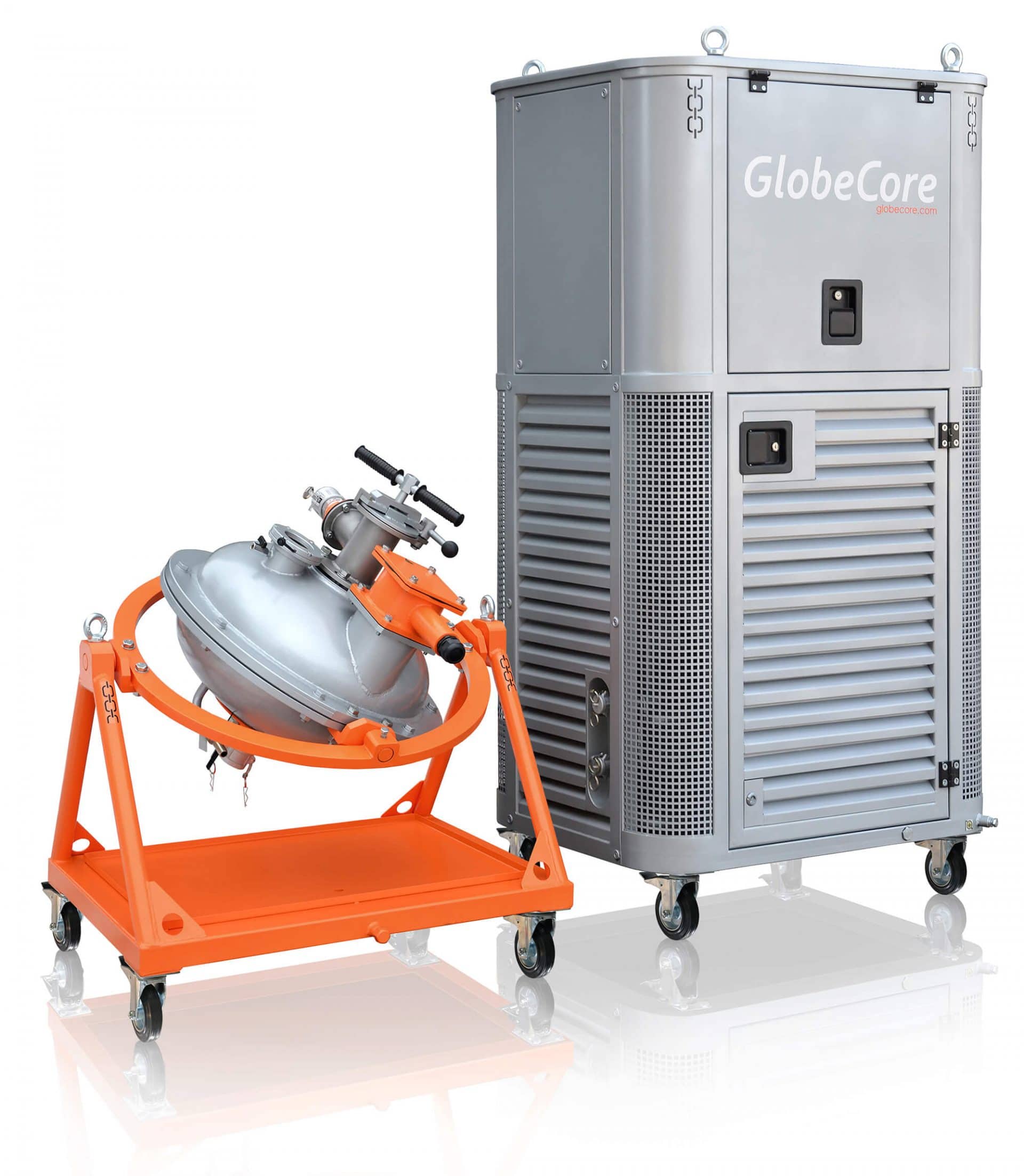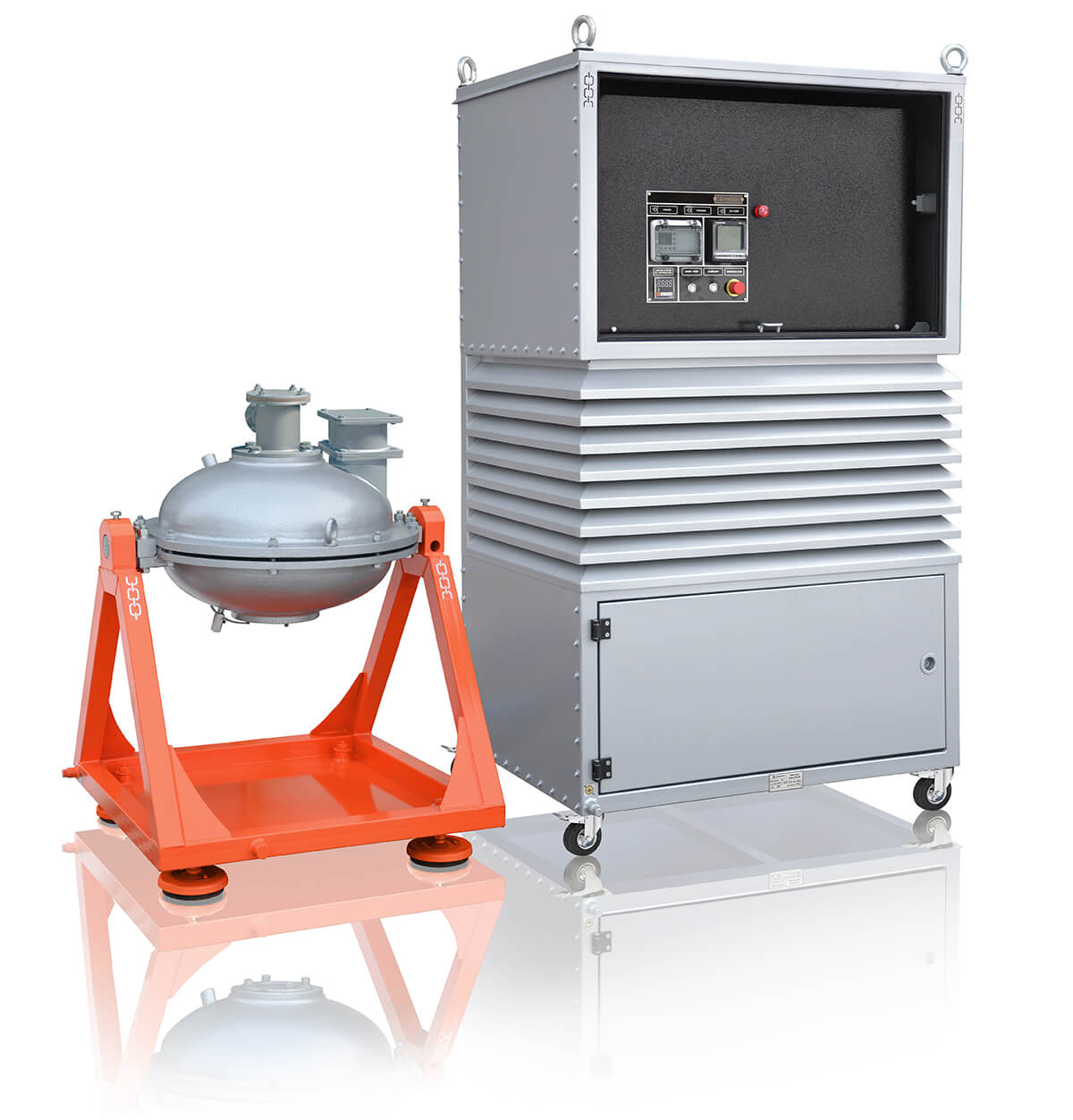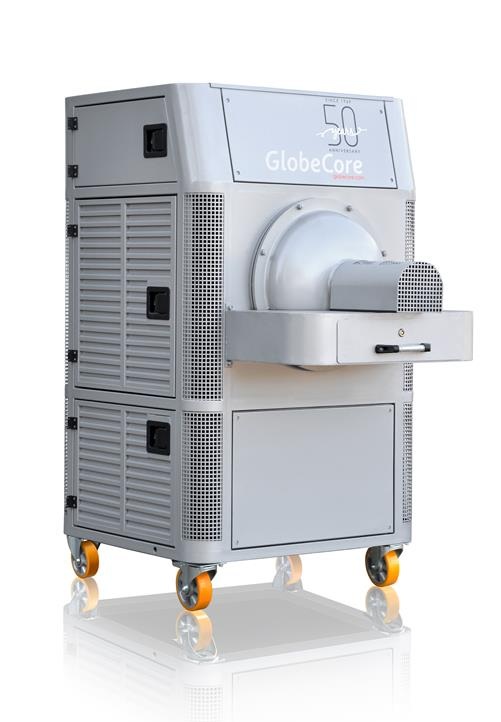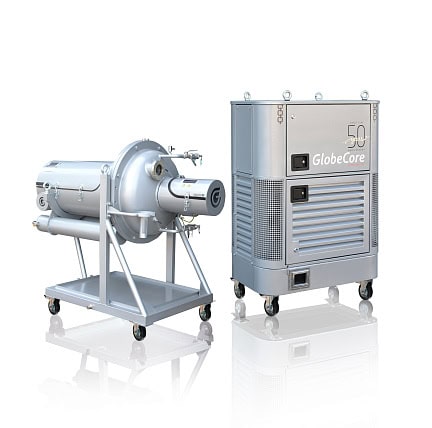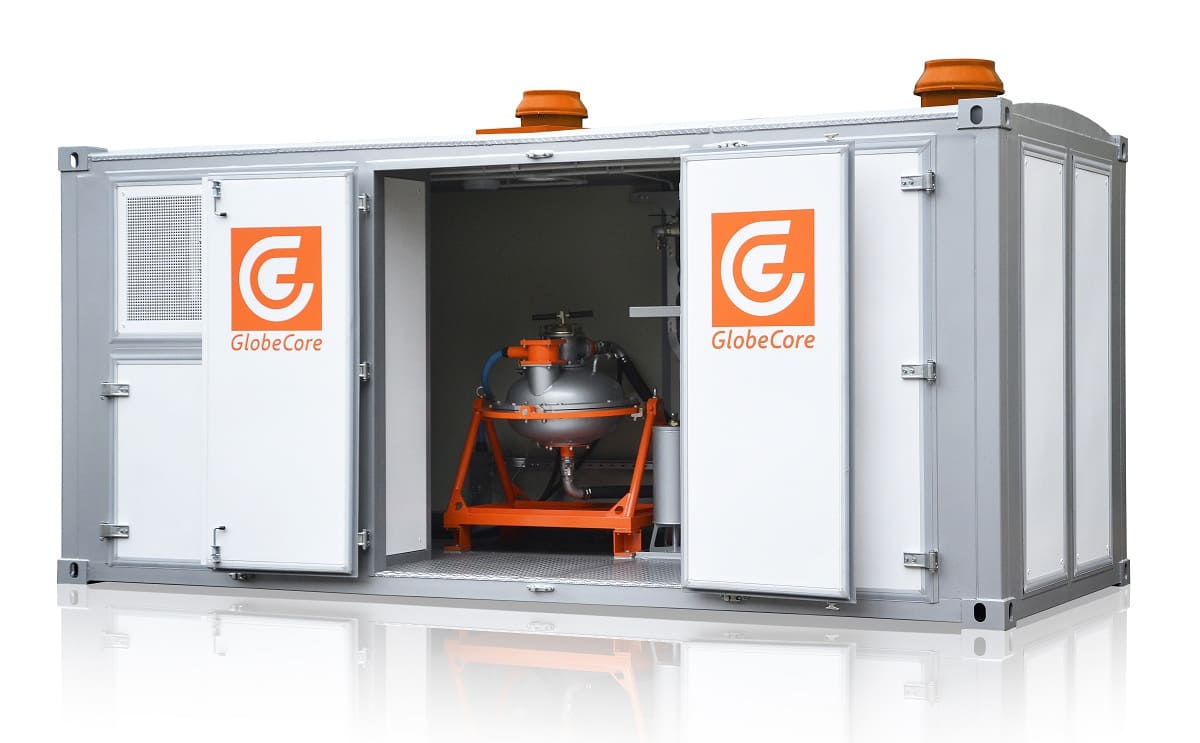
AVSk-150 Wastewater Treatment Complex
Cap: 18000 LPH | Wastewarer treatment | 0,2 m/sec max flow | Small footprint
GlobeCore is the world’s only high-tech company for production of operating vortex layer devices with real applications in the industrial sector which deliver the expected results.
The AVSk-150 complex is designed to purify wastewater, removing hexavalent chrome, iron, phenol, cyans, arsenic, fluorine and other impurities.
Composition:
- AVS-150 vortex layer device;
- two tanks with portioning pumps and agitators for chemicals;
- reaction vessel;
- supply pump;
- chemical mixing tank;
- sampling and ferromagnetic particle capture tank;
- chemical storage cabinet.
Equipment features
The complex is distinguished from other equipment for the same purpose by the presence of a vortex layer device (a chamber, where ferromagnetic particles move along complex trajectories, driven by a rotating electromagnetic field).
The vortex layer device intensifies physical and chemical processes of wastewater treatment by acoustic and electromagnetic treatment, high local pressure due to collisions of the particles between each other the the chamber walls.
Quality of wastewater purification
|
Contaminant |
Starting concentration |
Concentration after AVSk-150 |
|
Hexavalent chrome Cr6+, mg/dm³ |
1000 |
0 |
|
Iron Fe2+;3+, mg/dm³ |
250 |
0 |
|
Phenol |
0.5-10 g/dm³ |
50-100 mg/dm³ |
|
Cyans, mg/l |
8000 |
0.12 |
|
Arsenic, mg/dm³ |
2115 |
0 |
|
Fluorine, mg/dm³ |
350 |
10 |
| No. |
Parameter |
Value |
| 1 |
Wastewater treatment rate for heavy metals removal, m³/h (gal/min), max |
18 (80) |
| 3 |
Process chamber length, mm (in) |
156 (6) |
| 4 |
Magnetic induction in the bore middle, Т |
0.12 |
| 5 |
Max flow rate, m/sec (in/sec) |
0.2 (8) |
| 6 |
Max pressure inside the process chamber, MPa (psi) |
0.16 (23) |
| 7 |
Dynamic viscosity of the material, Pa·sec (lbf·s/ft²) |
1 (0.02) |
| 8 |
Max product temperature, ºС (ºF) |
70 (158) |
| 9 |
Power supply parameters |
Customizable |
| 10 |
Active power, kW |
9.5 |
| 11 |
Total max power, kVA |
22 |
| 12 |
Capacitor, kVAr |
40+25+25 |
|
13 |
Max dimensions, mm (in): Container: – length – width – height AVS process section: – length – width – height AVS control section: – length – width – height |
4,800 (189) 2,100 (82.7) 2,500 (98.4)
1,060 (41.7) 910 (35.8) 1,250 (49.2)
1,050 (41.3) 800 (31.5) 1,960 (77.1) |
| 14 |
Weight, kg (lbs), max: Container (with the unit and the oil purification system included) Process section Control section |
5,000 (11,000) 380 (830) 300 (660) |
- Rapid chemical reactions in the process chamber (on the order of seconds and fractions of a second).
- Reduction of chemical consumption by 25–50 %.
- Reduction of power consumption by a factor of 2–8.
- Reduction of oil purification equipment footprint by 10–15%.
What is the operating principle of AVS units?
The AVS is an electromagnetic induction device. Small needle-like elements made of a ferromagnetic alloy are placed inside the inductor, where they move chaotically. As a result, they break down solid particles or promote intensive homogenization, extraction, or activation of the materials being processed. The unit also accelerates chemical reactions while requiring several times less reagents than other units operating on a similar principle.
What advantages do AVS units offer over devices operating on a similar principle?
AVS units process substances and materials dozens of times faster than ball mills, vibration mills, hammer mills, various grinders, and dispersers. GlobeCore units consume dozens of times less electricity than the equipment listed above. The average electricity consumption of the AVS-100 is 4.5 kWh, while that of the AVS-150 is 9.5 kWh, depending on the materials being processed and the chemicals used. In addition, a single AVS unit can perform various technological processes. For example, it can remove heavy metals from wastewater in one cycle and disinfect it in the next.
How does the AVS unit handle wastewater treatment?
Industrial wastewater can primarily be treated to remove contaminants that cannot be removed by filtration, such as hexavalent chromium, phenols, cyanide compounds, fluorine, and nitrates. Sewage can also be disinfected, as the vortex layer unit destroys bacteria, microorganisms, and helminths present in it. AVS units installed upstream of local wastewater treatment facilities have demonstrated good treatment results.
How does the AVS unit handle material grinding?
The GlobeCore unit can be used to grind various materials down to 0.1 microns and produce stable multicomponent emulsions. AVS units are successfully used at aluminum plants for the environmentally friendly processing of salt slag. The units are also capable of grinding quartz sand (from 100–1,000 microns down to several dozen microns or even just a few microns), which accelerates the production of microcement, dry construction mixes, sand-lime bricks, and glass. The AVS can restore the properties of caked cement and grind coal for the production of coal-water fuel. The GlobeCore unit can also produce various types of micropowders and perform additional grinding of rocks to increase mineral extraction efficiency.
In what cases is the use of AVS units not advisable?
During operation, the ferromagnetic alloy elements gradually wear out. For example, the consumption of needle-like elements during wastewater neutralization is 0.25 g/m³. Iron particles enter the material being processed. Therefore, AVS units are not suitable for producing certain types of pigments and products. However, they are suitable for drinking water treatment, as the iron content in water after treatment in an AVS unit remains below the maximum permissible concentration of 0.3 mg/L.


Webinars


Milk-processing factory wastewater treatment

Milk-processing factory wastewater treatment plant AVSk-150

Silver wastewater treatment plant AVSk-150

Wastewater treatment plant from vegetable oil factories AVSk-150