

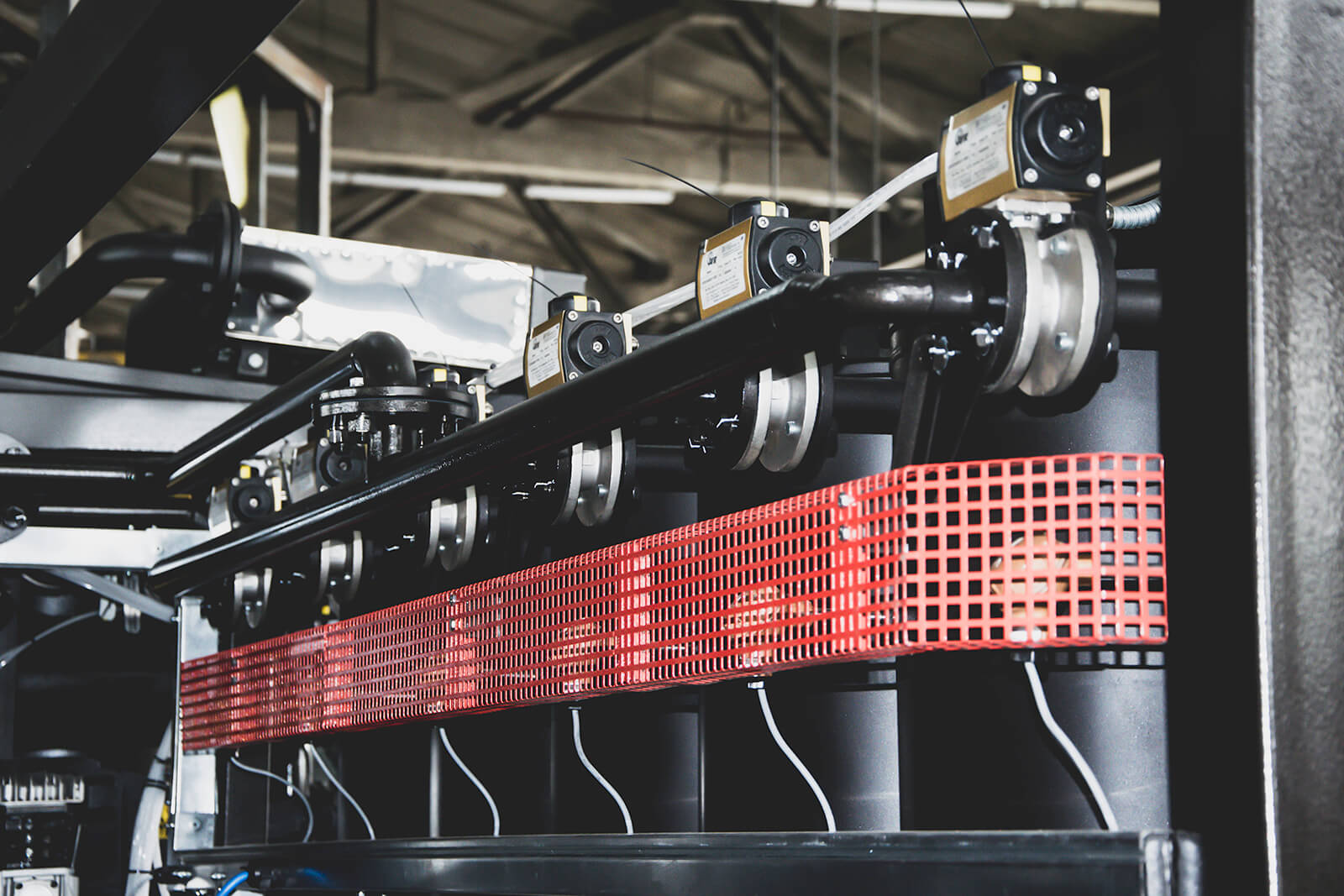


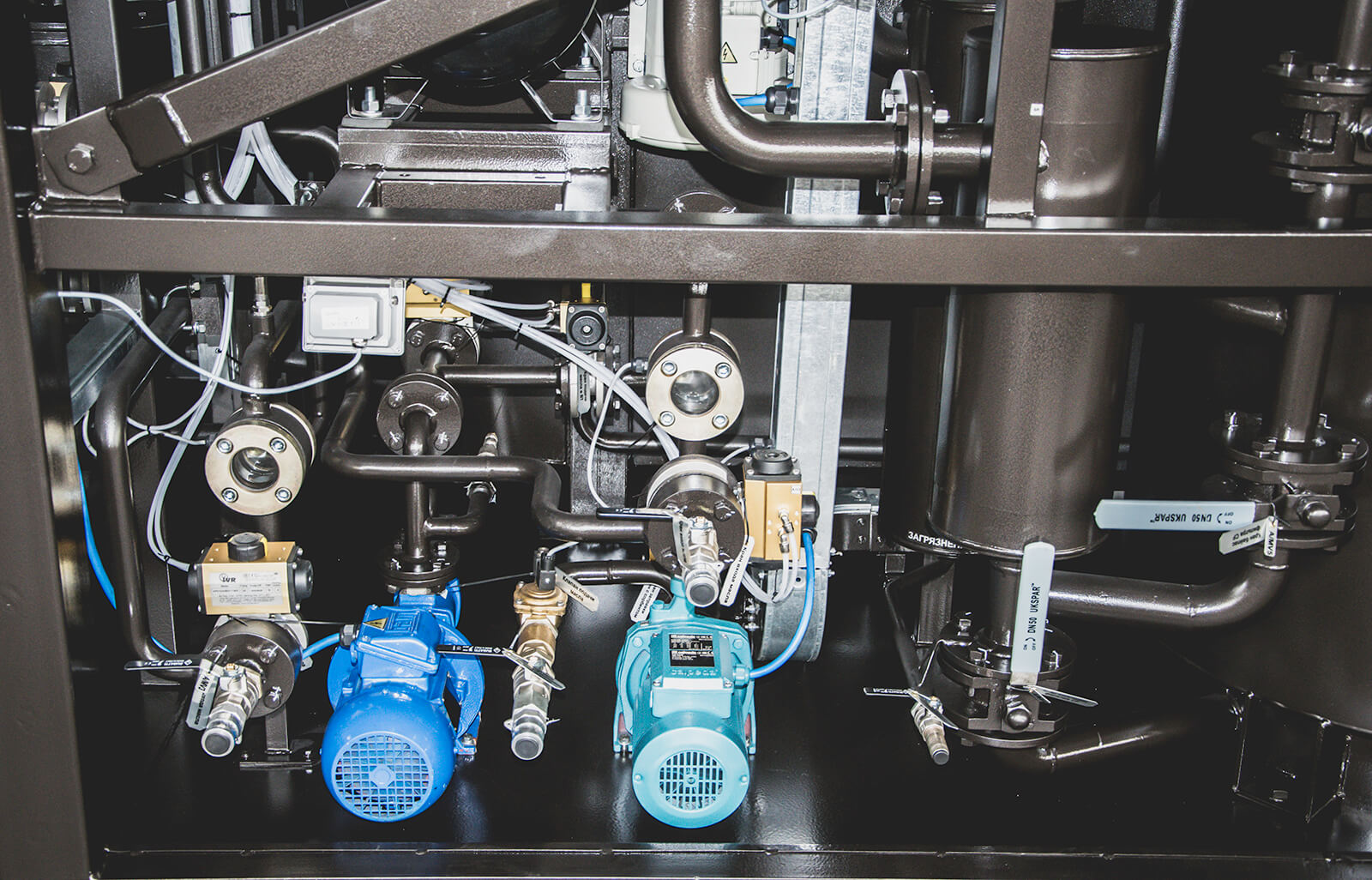
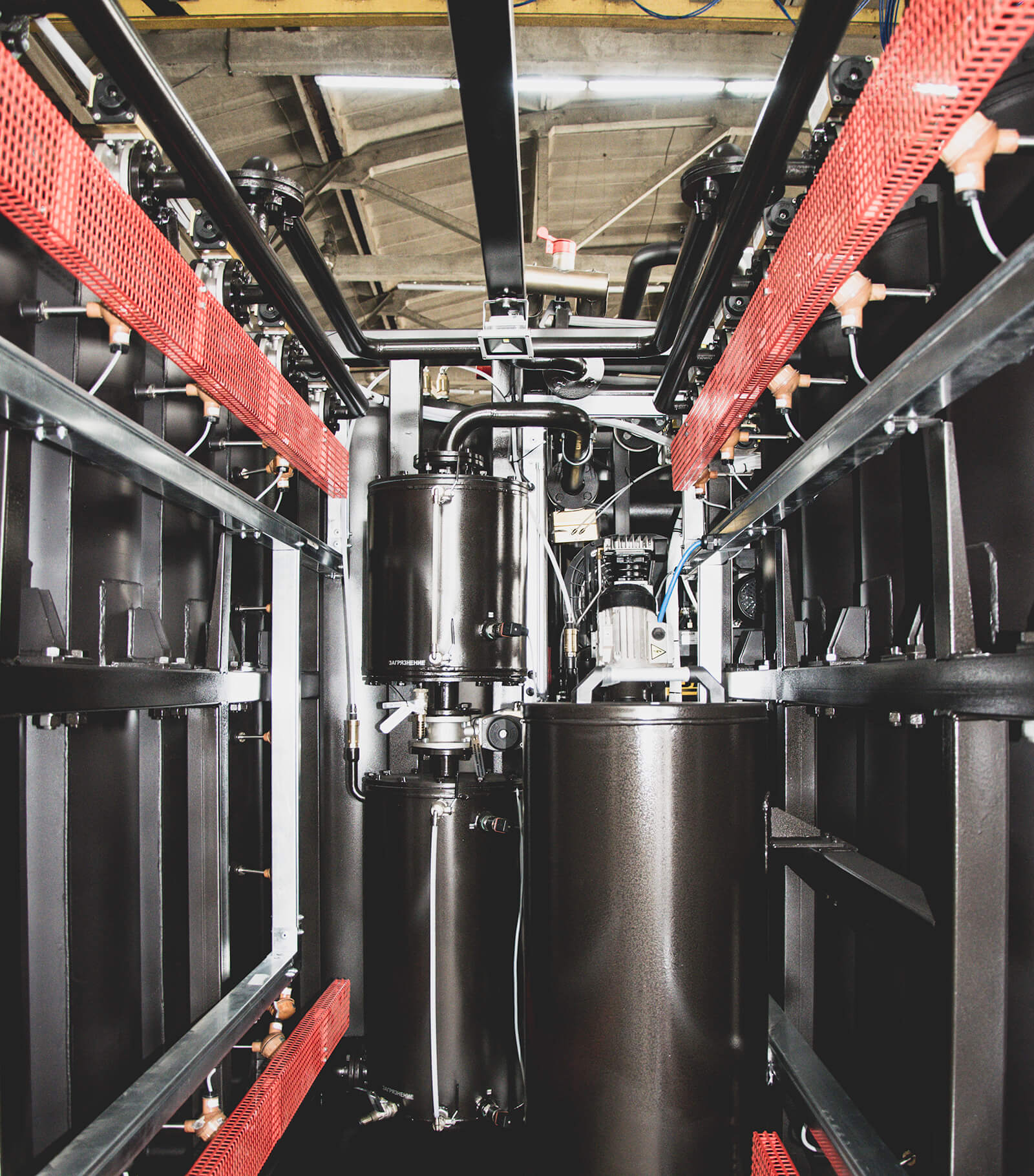
CMM-12R Oil Regeneration Systems
Cap: 1000-2000 LPH | Regeneration | Sorbent Reactivation | Economy
- Description
- Specifications
- Advantages
- Application
- FAQ
- Configurator
- Payback Period
- Video
- Gallery
- Publications
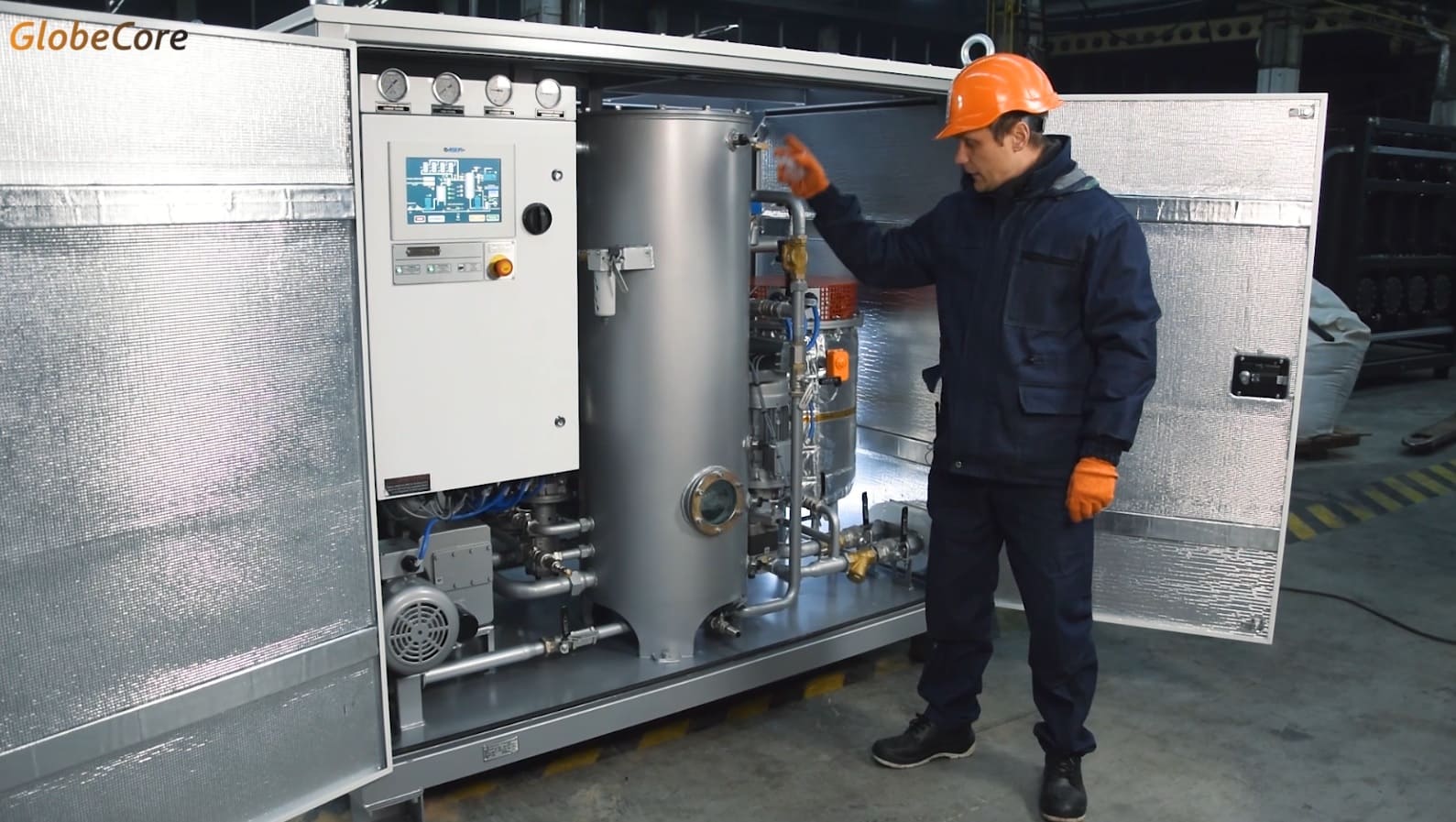
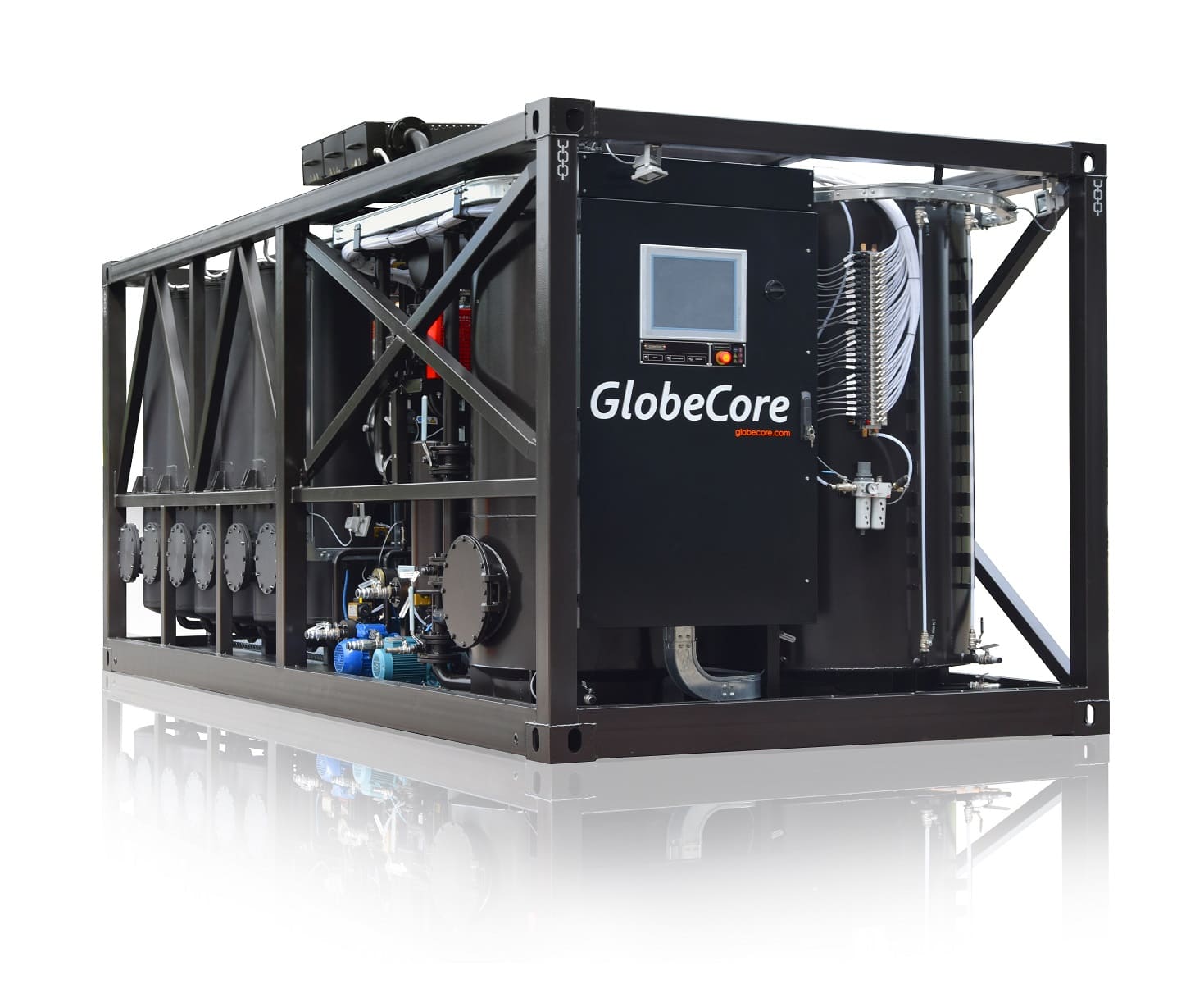
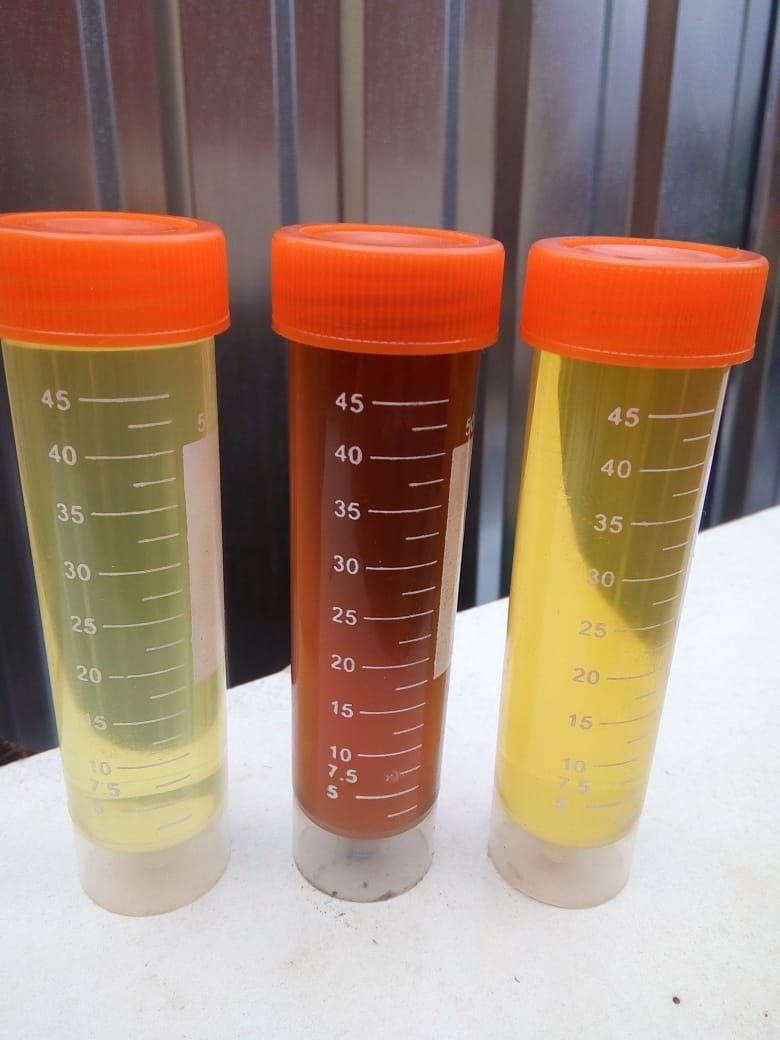
GlobeCore’s oil regeneration process restores used oils to a condition close to new oil. This process makes it possible to fill transformers with oil that would otherwise have been disposed of. The oil can be used in the transformer without replacement throughout its entire service life.
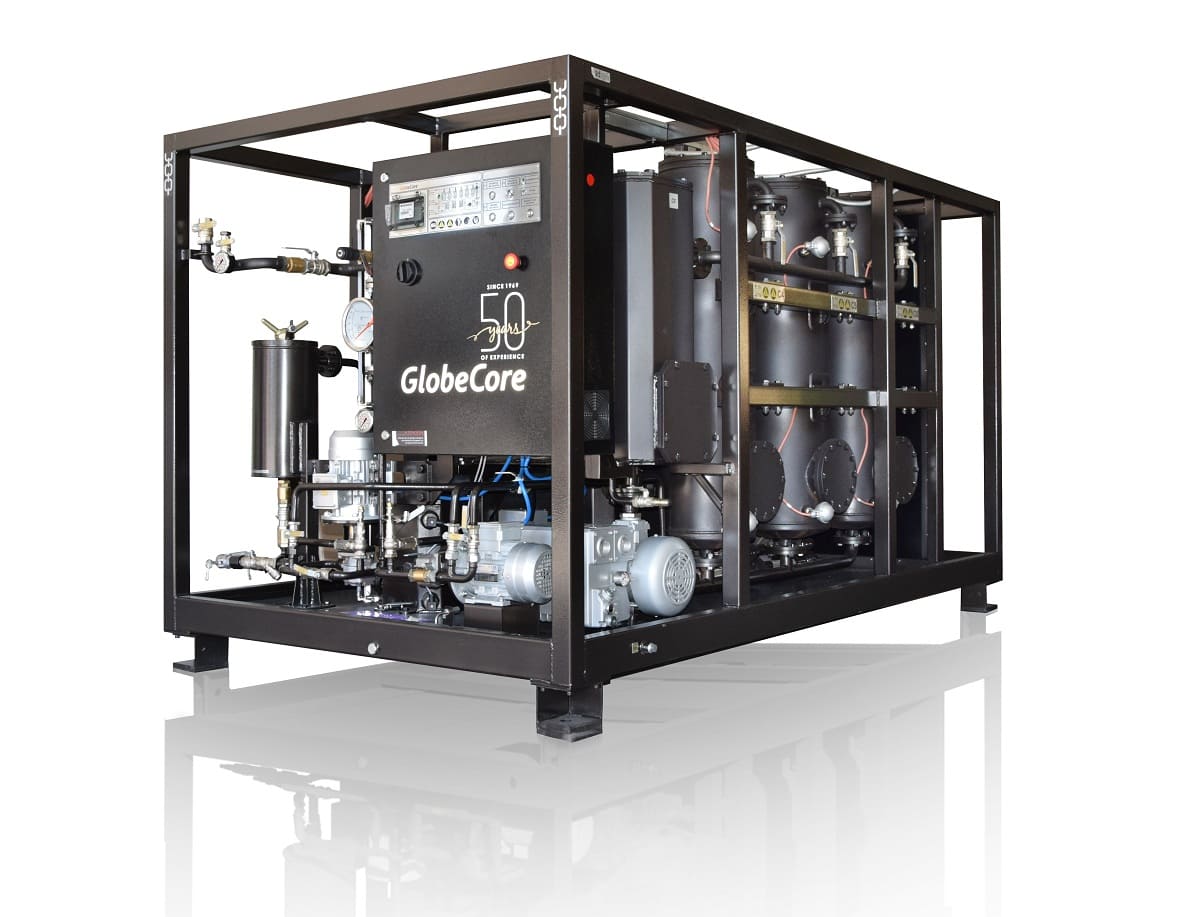
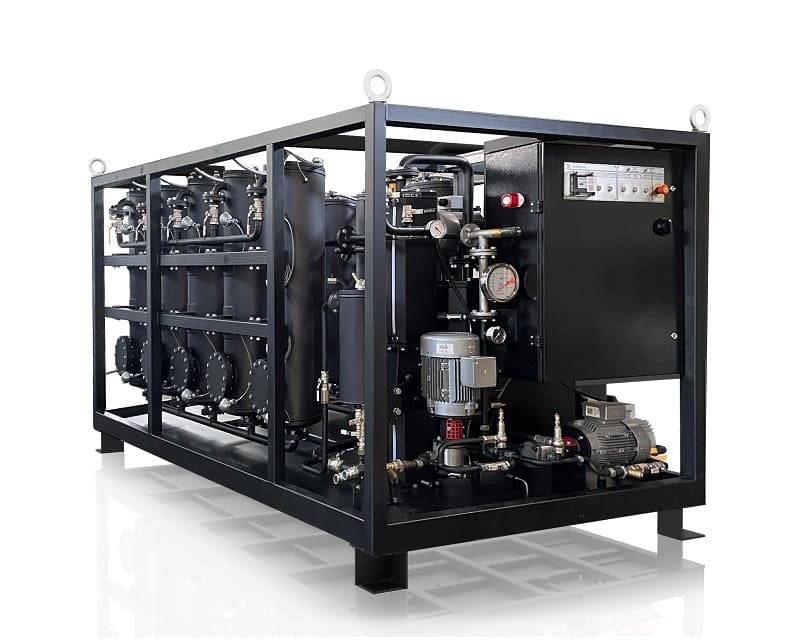
GlobeCore’s CMM-R systems are designed to extend the transformer’s lifespan by restoring the dielectric strength and chemical composition of dielectric insulating oil.
In the oil regeneration process, oil degradation products and acidic compounds are removed, the oil becomes clear, oxidation resistance improves, while its gas solubility is reduced.
| No. |
Parameter |
Value |
| 1 | Nominal capacity, L/h (gal/min) |
1,000-2,000 (4.4-8.8) |
| 2 | Oil losses during operation, % |
2-25 |
| 3 | Maximum allowable oil temperature, °C (°F) |
90 (194) |
| 4 | Outlet pressure, bar (psi) |
2.5 (36.3) |
| 5 | Maximum power consumption, kW |
55 |
| 6 | Nominal vacuum suction rate, L/h (gal/min) |
280,000 (1,232) |
| 7 | Fuller’s earth load, kg (lbs) |
1,600 (3,527) |
| 8 | Power supply parameters | |
| voltage, V |
Customizable |
|
| frequency, Hz | ||
| 9 | Coarse filtration degree (mesh filter), µm |
100 |
| 10 | Pre-filtration degree, µm |
25 |
| 11 | Fine filtration degree, µm |
5 |
| 12 | Dimensions, mm (in) | |
| length |
5,500 (216.5) |
|
| width |
2,320 (91.3) |
|
| height |
2,450 (96.5) |
|
| 13 | Weight, kg (lbs) |
6,000 (13,227) |
Oil regeneration within a transformer restores waste oil to as good as new condition:
| Parameter | Before processing | After processing |
| Mass moisture content, g/t (ppm) as per IEC 733; ASTM D-1533 | 43 | 5 |
| Industrial purity grade as per ISO 4406 | -/18/16 | -/14/12 |
| Volumetric gas content, % as per IEC 60599; ASTM D-3612 | — | 0.1 |
| Acid number, mg KOH/g as per IEC 296; ASTM D-664 | 0.2 | 0.01 |
| Corrosive sulfur as per IEC 5662; ASTM D-1275 | present | not detected |
| Dielectric strength, kV as per IEC 156; ASTM D-18116 | 30 | 70 |
| Interfacial tension, N/m, at 25 °C as per IEC 6295; ASTM D-664 | — | 45 |
| Dissipation factor at 90 °C as per IEC 247; ASTM D-924 | 0.095 | 0.001 |
| Oxidation stability as per IEC 74; 164 hours | — | restored |
GlobeCore manufactures oil regeneration systems for both transformer manufacturers and transformer service providers.
GlobeCore units are loaded with a sorbent that captures all oil decomposition products.
GlobeCore regeneration systems can use the same sorbent for up to 3 years before the first replacement. No more need for consumables and costly labor related to the replacement of exhausted sorbent at the job site.
Regeneration systems can be combined with degassing units or purchased as stand-alone systems.
GlobeCore regeneration systems can be used in combination with your existing degassing or drying unit.
Each GlobeCore unit can be customized and includes a number of options:
- Extra vacuum pump assembly for transformer vacuuming;
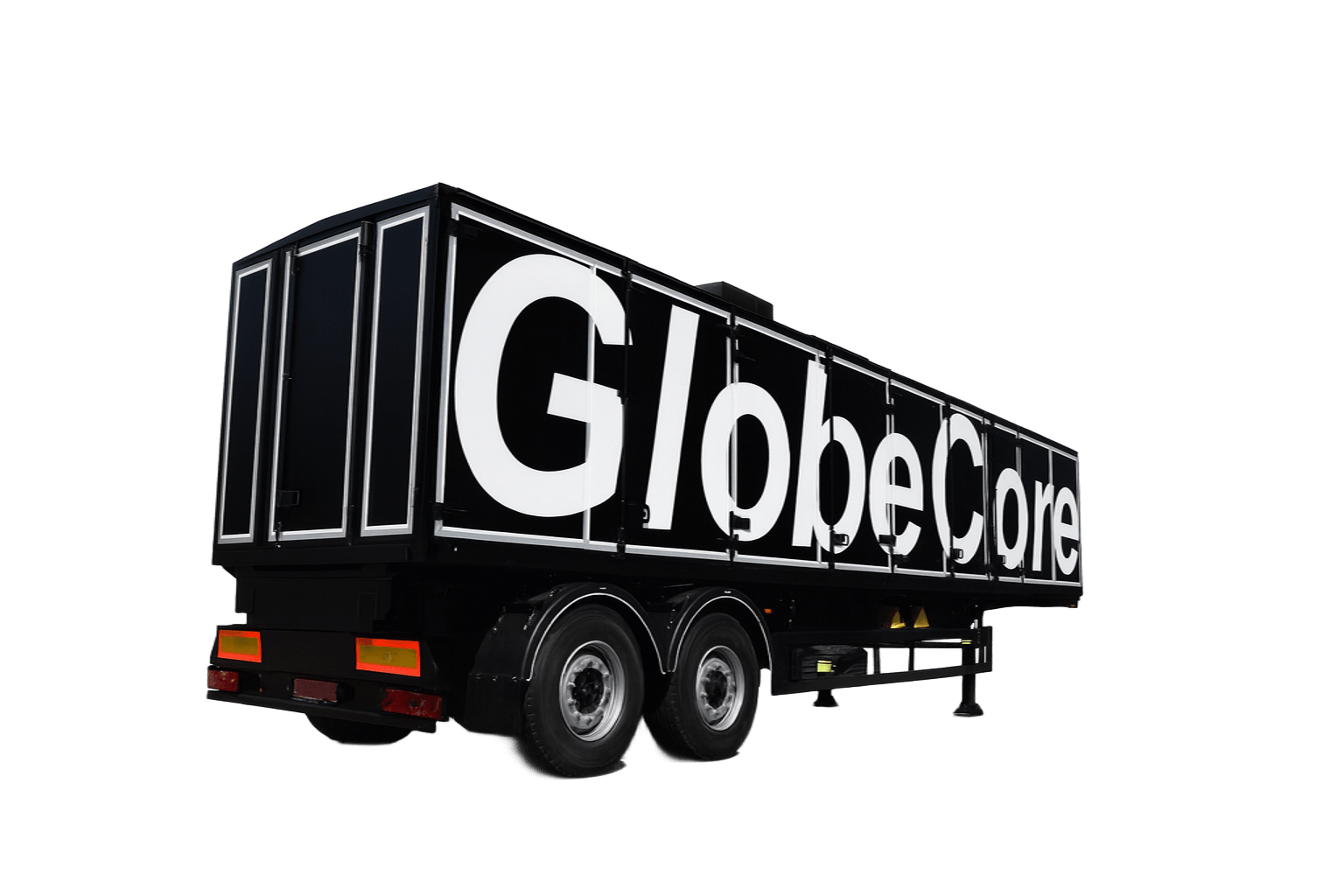
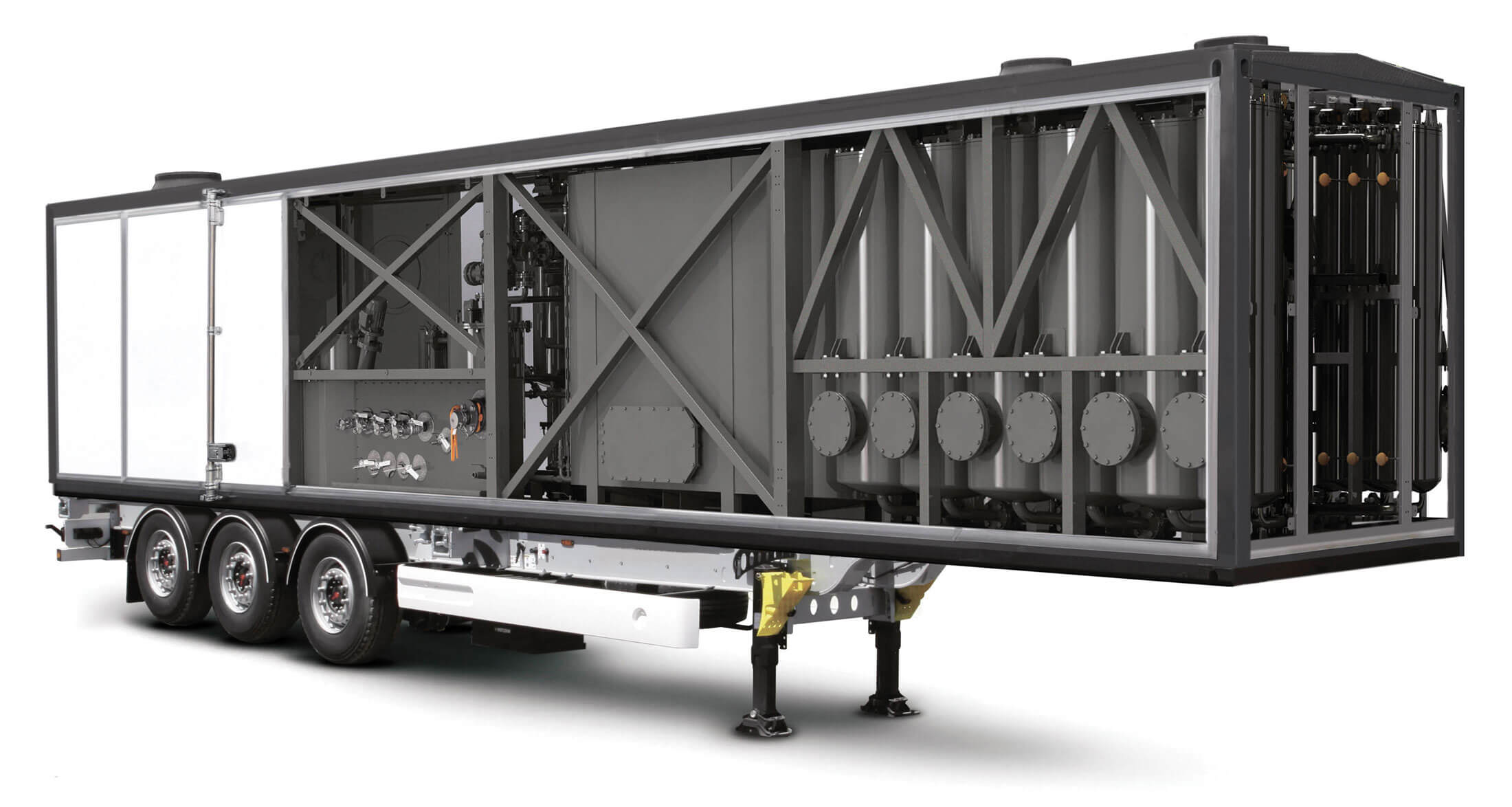
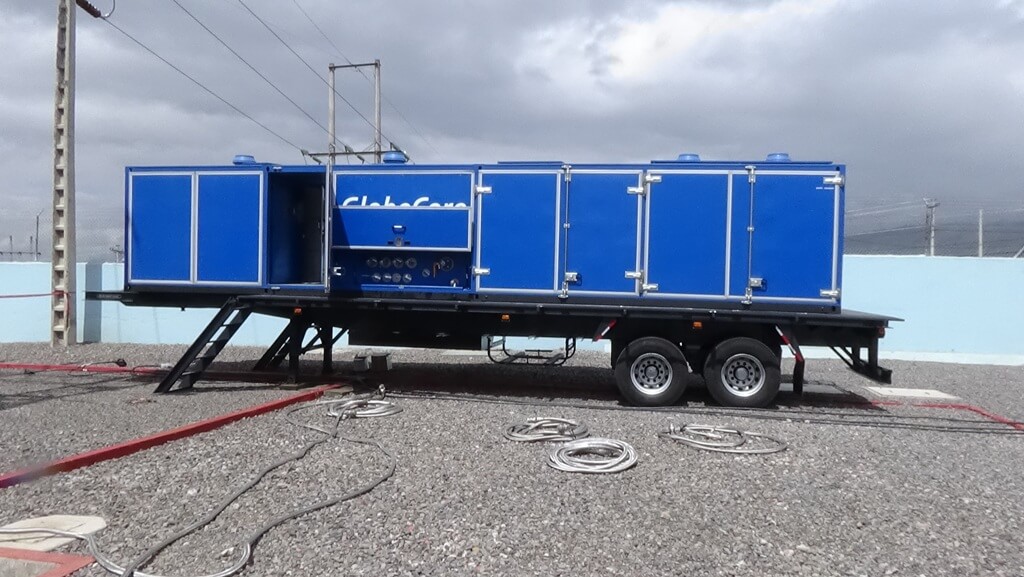
- Mounted on a trailer or semi-trailer;
- Moisture meters at the inlet and/or outlet of the oil stream;
- Remote control and process monitoring via smartphone or PC;
- Climate-controlled operator workroom.
Application:
Is there a difference between oil purification and oil regeneration?
The terms “purification” and “regeneration” are sometimes used interchangeably, although they actually refer to different processes. Oil regeneration is a technological process that involves the selective removal of aging products and contaminants from oil, followed by stabilization with additives to restore its quality and make it suitable for reuse in its original application.
What is the main difference between CMM-RL and CMM-R units?
CMM-RL units are manually operated, while CMM-R units operate automatically. In addition, the columns of CMM-RL units contain less sorbent than those of CMM-R units.
How often should transformer oil be regenerated?
There is no strictly defined interval for oil regeneration. The frequency depends on the results of oil analysis and the transformer’s operating conditions. As a general guideline, oil regeneration is performed approximately every 10-15 years.
What is the consumption rate of the regeneration sorbent in CMM-R units?
On average, 1 kg of sorbent regenerates 4 liters of oil with an acid number of 0.25 mg KOH/g.
How is sludge removed from transformer windings?
Sludge removal from transformer windings is carried out by circulating oil heated above its aniline point through the transformer. The aniline point is the temperature at which sludge begins to dissolve in the oil. This temperature is typically around 80°C. Sludge removal takes place simultaneously with oil regeneration. Only fresh or regenerated oil should be used for sludge removal.
Transformer windings can be cleaned with the transformer either energized or de-energized. The cleaning process requires 30 to 60 passes through the regeneration unit. When the transformer is de-energized, sludge dissolution becomes less effective due to the absence of winding vibrations, so the cleaning process takes longer.
Are there any sorbent losses during reactivation?
In CMM-R units, sorbent reactivation takes place directly inside the columns, eliminating the losses that could otherwise occur during unloading and loading operations.
What percentage of oil is lost during the sorbent reactivation process?
Generally, between 2% and 20%. The exact percentage depends on the initial quality of the oil.
Can oil regeneration be performed using a CMM-12R unit while the transformer is in operation?
Yes.


Webinars




How to Restore the Properties of Aged Transformer Oil

Transformer Oil Processing Solutions by GlobeCore

Midel eN 1204 Natural Ester Dielectric Fluid Purification
Heat Transfer Oil Purification – Why Mineral HTF Systems Need It?