

Zeolite regeneration
What is the best method for drying zeolite?
- This topic has 4 replies, 5 voices, and was last updated 5 months, 2 weeks ago by .
Answers
-
September 14, 2024 at 2:39 pm by Christopher Mcdaniel
The best method for drying zeolite is thermal regeneration, where the zeolite is heated to a temperature between 150°C and 300°C to remove moisture or adsorbed materials. This heating process desorbs water from the zeolite’s pores, restoring its adsorption capacity. Dry air or an inert gas is often passed through the zeolite bed to aid in the moisture removal process, ensuring efficient drying without damaging the zeolite’s structure.
-
January 20, 2026 at 1:39 pm by Oleksandr Dannyk
In addition to thermal regeneration, it is important to consider the specific operating conditions and the properties of the zeolite itself when choosing a drying method. For example, it can be useful to evaluate:
Particle size and shape of the zeolite, since fine grains heat up faster but may create higher flow resistance;
Degree of saturation or contamination, which affects the required temperature and regeneration time;
Energy and operational constraints, such as the availability of dry purge gas or the possibility of heat recovery.
In some cases, combining a preliminary purge with dry gas at a lower temperature followed by thermal regeneration can reduce overall energy consumption and shorten the process time.
For a more detailed explanation of zeolite regeneration mechanisms, especially in the context of gas dehydration and process efficiency, it is worth reading this article:
https://globecore.com/news/zeolite-regeneration-intended-for-gas-dehydration.
It provides useful technical insights that are often not covered in brief forum answers. -
April 2, 2026 at 7:20 am by Craig Price
A practical point that is often overlooked is that uniform heat and controlled airflow distribution are just as important as temperature itself during zeolite drying. In industrial practice, non-uniform heating may lead to partial regeneration—where the outer layers of the zeolite are dry, but the internal pores still retain moisture, reducing overall adsorption efficiency. For this reason, systems with forced convection (heated air circulation) tend to perform better than simple static heating.
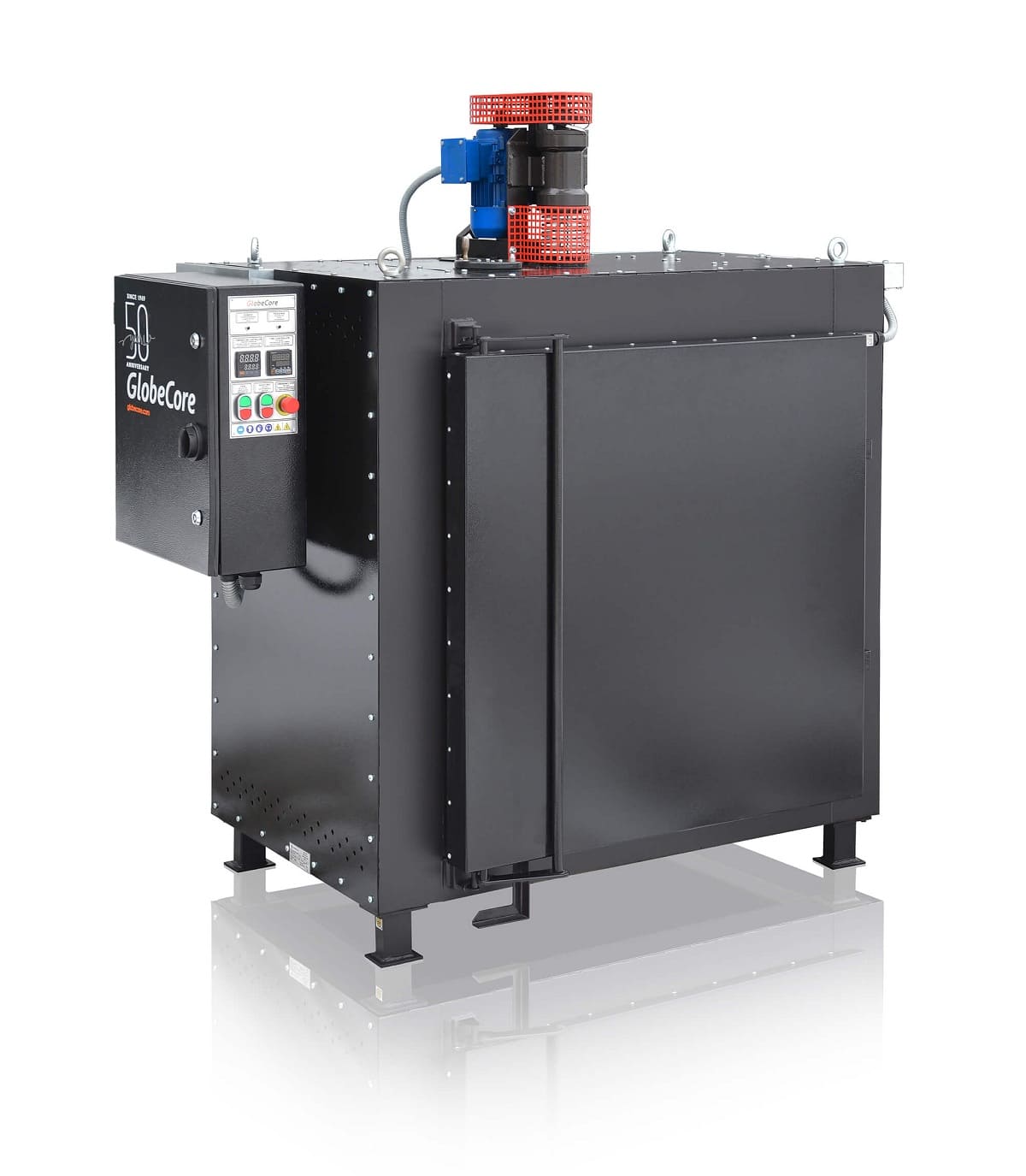
Another aspect is process control and repeatability. Dedicated drying equipment allows for maintaining stable temperature, airflow, and time parameters, which is critical when zeolite is used in applications such as gas dehydration or transformer drying, where even small amounts of residual moisture can affect performance. SSC-type zeolite drying cabinet solutions are specifically designed for this purpose, combining heating elements with controlled air circulation to achieve consistent and deep dehydration of the material.
If you are looking for a more practical, equipment-focused perspective on how this is implemented in real conditions, it is worth checking out this article: https://globecore.com/oil-processing/zeolite-drying-cabinet/. -
April 2, 2026 at 7:27 am by Haruto Tanaka
You’re right to flag uniform heating and controlled airflow as equal partners with temperature in effective zeolite regeneration. In practice that means using forced-convection drying or heated purge gas so heat penetrates the bed and internal pores rather than just surface layers, monitoring outlet dew point and placing thermocouples at multiple bed depths to confirm complete desorption, and tailoring the temperature ramp and hold time to particle size, degree of saturation and contamination. Keep peak thermal regeneration temperatures in the 150–300°C range for standard synthetic zeolites (lower if organics or volatile contaminants are present), consider a cold or warm dry-gas pre-purge to remove bulk moisture and volatile species, and use inert purge gas if oxidation is a risk.
For repeatability and industrial use—gas dehydration, transformer drying or large-scale softening—dedicated equipment like SSC-type drying cabinets or packaged heated-bed regenerators give stable airflow, controlled temperature profiling and repeatable cycle timing, which improves adsorption capacity recovery and process efficiency. Design for manageable pressure drop (avoid overly fine fines), implement heat recovery where possible to cut energy use, and include safety interlocks and contamination-handling provisions; combined monitoring of temperature, flow and outlet dew point is the simplest way to ensure deep, consistent zeolite dehydration in production.