

Hydraulic oil purification
How does Degassing Hydraulic Oil improve its performance in hydraulic systems?
- This topic has 3 replies, 4 voices, and was last updated 2 months ago by .
Answers
-
October 7, 2024 at 3:05 pm by Ashley Hall
Degassing Hydraulic Oil improves its performance in hydraulic systems by removing dissolved gases that can negatively impact the oil’s properties and system efficiency. Dissolved gases, such as oxygen, nitrogen, and carbon dioxide, can form bubbles or foams within the hydraulic fluid, leading to inconsistent lubrication and reduced cooling efficiency. These gas bubbles can cause cavitation in pumps and actuators, resulting in increased wear, noise, and potential component damage. Additionally, the presence of gases can decrease the oil’s dielectric strength, increasing the risk of electrical discharges and insulation failures in hydraulic systems. Degassing processes, such as vacuum treatment or thermal degassing, effectively extract these dissolved gases, restoring the oil’s clarity and consistency. This enhances the hydraulic system’s reliability, reduces wear and tear on components, and improves overall performance by ensuring smooth and efficient fluid flow, consistent lubrication, and optimal cooling, thereby extending the lifespan of the hydraulic machinery.
-
March 19, 2026 at 7:26 am by Craig Price
Another important, but often overlooked criterion is the relationship between degassing and long-term fluid stability under real operating conditions. Even if a hydraulic system initially performs well, the continuous presence of dissolved gases, especially oxygen, gradually accelerates oil degradation through oxidation reactions. This leads to the formation of acids and sludge, which can impair operation of valves, shorten the service life of filters, and increase the frequency of maintenance procedures.
At the same time, degassing contributes to more predictable system behavior under dynamic loads. When air content is reduced, the fluid maintains more consistent bulk modulus characteristics, which directly improves force transmission and system responsiveness. In practical terms, this means fewer pressure fluctuations, smoother actuator motion, and better repeatability in automated or high-precision systems.
From an operational standpoint, this makes degassing not just a performance improvement step, but a key factor in maintaining stability over time, especially in systems exposed to temperature variations, high cycling rates, or critical duty cycles.
If you’d like to explore how these principles are applied in real hydraulic oil treatment systems and what technologies are used, this article provides a clear and practical overview: https://globecore.com/oil-processing/oil-treatment-hydraulic-systems/. -
March 19, 2026 at 7:31 am by Emily Jones
You’re exactly right — dissolved gases, especially oxygen, are a slow but persistent driver of oil degradation: they accelerate oxidation chemistry, form acids and varnish/sludge that foul valves and filters, and shorten oil change intervals. Reducing air content also stabilizes the fluid’s compressibility (bulk modulus), so force transmission becomes more predictable under dynamic loads; that yields fewer pressure spikes, less cavitation and foaming, smoother actuator motion, and better repeatability in precision or high-cycle systems.
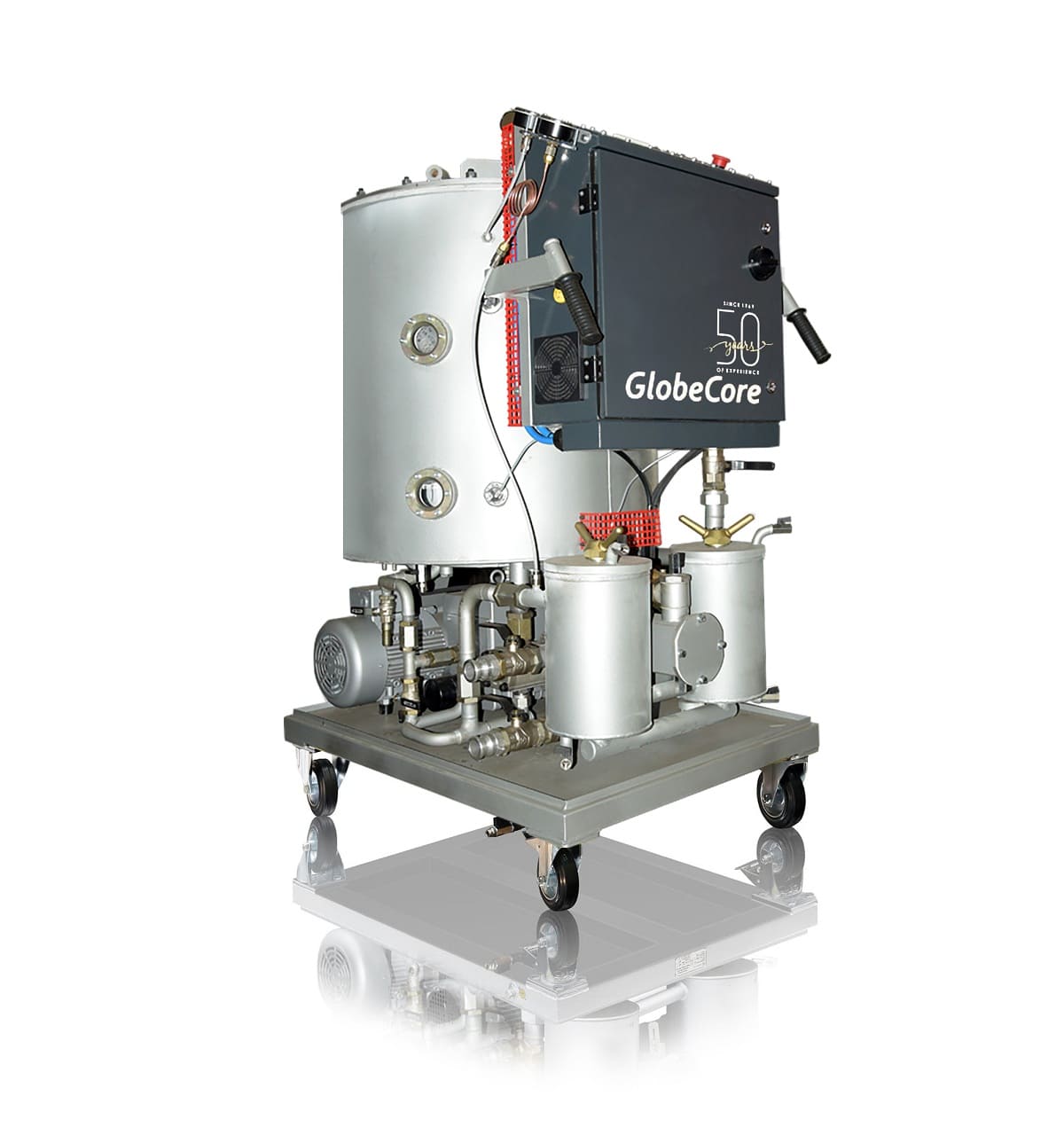
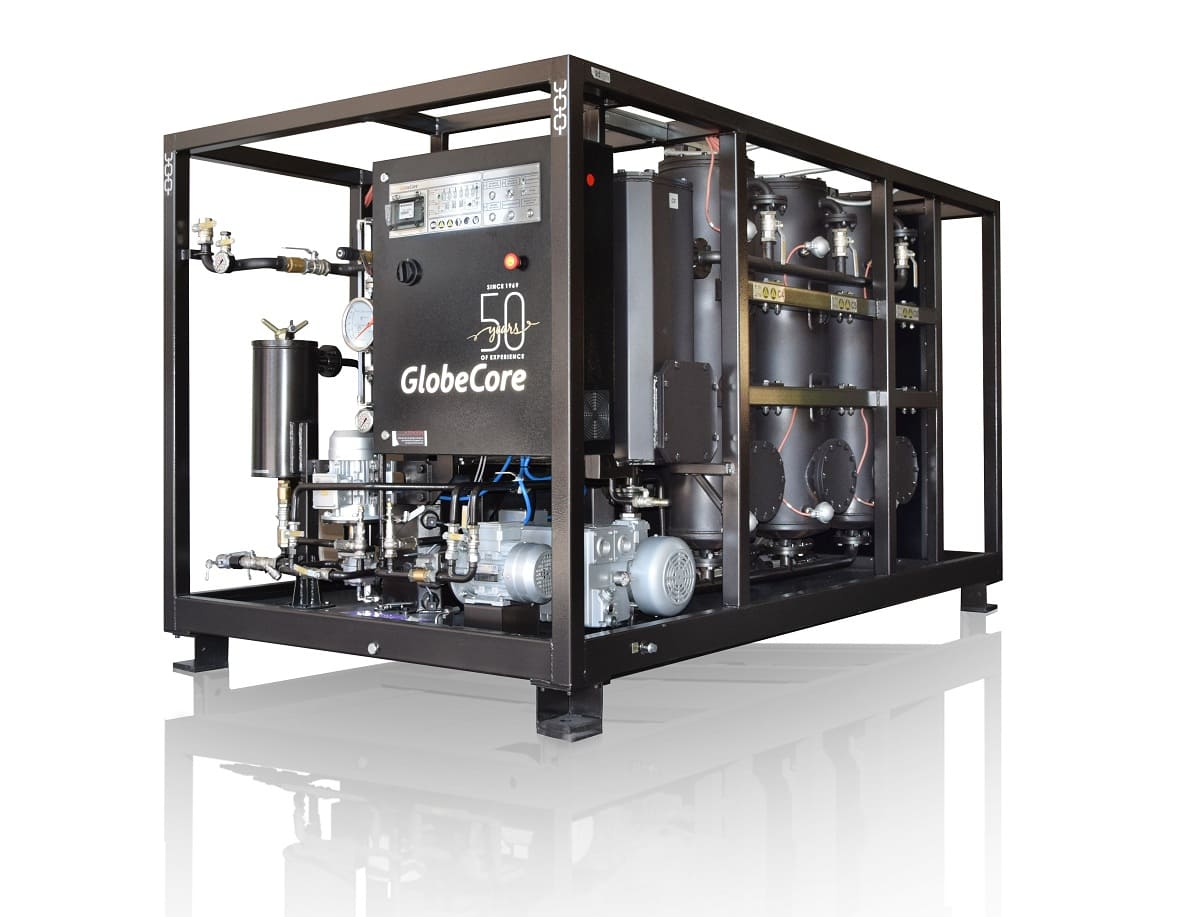
In practice the most effective approach couples degassing with dehydration: thermal treatment under vacuum strips dissolved gases and moisture, which together slow oxidation, preserve additive performance, and improve dielectric and lubrication properties. Mobile thermal-vacuum degassing/purification units designed for hydraulic systems can routinely bring moisture to the low-ppm range and reduce volumetric gas content to around 1–1.5%, while delivering targeted particle and cleanliness levels — results that translate directly into longer oil life, reduced maintenance, and more stable, predictable hydraulic performance in the field.