GlobeCore

  • Home
  • Products
    • Oil Regeneration
      • CMM-6RL Oil Regeneration Unit
      • CMM-10RL Transformer Oil Regeneration Plant
      • CMM-12R Oil Regeneration Systems
      • CMM-12R Oil Regeneration System (With Activated Bauxite)
      • CMM-8RSL/4000 Transformer Oil Regeneration Plant (With Fuller’s Earth)
      • USB-6 Oxidation Inhibitor injection unit
      • СММ-0,001U Laboratory Oil Filtration Unit
    • Oil Purification & Degassing Machines
      • CMM-0.6L Oil Degassing & Filtration Cart
      • СММur-1L mobile oil plant
      • CMM-1.0LT Transformer Oil Purification Unit
      • CMM-1H Oil Processing Unit
      • CMM-2.2LT Industrial Oil Purification Unit
      • CMM-4,0T Turbine oil filtration
      • CMM-4,0LT Transformer Oil Purification Unit
      • CMM-4/7 portable oil degassing unit
      • CMM-6LT Industrial Oil Purification Unit
      • CMM-6/7 Degassing Unit
      • CMM-8LT Oil Processing Unit
      • CMM-10 — Transformer Oil Purification Machine
      • CMM-15 Oil Degassing Plant
    • Oil Filtration Machines
      • CMM-1,0CF Unit for Removal of Water from Oil
      • CMM-2,0CF Unit for Removal of Water from Oil
      • CMM-1,2Fr Industrial oils filtration unit with self-cleaning filters
      • CMM-4,0F Oil filtration unit
    • Oil Drying Unit
      • ZP-130 Sorbent Cartridges
      • ZP-260 Sorbent Cartridges
    • Oil Heating
      • PPM Inline Oil Heater. Stream oil heating
    • Fuel Polishing
      • TOR-1 diesel fuel moisture content tester
      • CMM-6RL dark diesel fuel polishing machine
      • CMM-6RL dark heating fuel polishing machine
      • CMM-6RL low-viscosity marine fuel polishing machine
    • Online Transformer Dry-Out Systems
      • CMM-260C Online Transformer Dry-Out System
      • TOR-4 Online Transformer Dry-Out System
    • Online Transformer Monitoring Systems
      • TOR-5 Online Transformer Monitoring System
    • Transformer Maintenance
      • Mojave Heat (Sukhovey): Hot Air Dryer Unit
      • UVV Vacuum Cold Trap
      • US-6S Transformer vacuum furnace
      • LFD Low Frequency Heating Device
      • BV-3000 Transformer Evacuation System
      • BV-5000 Transformer Evacuation System
      • UVD Vacuum Oil Filling Unit
      • UVD-1000 Oil Filling and Transportation System
      • TSS Transformer Safety System
      • CMM-6RL Oil Regeneration Unit
      • CMM-10RL Transformer Oil Regeneration Plant
      • CMM-12R Oil Regeneration Systems
    • Vacuum Transformer Drying Ovens
      • US-6S Transformer vacuum furnace
    • Sorbent Processing
      • BRZ Zeolite Regeneration Block
      • BRPS Zeolite Regeneration Block
      • SSC-15 Zeolite Drying Cabinet
      • ZP-130 Sorbent Cartridges
      • ZP-260 Sorbent Cartridges
    • Instruments – Transformer Oil Testers
      • TOR-1 Oil Moisture Meter
      • TOR-2 Hydrogen and Moisture Analyzer for Transformer Oil Monitoring
      • TOR-3 (TOR-3 SL) Oil Tan Delta Tester
      • TOR-6 Transformer Oil Moisture and Particles Tester
      • TOR-7 Universal Transformer Oil Tester (moisture, gases, solid particles)
      • TOR-8 tester for residual gas content of insulating oil
      • TOR-60 (TOR-60 SL) Breakdown Voltage Tester
      • TOR-80 (TOR-80 LSL) Breakdown Voltage Tester
      • TOR-80A (TOR-80 ASL) Transformer Oils Breakdown Voltage Tester with Battery
      • TOR-100 (TOR-100 SL) Breakdown Voltage Tester
    • Wind Turbine Service
      • CMM-G wind turbine gearbox oil changer (with dimensions adapted to the customer’s trailer ones)
      • CMM-G Wind Turbine Gearbox Oil Changer
      • CMM-GL Wind Turbine Gearbox Oil Changer
      • CMM-0.6L Oil Degassing & Filtration Cart
      • CMM-4,0T Turbine oil filtration
    • Medical Equipment Maintenance
      • CMM-0.6 X-ray Transformer Oil Purifier
      • SSC-15 Zeolite Regeneration System for Oxygen Concentrators
      • AVSk-150 Hospital Wastewater Treatment Complex
    • Blending systems
      • USBL-1 Laboratory Blending System
      • USB-1 Fuel oil blending system
      • USB-5 high-speed mixing unit for production of sanitizers (0.15 – 0.3 m3/h)
      • USB-5 high-speed mixing unit for production of sanitizers (1.1 m3/cycle)
      • USB-6 Impeller Stirrer
      • Colloid Mill
      • Vortex Layer Devices
    • Colloid Mill
      • Colloid mills for food industry
        • CLM-100.3 Colloid mill
      • Colloid mills for bitumen emulsion production
        • CLM-0.25.1 Laboratory colloid mill
        • CLM-2/4 Colloid mill
        • CLM-16/25 Colloid mill
      • Colloid mills for bitumen modification
        • CLM-8/16 Colloid mill
        • CLM-10/20 Colloid mill
        • CLM-40.2 Colloid Mill
      • Colloid mills for different applications
        • CLM-100.2 Colloid Mill
        • CLM-200.2 Colloid Mill
    • Vortex Layer Devices
      • AVS-100 Mixing Machine. Vortex Layer Device
      • AVS-150 Chemical Mixing Machine
      • AVSp-100 Vortex Layer Device (Semi-Automated)
      • AVSp-150 vortex layer device (semi-automated)
      • AVSk-150 Wastewater Treatment Complex
    • Bitumen emulsion plant, Bitumen Emulsion Production
      • CLM-0.25.1 Laboratory colloid mill
      • USB-2 Bitumen emulsion unit 2 m3/hour production capacity
      • USB-2 Bitumen emulsion plant 8 m3/hour production capacity
      • FB Bitumen filter
      • USB-6 Impeller Stirrer
    • Bitumen Modification Plant. Modified Bitumen Production
      • USB-3 Bitumen modification laboratory system
      • USB-3 Continuous Bitumen Modification Unit (12 m3/hour)
      • USB-3 Bitumen modification unit 16 m3/hour production capacity
      • USB-4 Modified bitumen collection tank (USB-3)
      • USB-6 Impeller Stirrer
    • Laboratory system for Bitumen Emulsion Samples
      • CLM-0.25.1 Laboratory colloid mill
      • CLM-100.1 Bitumen Emulsion Laboratory System
      • USB-3 Bitumen modification laboratory system
    • Biodiesel Equipment
      • USB-1L Biodiesel laboratory equipment
      • USB-1 Biodiesel equipment
        • Filters
          • The filter GC Fine with a filtration factor β = 4000
        • Vacuum Pumps
          • GC Roots Vacuum Pumps
          • مضخات التفريغ GC Vane (مضخات دعم)
    • Custom Equipment
      • CMM-4R TRANSFORMER OIL REGENERATION MACHINE
      • CMM-1 MOBILE OIL PLANT
      • CMM-2.2 MOBILE OIL PLANT
      • CMM-4 MOBILE UNIT FOR POWERED TRANSFORMER OIL PROCESSING
      • CMM-12A DEGASSING UNIT
      • CMM-1CO CABLE OIL DEGASSING UNIT
      • CMM-5M INDUSTRIAL OIL PURIFICATION MACHINE
      • MCU ZEOLITE OIL DRYING UNIT
      • CMM-8RP Sorbent Reactivation Unit
      • BDK-3 CATALYTIC CONVERTER
      • CMM-600CF TRANSFORMER OIL FILTRATION AND REFILLING MACHINE
      • SN-1 PUMP ASSEMBLY
      • SBE-30 BITUMEN EMULSION COLLECTION TANK (UVB-1)
      • UVB-1 BITUMEN EMULSION UNIT 1 M3/HOUR PRODUCTION CAPACITY
      • UVB-1 EXTENSION 1 M3/HOUR PRODUCTION CAPACITY
      • INDUSTRIAL MIXER – COLLOID MILLS CLM-4 SMALL
      • BIG COLLOIDAL MILL CLM-18 GRINDING MACHINE
      • INDUSTRIAL MILL – GIANT COLLOIDAL MILL CLM-22
      • CMM-0.6 Clean Marine Oil Degassing Cart
      • Compressed Air Supply Unit UOV
    • Accessories & Components
  • Dealers
  • Tech School
    • Webinar Registration
  • News & Articles
  • History
  • Reviews
  • AskMe
  • Contacts
  • EN
    • FR
    • ES
    • PT
    • TH
    • VN
    • CN
    • HA
    • AZ
    • JP
    • DE
    • RO
    • Hun
    • Arabic
    • Ind
GlobeCore / Colloid mill / Mayonnaise Production Technology

Mayonnaise Production Technology

There is a legend about the origin of mayonnaise. It says that this sauce was invented by a chef of the French garrison, which was locked by the British on the island of Menorca in the city Mahon (Mayon). The besieged experienced problems with food – there were only olive oil and turkey eggs, and the officers were only fed on fried eggs. Then the French commandant’s personal chef – thoroughly grated egg yolks with sugar and salt, mixed it all with olive oil, and finally, added lemon juice into the mixture. Thus, the classic mayonnaise was created. This wonderful sauce quickly gained its recognition and became known as “mahon sauce” or “mayonnaise”.

However, the Spaniards insist on their authorship, arguing that the treacherous French usurped the glory of their “ali-oli” sauce, popular in South Europe since Virgil.

In the early 19th century a French chef made mayonnaise with mustard, which gave it a delicious and piquant taste. Besides, mustard, being an excellent emulsifier, it improved the sauce durability in a long-term storage. This kind of mustard sauce got the name “Provencal sauce from Mahon” or more familiar to us name – “Provence” mayonnaise.

Today there are many recipes of mayonnaise with different proportions of ingredients, but the determining factor of this product is the fat content. According to European standards, with regard to the fat content, the product is referred to as “mayonnaise” (at 80% of fat), “salad mayonnaise” (at 70-50% of fat) and salad dressing (at 49-20% of fat).

Using the language of the food industry technologists, we can describe mayonnaise as “oil in water” fine emulsion, prepared from egg powder, milk powder, mustard powder and vegetable oil with the addition of emulsifiers, flavorings and spices. Thus, the main task of a technologist in this regard – is to obtain a homogeneous, stable substance, taking into account the concentration of the dry components and the degree of their swelling – by adjusting the flow of the oil, and the level of mechanical and hydro-mechanical equipment.

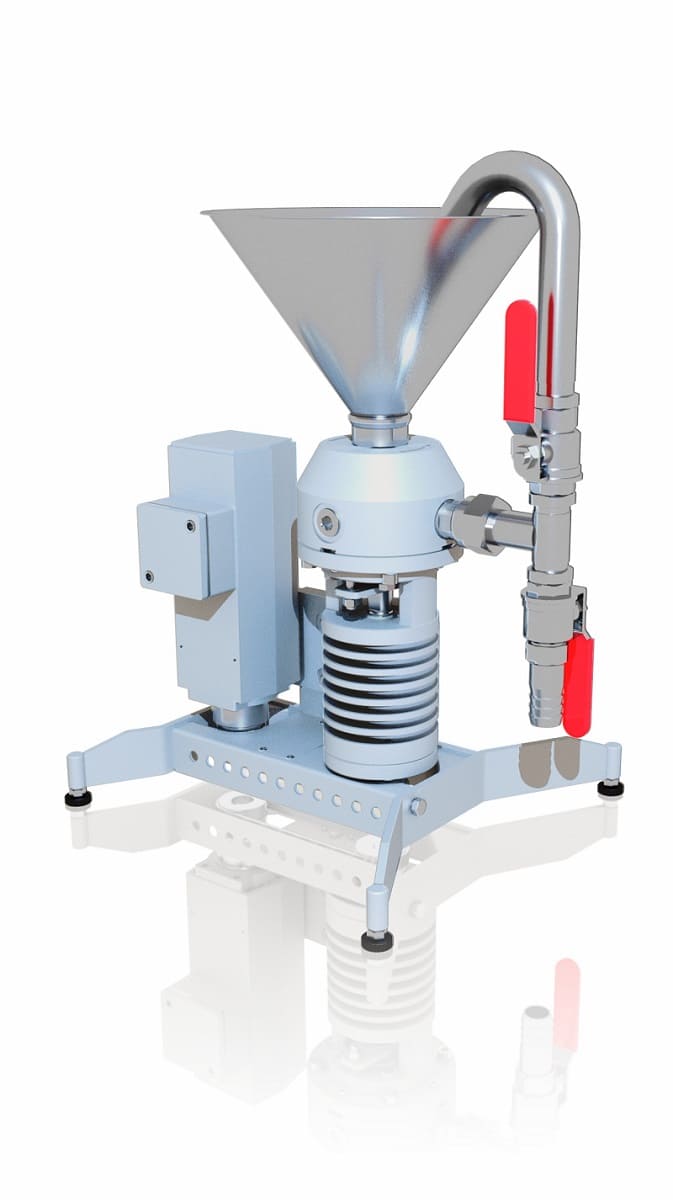
A mayonnaise production line consists of several compulsory sets: a section of components resting, tanks for steam treatment, the main mixer tank, and a homogenizer or colloid mill.

To obtain a high-quality product, the raw materials have to meet certain requirements. For example, vegetable oil (sunflower, soya, olive, corn, peanut, and others), serving as one of the main components, must pass through a refining process, including deodorization, and used within a period of one month since refining.

The following ingredients are used in dry form: egg powder, powdered cow’s milk (skimmed or whole), mustard powder, sugar, and salt. Vinegar is used in the form of a 9-10% solution of acetic acid.

The preparation of mayonnaise consists of a series of steps: first, you prepare the ingredients according to the recipe. The dry ingredients: egg and mustard powder, powdered milk, sugar, salt, soda are weighed on the scales, and then sifted through a fine-meshed sieve. Sifting through a sieve breaks large lumps, improving the moisture-retaining capacity of the powders. The required amounts of vegetable oil and water are poured out into the appropriate storage tanks.

Usually, egg paste is cooked first. For this – egg powder and water are delivered into a mixing tank. The mixture is stirred with a paddle-type mixer for about 2 – 10 minutes. Then it is heated to 60-65°C and held for 15-20 minutes, then pumped through a homogenizer into the main mixing tank to let it cool down to 20-30°C.

In the second tank, mustard and milk blend is prepared. A homogenizer evenly distributes the dry ingredients (milk powder, mustard powder, salt, sugar and soda) in the water and a colloid mill provides an additional grinding of the solid fractions (if necessary). The obtained mixture sits for 20 minutes at 80-85°C for a better dissolving and pasteurization of the components, and then it is allowed to cool down to 20-30°C. Cooled down mustard and milk paste is also pumped into the main mixing tank.

In the main mixing tank egg paste and mustard-milk paste are stirred for 5-10 minutes with a paddle-type agitator to obtain a homogeneous paste. The weight ratio of mustard-milk and egg pastes range from 1.5-2.0:1 for high-calorie mayonnaise and 2.2-2.8:1 for medium and low-calorie.

At the next stage vegetable oil is delivered into the main mixing tank. For an even distribution the oil is spread with a thin jet into the mixture of egg and mustard-milk pastes, that it is passed through a homogenizer.

Simultaneously with the introduction of the last portions of vegetable oil the previously prepared cold (15-16°C) vinegar-salt solution is introduced.

The sequence and speed of adding vegetable oil and vinegar-salt solution into the paste are extremely important, because the simultaneous or accelerated introduction of these components can result in emulsion getting lumpy.

At the final stage a coarse mayonnaise emulsion, from the mixer tank is pumped through a homogenizer or a colloid mill. Homogenization is continued until a stable emulsion is obtained. As practice shows, this requires all mayonnaise emulsion to be passed through a homogenizer at least 2-3 times.

If the sample taken is entirely homogeneous, has no lumps, runs evenly and has a typical for mayonnaise viscosity, color, taste and smell – the product is considered to be ready and is subject to packaging.

Mayonnaise is stored at 3-7°C. Freezing or excessive heat of mayonnaise destroys its structure, besides a high temperature dramatically reduces the shelf life of this remarkable product.
    Leave Your Request


    • Home
    • Products
    • Dealers
    • Tech School
    • Contacts

    ® Copyright by - 2025 © GlobeCore

    GlobeCore, Sadovskogo 14, Poltava, Ukraine, 36034

    This website uses cookies to improve your experience. By continuing to browse, you agree to our use of cookies. Read more in our Privacy Policy.