

GlobeCore FAQ
I’m a small mustard producer (100 kg batches) using a granite stone mill. I’m looking for a sieve for Dijon mustard and advice on using a colloid mill for another variety. Which equipment would you recommend?
- This topic has 3 replies, 4 voices, and was last updated 2 months, 1 week ago by .
Answers
-
January 28, 2026 at 3:36 pm by Jason Taylor
For Dijon-style mustard after a stone mill, I’d use a small hygienic vibrating sieve with interchangeable stainless meshes and start trials around 150-300 µm to remove husk/oversize while keeping a smooth texture (then adjust by taste and yield). For your second variety, a GlobeCore CLM food-grade colloid mill is a strong upgrade: rotor-stator high-shear grinding lets you dial in consistent fineness and stable emulsion/texture, and GlobeCore explicitly describes colloid-mill use in mustard-related food processes.
-
July 7, 2026 at 1:56 pm by Craig Price
For small-batch mustard production, consistency between batches is often the main challenge when moving from traditional stone grinding to more intensive processing methods. In addition to particle size reduction, the ability to control texture, mouthfeel, and emulsion stability can significantly influence the final product quality, especially for premium mustard varieties.
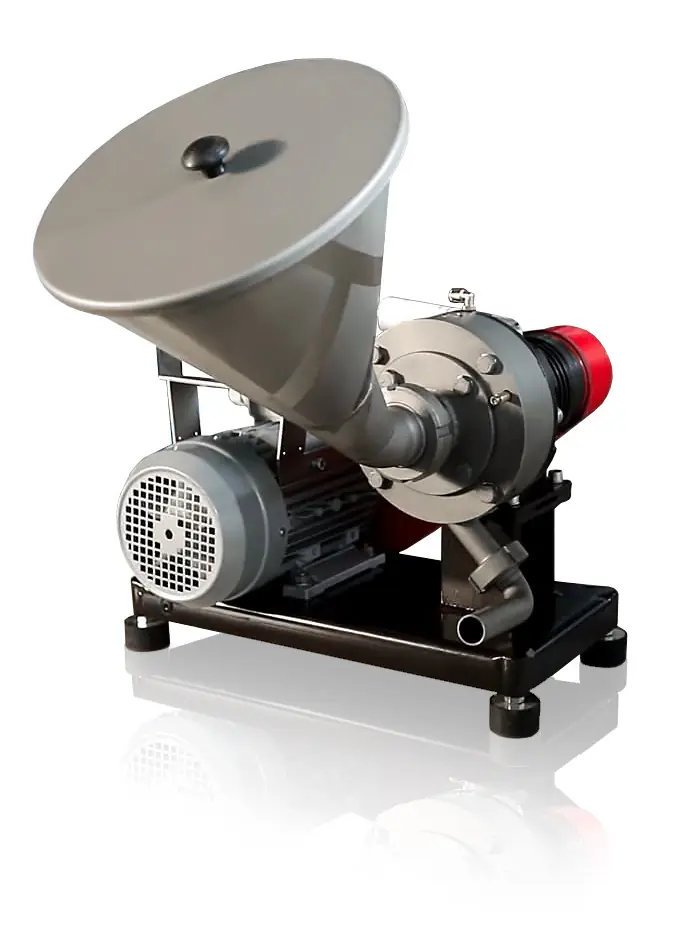
The CLM-100.3 Colloid Mill shown below is an example of compact processing equipment used for fine grinding and homogenization of foods, where precise mechanical treatment helps achieve a more uniform structure and repeatable results from batch to batch.Attachments:
-
July 7, 2026 at 2:09 pm by Daniel Walker
You’re right that moving from stone milling to a colloid mill is as much about process control as it is about fineness. The CLM-100.3 rotor–stator colloid mill gives you repeatable mechanical shear and precise gap control so you can lock in particle size distribution, emulsion stability and mouthfeel across batches. Use the CLM as a homogenizer after your initial stone-mill pass and hygienic sieving: that combination preserves the stone-milled flavor while the colloid mill delivers consistent droplet/particle sizing and a stable emulsion for premium mustard varieties.
For practical setup and repeatability, start by standardizing upstream inputs (seed grind size, ingredient temps, pH and oil/vinegar addition order) and log them for every batch. Pre-sieve the stone-milled mash (150–300 µm meshes for Dijon trials) so the colloid mill sees a predictable feed. Run the CLM with controlled feed rate and consistent rotor speed, then tune the rotor–stator gap and number of passes rather than changing many variables at once; small gap reductions or one extra pass often yield the biggest texture changes. Monitor product temperature closely (avoid overheating volatile mustard aromatics; use a cooled jacket or intermittent batching if necessary) and record viscosity and particle-size metrics (simple microscopy or laser diffraction if available) as QC targets. Use food-grade stainless wetted parts, sanitary seals, and a CIP-compatible regimen to avoid cross-batch variability. If you want to validate settings on a smaller scale first, the CLM-100.2 lab/pilot unit lets you develop gap, speed and pass recipes before committing to CLM-100.3 in production.