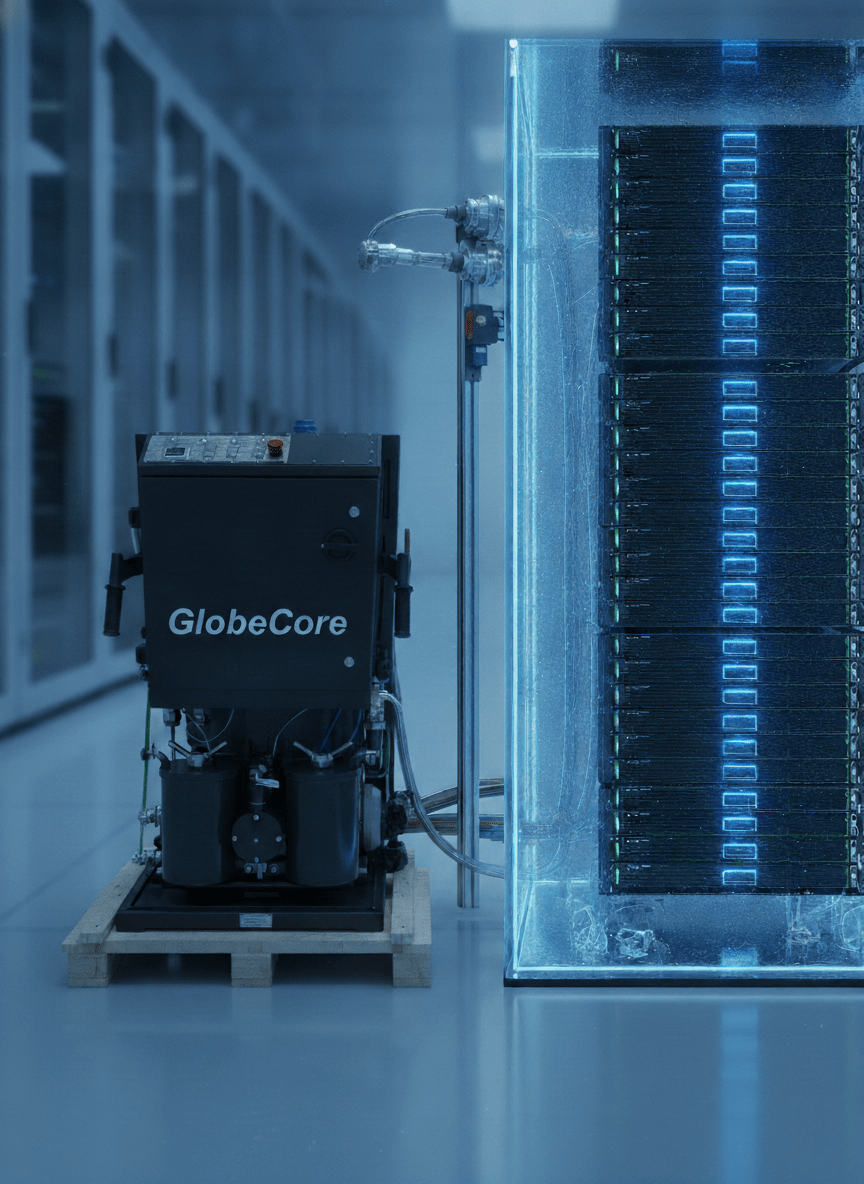
Data Center Immersion Cooling Fluid Purification is becoming critical as immersion cooling moves from niche to mainstream in modern data center design. Facilities running on fluid-based cooling systems achieve energy savings of up to 97%, dramatically reduced footprints, and consistently optimal processor temperatures – but only if the fluid itself is kept in specification. Before exploring why purification matters, it helps to understand the scale of the problem immersion cooling was built to solve.
Modern data centers are among the most energy-intensive facilities on the planet. In the United States alone, they account for roughly 2% of total national electricity consumption – with a single large facility consuming as much power per day as a town of 9,000 people. A significant portion of that energy – anywhere from 2–6% up to 60–70% depending on the facility – goes not toward computing, but toward keeping servers cool. That makes thermal management one of the most critical engineering challenges in data center design today. Immersion cooling addresses this directly: by submerging server boards in non-conductive fluids, operators eliminate fans, heat sinks, and thermal interface materials, transferring heat efficiently into the liquid. Sustaining those gains over time, however, depends on systematic Data Center Immersion Cooling Fluid Purification.
How Immersion Cooling Works
Immersion cooling removes heat by directly submerging printed circuit boards in a non-conductive fluid. Heat generated by components is transferred directly and efficiently to the fluid, eliminating the need for active cooling components such as thermal interfaces, heat sinks, and fans. This approach improves energy efficiency and increases server density in racks. The collected heat can also be reused for further innovations.
Single-Phase and Two-Phase Systems
Cooling fluids can be used in one of two systems – single-phase or two-phase. The difference lies in whether a phase transition occurs, i.e., whether the fluid converts to vapor. In a single-phase system, the fluid circulates via an additional pump and does not convert to vapor. Fluids with high boiling points (above 80°C (176°F)) are chosen for such systems. A two-phase system requires no pump, uses the phase transition, and is considered a more efficient cooling method.
For correct fluid selection, the operating temperature range must be taken into account. For example, if a semiconductor tester needs to be cooled with an operating temperature range of -40…104 °F., the cooling fluid must not boil at 40°C (104°F), while in the chiller it may reach -50°C (-58°F).. Most chiller expansion tanks are vented, and since the air in these tanks becomes saturated with fluid vapor, the only way to reduce fluid loss per thermal cycle is to reduce the vapor pressure of the fluid. This can be achieved by selecting a fluid with a higher boiling point.
A two-phase system uses a tank containing server boards filled with Novec, which has a boiling point of 61°C (141.8°F). As processors generate heat, the fluid heats up and boils; the hot vapor rises to the tank lid. A cooling coil (water-cooled) is placed at the top of the tank, where the vapor condenses and returns to liquid. The fluid thus circulates back into the tank without pumps. This system saves up to 95% of energy with minimal fluid loss.
Printed circuit boards designed for immersion cooling contain no heat sinks or cooling pads. Components can be placed more densely, and processors can be overclocked further – for example, a 500W ASIC can be pushed to 750W.
For two-phase cooling, fluid selection is typically based on boiling point. For vapor-phase soldering equipment, the boiling point is selected to match the eutectic point of the solder. For electronics cooling systems, the fluid’s boiling point must maintain the required component operating temperature range. The temperature of the final heat sink must also be considered.
Real-World Results
Intel and SGI supercomputers use 3M immersion cooling technology. Test results on Intel servers showed energy efficiency of 1.02–1.03 PUE. The Suiren (“water lily”) supercomputer, developed by Japanese company PEZY Computing and ExaScaler Inc., uses single-phase cooling based on 3M fluid. This placed it in the Green500 list of the most efficient high-performance computers – a ranking maintained since 2007 based on operations per watt. In 2014, it achieved 2nd place with a performance of 4.95 Gflops/W, consuming 37.38 kW.
In the United States, energy efficiency of government data centers is regulated by a 2015 executive order requiring a PUE below 1.5 for all data centers, with new data centers targeting 1.2–1.4 by 2025. In 2014, 3M received the Edison Bronze Medal from IEEE for its two-phase Novec fluid cooling technology.
Why Fluid Condition Matters
Dielectric fluids like Novec engineered fluids offer exceptional properties out of the bottle – non-flammable, non-explosive, chemically stable, compatible with metals, plastics, and elastomers, and with very low toxicity profiles. They are, by design, “dry” fluids: components submerged in them remain clean and residue-free, unlike mineral oil, which clings to surfaces, degrades cable insulation, and creates significant cleanup challenges.
But these advantages erode when the fluid is contaminated. Particulates reduce electrical insulation quality. Moisture disrupts boiling behavior in two-phase systems and accelerates oxidation. Gas entrainment reduces thermal conductivity. For fluorinated fluids – which are expensive, precision-engineered, and often recycled via distillation – maintaining fluid purity is not just a performance issue, it’s an economic one.
This is exactly why Data Center Immersion Cooling Fluid Purification must be treated as a core maintenance discipline, not an afterthought.
GlobeCore CMM-LT: Equipment for Data Center Immersion Cooling Fluid Purification
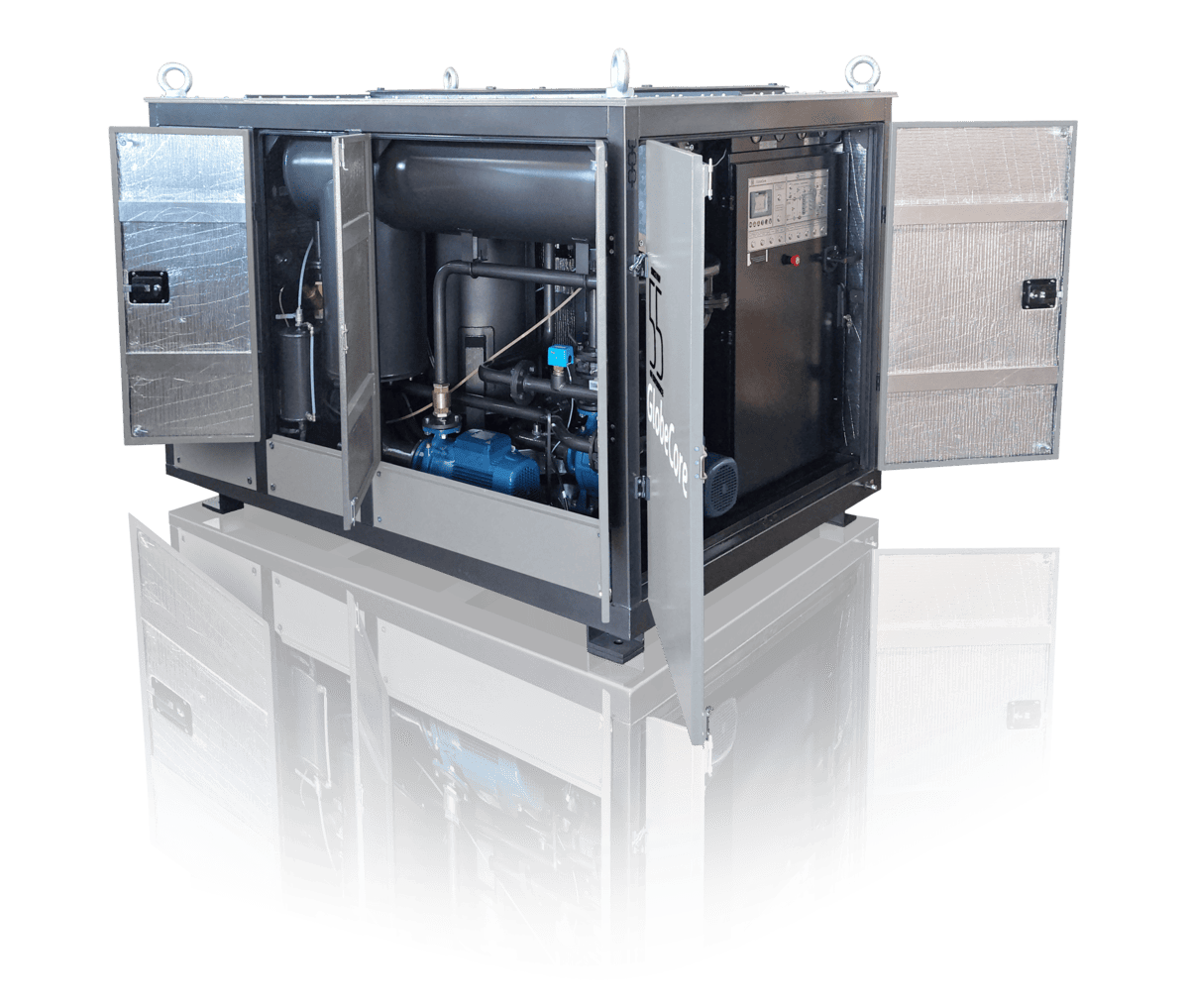
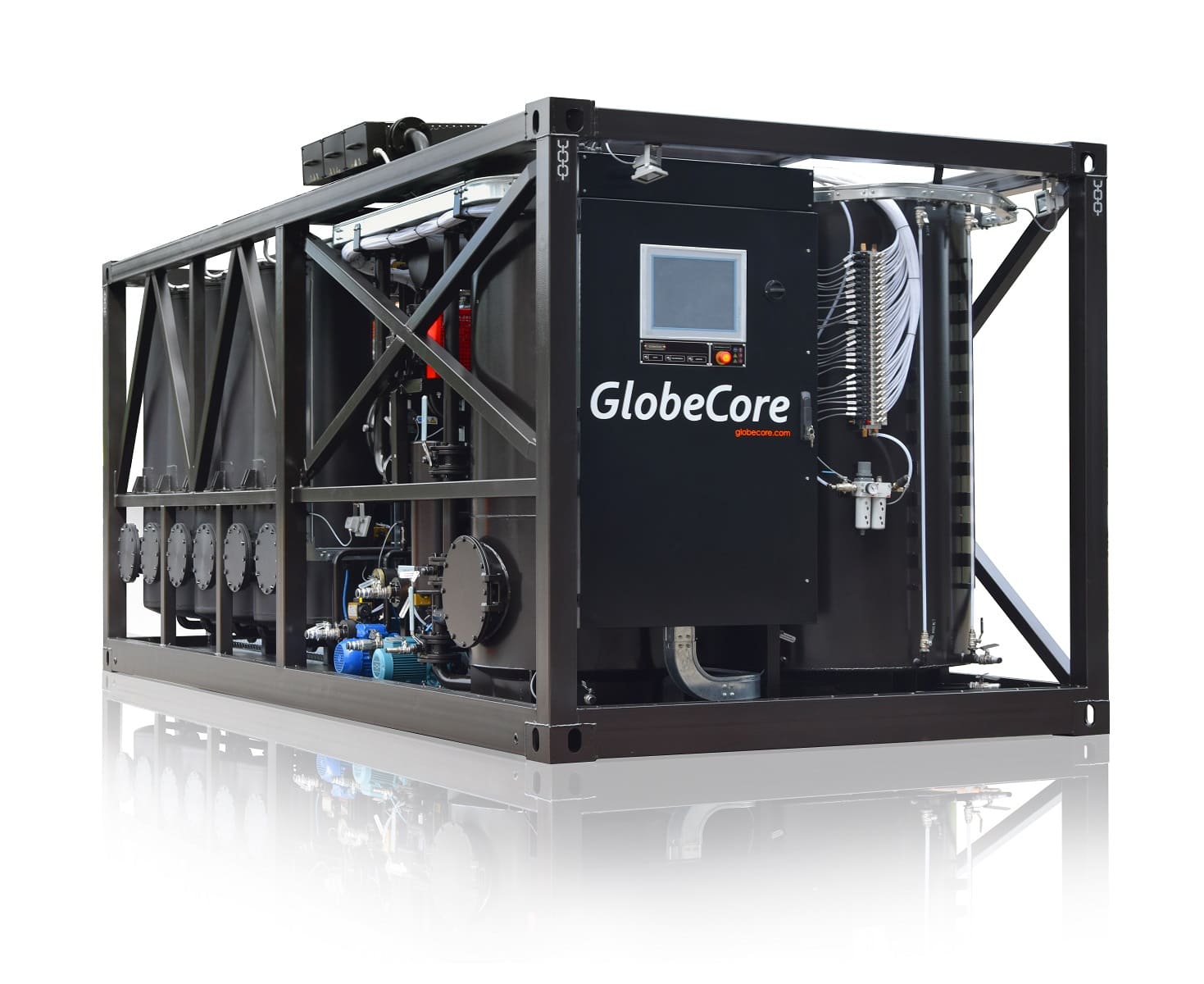
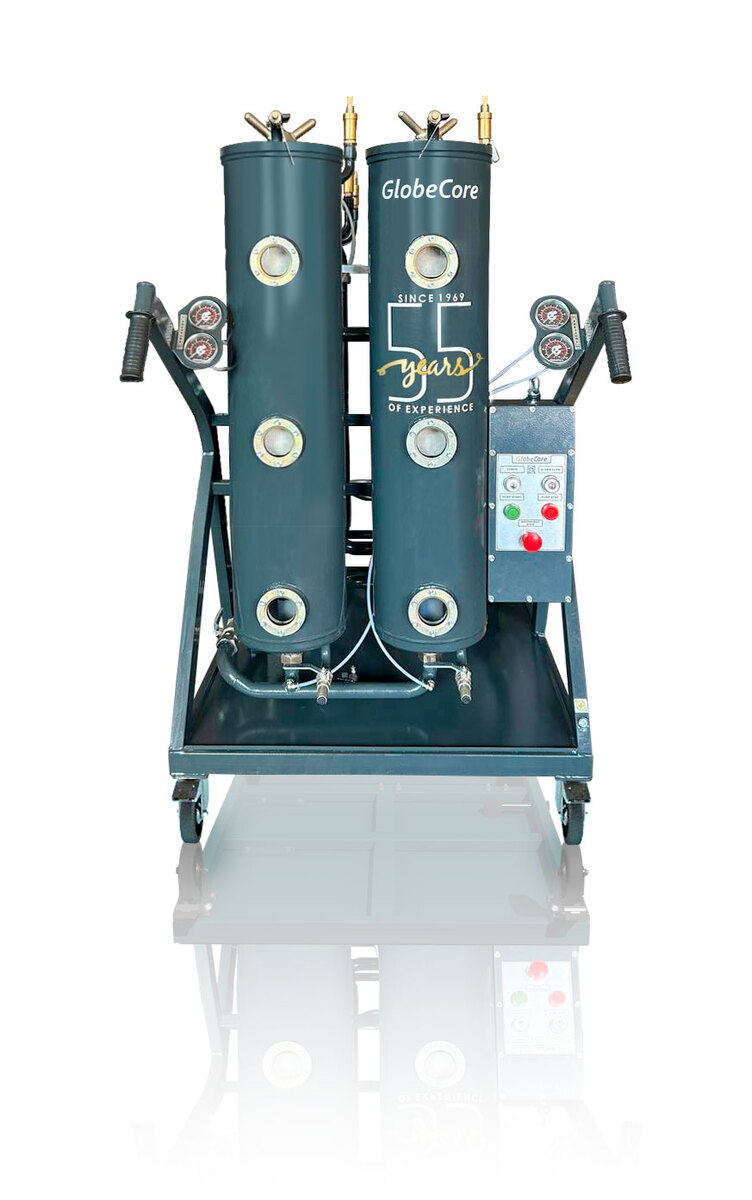
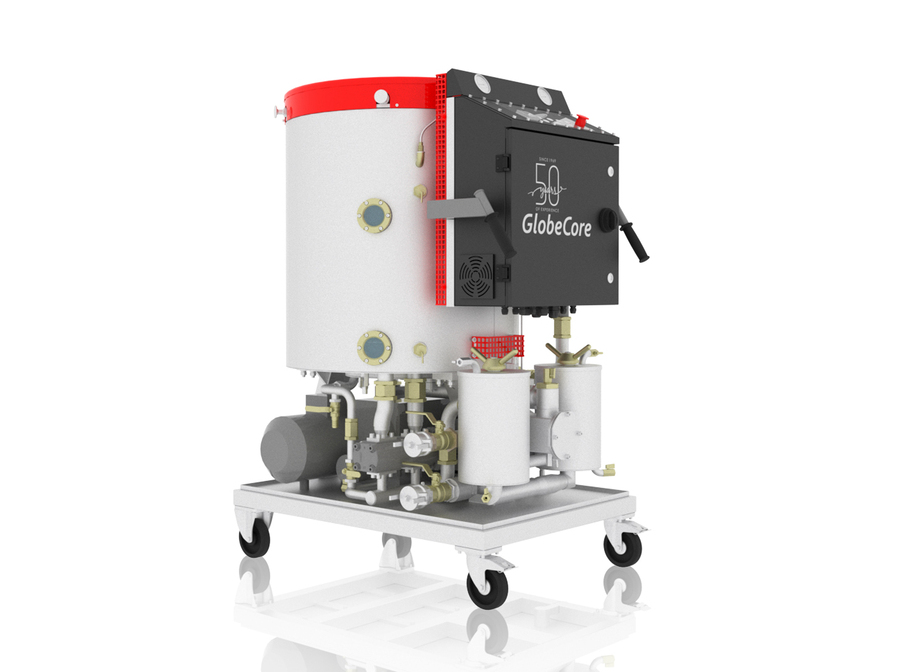
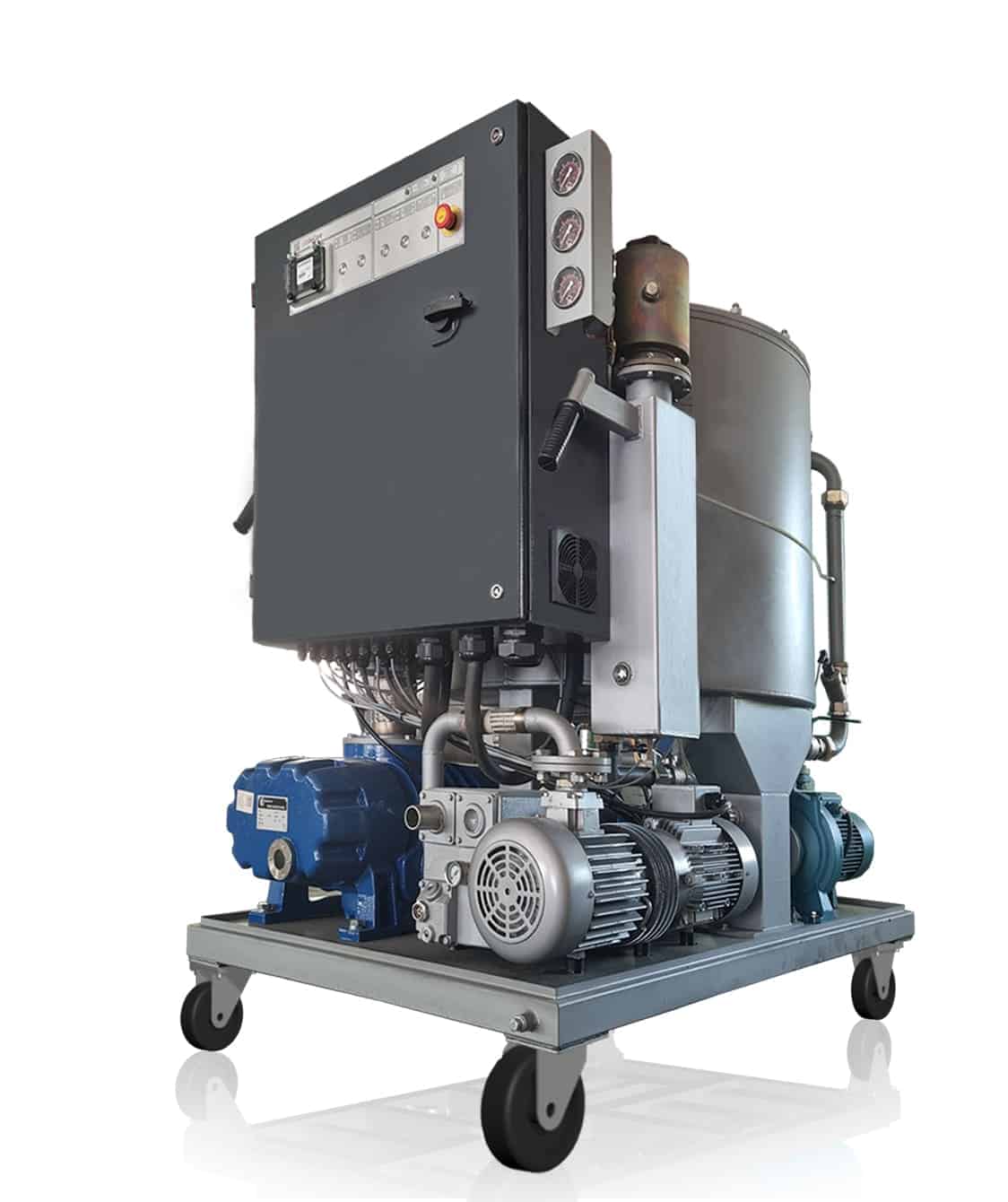
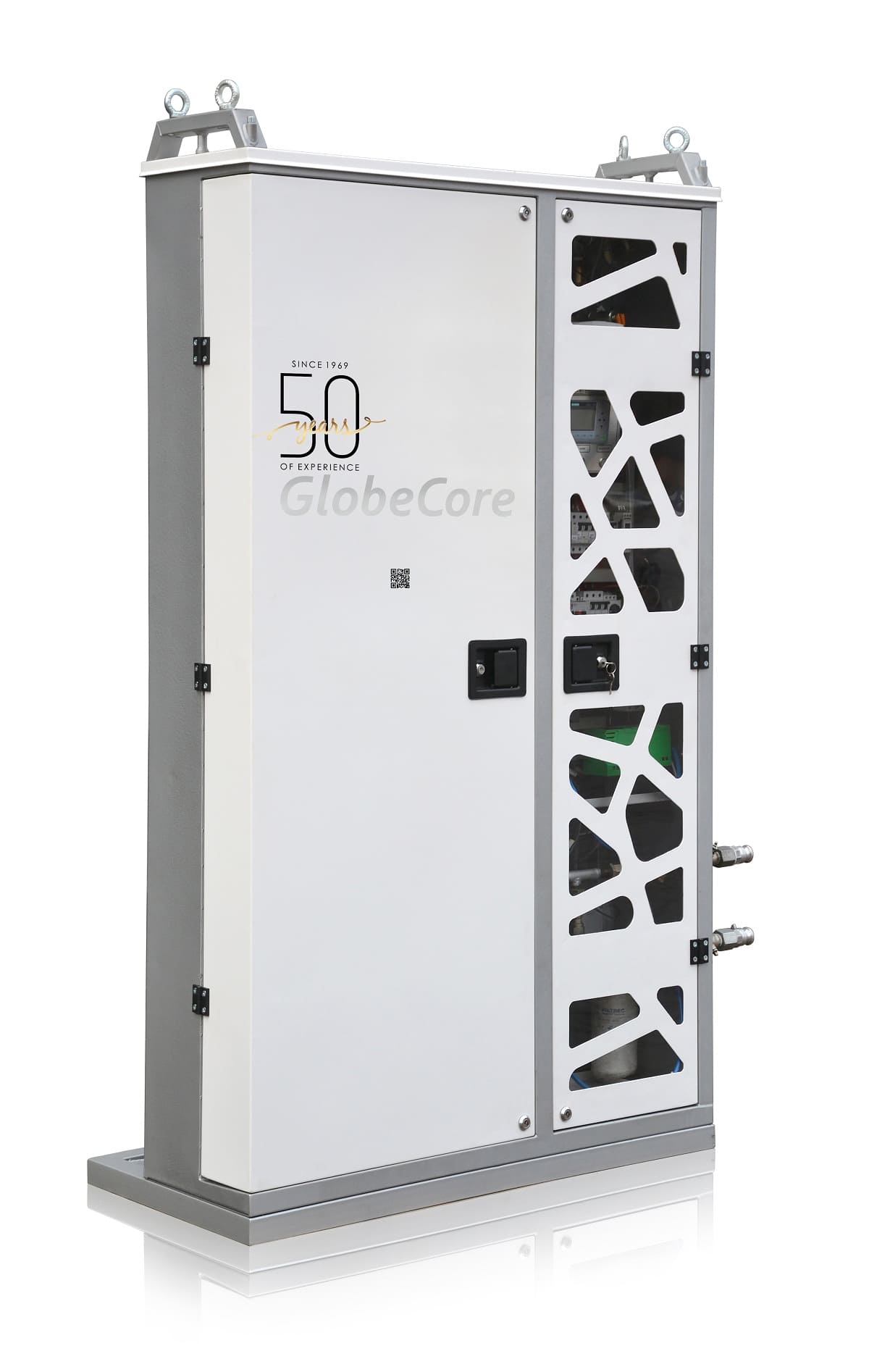
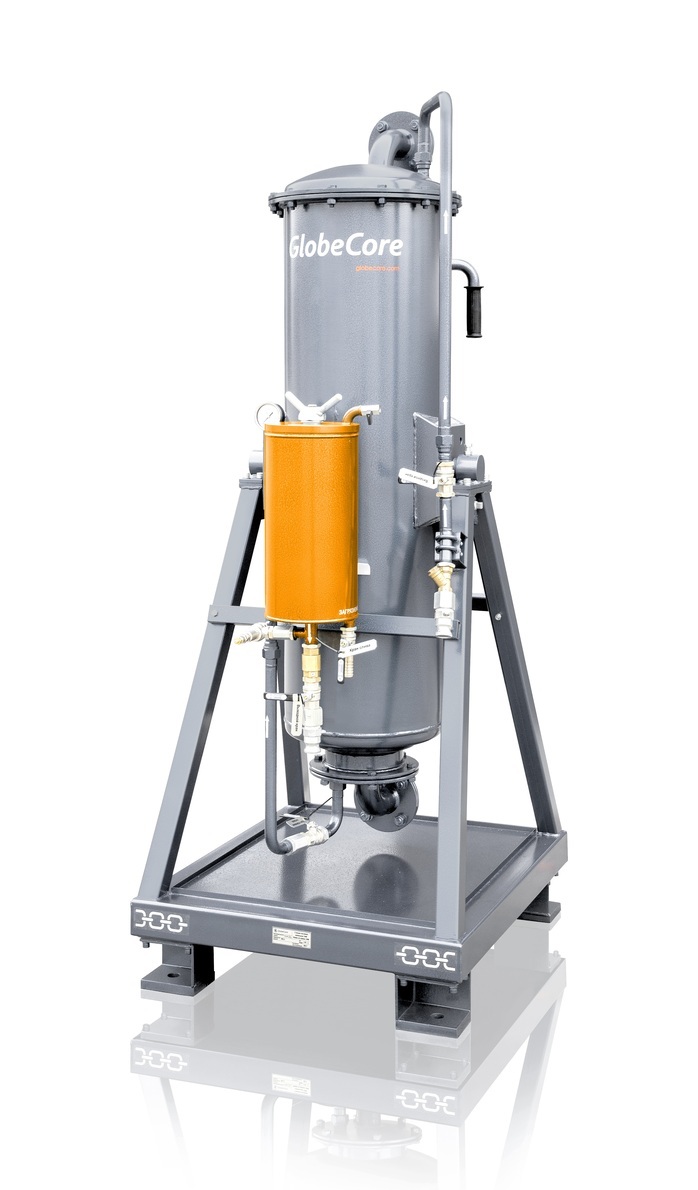
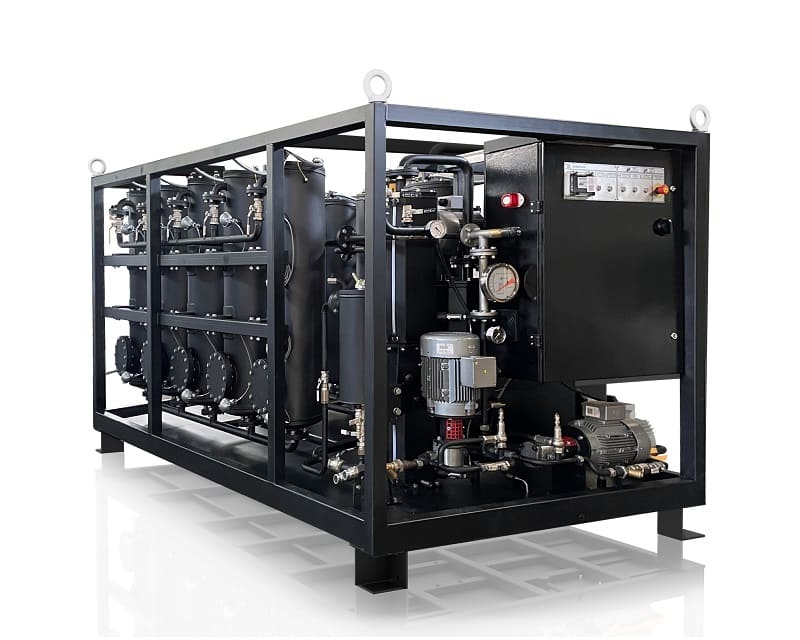
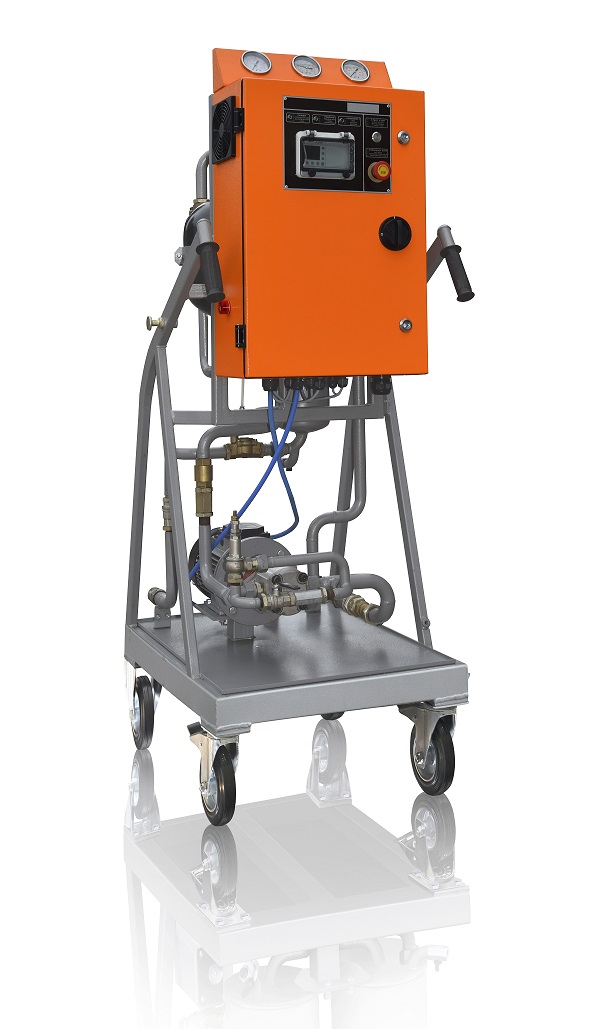
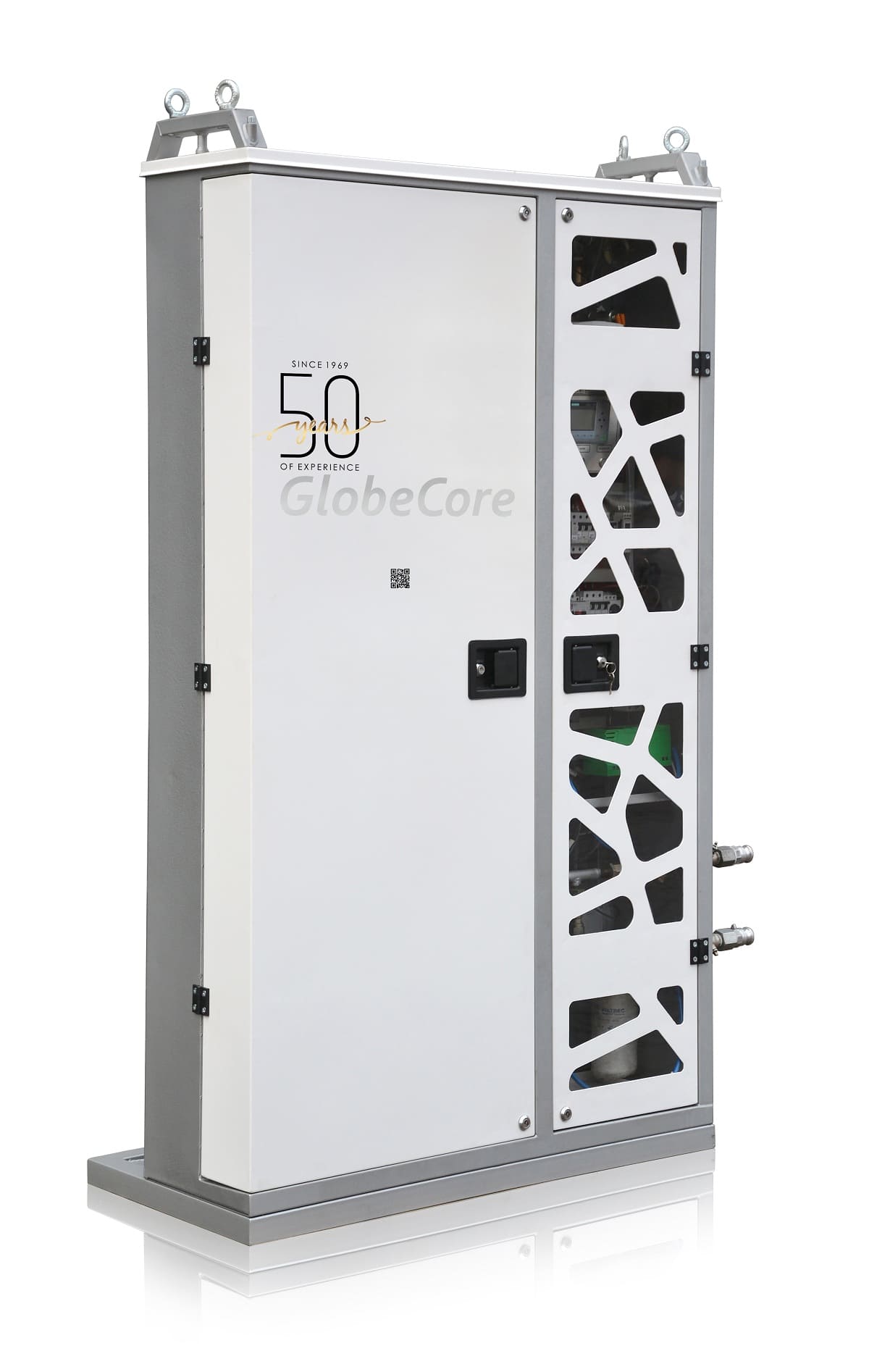
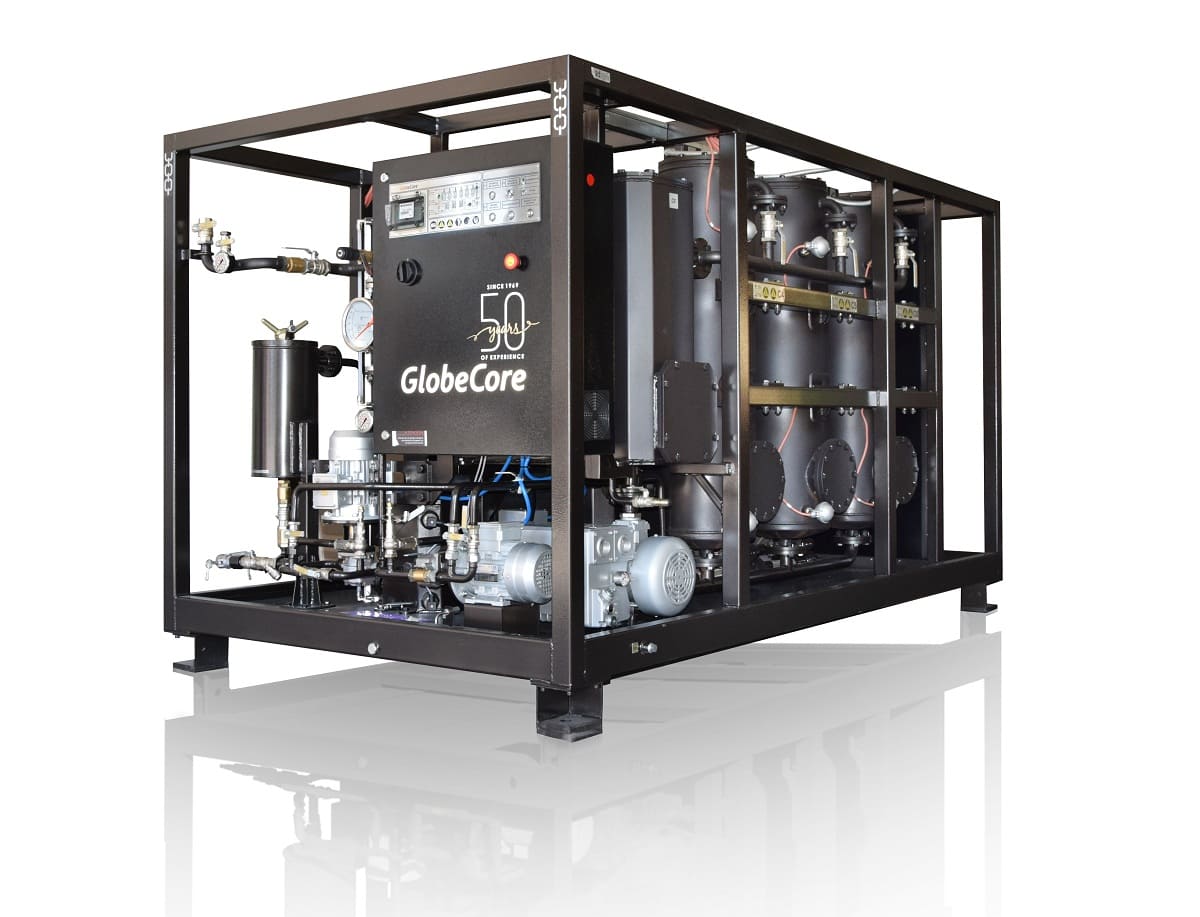
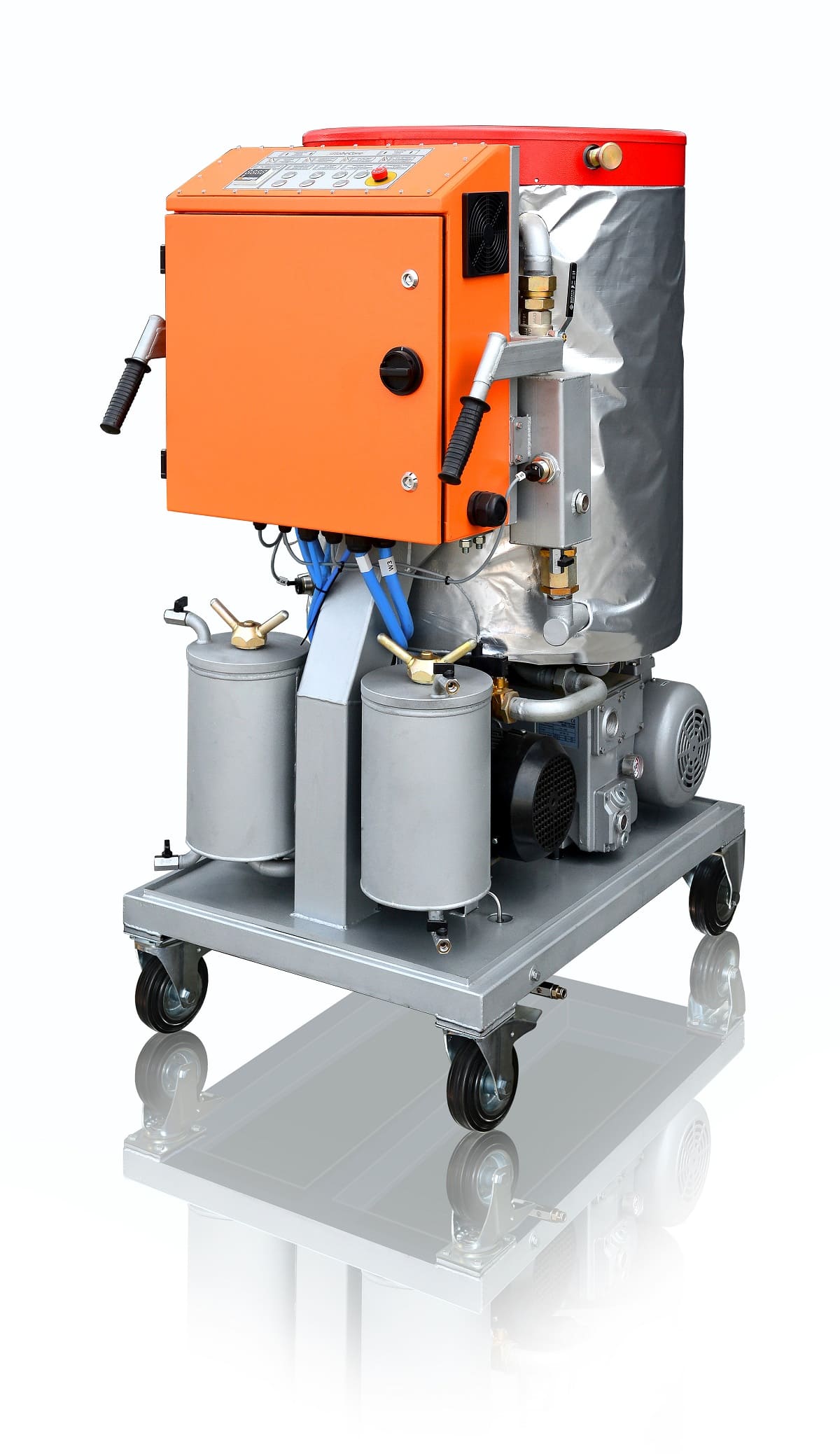
As a solution for operators running immersion-cooled data centers, GlobeCore offers the CMM-LT series – a line of industrial fluid purification units engineered specifically for the demands of high-purity dielectric fluid maintenance.
Each CMM-LT unit combines vacuum processing and multi-stage filtration in one compact, mobile platform:
- The fluid first passes through mechanical filters that remove solid contaminants.
- It then moves through a heating zone, raising temperature to drive off moisture.
- From there it enters a vacuum degassing stage, where dissolved gases and moisture vapors are extracted under reduced pressure.
- Final filtration to 0.3 microns ensures the output fluid meets stringent purity standards.
The CMM-LT series is available in five capacities to match different facility scales: CMM-1LT, CMM-2.2LT, CMM-4LT, CMM-6LT, and CMM-8LT, covering throughput from 1 to 8 m³/hour (4.4 to 35.2 GPM). All units are mounted on wheeled platforms for easy repositioning within a server room or across a facility, and designed for straightforward, intuitive operation.
Originally developed for transformer, turbine, hydraulic, and compressor oils, the CMM-LT platform’s vacuum-filtration combination translates directly to the needs of Data Center Immersion Cooling Fluid Purification – where the same core contaminants (particulates, moisture, gas) must be removed from high-value, precision dielectric fluids.
The Business Case for Ongoing Purification
Data centers operating under immersion cooling already benefit from reduced energy costs and a smaller physical footprint. But those gains are only sustainable if the cooling fluid remains in specification.
Fluids like 3M Novec, Shell S5X, Solvay are costly materials. Rather than disposing of degraded fluid, most operators recycle it – typically via distillation to remove particulates and chemical byproducts. On-site purification with equipment like the CMM-LT series extends fluid service life, reduces the frequency of costly full-fluid exchanges, and ensures continuous compliance with the dielectric and thermal performance standards the cooling system was designed around.
For facilities targeting PUE values of 1.2–1.4 or better – the benchmark increasingly expected of modern data infrastructure – maintaining fluid quality through systematic Data Center Immersion Cooling Fluid Purification is not optional. It is the operational foundation on which immersion cooling’s efficiency advantages rest.
Immersion cooling is redefining what’s possible in data center thermal management: fewer components, less space, dramatically lower energy consumption, and a path toward truly green infrastructure. But the fluid at the center of it all – the dielectric medium that absorbs heat, transfers it, and keeps electronics clean – must be actively maintained.