Dry oil does not always mean dry winding insulation. Moisture can remain trapped in cellulose insulation for weeks, even after the oil has already reached acceptable moisture levels. It is precisely at this seemingly “acceptable” point that a transformer may enter an emergency operating condition during the first sudden load increase or short circuit. The opposite mistake is just as costly: a transformer is taken out of service for lengthy dismantling and workshop drying when, in reality, several days of treatment with a mobile on-site drying unit would have been sufficient. This usually happens because there is no objective criterion for determining whether the insulation has actually finished drying.
This is where the logic of IEC 60422, the fundamental international standard for transformer oil maintenance, becomes relevant. The standard evaluates insulation condition not by a single measurement but by observing how parameters change over time. A gradual trend is often far more informative than an absolute value that still falls within acceptable limits. The same principle—evaluating the trend rather than relying on a one-time measurement—provides an objective criterion for determining when the drying process is truly complete.
Why Insulation Becomes Moist Even Without Obvious Causes
Paper-oil insulation maintains high insulation resistance, dielectric strength, and low dielectric losses only when its moisture content remains low. Cellulose paper has a capillary structure, making it highly hygroscopic even after oil impregnation. Transformer oil is less hygroscopic but still absorbs moisture, and during operation water continuously migrates between the solid insulation and the oil depending on the temperature profile.
In manufacturing practice, after factory drying the moisture content of cellulose insulation is typically reduced to approximately 0.5–1.0%, which is already close to the technological limit. From that point onward, moisture can only accumulate during service, depending on tank sealing quality, the condition of the breather, temperature cycling, and transformer loading.
Moisture accumulation also follows seasonal and loading patterns. Oil moisture is generally higher in spring and autumn than during summer or winter, while moisture content tends to increase as transformer loading decreases. Consequently, lightly loaded transformers—which often receive less operational attention—are frequently the most vulnerable to moisture-related insulation problems.
When Drying Is No Longer Optional
Transformer drying becomes necessary when:
- traces of free water are found inside the tank or on the active part;
- the transformer has remained without oil, or without oil replenishment, for more than one year;
- the indicating silica gel has completely changed from blue to pink;
- the active part has been exposed to atmospheric air for twice the allowable period;
- corrective drying fails to restore insulation parameters to the required standards.
When transformer loading changes rapidly, the insulation temperature rises and moisture trapped inside the cellulose turns into steam. In relatively mild cases, the steam loosens the structure of the insulation paper. During short circuits, however, steam generation is almost instantaneous, creating mechanical stresses capable of severely damaging the insulation. Both situations accelerate insulation ageing and significantly increase the probability of dielectric failure precisely when the transformer is already operating under emergency conditions.
Dismantling Is Not Always Justified
Drying the active part in an oven or vacuum chamber remains the most comprehensive restoration method. However, it also requires dismantling, transportation, prolonged outages, and considerable labor and energy costs.
For transformers that simply exhibit elevated moisture levels without critical mechanical damage, such an approach is often economically unjustified. If dismantling the active part is unnecessary, on-site drying is generally the more practical solution.
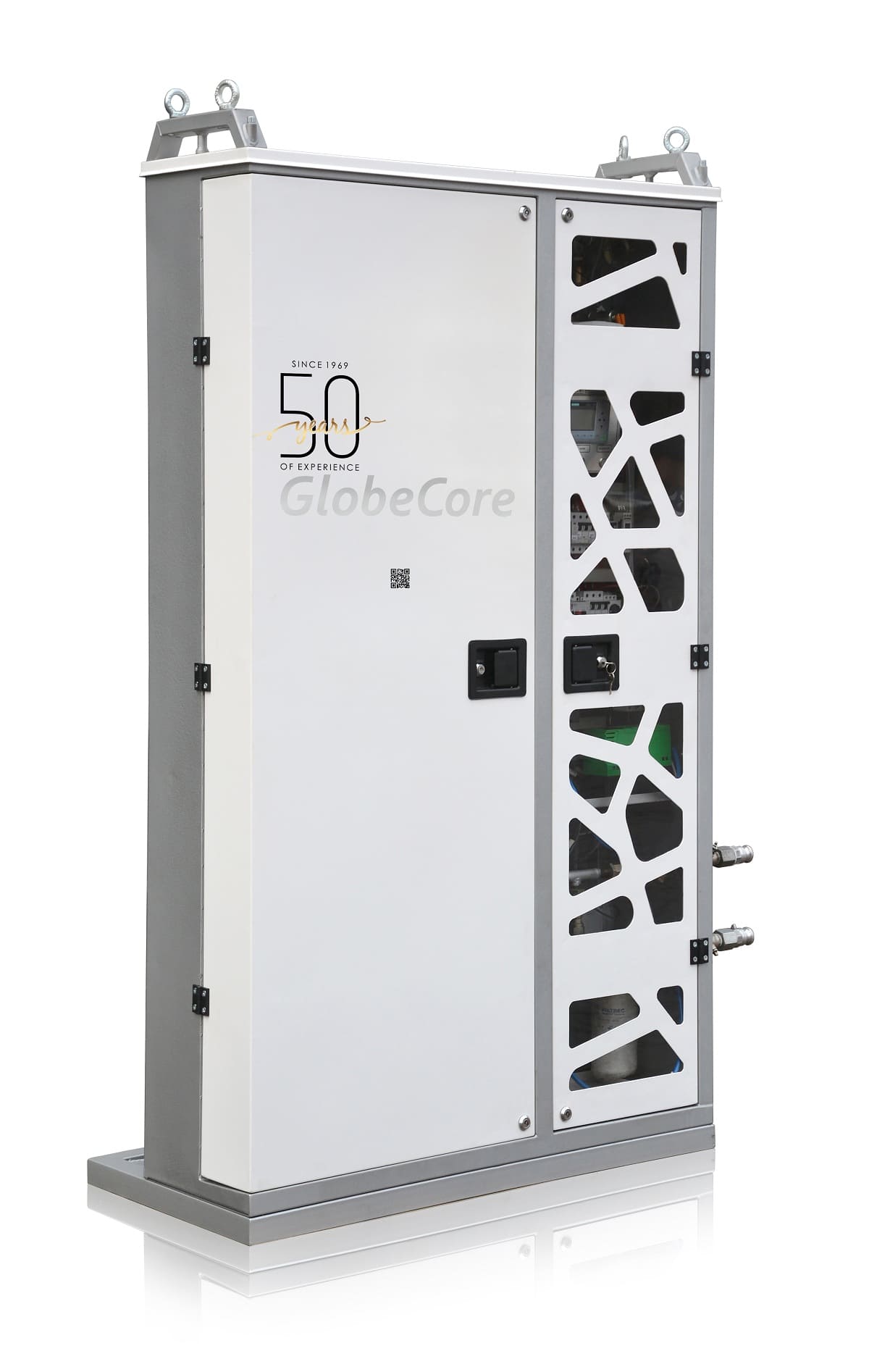
The Method: LFD Low-Frequency Heating device + CMM-4/7
A highly effective combination for drying transformers directly at the substation without transportation consists of the following stages.
1. Heating the Windings with an LFD Low-Frequency Heating device
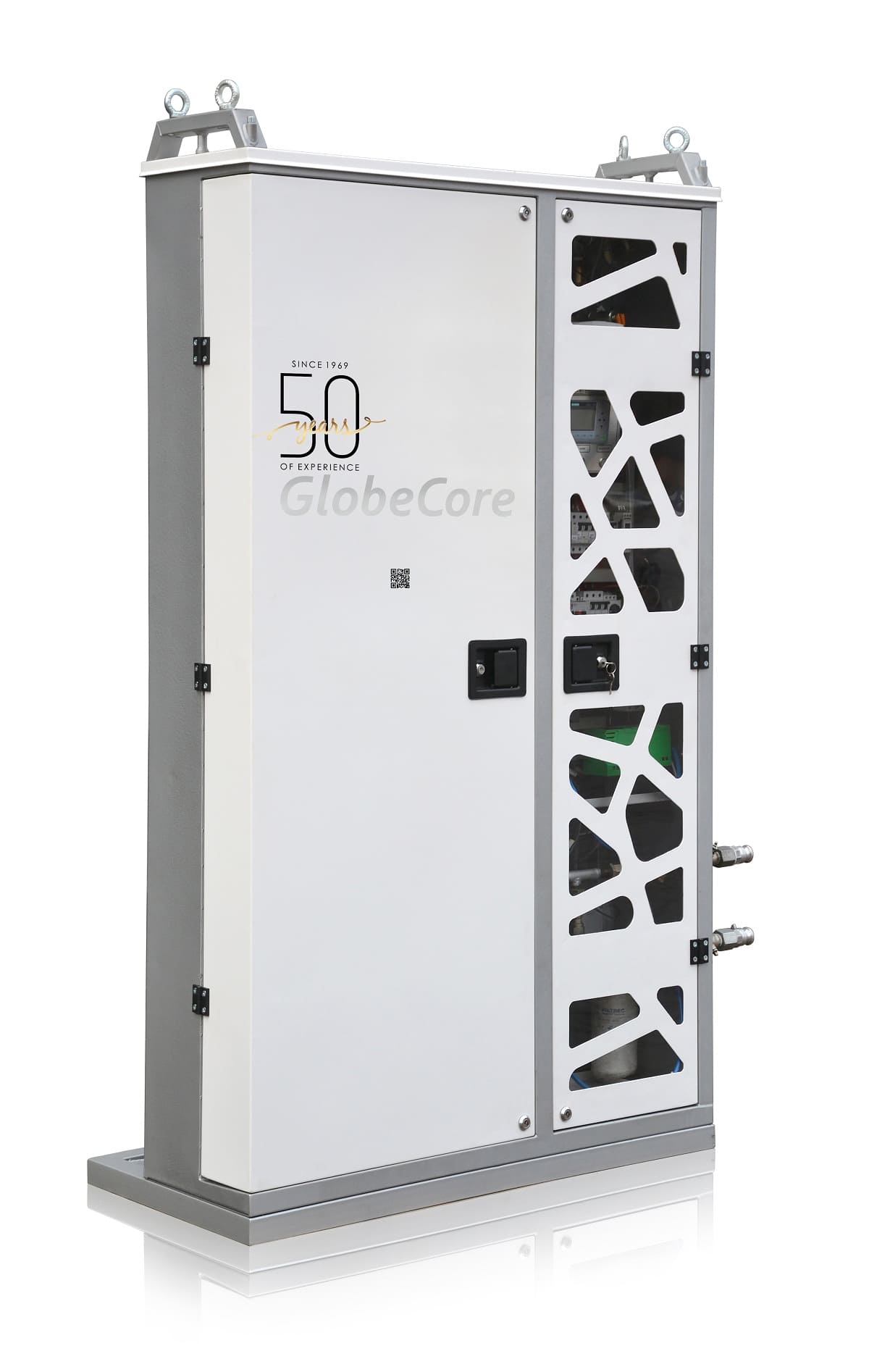
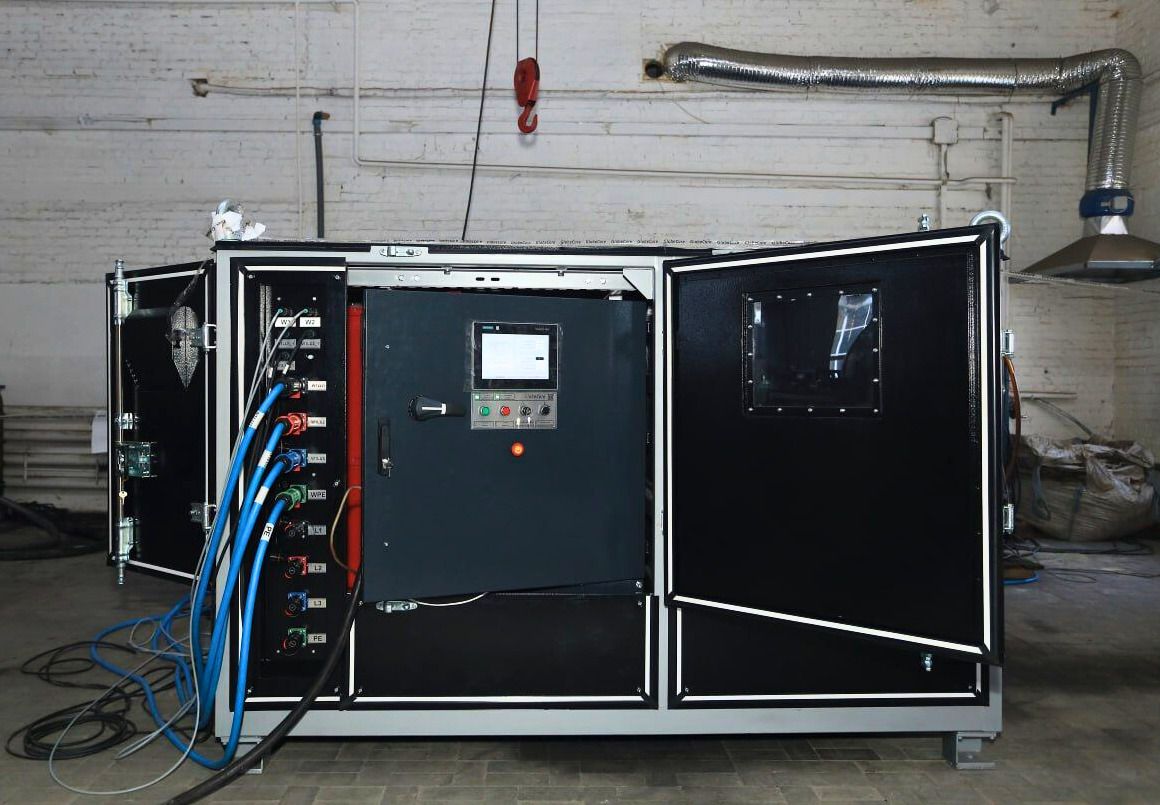
The operating principle of the LFD system is straightforward. A low-frequency current is passed through the transformer windings, causing the windings themselves to become the heat source. Heating therefore begins inside the active part, reaching the standard drying temperature of +75 to +120°C.
As the insulation warms, moisture trapped in the cellulose migrates into the transformer oil. Unlike external heating methods—such as circulating hot oil or using heated air—the heat does not have to travel from the tank toward the windings. Instead, it is generated directly within the insulation itself, allowing moisture to leave the solid insulation both faster and more completely.
2. Connecting the CMM-4/7 in a Closed Loop
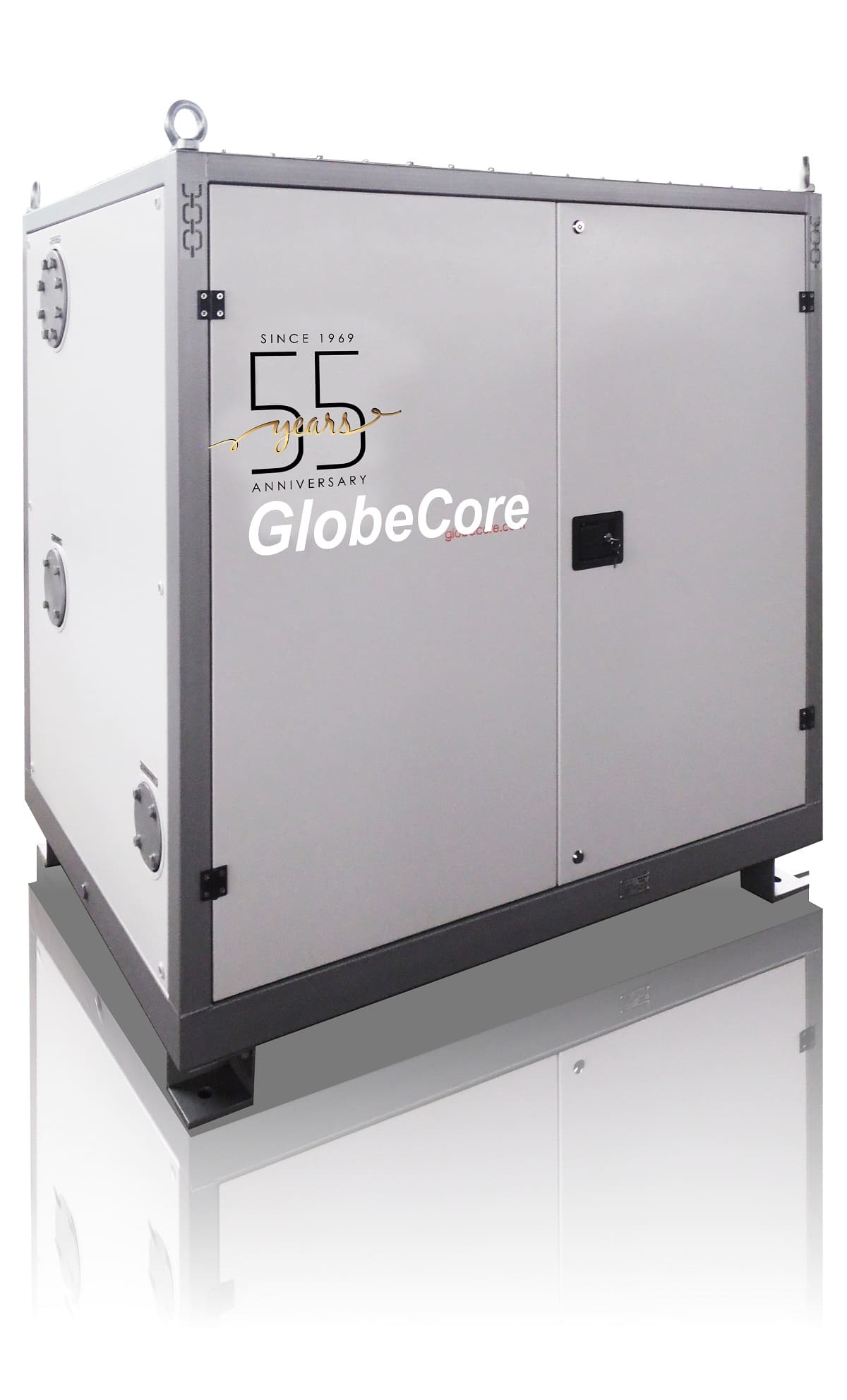
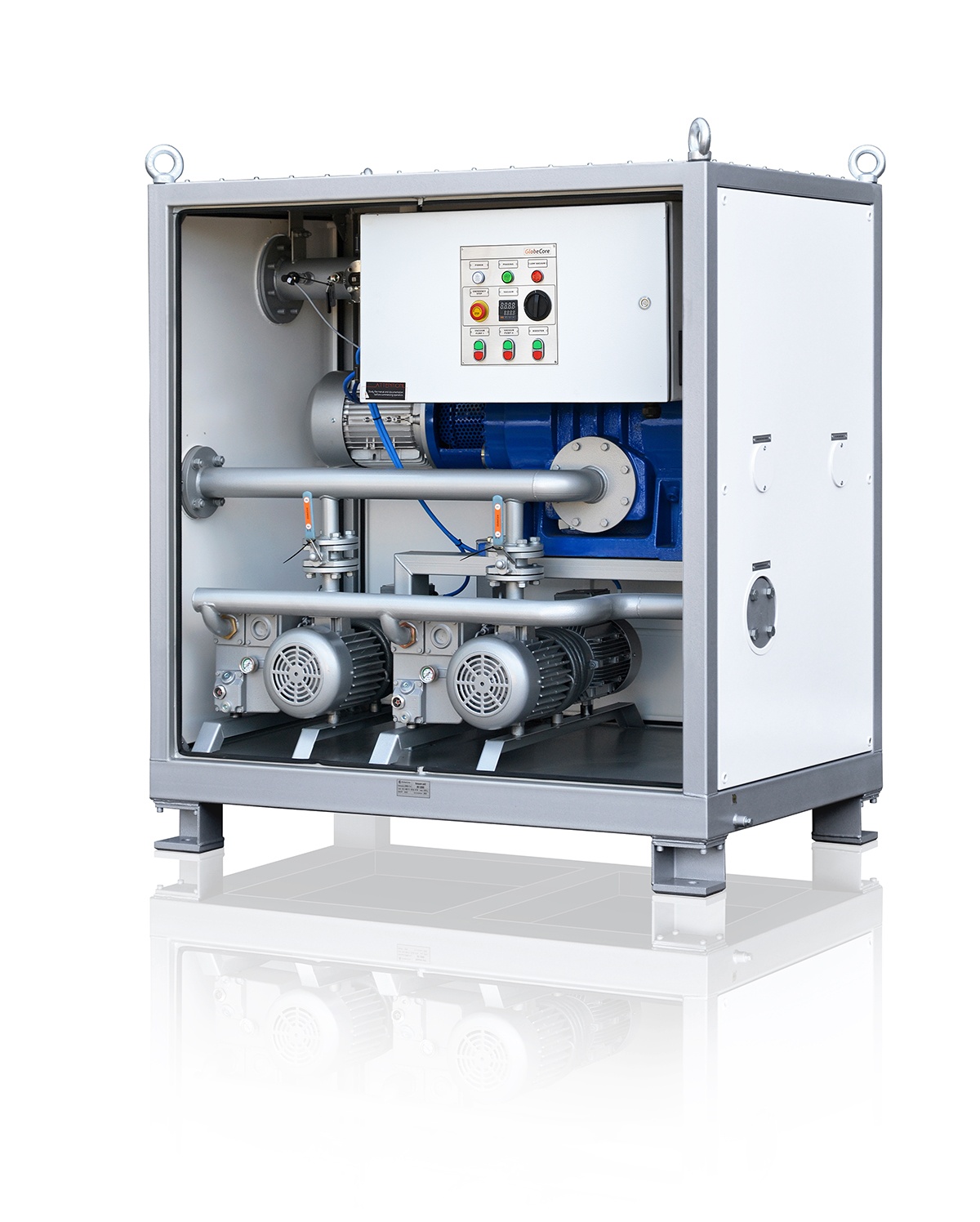
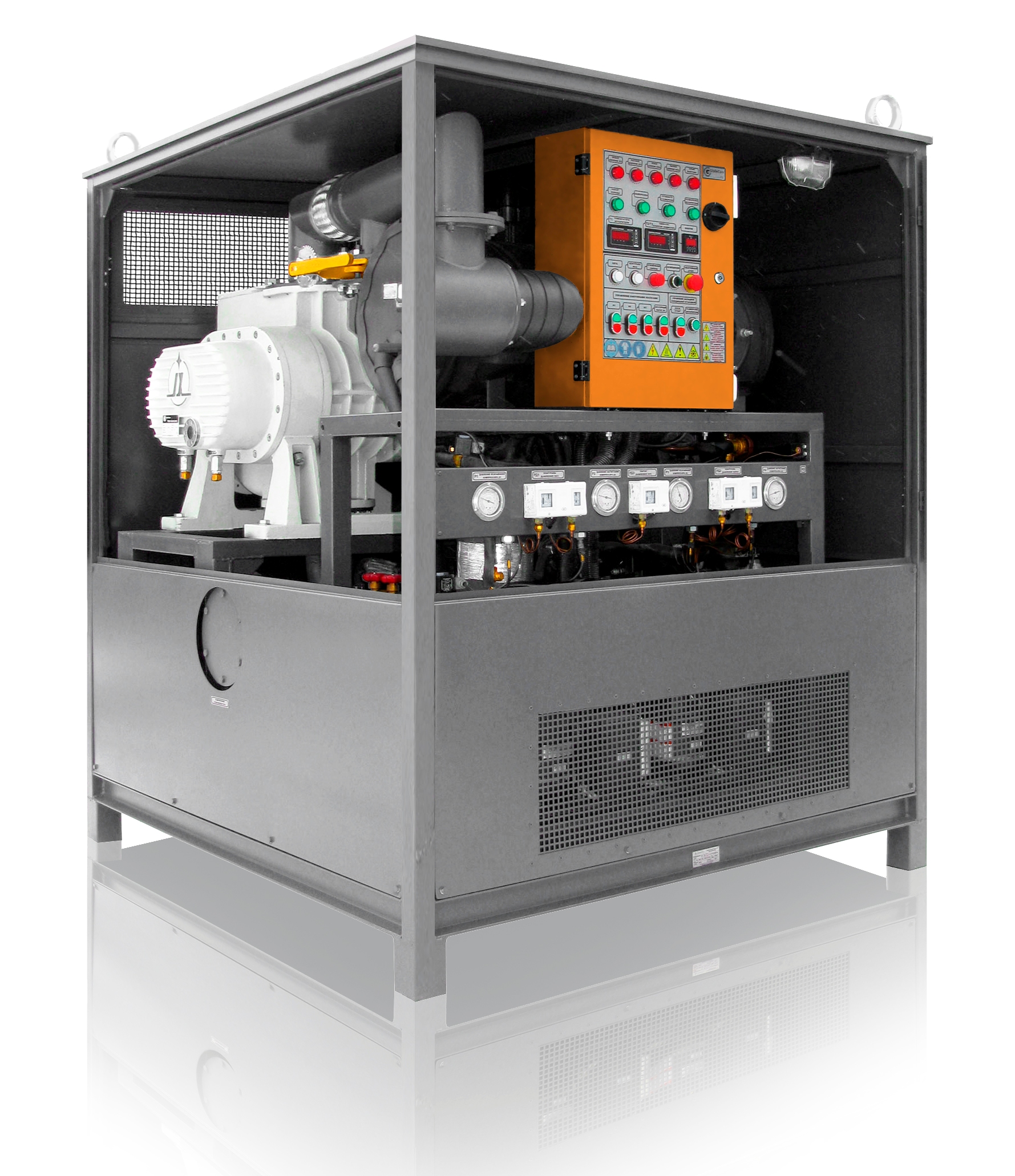
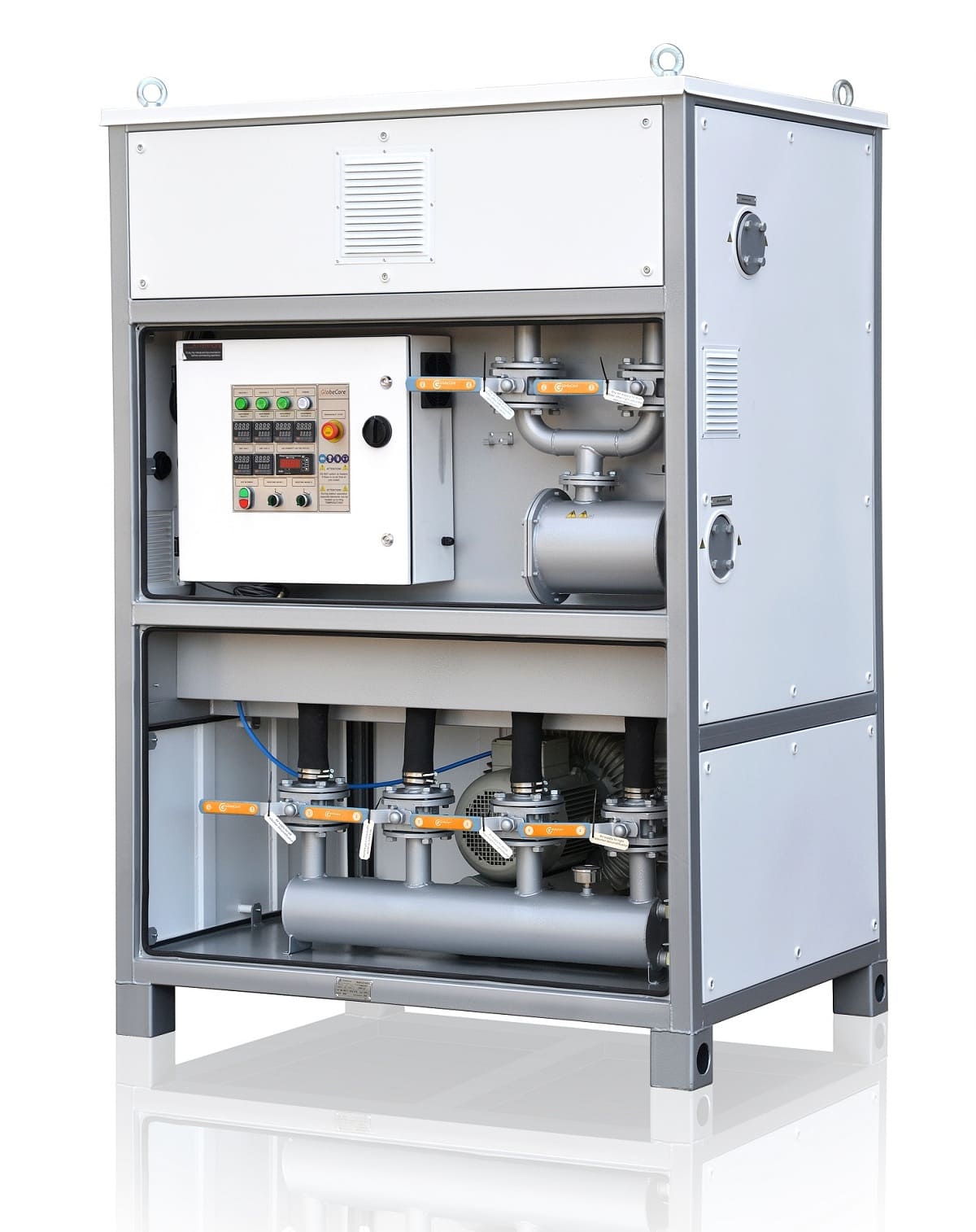
The CMM-4/7 oil purification unit is connected to the transformer in a closed circulation circuit. Moisture-containing oil continuously leaves the transformer tank, passes through heating, filtration, and vacuum degassing inside the unit, and then returns to the transformer in a dry condition.
3. Continuous Circulation Until Moisture Stabilizes
The cycle operates automatically while the LFD maintains the required winding temperature and the UVM-4/7 continuously removes moisture from the circulating oil.
As a result, not only is the transformer oil dried, but the solid cellulose insulation is progressively dried as well—which is the ultimate objective of the entire process.
Why This Method Is More Effective Than It Appears
The heat generated by core and winding losses naturally flows from the center of the active part toward the transformer tank. Moisture follows the same thermal gradient, moving with the heat flow rather than against it.
The air gap between the active part and the tank also acts as thermal insulation, reducing both drying time and electrical energy consumption.
Since the circulation loop is completely closed and continuously monitored, oil moisture is measured in real time instead of being estimated after a predetermined heating period.
For this reason, the decision to stop the drying process is based on the trend of oil moisture reduction, not on a fixed operating time.
The combination of an LFD low-frequency heater and the CMM-4/7 enables restoration of transformer insulation dielectric properties without dismantling the active part and entirely on site.
This approach is particularly valuable where maintenance regulations do not yet require the transformer to be removed from service, but moisture trends already indicate insulation deterioration. Using the moisture trend as the objective criterion for completing the drying process eliminates both insufficient drying and unnecessary additional operating hours, resulting in a more reliable and economically efficient maintenance procedure.