Steam turbines at nuclear power plants operate under conditions far more demanding than those at conventional thermal stations. The oil circulating through lubrication, regulation, and shaft sealing systems is not a consumable – it is a structural element of the equipment, one that must maintain its properties throughout the entire service life of the turbine. Nuclear plant turbine oil purification is therefore a continuous operational necessity, not a periodic service event. Degraded turbine oil leads directly to bearing failures, unstable governor operation, unplanned unit shutdowns, and delays in returning units to service after maintenance.
The Role of Turbine Oil in NPP Steam Turbines
Steam turbines in nuclear power plants operate under demanding conditions of elevated temperature, pressure, and mechanical load. Turbine oil in these systems serves three primary functions:
- Lubrication of friction surfaces, reducing wear on bearings and moving components;
- Cooling of friction pairs, dissipating heat generated under high load;
- Acting as a hydraulic medium in turbine governing and control systems.
To fulfill these functions reliably, turbine oils must possess specific physicochemical properties. They must exhibit high oxidation stability in the presence of heat, metal catalysts, water, steam, and air. They must resist stable emulsion formation on contact with water, demonstrate appropriate viscosity-temperature characteristics, and protect working surfaces from wear and corrosion. Oils must also be chemically inert to structural materials of lubrication and control systems, free from abrasive particles and aggressive compounds, and resistant to both foam formation and fire.
The viscosity grade of the oil is of paramount importance. In NPP steam turbine lubrication and governing systems, oils of ISO VG 32 (nominal viscosity 32 cSt at 40°C, permissible range 28.8–35.2 cSt) and ISO VG 46 (nominal viscosity 46 cSt at 40°C, permissible range 41.4–50.6 cSt) are used. Viscosity determines the oil’s ability to form and sustain a continuous lubricant film between moving parts – a film sufficiently thick to prevent metal-to-metal contact under operating conditions.
Causes and Consequences of Turbine Oil Degradation
Loss of turbine oil service quality is a serious operational concern. External indicators of degradation include excessive foam formation, lacquer deposits on internal equipment surfaces and oil tank screens, and instability in the electro-hydraulic drive of the turbine governing system. These symptoms can lead to bearing failures, forced outages, and delays in returning generating units to service.
Quality degradation arises from several root causes:
- Depletion of service life: exhaustion of additive packages, supply of substandard product, chemical decomposition forming acidic products, gel, or solid sludge through hydrolysis or thermal degradation at friction zone hotspots;
- Maintenance errors: use of incompatible paints, sealing materials, or sealants; introduction of foreign objects into equipment cavities; incomplete drainage during oil replacement;
- Design incompatibilities: use of oil coolers (e.g., M-540 type) with wooden inserts and copper components that are destroyed by phosphate ester fluids, leading to contamination and accelerated fluid degradation;
- Operational problems: excessive fluid temperature, water ingress, and oil emulsification.
For mineral turbine oils, the most common cause of condemnation is exceeding the permissible acid number. An additional challenge is accelerated loss of demulsification properties – particularly significant given the prevalence of water contamination in NPP steam turbine oil systems.
Nuclear Plant Turbine Oil Purification: CMM-T Technology
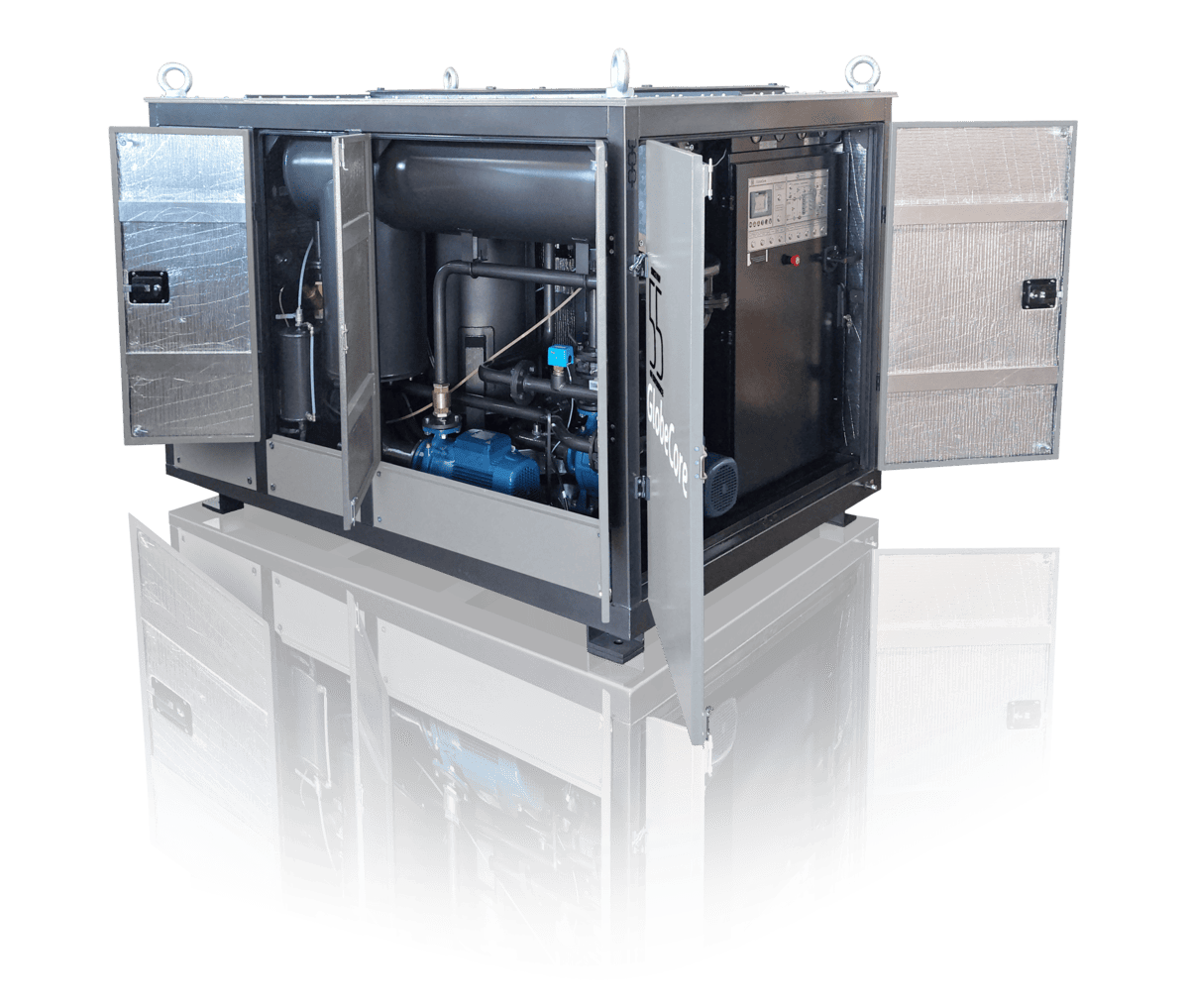
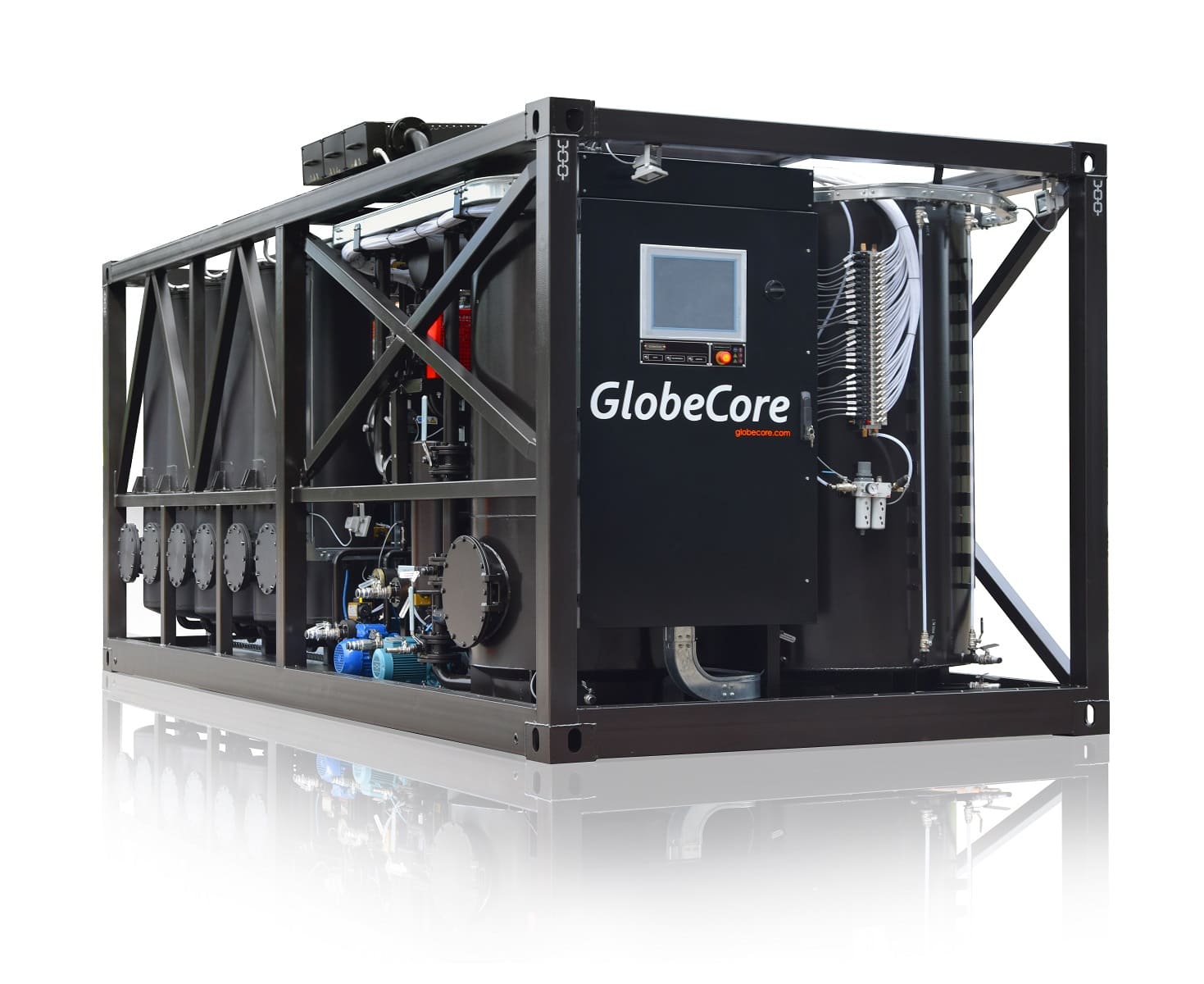
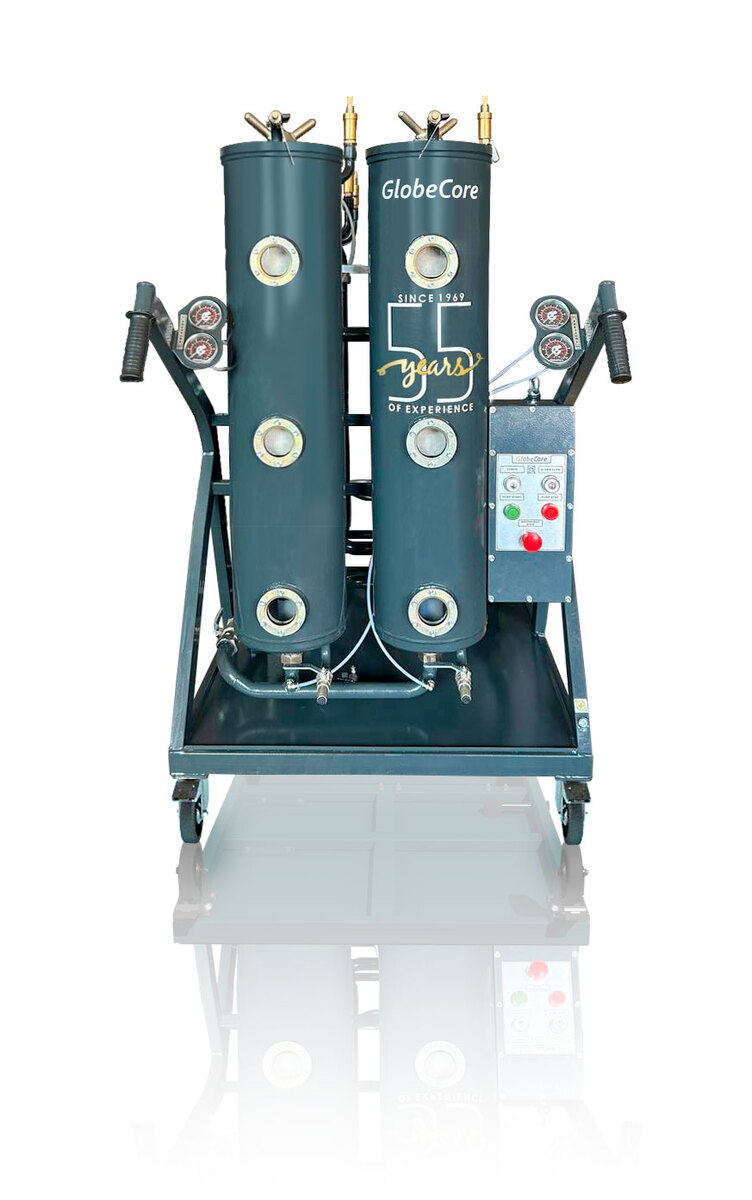
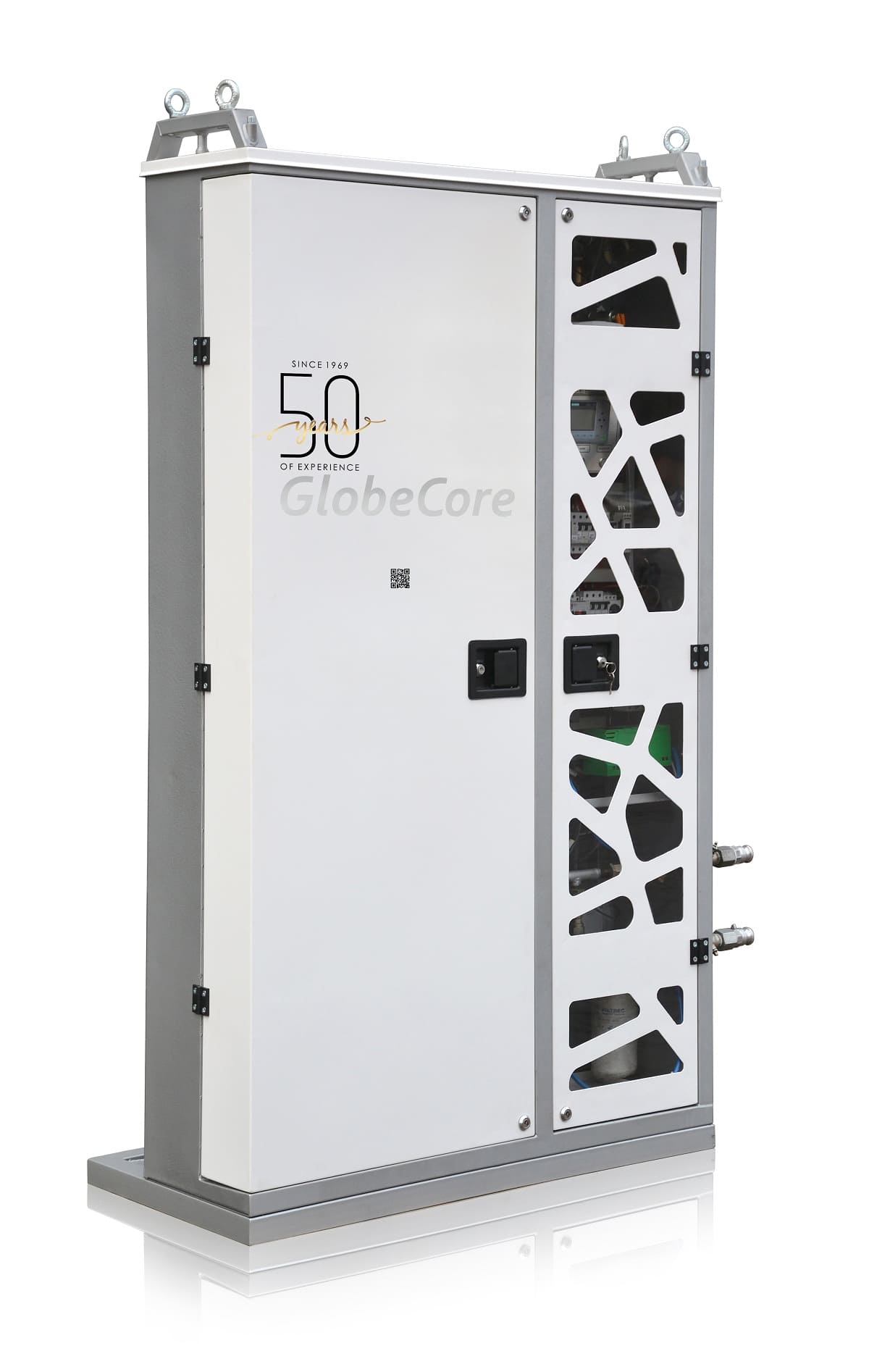
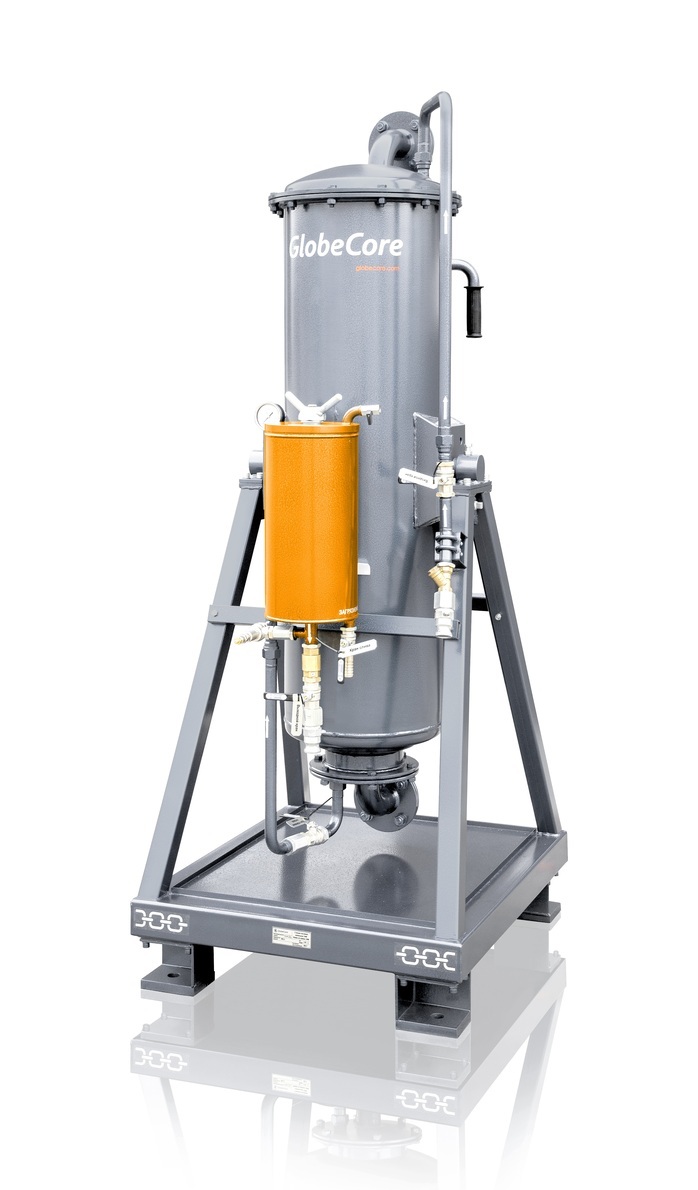
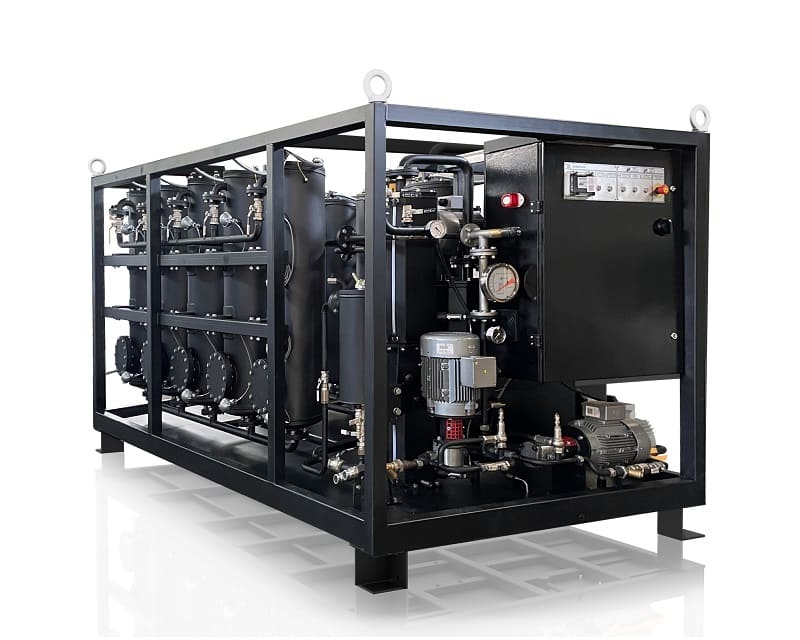
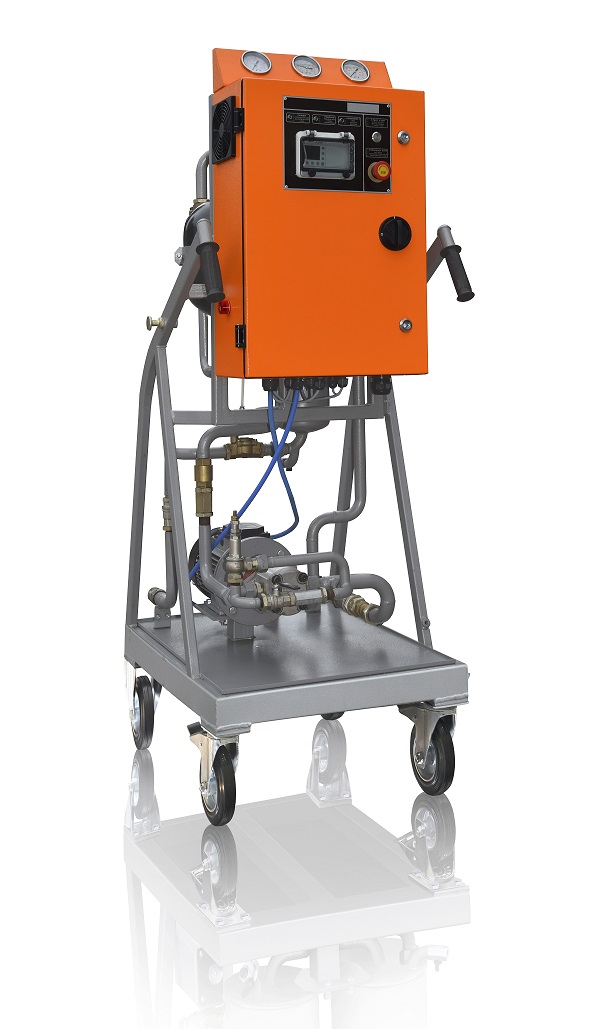
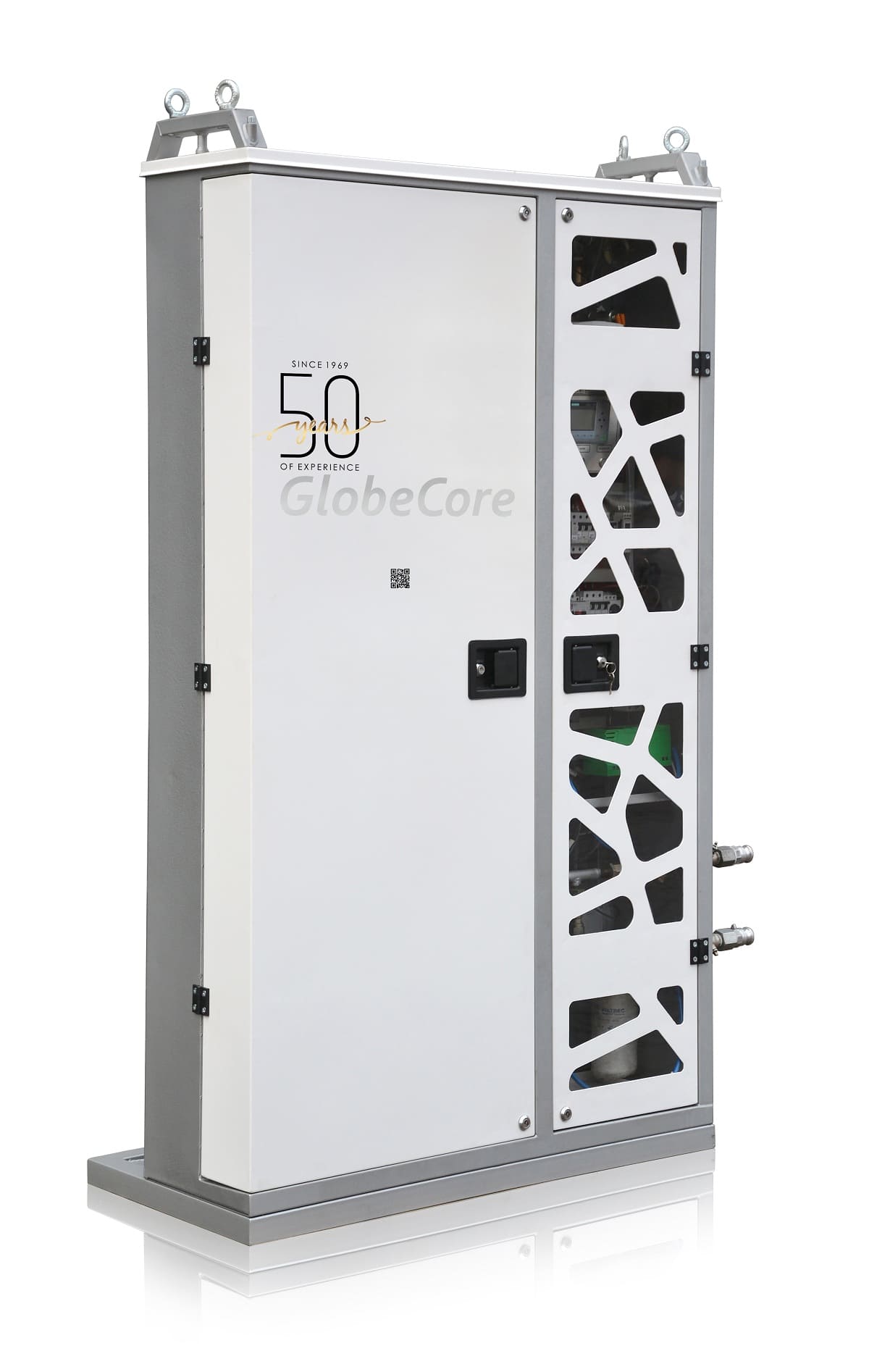
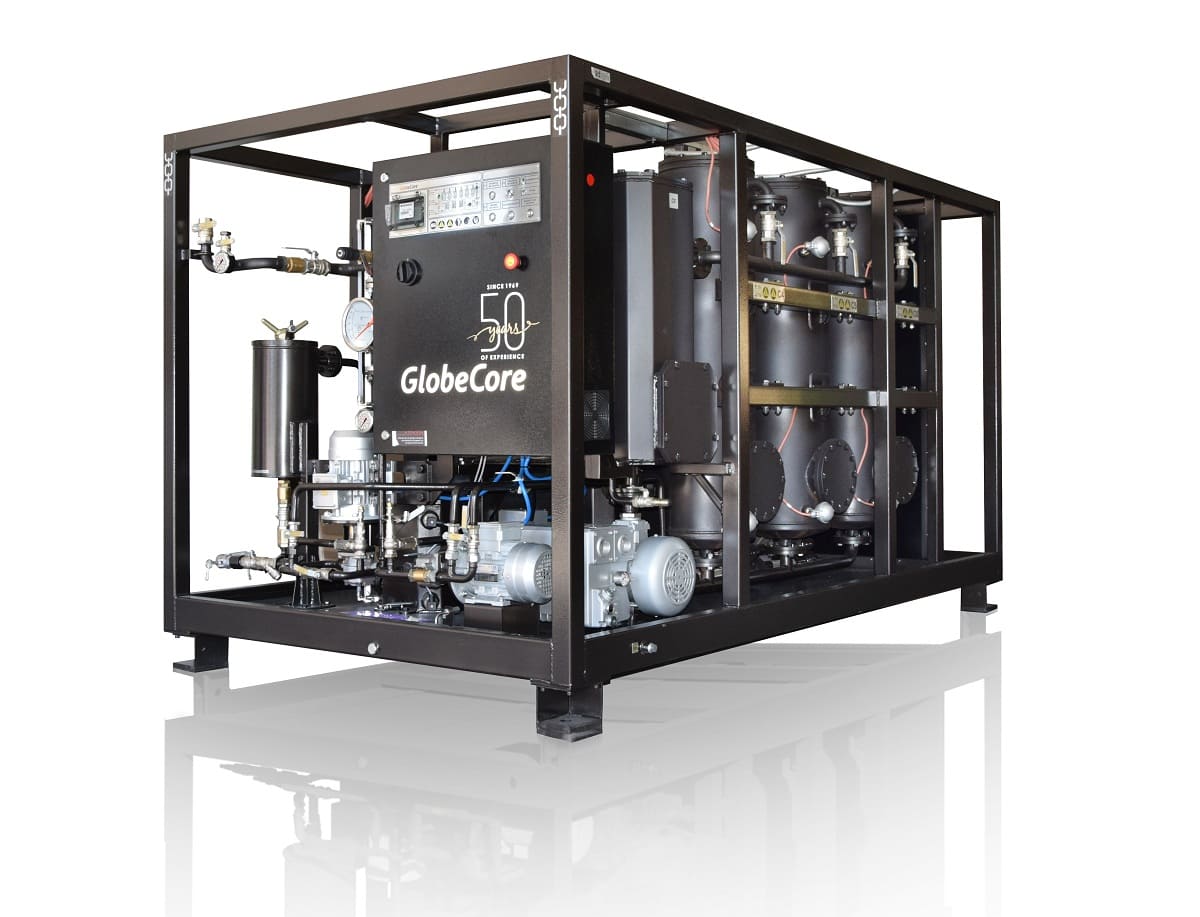
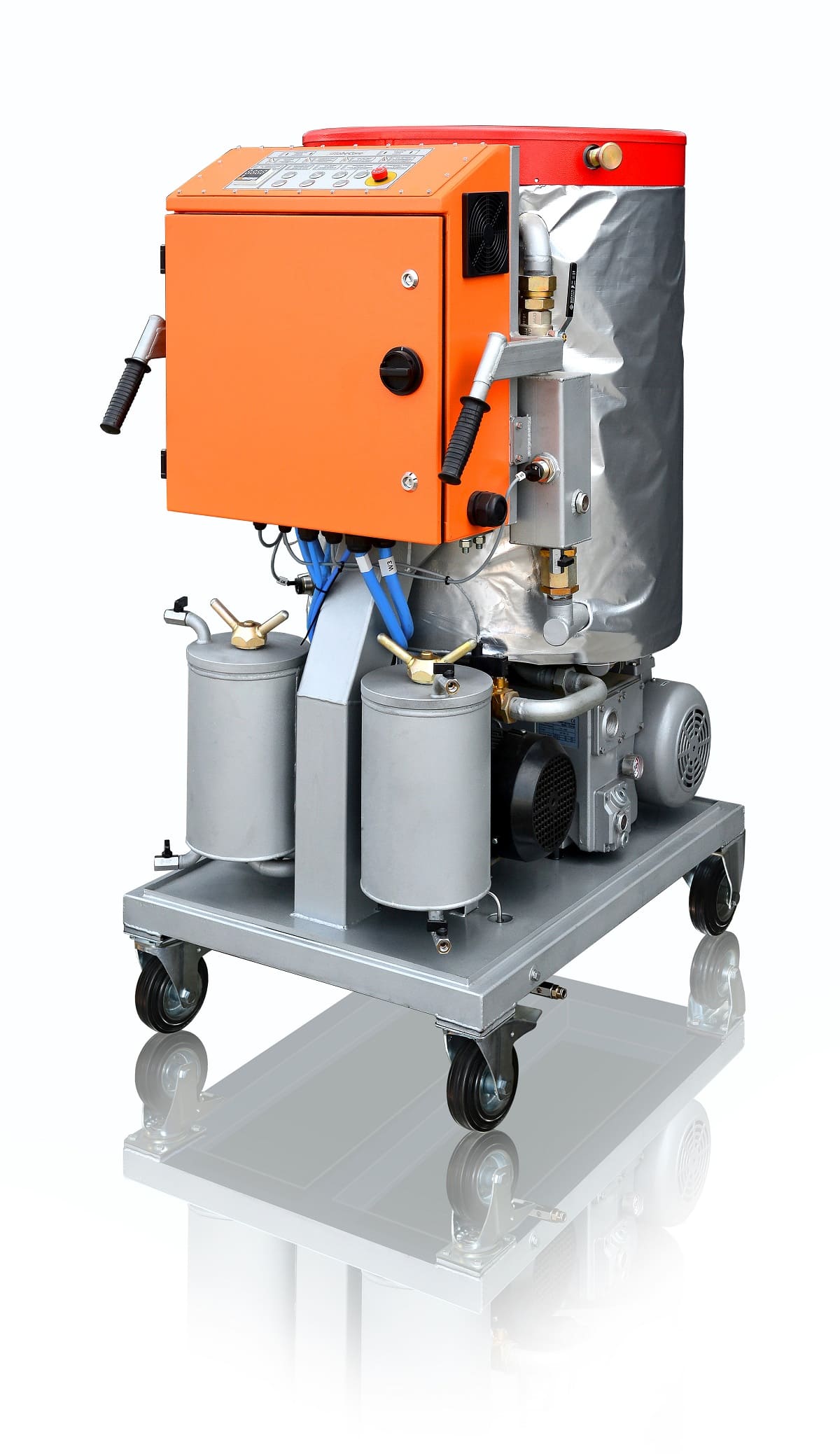
To maintain turbine oil quality throughout the service life of NPP steam turbines, on-site Nuclear Plant Turbine Oil Purification is performed using specialized mobile equipment. These units combine purification, dehydration, degassing, and filtration in a single system – addressing the primary contaminants that degrade oil performance.
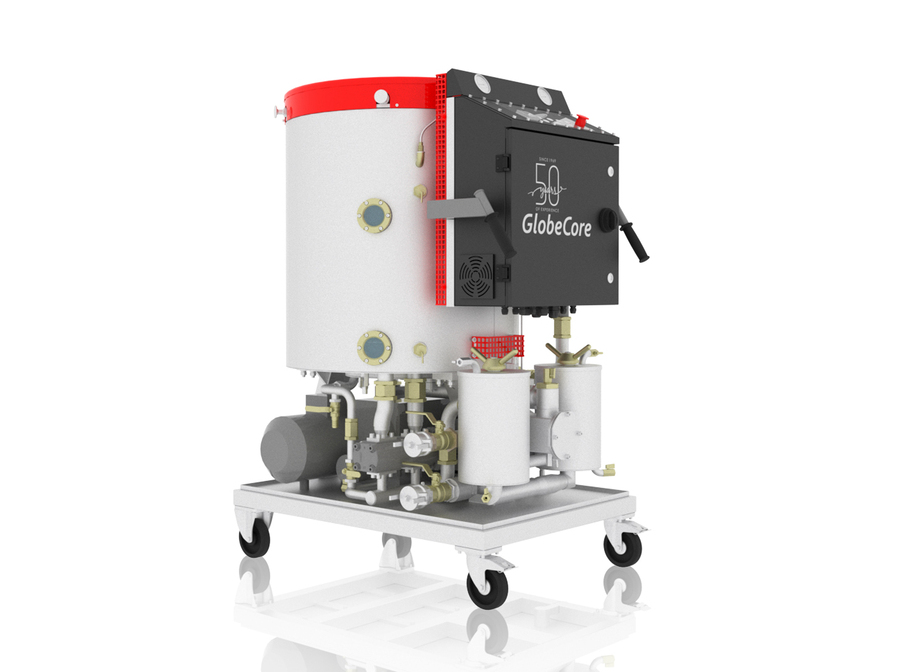
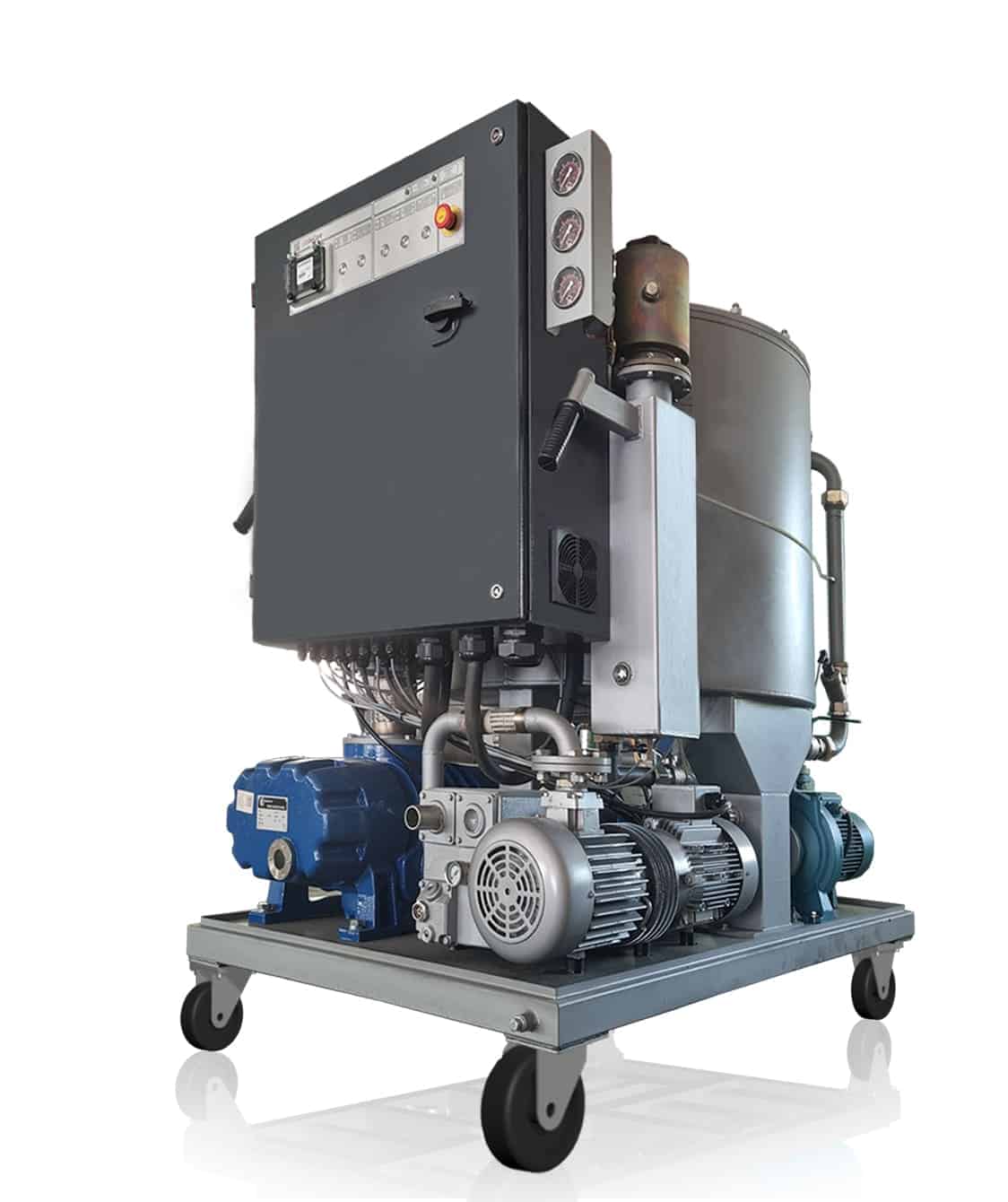
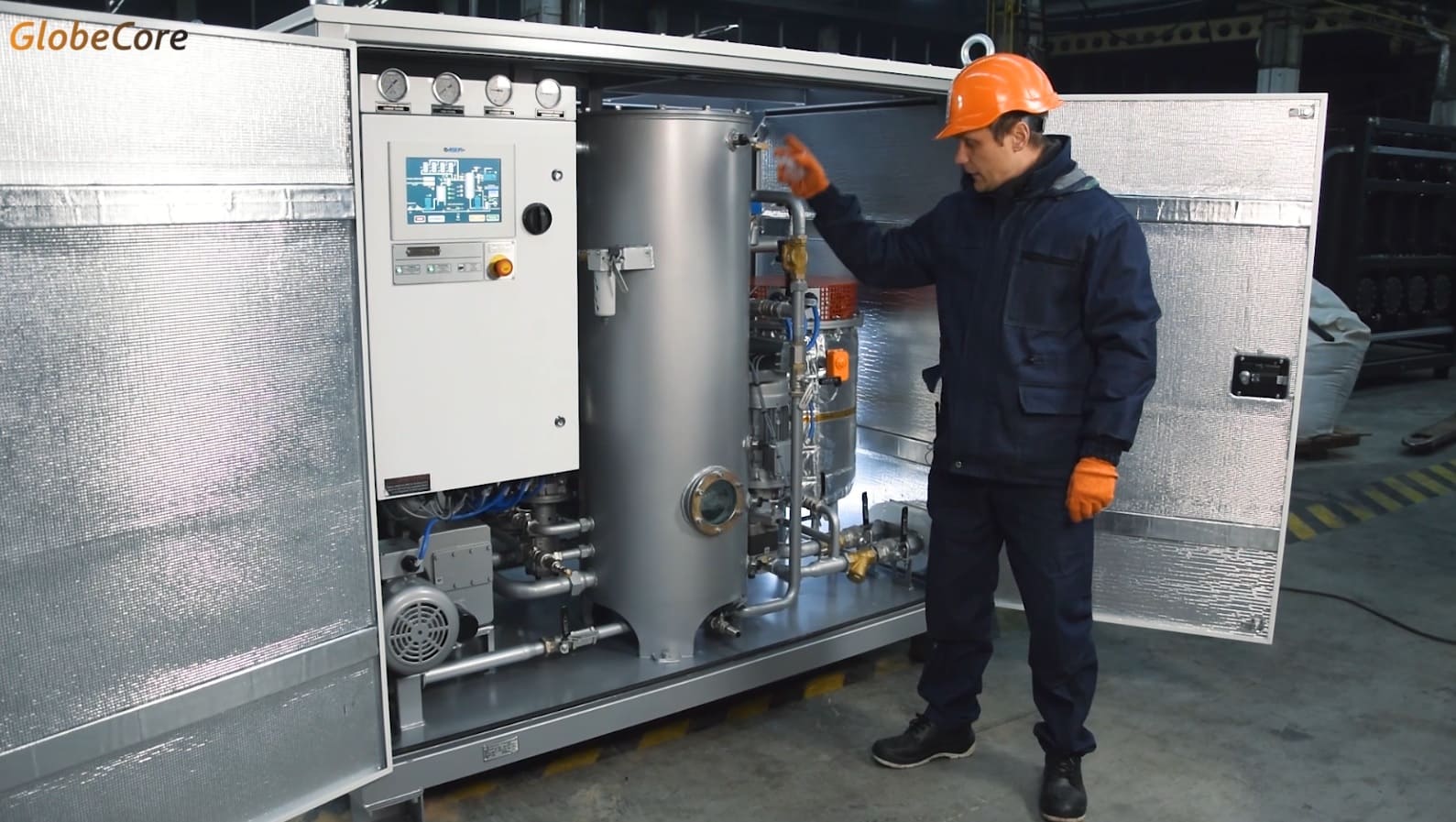
The CMM-T turbine oil purification unit, developed by GlobeCore, is designed specifically for the operational conditions of power plants: limited space, the need for mobility between work locations, and demanding performance requirements. The machine achieves a throughput of 4.5 m³/h within compact overall dimensions of 171 × 117 × 169 cm.
The CMM-T employs a two-pump architecture – a vacuum pump and a discharge pump – minimizing the footprint without sacrificing performance. The vacuum pump creates negative pressure in the vacuum vessel, drawing oil through a strainer and a heater. Inside the vacuum vessel, ring packing elements increase the effective oil film surface area, enabling intensive moisture evaporation under vacuum. Condensate is collected and separated, while the dried oil is pumped through fine filtration stages before delivery to the system.
Key performance parameters of Nuclear Plant Turbine Oil Purification with the CMM-T:
- Moisture reduction: from 50 ppm to 10 ppm;
- Mechanical particle contamination: reduced to ≤10 g/t;
- Throughput: 4.5 m³/h.
The unit is equipped with a full safety instrumentation package: level sensors controlling oil level in the vacuum vessel and actuating solenoid valves; a foam sensor triggering foam dump; a flow relay preventing heater activation until oil flow is confirmed; an RTD temperature sensor and thermostat for overheat protection. The control panel features a PLC with status display and operator controls. The unit is wheel-mounted for mobility within the plant.
Extending Oil Service Life and Turbine Reliability
Timely and systematic Nuclear Plant Turbine Oil Purification extends the service life of the oil itself and ensures the reliability of steam turbines throughout their operational lifetime. When purification is performed regularly in accordance with technical standards, oil performance characteristics remain within permissible limits, reducing the frequency of complete oil replacement and the associated costs and outage risks.
Regular oil analysis combined with on-site Nuclear Plant Turbine Oil Purification provides plant operators with a cost-effective strategy for managing turbine lubrication system condition across the full operational cycle of a generating unit.