Moisture is one of the greatest threats to a power transformer. It rarely manifests itself through a sudden failure or an immediate protection trip; instead, it accumulates gradually, year after year, until one day it reveals itself through reduced insulation dielectric strength, shortened service life, or, in the worst case, an internal short circuit.
Why Moisture in Transformer Insulation Is So Dangerous
Cellulose (paper/pressboard) insulation inside a transformer is arguably its most valuable component. Its condition largely determines how long the transformer can remain safely in service.
A key fact about insulation aging is that the aging rate of cellulose insulation depends heavily on temperature.
| Temperature | Insulation Aging Time |
|---|---|
| 100 °C | ≈ 20 years |
| 110 °C | ≈ 5 years |
This is why, under normal operating conditions, replacing power transformers simply because they have reached their nominal 25-year service life is often not economically justified. In many cases, the equipment still retains a significant remaining service life.
The problem is that moisture does not wait for a convenient moment to accumulate. After 25-30 years of operation, the moisture content of the insulation may reach a level that significantly affects transformer reliability and remaining service life. The rate of moisture accumulation is directly related to the operating load the transformer has carried throughout its lifetime.
Why a Conventional Major Overhaul Is Not the Best Way to Combat Moisture
Restoring insulation moisture content to an acceptable level usually requires a major overhaul, and insulation drying is one of the most time-consuming stages of this process.
- Insulation drying may account for 25-50% of the total overhaul duration.
- The larger the transformer, the more difficult the process becomes due to the greater volume and mass of insulation.
- Conventional drying methods (high temperature and vacuum) may themselves damage insulation that has already been weakened by aging.
- A complete overhaul setup is required, and the work is often limited to seasons with above-freezing ambient temperatures.
- Opening the transformer tank under field conditions introduces additional risks.
For both technical and economic reasons, it is far more practical to keep insulation moisture within safe limits continuously than to attempt to correct the problem during the limited window of a scheduled overhaul.
Where Moisture Actually Comes From
In a sealed transformer, there are essentially only two sources of moisture.
1. The Atmosphere
Imperfections in transformer design or maintenance (seals, breathers, gaskets) gradually allow external moisture to enter.
Typical accumulation rate: 0.03-0.05% per year
2. Aging as a By-Product
Oxidation and thermal aging of cellulose insulation and transformer oil are unavoidable throughout the transformer’s service life. Moisture is one of the natural by-products of these processes.
Typical accumulation rate: 0.04-0.05% per year
What This Looks Like in Numbers
| Stage | Moisture Content of Solid Insulation |
|---|---|
| After manufacturing | 0.5-0.8% |
| Immediately after installation | no more than ≈ 1% |
| After 25 years of operation (estimated) | 2.7-3.0% |
| Generally accepted safe limit | no more than ≈ 2% |
A Common Misconception
The presence of transformer oil does not protect solid insulation from absorbing moisture – it merely slows the process down. Moisture continuously migrates between the oil and the paper.
The ability of transformer oil to retain water depends strongly on temperature, whereas the moisture saturation point of paper remains approximately 17%, regardless of temperature. In other words, the paper will continue absorbing moisture from the oil for a very long time before equilibrium is reached.
Why Elevated Insulation Moisture Is Dangerous
Excess moisture in solid insulation is not just another number in a test report. In practice, it:
- increases the risk of internal short circuits;
- makes future repairs more difficult and time-consuming, reducing the interval between overhauls;
- directly reduces the transformer’s remaining useful service life;
- lowers the maximum temperature the insulation can safely withstand, effectively reducing the transformer’s overload capability.
Why Moisture Is So Difficult to Measure Accurately
| What Happens | Why It Complicates Evaluation |
|---|---|
| Temperature decreases | Moisture condenses into droplets on solid surfaces or forms conductive paths. |
| Temperature increases | Moisture is released from wet insulation, while microcapillaries become filled with steam bubbles, increasing the risk of short circuits. |
| Temperature below 0 °C | Water freezes into ice crystals, creating a risk of damage during energization. |
| Migration between layers | Moisture migration rates from oil to paper and from paper to oil differ, making accurate assessment more difficult. |
The situation is further complicated by the fact that up to 98% of all moisture inside a transformer is contained in the cellulose insulation, which is also the most difficult part to measure directly.
In practice, paper moisture is estimated indirectly from transformer oil moisture using equilibrium curves, whose accuracy improves as the sample temperature increases.
A Practical Solution: Continuous Gentle Drying Instead of Periodic Intervention
Since moisture accumulates continuously and most of it is concentrated in the transformer component that is the most difficult to dry – the cellulose insulation – the most effective long-term strategy is not a one-time drying campaign every few decades, but continuous filtration that keeps both the oil and the paper dry throughout the transformer’s service life.
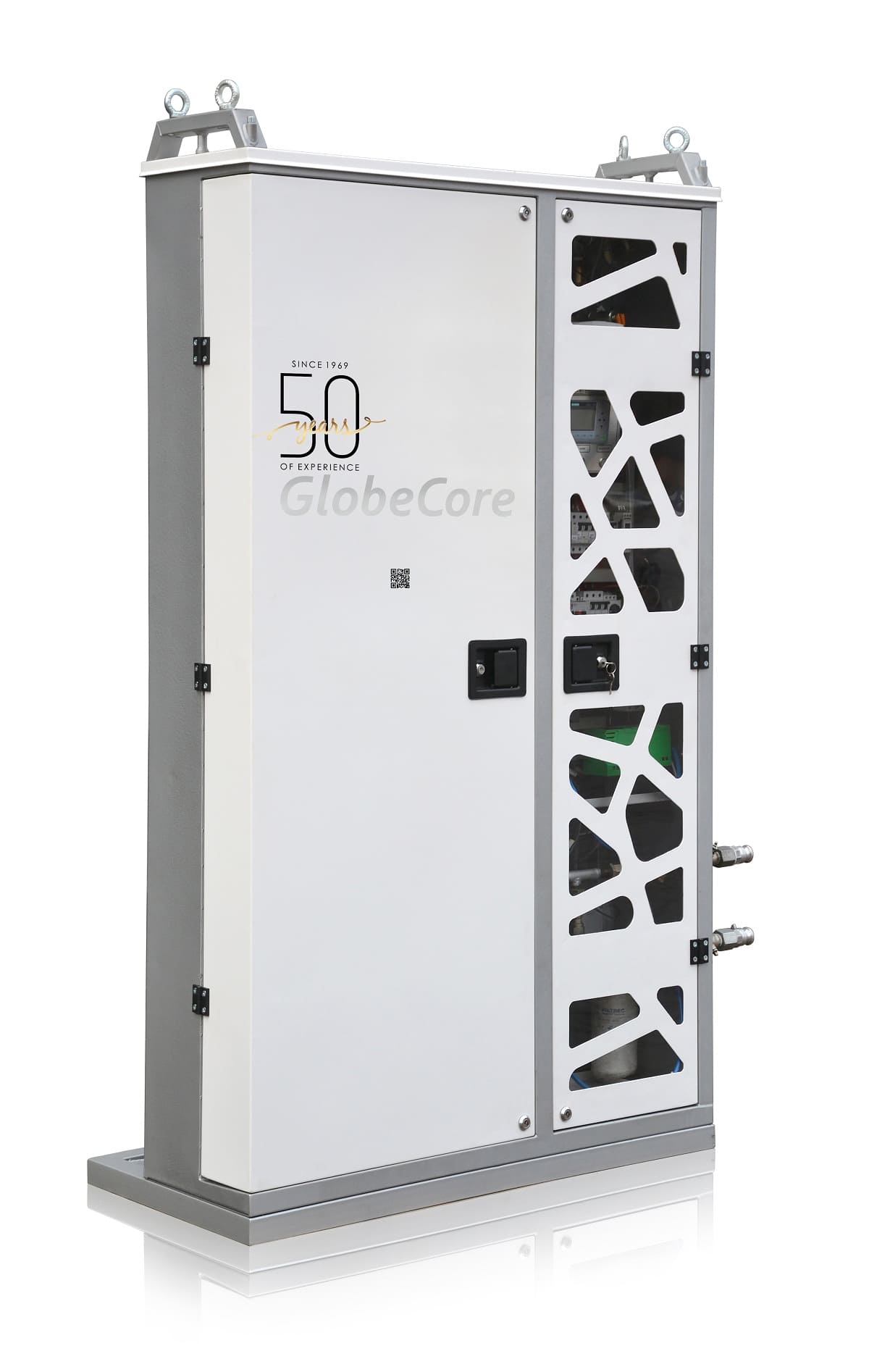
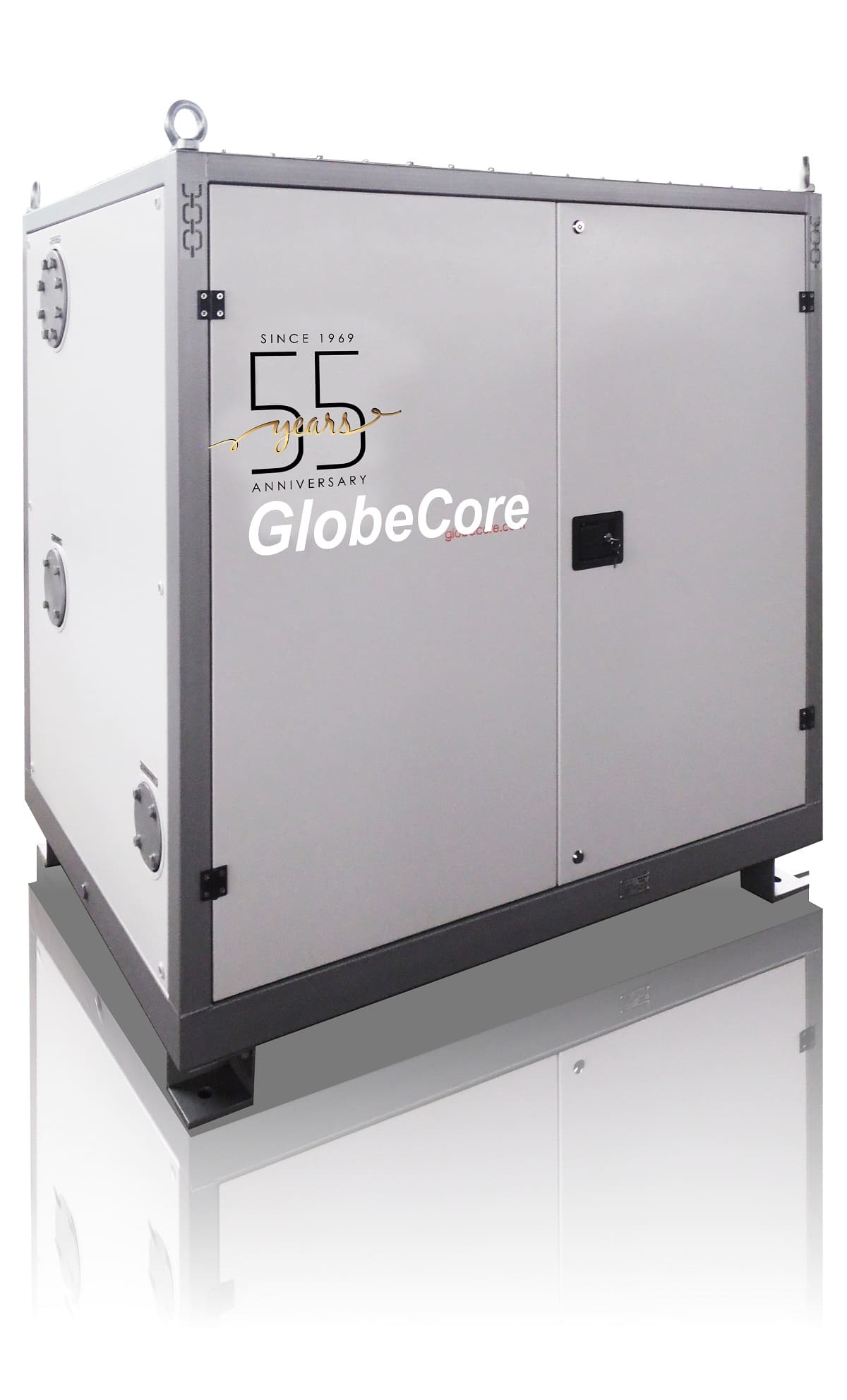
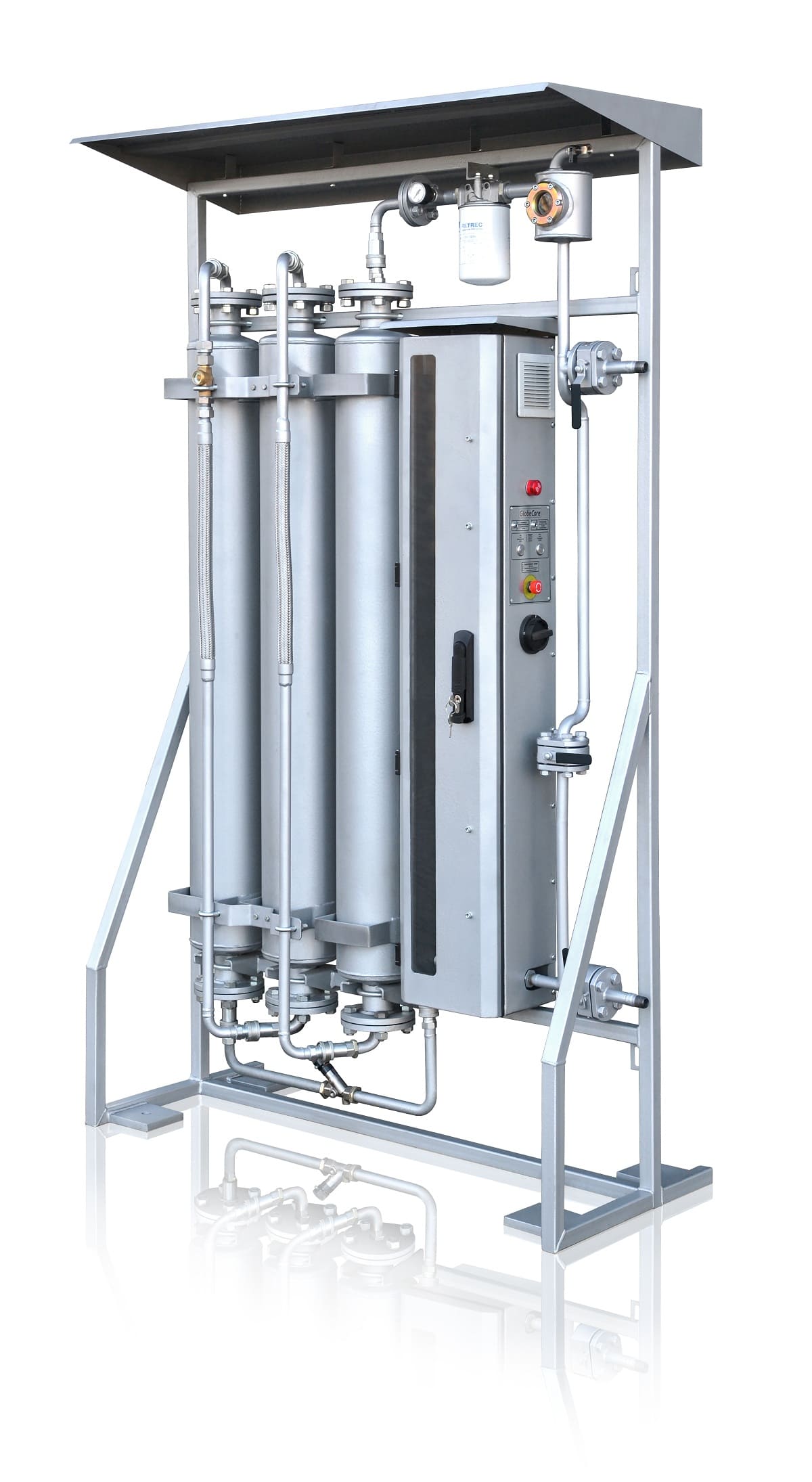
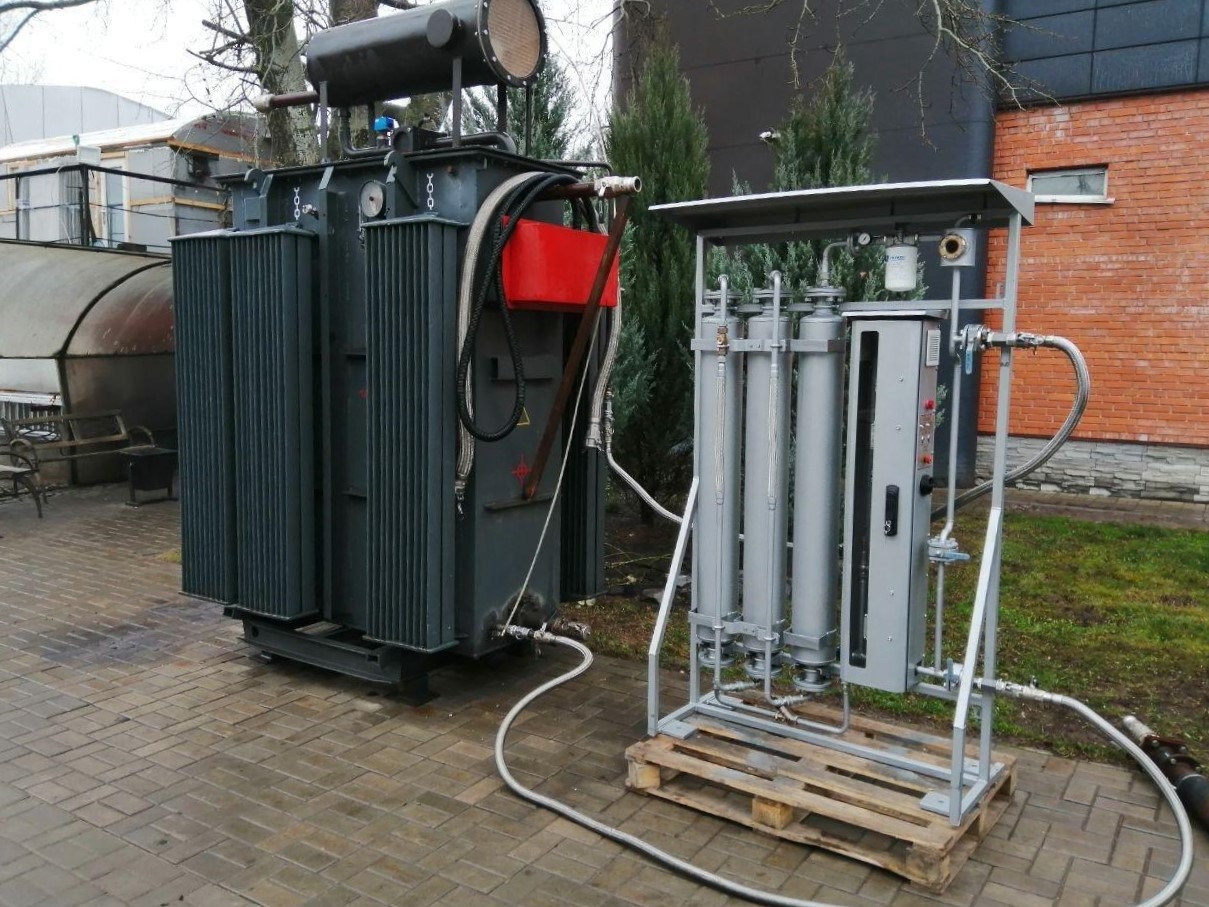
This is precisely the gap filled by the CMM-260C continuous online oil drying unit.
How It Works
The unit is connected directly to the transformer.
Transformer oil is continuously circulated through adsorption columns.
As the oil passes through the columns, it releases moisture, which is retained by the sorbent.
Thanks to pore sizes specifically selected for water molecules, the sorbent does not absorb oxidation inhibitors, dissolved gases, or furan compounds. As a result, it does not affect the results of routine transformer diagnostics, including DGA, furan analysis, and other standard tests.
Why It Dries Not Only the Oil but Also the Solid Insulation
In a transformer operating under load, moisture is constantly migrating between the winding insulation and the transformer oil in an attempt to reach equilibrium.
By continuously maintaining the oil in a dry condition, the unit creates a stable concentration gradient that gradually draws moisture out of the cellulose through diffusion – without high temperatures, without vacuum, and without opening the transformer tank.
This is a much gentler process than conventional drying methods, which is especially important for insulation that has already aged and become mechanically weakened.
The unit provides a capacity of at least 30 L/h and can adsorb up to 9 liters of water during the service life of the sorbent.
Connection to the transformer takes less than one hour, and the unit is compatible with transformers of any manufacturer and any service age, whether newly installed or in operation for decades.
The process requires neither oil heating nor continuous operator supervision. The unit is available in two versions, with or without a protective enclosure.
Because it operates without heating and without continuous monitoring, the unit is also suitable for transformers installed in remote or hard-to-access locations.