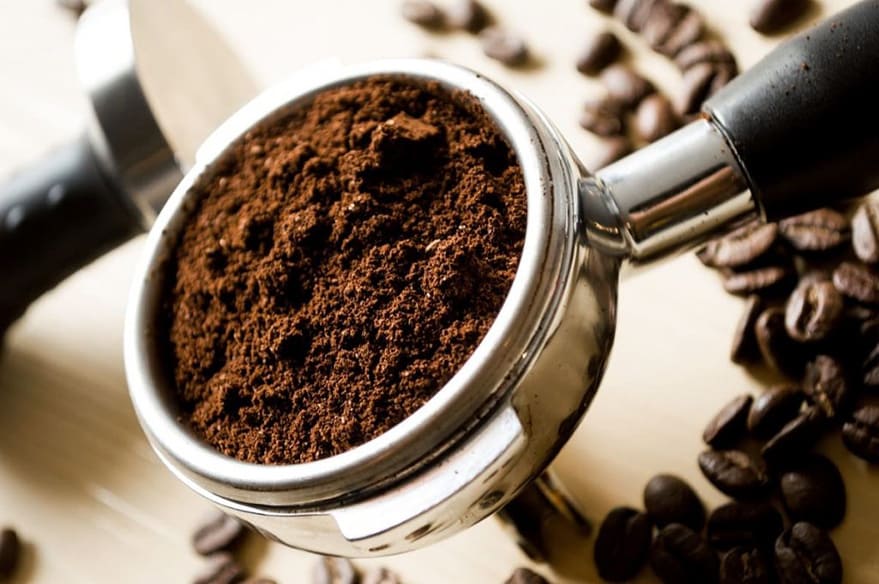
Coffee milling is a mandatory stage of manufacturing both a natural product from roasted coffee beans and an instant freeze-dried, granulated, or powdered beverage. Depending on the type of coffee, grinding is performed to a certain fraction. It may be coarse grinding with a size of almost a millimeter, medium, fine grinding to tenths of a millimeter, and pulverization as a result of which a powder with particles of merely a few microns is formed.
World coffee market
On average, people from all over the world drink 2.25 billion cups of coffee per day. It turns out that every third inhabitant of the planet consumes at least one cup of the beverage a day. Furthermore, coffee is drunk most in Europe — 34.4% of the global volume. The United States accounts for a share of 18.2%. It is followed by Brazil with an indicator of 14.9%.
With regard to rankings for the number of beverages per capita, Europeans come first as well. Finns drink 12 kg of coffee per person annually. Norwegians rank next with an indicator of 9.9 kg, and the third rank is held by Iceland — 9 kg per one country resident.
The consumer prefers powder or granules already prepared for consumption to just roasted beans. Ground natural coffee is bought most in the market. The share thereof is 6% greater than that of unground bean product. Therefore, it makes sense for manufacturers to improve and optimize the lines and facilities for production of natural ground coffee.
Degrees of coffee grinding
Along with a growth in demand, the consumer’s requirements for the product quality increase as well. 53% of the beverage connoisseurs identify aroma and taste as the most important criterion. These features are directly influenced by coffee grinding fineness. The more finely the product is ground, the larger the area of contact with water is which means that extraction takes place faster. In order to reveal the taste and aroma properties of the beverage as vividly as possible, it is important that the beans be properly ground. Freeze-dried or granulated coffee is made from raw materials ground to 30–45 microns and finer.
Natural coffee is represented in the market by the following fractions:
- Pulverized coffee. The coffee ground to a powdery state is suitable for preparing in a jezve. The fraction shall not exceed 0.15 mm — it’s like dust or powder. Pulverization from 0.075 to 0.125 mm or even finer is considered to be a perfect option for Turkish coffee.
- Finely ground coffee. Suitable for a coffee machine. The fraction shall not exceed 0.4 mm.
- Medium ground coffee. Designed for filtering drip coffee makers with paper and metal filters. The beans are ground here to particles of 0.4–0.5 mm.
- Coarsely ground coffee. The best option for a French press. In the event of coarse grinding, the coffee is ground to 0.8 mm.
Fractions of grinding the beans vary depending on further beverage preparation technology. Therefore, it is important for manufacturers to be able to adjust the degree of grinding the product.
Popular coffee grinding methods
Grinding the coffee that enters the market in natural, freeze-dried, or granulated form looks the same for all the three types of product. In this case, the following types of coffee grinders are used for grinding:
- Burr-stone mills. They are some of the most popular coffee mills due to high capacity and excellent quality of final product. They constitute the equipment that operates on the mill principle with cylindrical and conic burr-stones. The beans pass between them and are ground to required fraction. Such mills are quite expensive to purchase and maintain.
- Rotary blade coffee mills. The equipment operates on the principle of grinding the beans by means of blades rotating at a high speed. The technology is simple and inexpensive, but it yields an unsatisfactory result, because grinding comes out non-uniform, and due to high heating of the beans, the final product taste deteriorates. Most often, it is used in everyday life.
- Hammer mills. Machines with an operating chamber where the coffee beans are crushed by impacts of special moving elements. The technology is simple and reliable, but it does not provide the best result in terms of grinding quality. The equipment is noisy, requires periodic repairs, and is suitable for handling a dry product only.
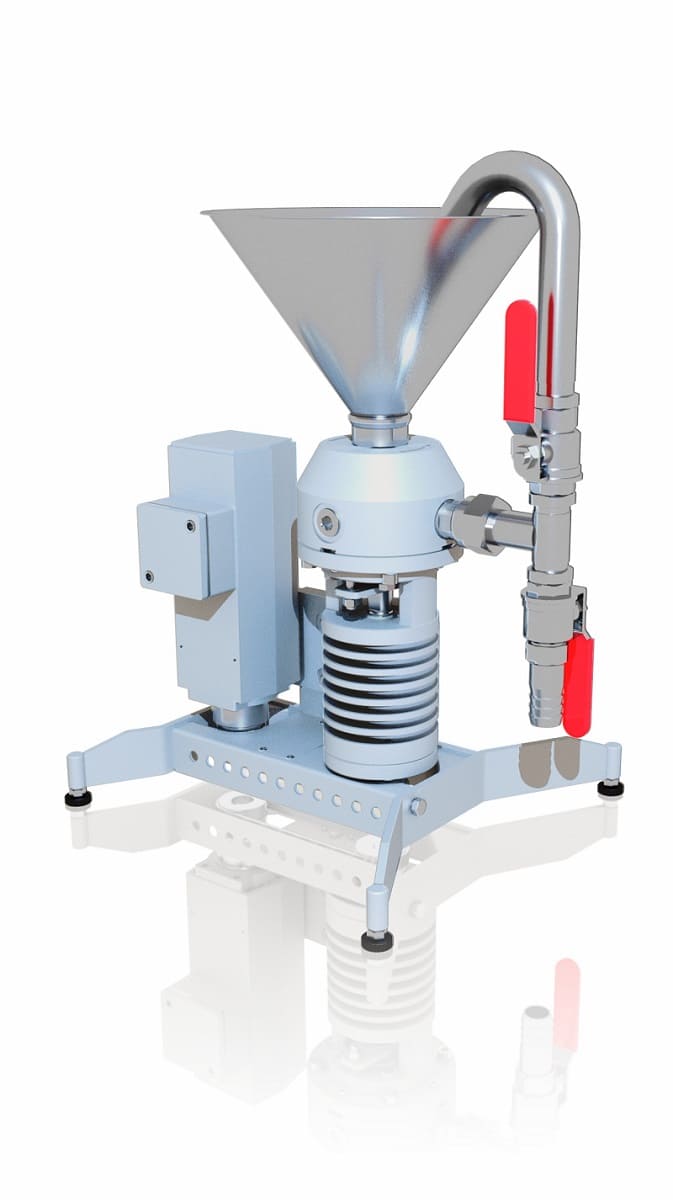
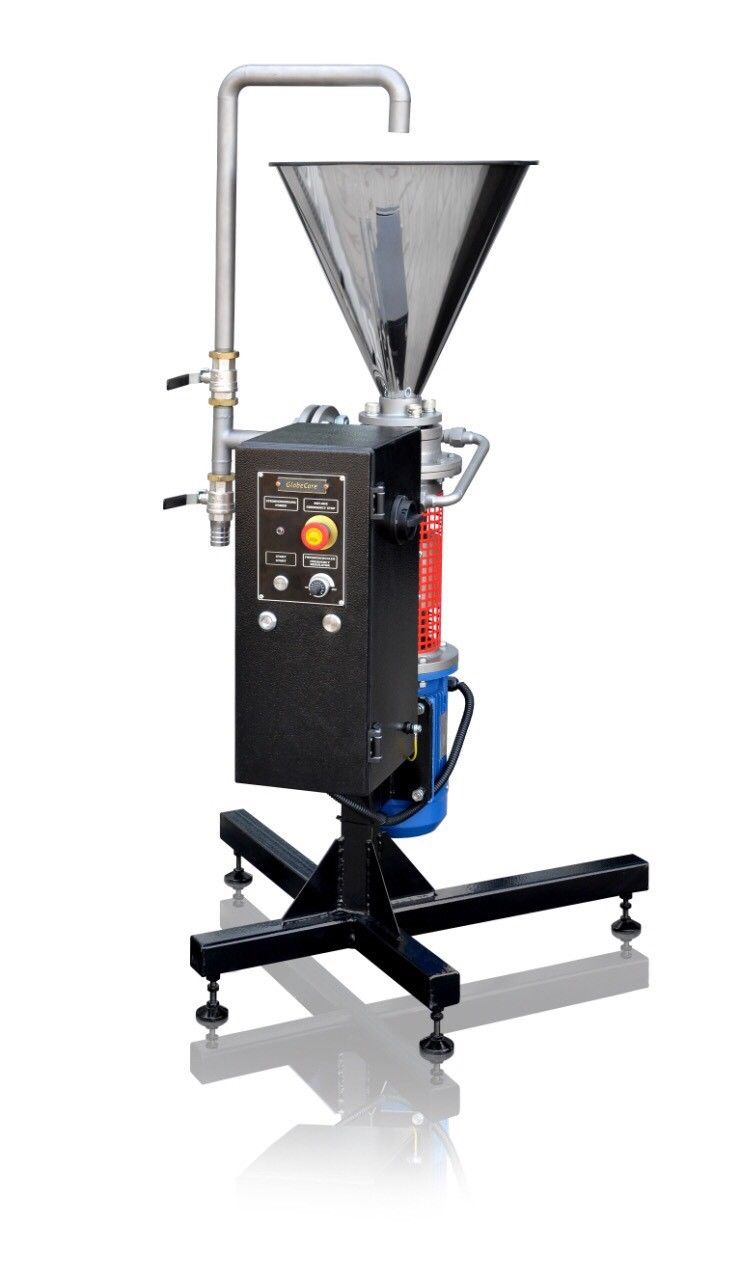
- Colloid mills. The equipment with a rotor that rotates about a stator passing it a split millimeter away. In this space, the particles are ground to microns when driven by centrifugal forces. But this technology is mainly relevant for wet grinding. And dry grinding is not distinguished by such high fineness.
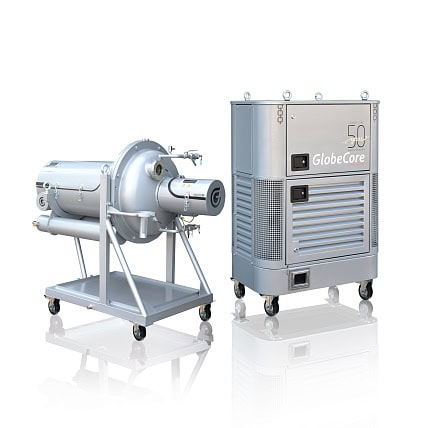
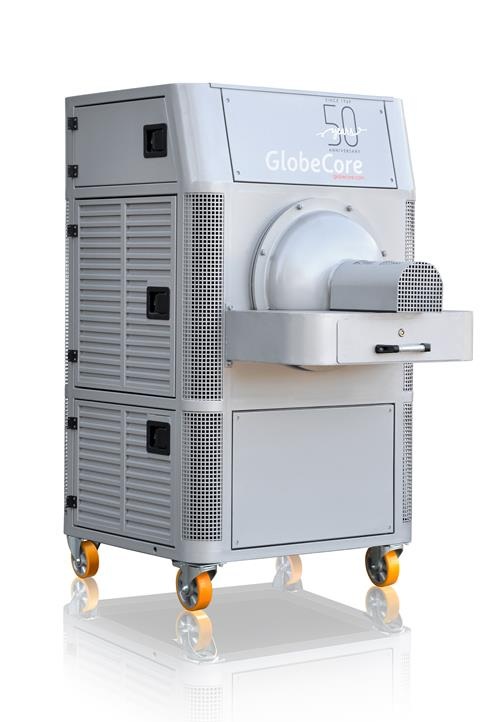
A burr-stone unit is considered to be the most efficient and high-quality conventional coffee mill. But with advancements in modern technologies, a vortex layer device (AVS) has become a worthy rival to it. An electromagnetic coffee mill allows obtaining a high-quality product of coarse, medium, fine, and ultrafine fractions with minimum finance and time consumption.
Coffee milling in a vortex layer device
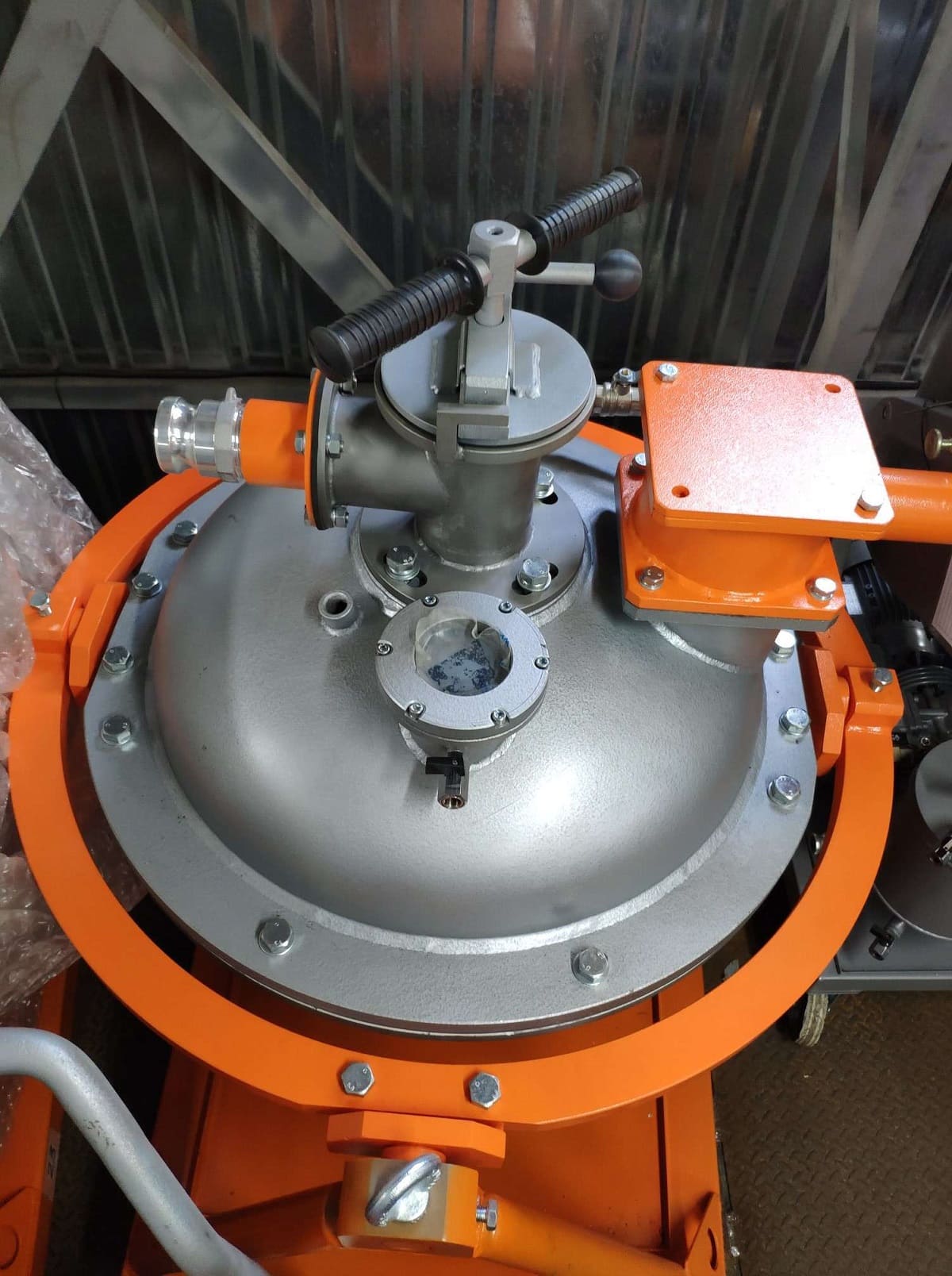
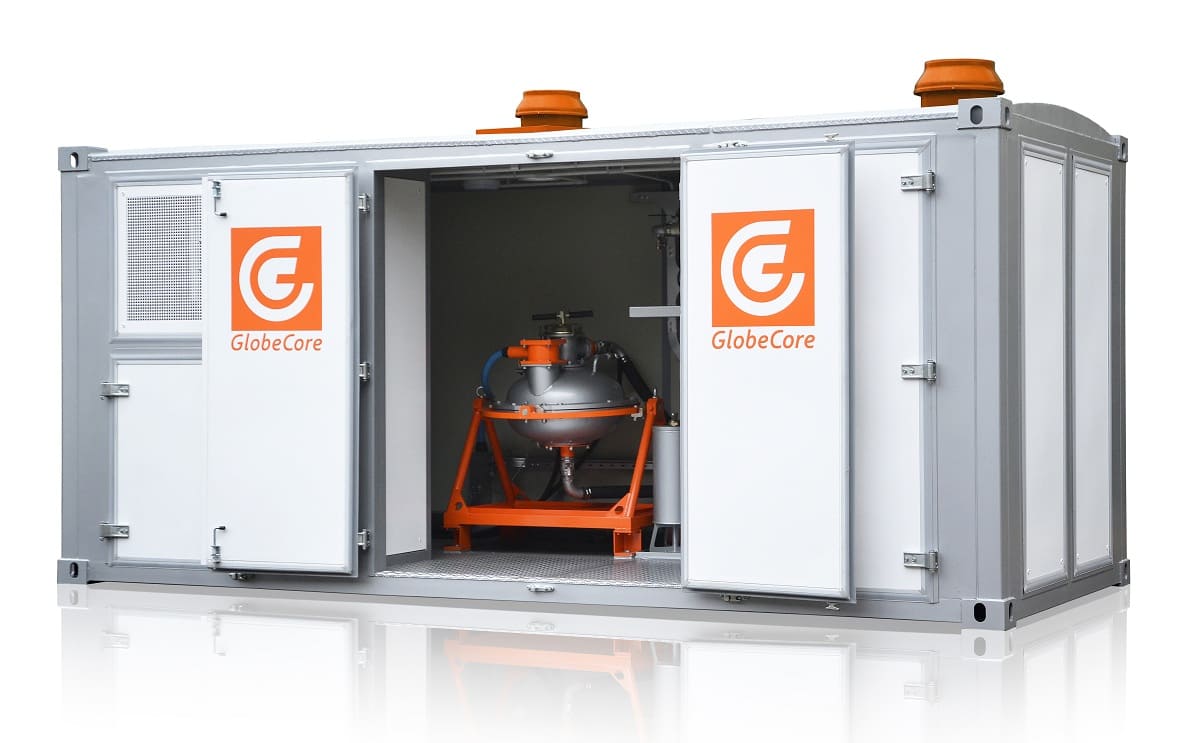
In order to optimize coffee milling on an industrial scale, a vortex layer device is introduced into the market. This equipment operates on the basis of a rotating electromagnetic field with ferromagnetic needles inside the chamber. Сoffee grinding occurs due to the beans colliding with the chamber walls, ferromagnetic particles, and one another. In this case, the beans are exposed to an electromagnetic field, acoustic vibrations, high pressure which affects the milling efficiency.
The longer the process takes, the finer particles we get at the outlet. Therefore, it is possible to adjust the degree of grinding by just changing the time of processing the beans in the chamber. In general, AVS allows obtaining finely ground coffee with a fraction of only 2–3 µm.
In addition, AVS is suitable for quick and efficient blending of coffee varieties in order to obtain blends. They differ in taste, aroma qualities and properties that are optimal for a particular case.
Using AVS, it is possible to obtain coffee blends of Arabica varieties, as well as to blend Arabica and Robusta. When coffee is blended by means of AVS, the finished product is distinguished by homogeneity, does not get separated at the outlet, and blending occurs in a matter of seconds. It is also possible to produce 3-in-1 instant coffee beverages by mixing the ingredients quickly and efficiently.
The special feature of AVS consists in the fact that it can handle both dry mixes and a liquid medium. Therefore, owing to the equipment, it is possible to optimize the production of freeze-dried and granulated coffee after milling. At this point, the processes of mixing the ground product with water take place and can also be carried out directly in AVS.
Advantages of coffee grinding by means of a vortex layer device
An electromagnetic coffee mill is an innovative piece of equipment that solves the problems of conventional coffee grinding methods due to the following:
- High efficiency. It is suitable for homogeneous coffee grinding up to 2–3 µm which is difficult to achieve by means of conventional devices.
- Versatility. AVS is suitable not only for coffee grinding, but also for preparing coffee blends. It can be used on instant beverage production process lines.
- Cost-effectiveness. The electricity input decreases several-fold compared to conventional methods due to the absence of complex, energy-consuming processes associated with operation of rotating, impacting mechanisms, etc.
- Usability. Adjusting the degree of milling and monitoring the processes are easy, clear, and do not require engaging any complex equipment. No pedestal is needed for using the unit; it requires no costly installation.
- Reliability. The equipment is distinguished by wear-proof design and operates sparingly and quietly.
Thus, AVS can be engaged at different stages of producing natural and instant coffee. In any case, it will be useful in grinding the beans, because this process is baseline. At the same time, the electromagnetic coffee mill will help in optimizing the energy and time consumption as part of manufacturing natural ground, instant freeze-dried, and granulated products.