Waste Oil Refining in the Power Industry
Waste Oil Refining with special oil purification equipment significantly reduces costs, time and effort. Using industrial oils for power and hydraulic equipment has several conditions that must be satisfied. The purity of the oil is one of the most important factors which define correct operation and reliability of equipment. Various standards govern the chemical and physical properties of lubrication materials and their quality.
When crude oil is refined, oil producers make the product of high quality, but even with careful transportation, storage and use, some changes of the product composition are inevitable. It becomes obvious that changing old oil with new unpurified oil cannot guarantee reliable operation of the equipment in the future. This is especially true if the equipment is operated with high loads or continuously for extended periods of time, when frequent oil change is not possible.
Why Quality of Industrial Oil Degrades
Industrial oil which has been used (or stored) for a long time, tend to change in terms of physical and chemical characteristics under the influence of several factors, such as:
- High temperature. The interaction with air facilitates oxidation, decomposition, polymerization and condensation of organic hydrocarbon compounds.
- Oxygen, the agent of oxidation of oil in storage and transportation.
- Particulate matter (products of burning and friction, fibers, metal filings, solid deposits), which enter the oil in the machinery;
- Solved/free water in the oil. It forms as a condensate on the surface of oil when the machinery is cooling down.
Types and Methods of Waste Oil Refining Processes
There are three main methods of regenerating transformer, turbine, industrial and other types of oil: physical (removal of impurities and drying), chemical and a combination of chemical and physical methods. Combinations of methods prove to be the most efficient.
Physical Methods Waste Oil Refining Process
The most commonly known methods are settling, filtration, centrifuging and vacuum drying.
Settling is the first and the most important stage of oil regeneration. The oil is saturated with small particles produced by wear of the machinery, as well as with moisture. The settling method involves heating the oil to a certain temperature (ideally 80-90 С). A temperature of 100 С should not be reached, since it causes the water in the oil to boil and form foam. Heating reduces the viscosity of the oil, making it easier for the heavier substances to settle under gravity. When oil is stored, particles also tend to settle to the bottom of the storage tank, making it a kind of natural purification.
Centrifugation relies on centrifugal forces. The centrifuge causes the heaviest particles to be pushed to the edge of the drum, forming and ring-like layer. The next layer is formed by water, and the next is the purified oil. The units are built to output the product directly from the centrifuge during operation, while the contaminants on the walls of the drums are removed when the machine stops.
A small amount of water is sometimes added to the oil in the centrifuge to accelerate purification and wash some of the contaminants from the walls of the centrifuge drum.
Filtration is the process of separating solid impurities from the liquid. This is done by passing the oil through a barrier, usually made of special materials. Such equipment uses pumps or compressors to create a pressure difference to push the contaminated oil through the barrier, which captures impurities from the oil.
When the oil contains additives, it is usually pre-treated by coagulant surfactants. They make finely dispersed particles larger so that the smallest impurities can be filtered out.
Water wash does not facilitate deep purification of old oil, but can remove water-soluble low-molecular acids and organic salts. Water solution of the acids is separated by heating to 60 С. It is important to maintain the temperature, since deviation reduces the efficiency of the process significantly.
In general, without any noticeable effect on the chemistry of the oil, these methods can remove dust, sand, metal particles and similar impurities.
Physical and Chemical Methods and Their Combinations
Physical and chemical methods and their combinations include coagulation (with consequent settling) and adsorption of impurities. Ion-exchange is a variation of the latter.
Coagulation is a method with involves treatment of oil with coagulants: inorganic and organic electrolytes, surfactants (non-electrolytes), colloidal solutions, surfactants and hydrophilic high-molecular compounds.
These act in the double electric layer formed on the surface of the impurities. The most commonly used inorganic electrolytes are sodium compounds (calcined soda, liquid glass etc), 36-98% sulfuric acid (added in small amounts – 0,25 – 0,5 % of oil volume). Organic electrolytes used are ionogenic surfactants, which dissociate into ions in the solution. The most common of these are alkyl benzol and alkyl toluol sulfonates.
Non-electrolytes with polar molecules, which have hydrophilic and hydrophobic groups are used as organic compound coagulants. Non-ionogenic surfactants are also used as non-electrolytic coagulants.
Waste Oil Refining takes 20-30 minutes on average, and the remaining time is required for settling of coagulated particles.
Oil heating temperature varies from 60 to 95 С.
Reaction time is defined by the quantity and efficiency of interaction of the regenerating particles in the oil.
Adsorption is a very efficient method to remove tar, esters, acids and other impurities from the oil. It can be used with all oil types.
The method is based on capturing a significant number of impurity molecules on the surface of the adsorbent.
There are several factors which define efficiency of adsorption:
- The size of adsorbent particles. The impurities are captured not only on the surface, but also in the pores of adsorbent material. By making the particles smaller, its adsorption capability can be increased several times.
- Size of particles to adsorb. Small particles are absorbed well by both small and large particles of the adsorbent media, while larger particles of impurities reduce the process efficiency.
- Adsorbent nature. For instance, basic adsorbents work well for organic acids. Silica gel is efficient for tar removal. These adsorbent materials are synthetic, but natural materials are also used, such as bleaching clay, Fuller’s earth etc.
- Temperature. It is important to keep the oil temperature around 80 to 100 С (70-75 С for transformer oil). Higher temperature increases the motion of the molecules and decreases the capture rate. If the temperature is too low, the motion of the impurity molecules to the adsorbent material is slowed.
- Duration of interaction of the regenerated particles with the adsorbent. It is only possible to purify the layers of oil in direct contact with the adsorbent particles; therefore, purification is performed with intensive stirring, usually at the rate of 1000-1400 rpm for 30 minutes.
GlobeCore Used Waste Oil Refining and Purification Equipment
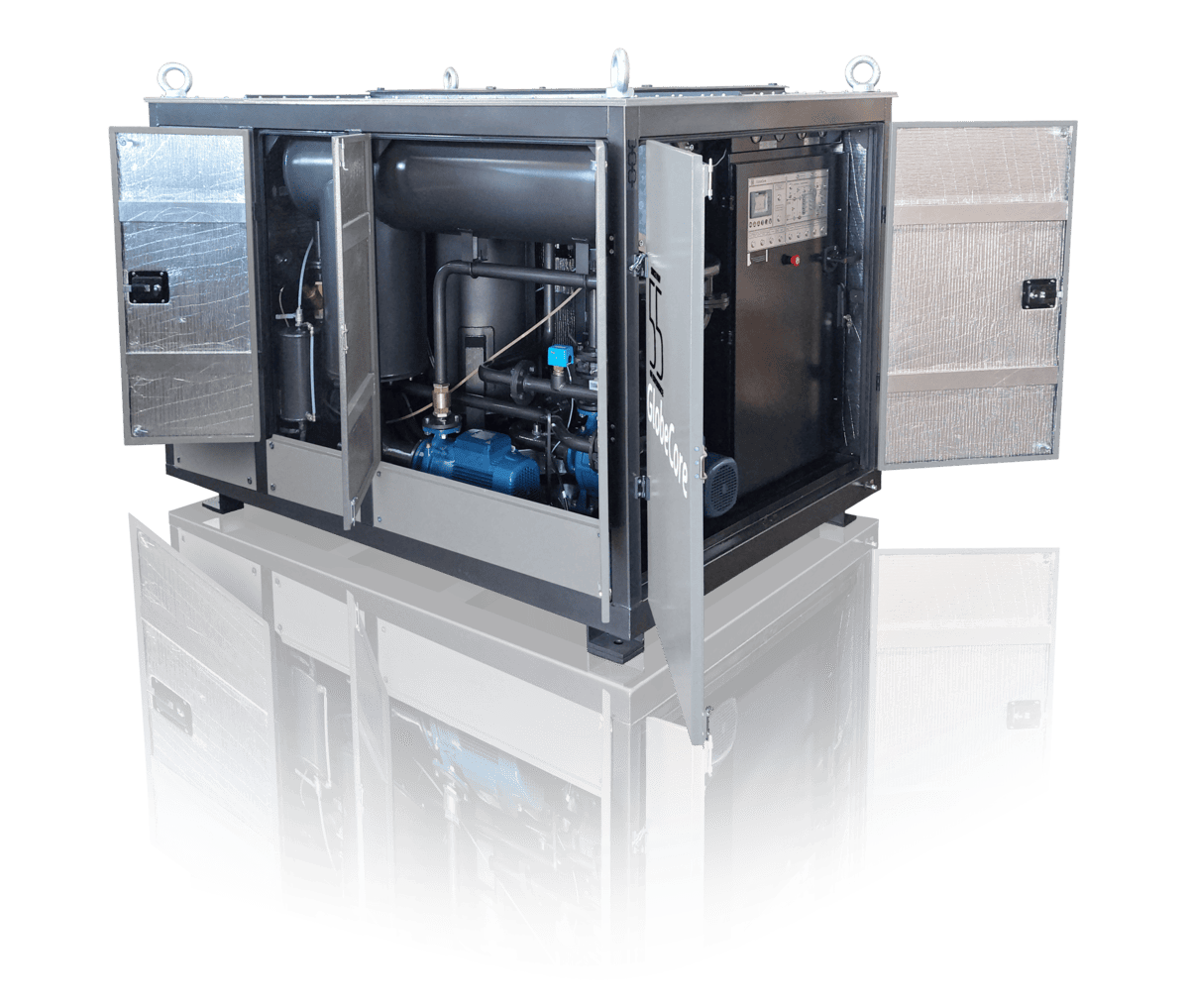
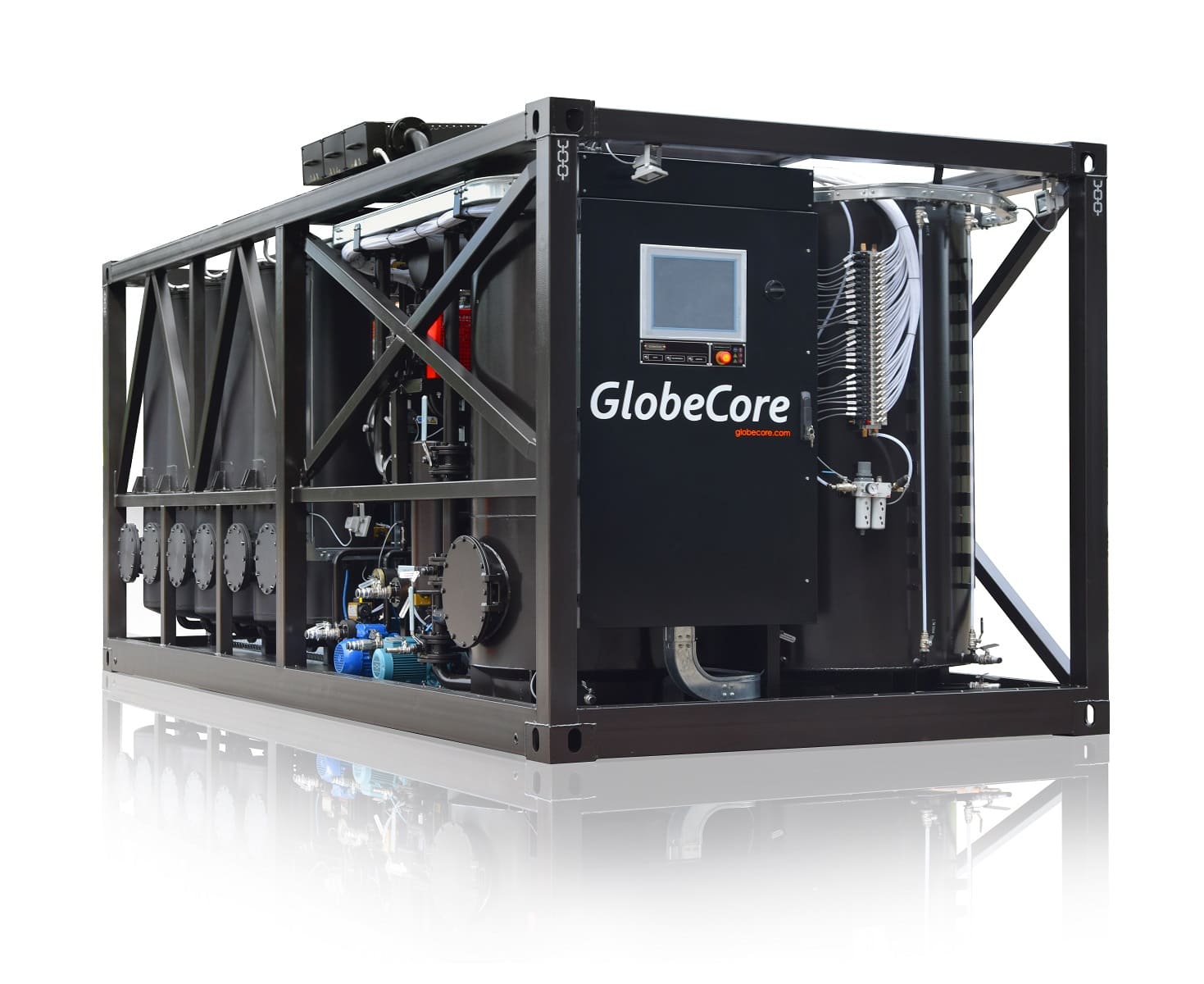
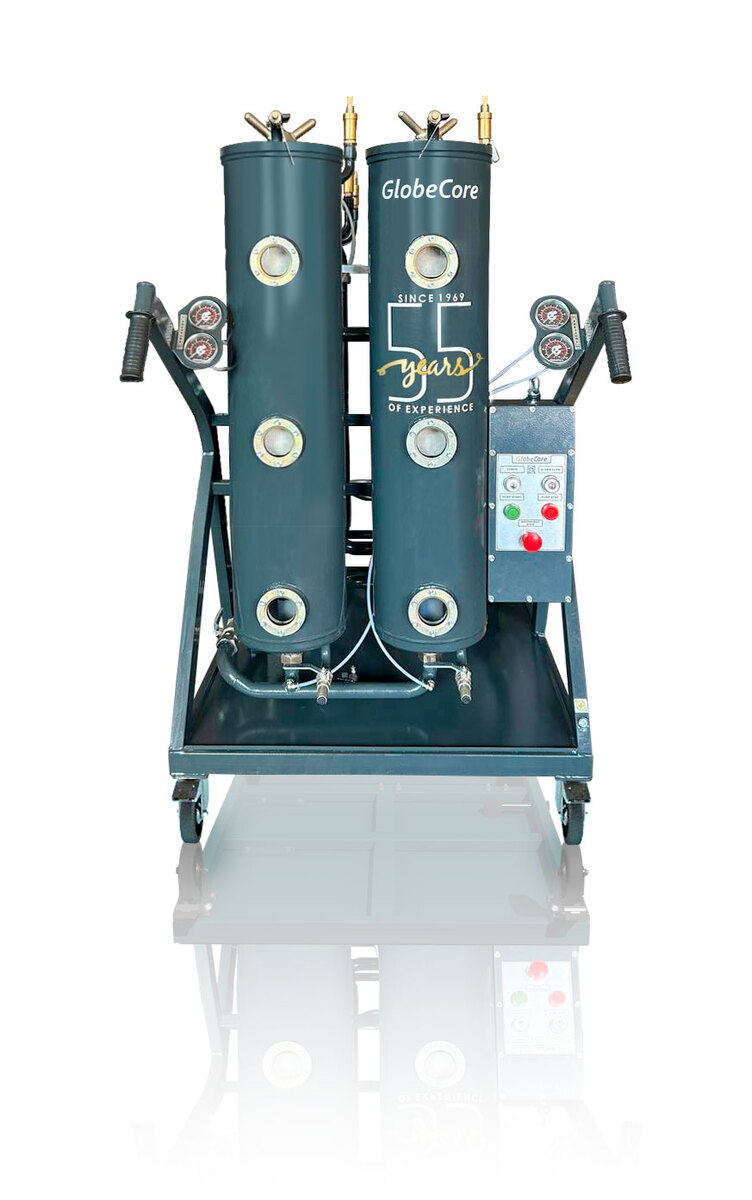
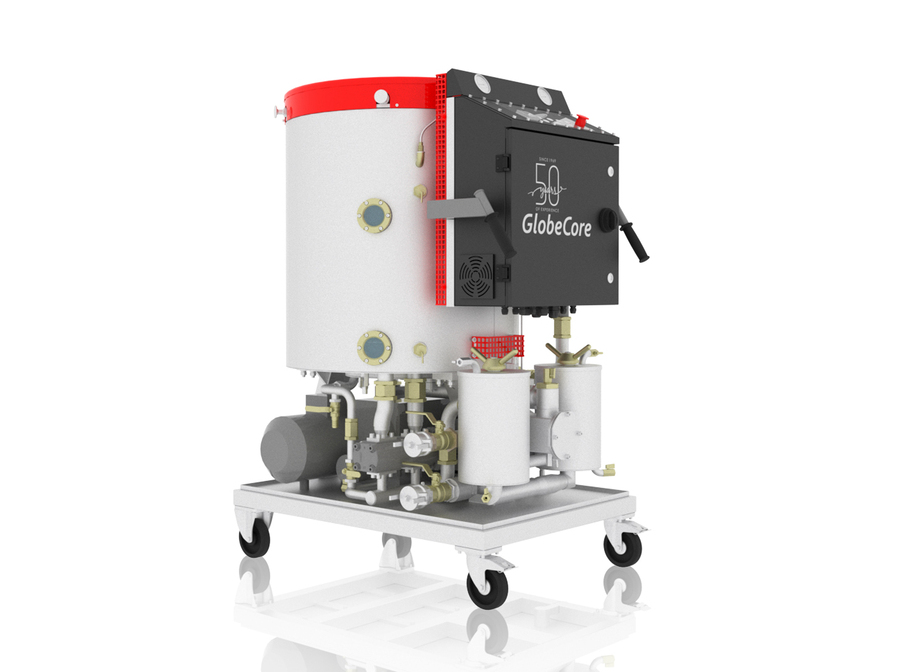
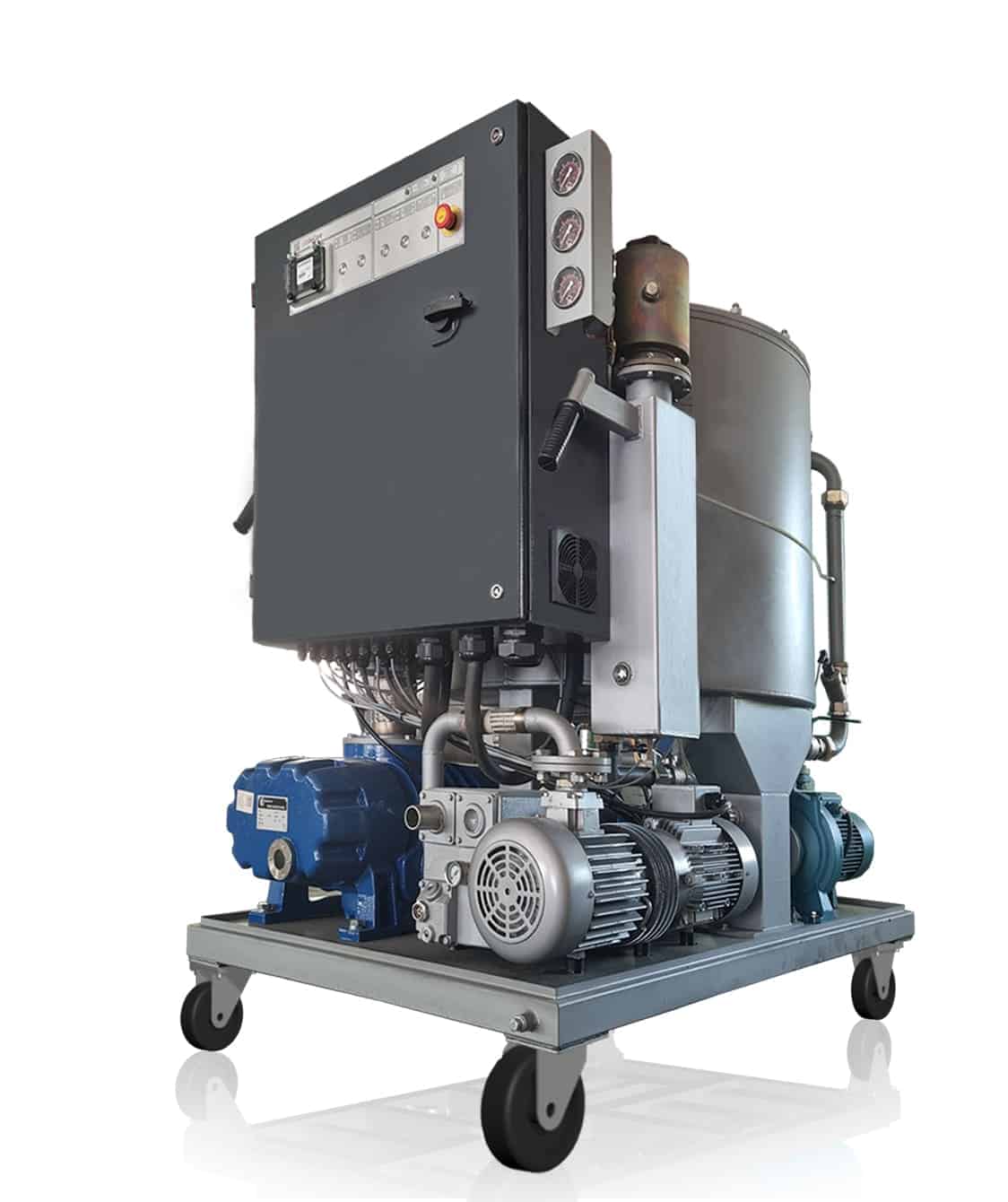
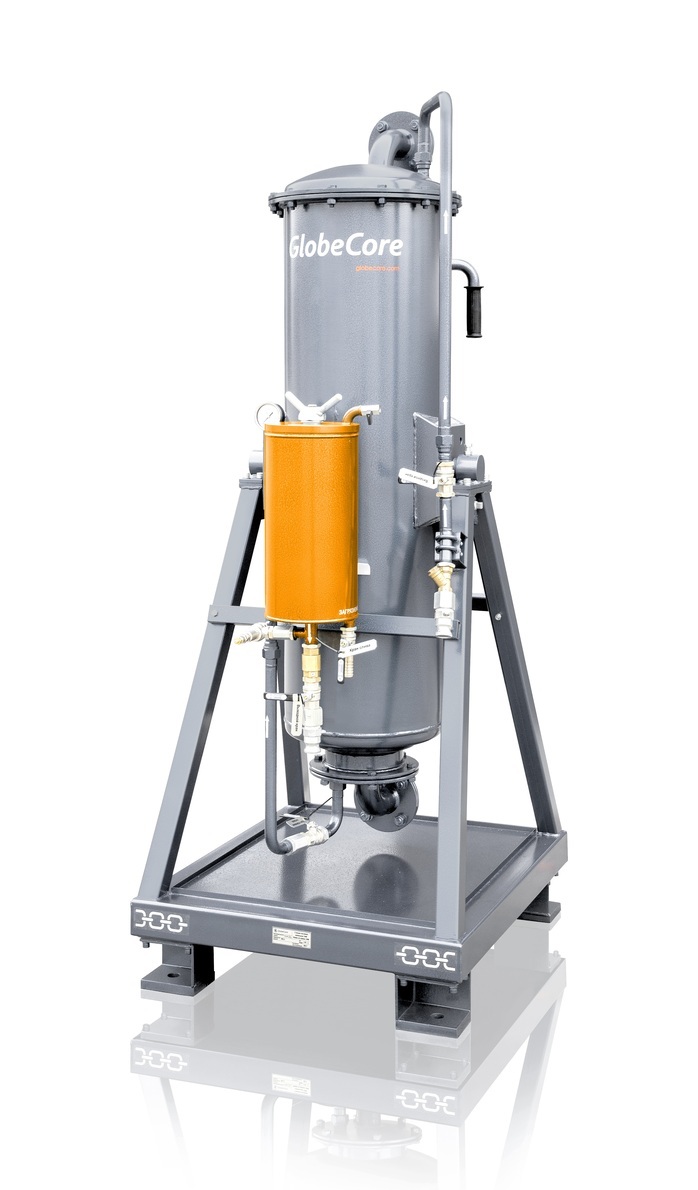
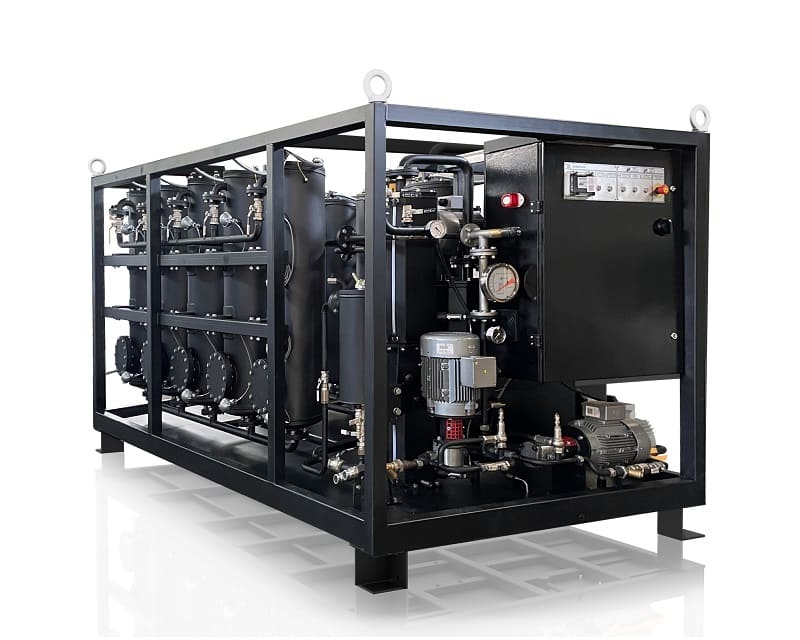
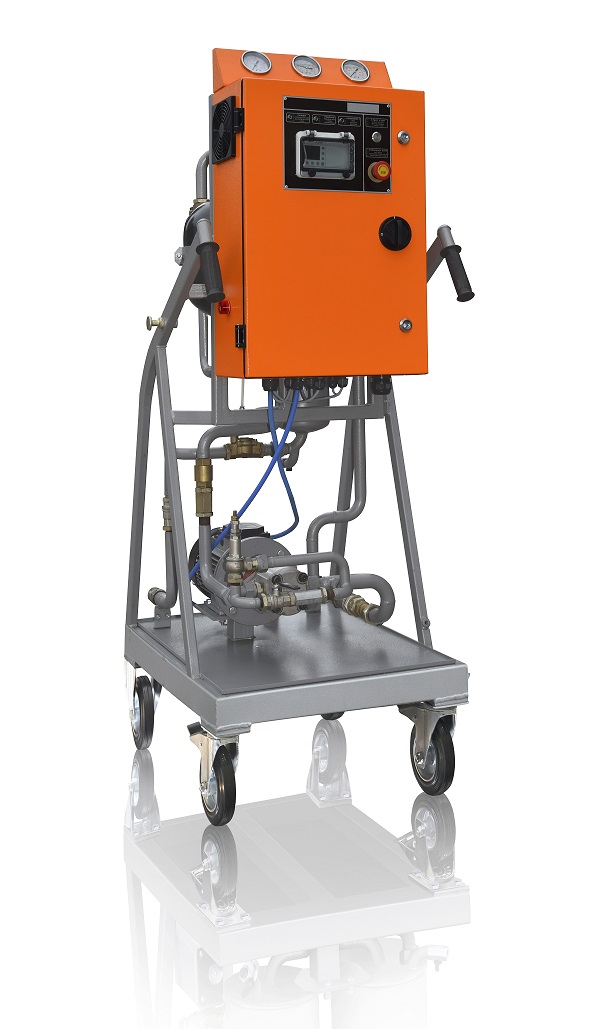
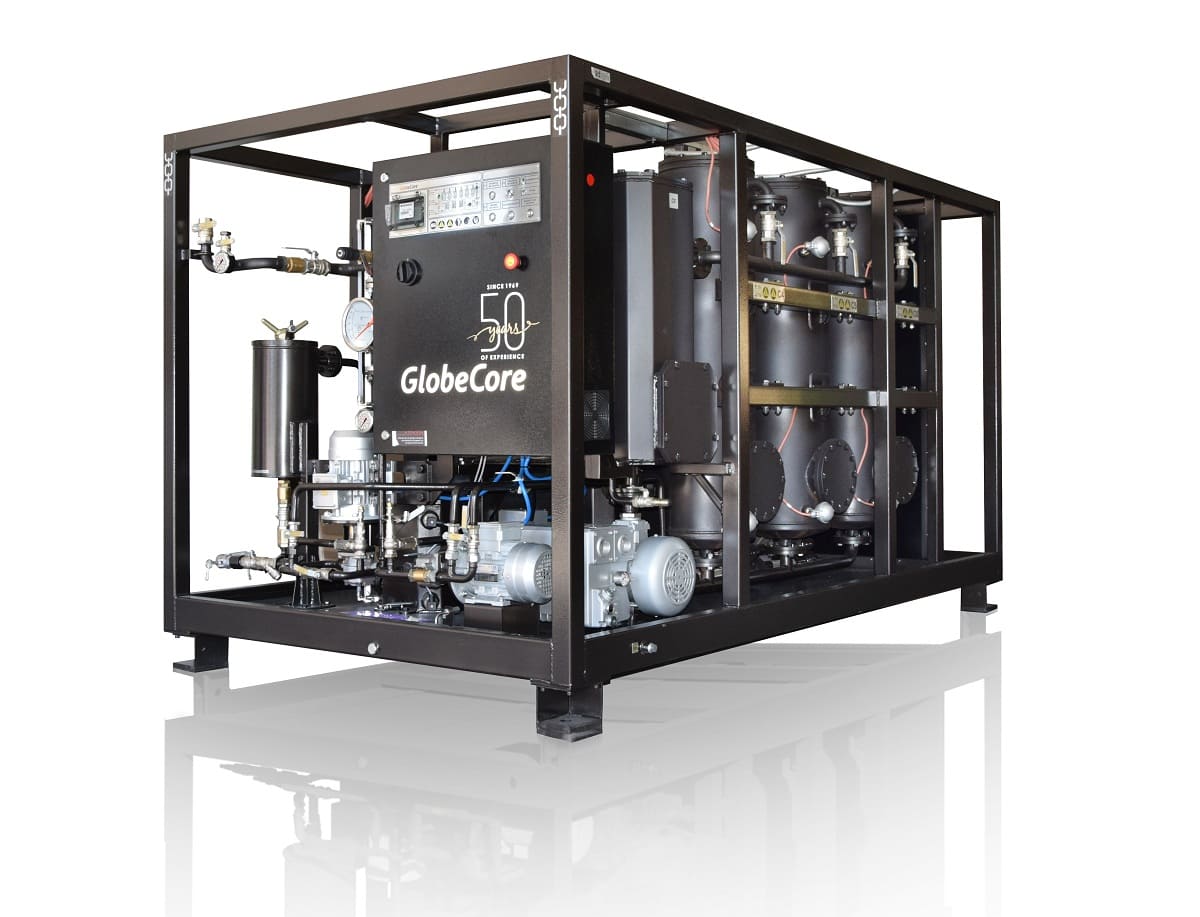
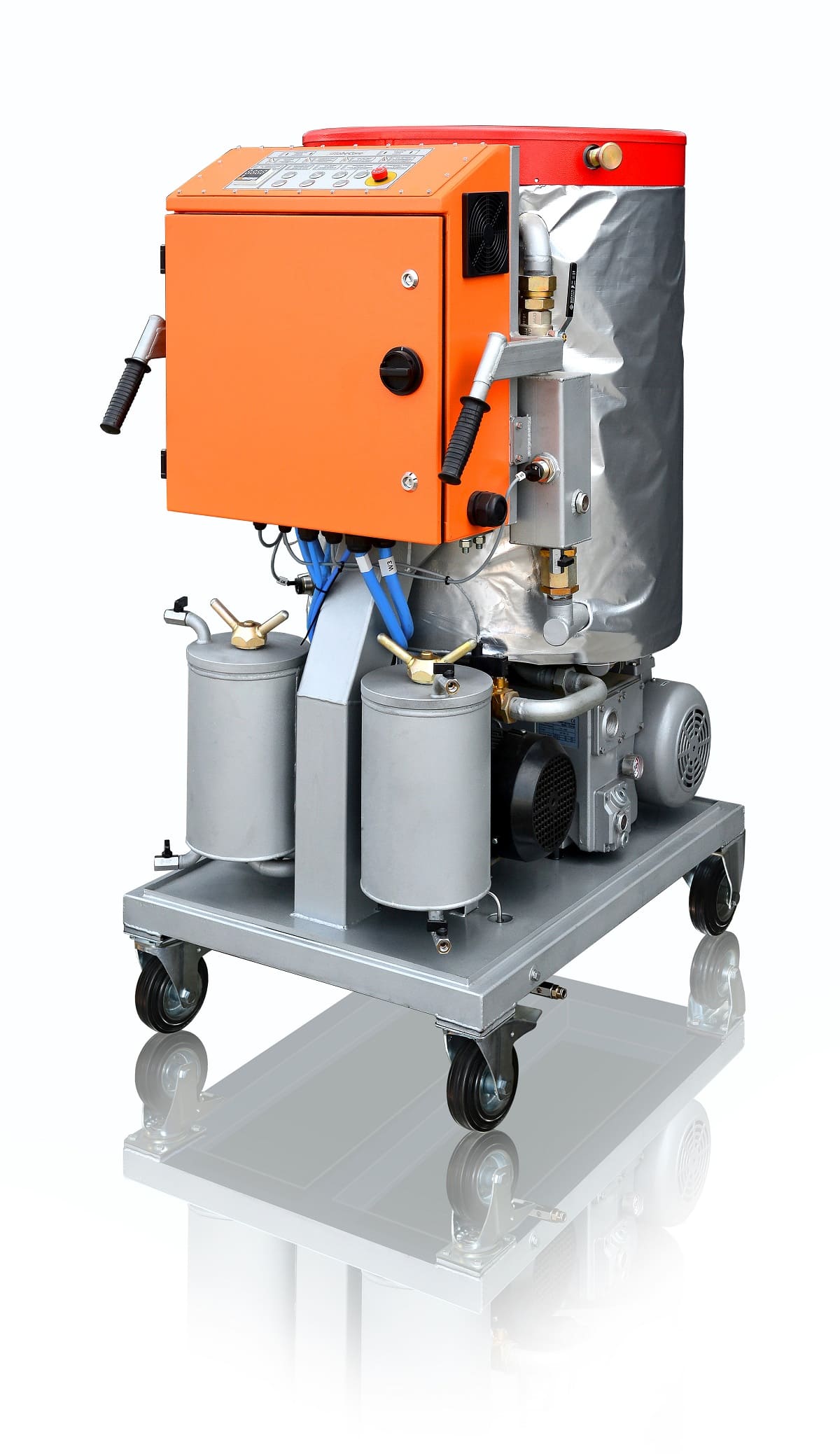
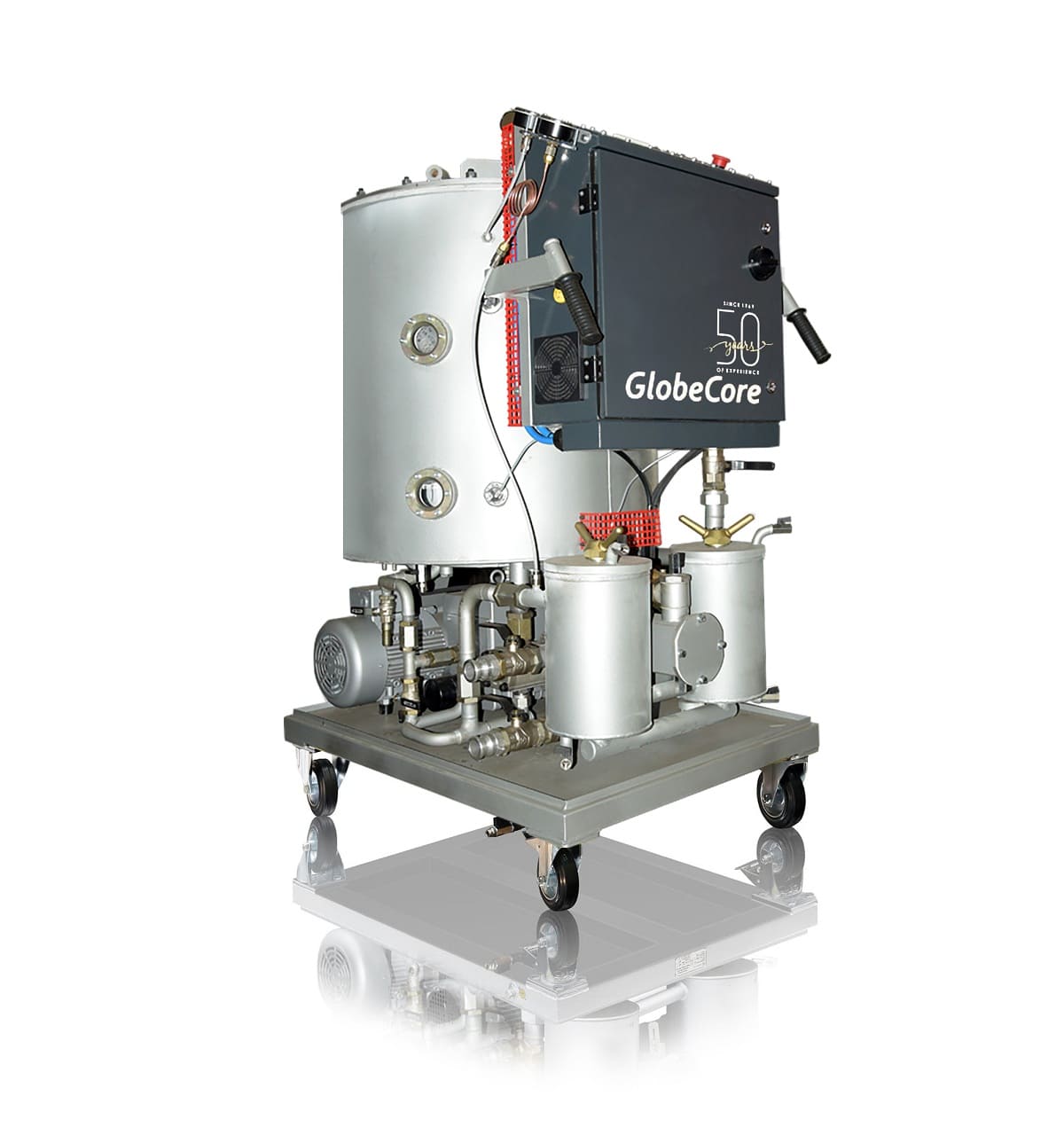
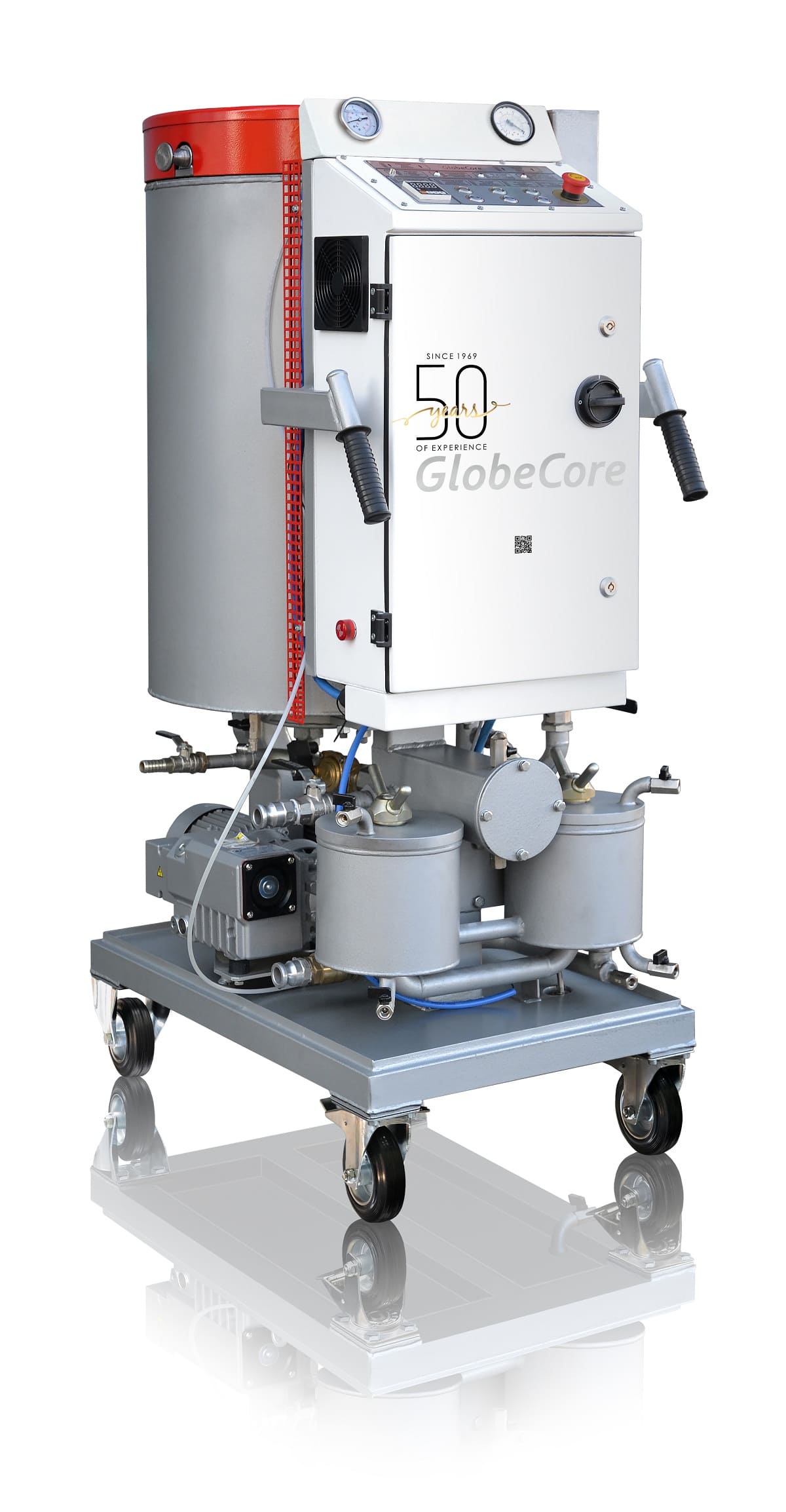
GlobeCore employs the most modern and efficient methods of waste oil refining in the equipment. Our units perform degassing, oil filtration, vacuum treatment, regeneration with Fuller’s earth and drying of transformer, turbine and industrial oil.
GlobeCore product range includes the following Oil Refining Units:
- CFU uses heat and vacuum to purify the oil and improve its parameters in one cycle. These units remove particulate matter and water transformer oil;
- CMM units include filtration, filtration and heating and vacuum purification of oil and oil degassing.
- MZU are designed for transformer oil dehydration with zeolite. The mineral can be regenerated directly in the unit.
- CMM-R and UVR units restore the chemistry and physical parameters of transformer oil. The difference is the type of sorbent used. The CMM-R uses Fuller’s earth, a sorbent with exceptional adsorption capacity. The saturated sorbent can be reactivated in the unit without unloading for as many as 300 reactivation cycles.
Waste oil refining by mobile GlobeCore units can be performed not only on electrical equipment, but also on hydraulic machinery, steam and gas turbines etc. The CMM-T units are built for purification of turbine oil with heat and vacuum. The unit operates in filtration, drying and degassing modes.
GlobeCore Waste Oil Refining Equipment Efficiency
GlobeCore purification equipment saves time and resources required for frequent change of oil in equipment. Our company’s main office is located in Oldenburg, Germany, with deliveries around the world. The company offers both standard and custom designed products. The client can model the unit to suit specific needs. Our specialists commission the unit and provide recommendations for its operation.