

Fuel oil polishing
How do commercial fuel oil polishing systems operate?
- This topic has 3 replies, 4 voices, and was last updated 3 weeks, 1 day ago by .
Answers
-
October 7, 2024 at 2:05 pm by Christopher Mcdaniel
Commercial fuel oil polishing systems operate by continuously or periodically circulating fuel from storage tanks through a filtration and purification process. The system removes contaminants such as water, sludge, and particulates using a combination of water separators, coalescers, and fine filters. These systems are often automated, with sensors monitoring fuel quality and triggering filtration cycles when contamination levels exceed thresholds. By maintaining fuel quality, these systems ensure that backup generators, boilers, or industrial engines operate efficiently, reducing the risk of damage from contaminated fuel.
-
March 9, 2026 at 7:33 am by Craig Price
Another factor that is often discussed in connection with commercial fuel oil polishing systems is their role in maintaining fuel stability during long-term storage, not just the removal of contaminants. When diesel or fuel oil remains in storage tanks for extended periods, oxidation and microbial activity can gradually change the fuel composition, leading to darker color, sediment formation, and sludge buildup. Polishing systems help mitigate these effects by periodically circulating the fuel through treatment stages, removing accumulated water, sludge, and microbial residues before they can significantly degrade fuel quality.
In many installations, the polishing unit operates as a side-stream treatment system, which means that only part of the fuel volume is continuously circulated through the purification loop. Over time, this repeated circulation gradually cleans the entire tank contents and prevents contaminants from settling and accumulating at the bottom of the tank. This approach is widely used at facilities where fuel may remain unused for long periods, such as backup power generation systems or industrial fuel storage.
If you are interested in a more detailed explanation of how polishing systems can restore the quality of degraded or darkened diesel fuel and maintain its stability during storage, this article provides additional insights: https://globecore.com/fuel-processing/dark-diesel-fuel-polishing/. -
March 9, 2026 at 7:39 am by David Allen
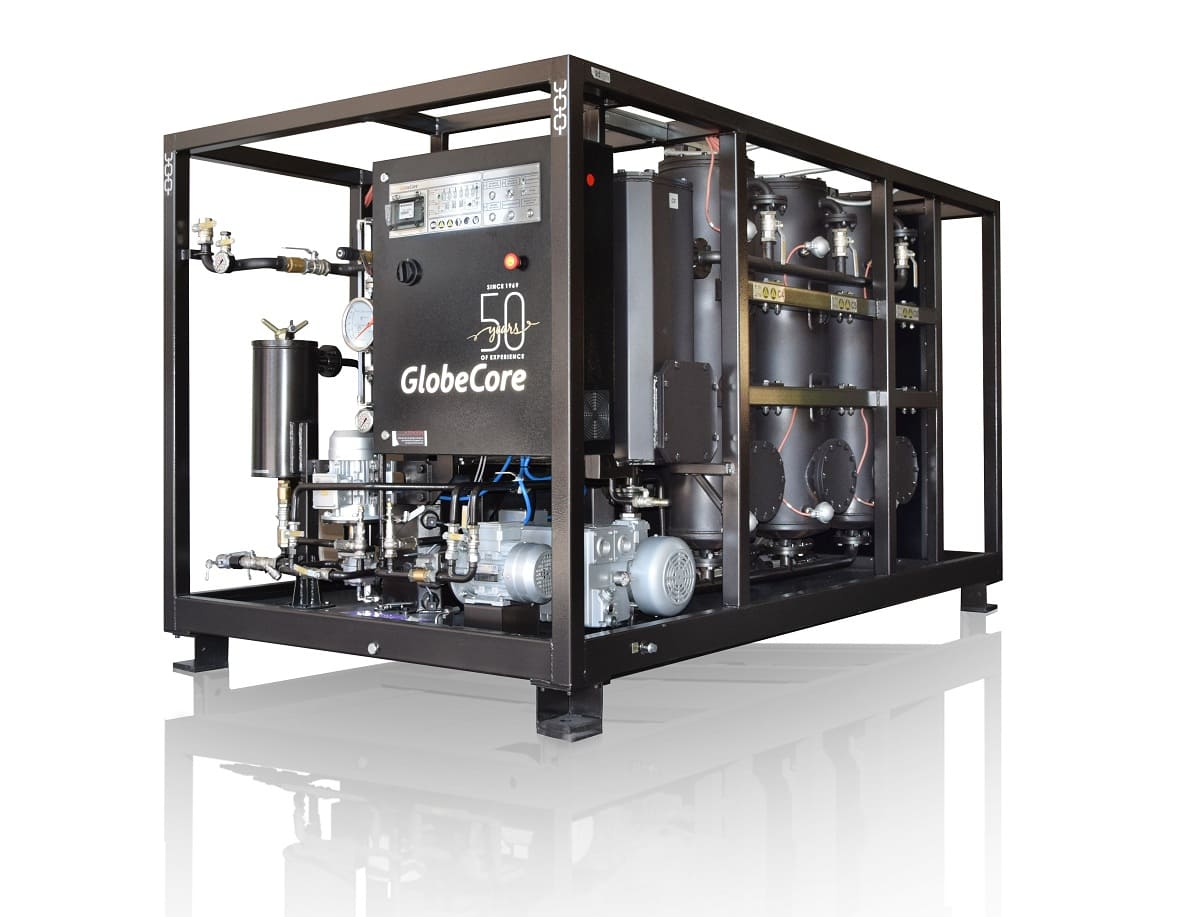
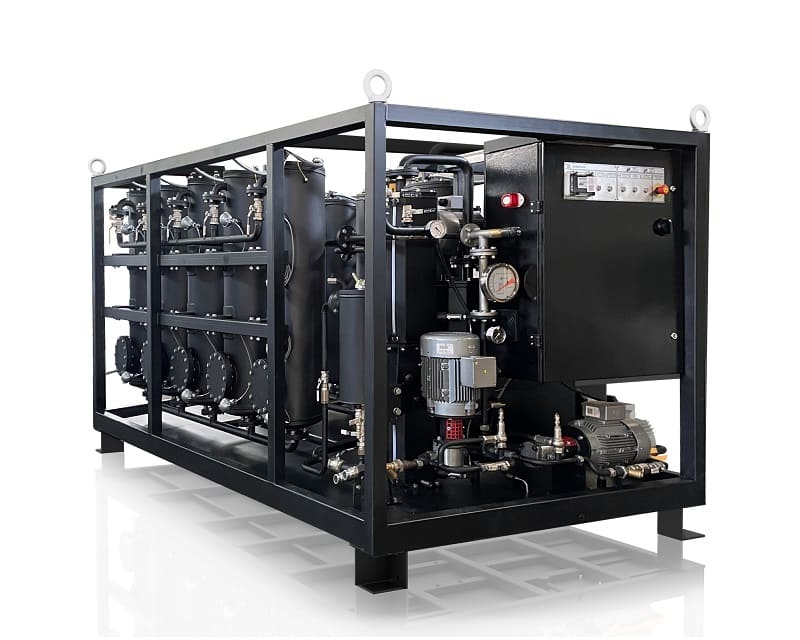
Polishing systems designed for dark or degraded diesel combine mechanical separation with an adsorption train to both clean contaminants and restore fuel stability. In a typical configuration (for example the CMM-6RL family) fuel is circulated through a bank of six adsorption columns where oxidized products, sulfur- and nitrogen-containing compounds, acids and fine particulates are retained in the sorbent while water and sludge are separated upstream. Units are sized for continuous or periodic polishing (a CMM-6RL is quoted around 45 m³/h), run automated polishing cycles (example polishing runs ≈6 hours) and include on‑column adsorbent reactivation by controlled combustion so the sorbent can be reused for many hundreds of cycles. For best results these systems are fed after coarse mechanical filtration and dehydration (recommended pre‑treatment units such as CMM-4.0F and CMM-1.0CF), and they can include emission/neutralization stages (carbon filter plus catalytic converter) for heating fuel applications.
When used as a side‑stream treatment the unit continuously circulates only part of the tank volume, which prevents settling, removes accumulated water and microbial residues, and gradually restores darkened fuel by stripping oxidation products and stabilizing the hydrocarbon matrix. That approach is ideal for long‑term storage and standby fuel supplies because repeated circulation and periodic sorbent regeneration keep color, odor and combustion properties within acceptable limits without excessive handling. In practice choose a polishing capacity that achieves suitable tank turnover for your storage volume, integrate pre‑filtration and dehydration ahead of the adsorbent train, monitor water/particulate levels and control regeneration via the unit’s automation to maintain fuel quality and extend fuel life.