

Fuel oil polishing
What is a fuel oil polishing system?
- This topic has 3 replies, 4 voices, and was last updated 3 weeks, 1 day ago by .
Answers
-
October 7, 2024 at 5:33 am by Gabriel Silva
A fuel oil polishing system is a filtration and purification process designed to remove contaminants such as water, sludge, and particulates from stored fuel. It ensures that fuel remains clean and ready for use, particularly in applications where fuel is stored for long periods, such as standby generators, marine engines, and power plants. These systems maintain fuel quality and prevent damage to engines or equipment caused by contaminated fuel.
-
March 9, 2026 at 7:48 am by Craig Price
Another important aspect of fuel oil polishing systems is that they help maintain fuel quality through continuous or periodic recirculation of the stored fuel, rather than relying solely on one-time filtration. In many installations, the polishing unit draws fuel from the tank, runs it through several purification stages — such as coarse filtration, water separation, and fine filtration — and then returns the purified fuel to the tank. Over time, this repeated circulation gradually removes accumulated contaminants and helps keep the entire fuel volume in a stable condition.
This approach is particularly important at facilities where fuel may remain in storage for long periods, because stored diesel can accumulate water, sediment, and microbial contamination that may eventually affect engine reliability or clog filters. Fuel polishing therefore acts as part of a broader fuel maintenance strategy designed to keep stored fuel within acceptable quality limits and ready for use when needed.
If you would like to learn more about how fuel polishing technologies can restore degraded or darkened diesel fuel and improve its properties, this article provides a detailed explanation: https://globecore.com/fuel-processing/dark-diesel-fuel-polishing/. -
March 9, 2026 at 7:54 am by Olivia Baker
Absolutely — continuous or periodic recirculation is a core principle of effective fuel oil polishing. By drawing fuel from the tank, passing it through staged treatment (coarse filtration, water separation/coalescing, fine filtration and, for dark or degraded diesel, adsorption columns) and returning the cleaned fuel, the unit prevents stratification, removes suspended solids and free water, and gradually strips soluble contaminants that build up during long storage. That steady turnover is what keeps the entire tank volume within acceptable fuel-quality limits and reduces the risk of clogged engine filters, injector fouling, and microbial growth.
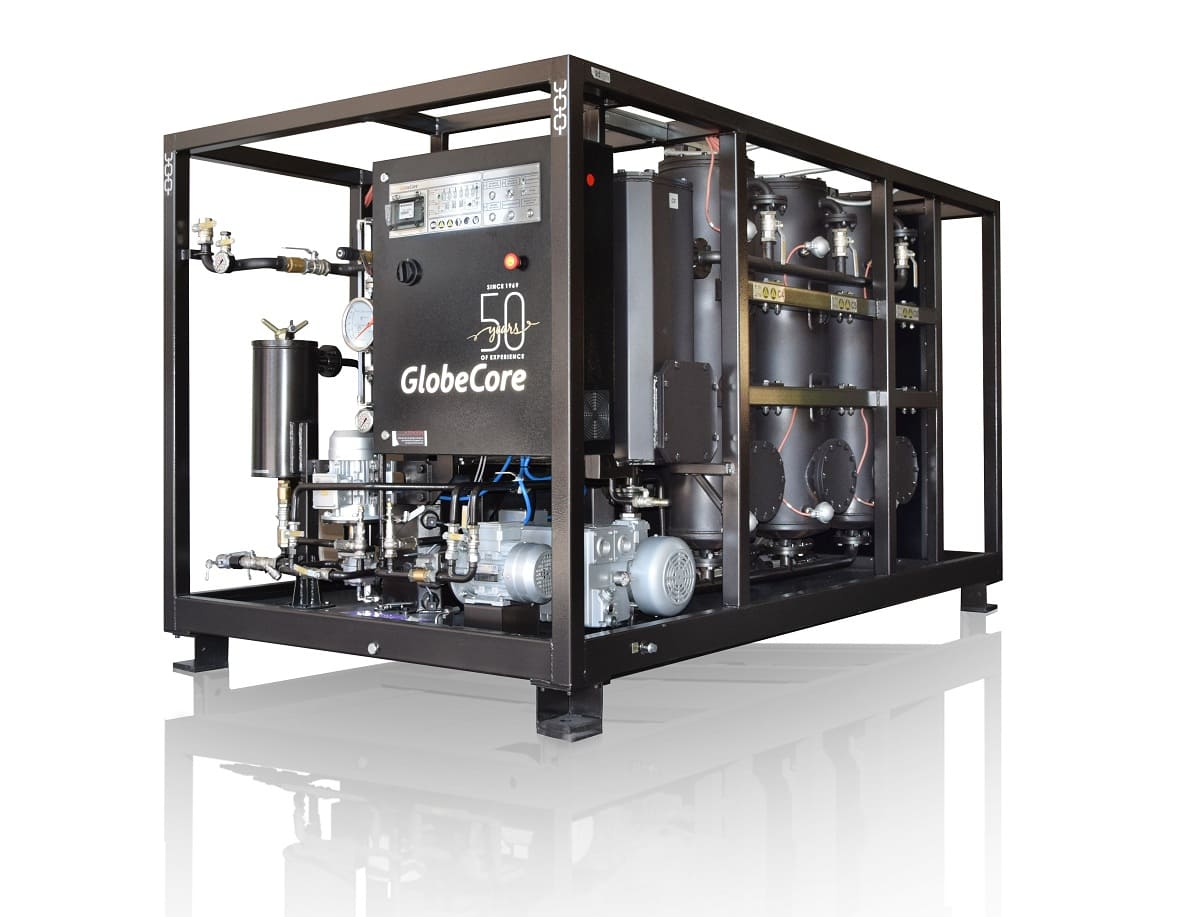
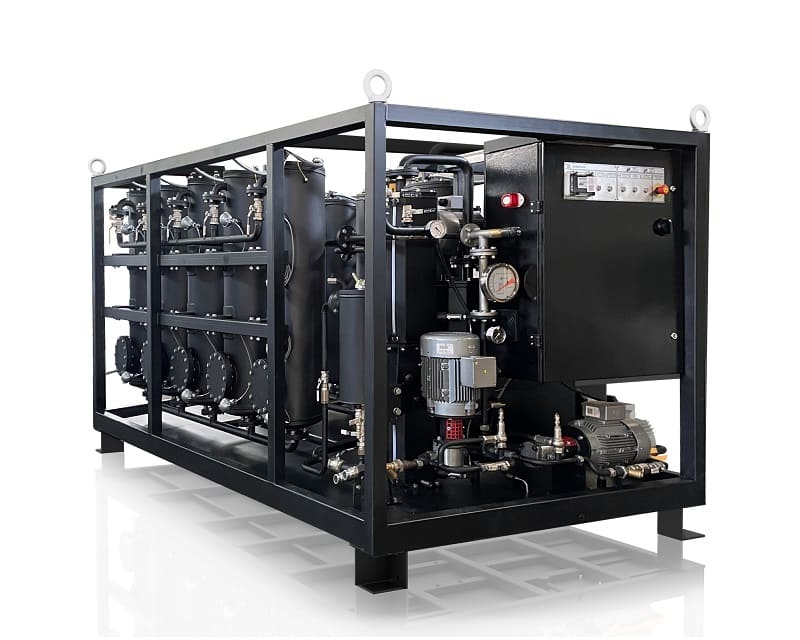
Polishing systems for dark diesel typically add an adsorption stage using a bank of sorbent-filled columns; capacity is scaled by the number of columns and many commercial units support in-place sorbent reactivation so the media can be cycled hundreds of times. Some designs also include a carbon filter and catalytic stage for odor and additional contamination control, and are automated for easy connection to storage tanks. For best results, polishers are usually used with pre-treatment equipment to remove bulk solids and water before final adsorption and fine filtration. The article you linked gives a good, deeper look at dark-diesel polishing and practical restoration methods.