

Air drying
What is an industrial hot air dryer used for?
- This topic has 3 replies, 3 voices, and was last updated 1 month, 1 week ago by .
Answers
-
September 9, 2025 at 7:33 am by Nancy Harris
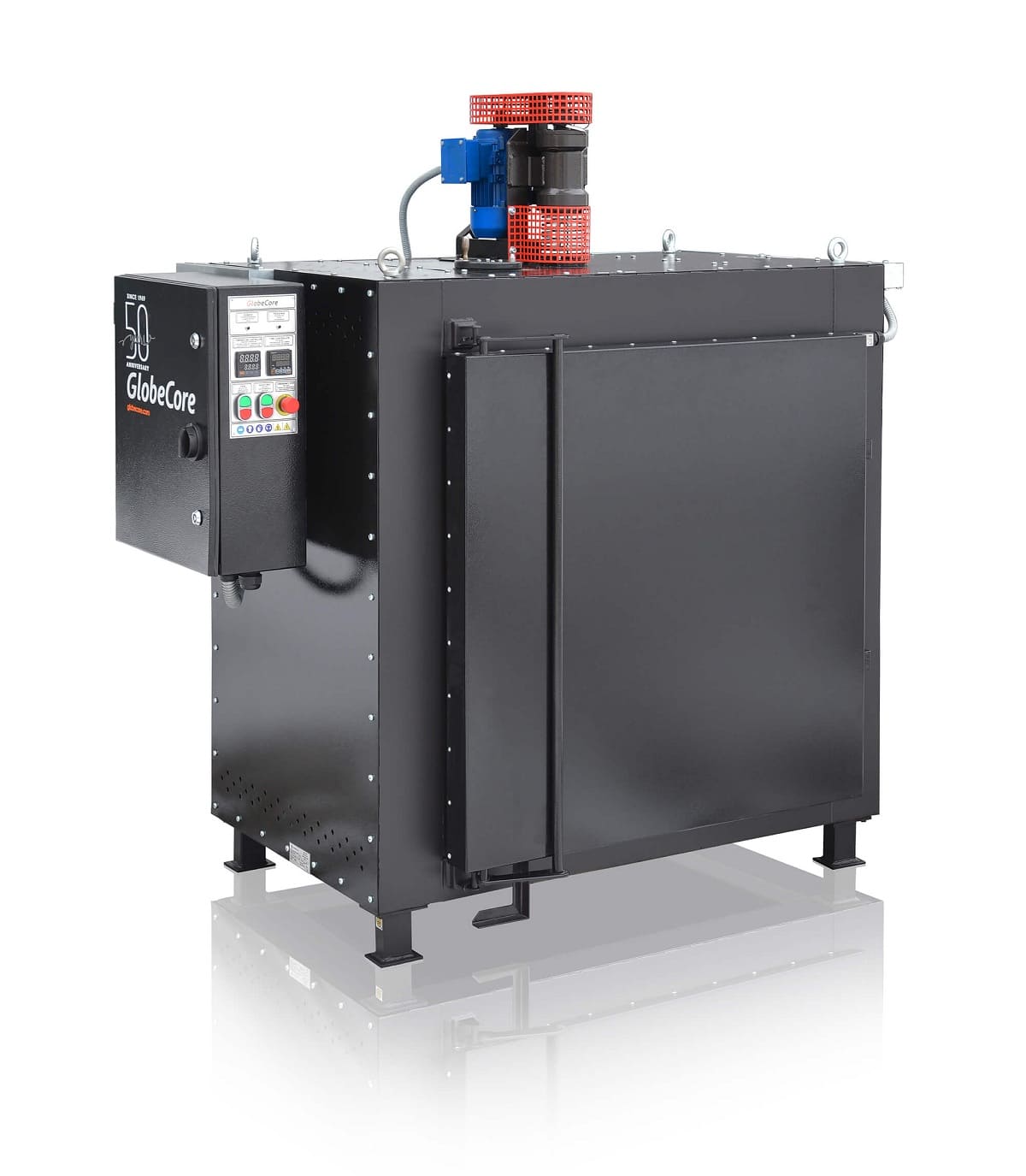
It’s used for drying parts, materials, or equipment with controlled hot air flow. While GlobeCore specializes in oil purification, it also offers drying equipment for power transformers, ensuring internal components are moisture-free before filling.
-
February 18, 2026 at 7:49 am by Craig Price
In addition to general drying of parts and materials, industrial hot air dryers are particularly valuable when moisture removal must be uniform and controllable across complex assemblies. In transformers and other electrical equipment, trapped moisture can compromise insulation performance and accelerate degradation. What sets hot air drying apart from other drying methods is the ability to control temperature and airflow independently, which helps avoid thermal stress on sensitive components while still achieving effective moisture removal.
This makes hot air drying systems particularly useful not only in manufacturing environments, but also during pre-commissioning and routine maintenance, when the equipment must be brought back to a dry and stable condition before service.
For more details on how advanced hot air drying solutions, including the Mojave Heat dry air system, work and their advantages for transformer pre-commissioning and maintenance, I recommend checking out this article: https://globecore.com/transformer-maintenance/dry-air-system-mojave-heat/. -
February 18, 2026 at 7:54 am by Tyler Hill
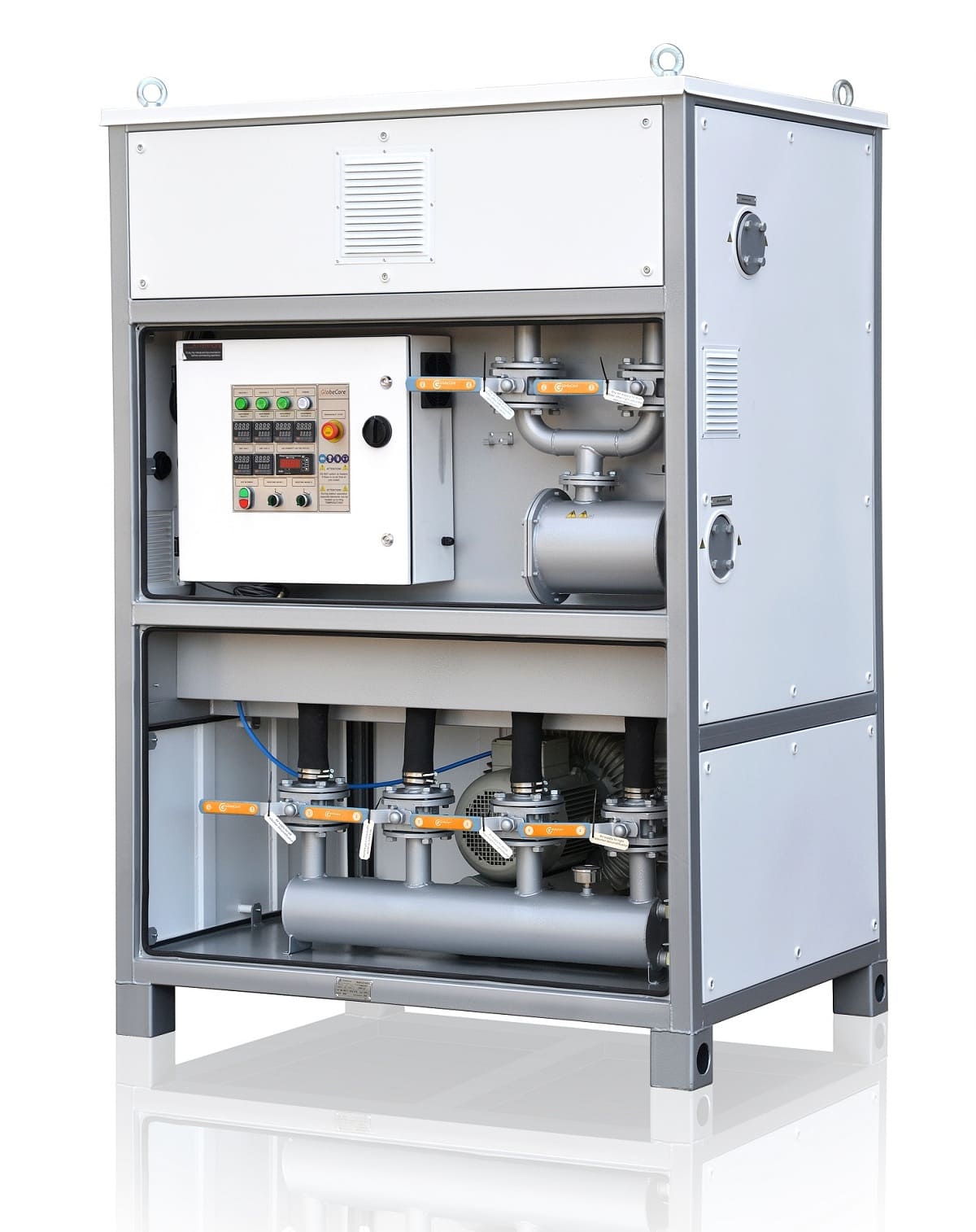
You’re absolutely right — controllable hot air drying is ideal where uniform, low-stress moisture removal is required, especially for transformer pre-commissioning and maintenance where trapped moisture degrades insulation and long‑term reliability. Systems like the Mojave Heat use zeolite adsorption with two independent adsorbers so dry air can be produced continuously while one bed regenerates; independent control of air temperature, flow and dew point lets you purge tanks and windings without thermal shock and achieve very low moisture levels for safe assembly and service.
For the Mojave Heat family the design targets are industry‑grade: model features include zeolite adsorption capable of dew points down to about −50 °C (for the 0.7 model), dry air temperatures up to roughly 90 ±15 °C, low output pressure (around 0.018 MPa / 0.18 bar), and high adsorbent/regeneration capability (regeneration temperatures to ~430 °C, adsorbent load ~190 kg on the 0.7). Heater capacity is up to ~24 kW overall and normal energy use in drying mode is low (roughly 1 kW for the 0.7 and ~5.5 kW for the 4). Beyond transformers, the same controlled dry air is useful for drying cables, electronics, pharmaceuticals, foodstuffs, paper and textiles where tight humidity control matters. If you want, I can pull the exact performance table for either the Mojave Heat 0.7 or the Mojave Heat 4 and relate it to a specific transformer size or maintenance procedure.