

Diesel bleaching
What is the capacity of typical diesel polishing units?
- This topic has 3 replies, 4 voices, and was last updated 1 month ago by .
Answers
-
October 7, 2024 at 2:28 pm by Laura Schmidt
The capacity of diesel polishing units varies depending on the system, but most commercial units can handle fuel flow rates ranging from 10 to 100 gallons per minute (GPM) or higher. Larger systems are available for industrial and marine applications, capable of polishing thousands of gallons per hour.
-
February 26, 2026 at 7:32 am by Craig Price
Another important factor to consider when discussing the capacity of diesel polishing units is how capacity relates to the specific contamination challenges you are facing. Units with higher flow rates are useful for rapid processing of large fuel tanks. However, without addressing the root causes of contamination, such as microbial growth or water ingress, recurring issues may still arise and degrade fuel quality despite a high throughput.
It’s also worth noting that the polishing unit’s design (filter media, water separation efficiency, and circulation strategy) can be just as crucial as raw capacity numbers. A unit rated at a lower flow rate (gallons per minute, GPM) with optimized separation stages may outperform a higher-capacity system in terms of overall cleanliness and engine availability.
For a deeper look at how polishing addresses dark diesel fuel and complex contamination scenarios, this article outlines the key principles and practical considerations: https://globecore.com/fuel-processing/dark-diesel-fuel-polishing/. -
February 26, 2026 at 7:41 am by Li Wei
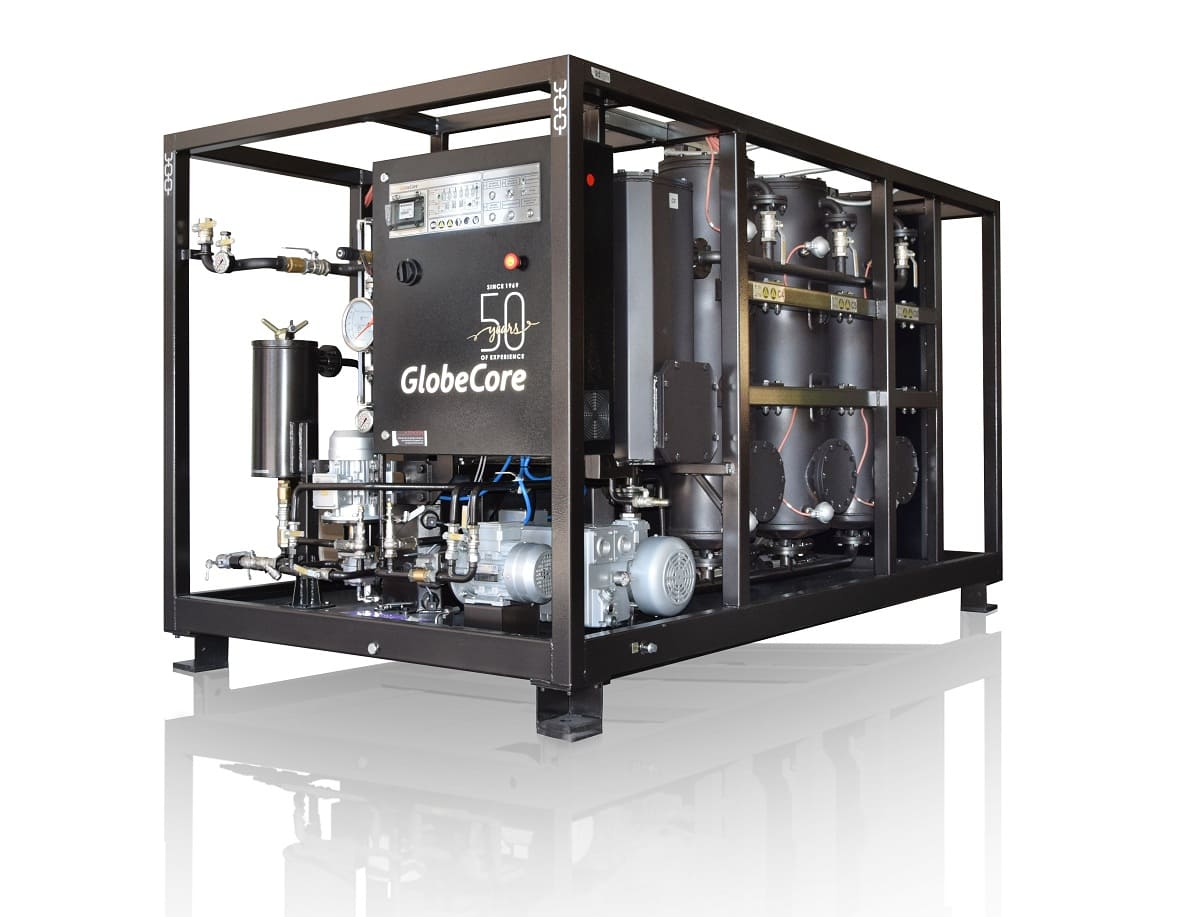
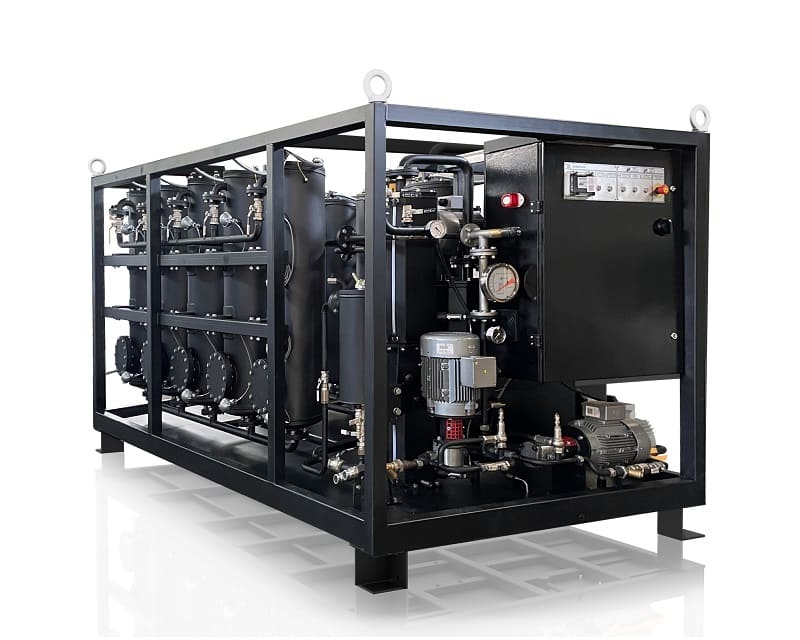
You’re absolutely right that raw flow rate is only part of the story — contamination profile, water content, microbial fouling, and the polishing unit’s separation and adsorption design determine real-world performance. For reference, an industrial adsorptive dark diesel polishing unit like GlobeCore’s CMM-6RL is rated at about 45 m³/h (roughly 200 US GPM), but actual throughput will vary with fuel quality and contamination load. That unit uses six adsorption columns, supports sorbent reactivation (reactivation cycle up to ~19 hours), and draws about 14.5 kW on three-phase power.
When sizing or comparing systems, prioritize water separation efficiency, filter media and adsorption stages, and circulation strategy as much as nominal GPM; a lower-flow system with optimized separation and good sorbent management will often produce cleaner fuel and fewer recurring issues than a higher-capacity unit with poor water/microbial control. If you want, tell me your tank size and contamination profile and I can map those needs to the closest polishing option and recommended pretreatment steps (mechanical filtration, water removal, microbial control).