

Hydraulic oil purification
What methods are used for Moisture Removal from Hydraulic Oil during purification?
- This topic has 7 replies, 6 voices, and was last updated 3 weeks ago by .
Answers
-
October 7, 2024 at 2:47 pm by James Shepherd
Methods for Moisture Removal from Hydraulic Oil during purification include vacuum dehydration, thermal drying, adsorption, and centrifugal separation. Vacuum Dehydration involves reducing the pressure around the hydraulic oil, which lowers the boiling point of water, enabling moisture to evaporate and be removed efficiently. Thermal Drying heats the oil to increase the rate of moisture evaporation, often combined with air circulation to carry away the evaporated water. Adsorption utilizes materials such as molecular sieves or silica gel to absorb and capture moisture from the oil, effectively reducing its water content. Centrifugal Separation spins the oil at high speeds, using centrifugal force to separate water and other contaminants based on density differences. Absorption techniques may also be employed, where moisture is absorbed by desiccants or chemical additives that react with water to remove it from the oil. These methods are often used in combination to achieve thorough dehydration, ensuring that the hydraulic oil maintains its insulating and lubricating properties for optimal system performance.
-
March 20, 2026 at 7:00 am by Craig Price
In practice, the effectiveness of moisture removal methods is also strongly influenced by the type of water present in the oil — free, emulsified, or dissolved. Different technologies perform differently depending on this condition. For instance, centrifugal separation and coalescence are generally effective for removing free water, while more advanced methods such as vacuum dehydration are required to eliminate dissolved moisture, which is often the most difficult to remove.
Another important consideration is the operating conditions of the purification process. Continuous circulation systems tend to achieve more stable and deeper dehydration over time compared to single-pass treatment, especially in systems where moisture ingress is ongoing. In such cases, combining methods (for example, filtration + vacuum dehydration + adsorption) provides a more reliable long-term result rather than relying on a single technique.
For this reason, in real industrial applications, moisture removal is not just about choosing a method, but about selecting the right combination and configuration based on contaminant type and operating conditions. If you’d like to explore how these approaches are implemented in practice and how hydraulic oil treatment systems are designed, this article provides a clear technical overview: https://globecore.com/oil-processing/oil-treatment-hydraulic-systems/. -
March 20, 2026 at 7:09 am by Rachel Wright
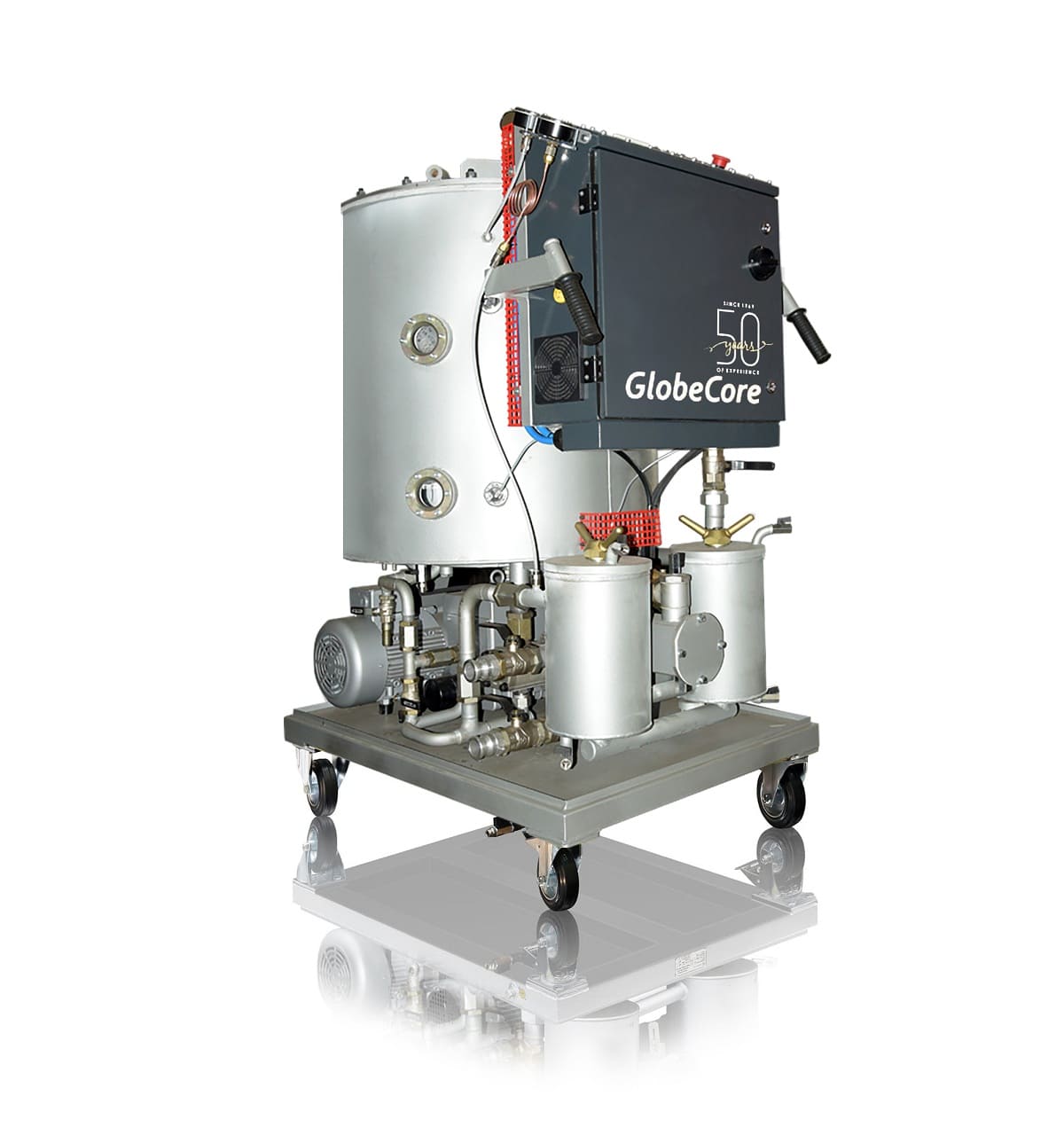
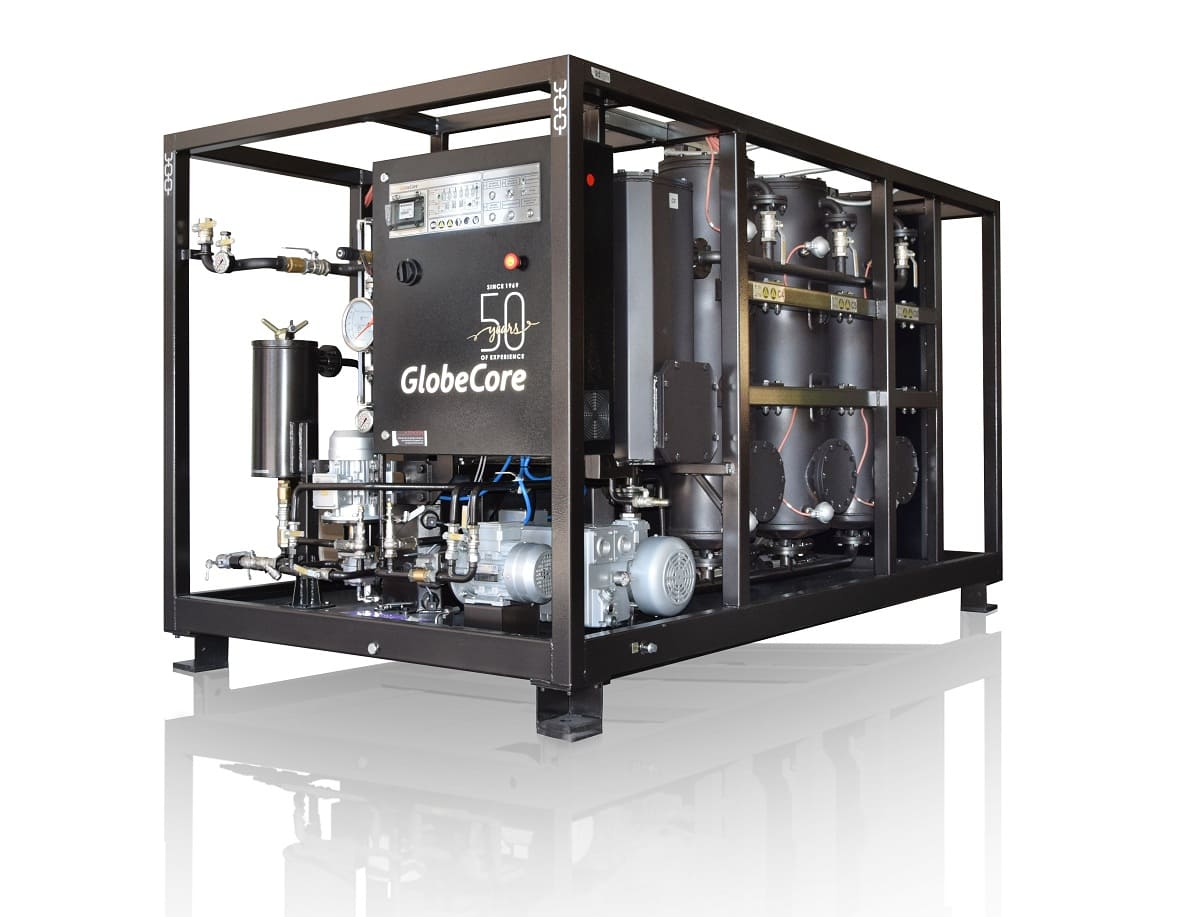
You’re exactly right that water type (free, emulsified, dissolved) and operating mode dictate which dehydration technology will work best. In practice we size and sequence equipment to match the contamination profile: for very high free-water loads (oil with visible water or water content on the order of tens of percent) coalescing-filter systems are used first to force droplets to merge and separate, often paired with a drain/collect tank and coarse particulate filtration. For preliminary removal or bulk separation a settling tank or centrifuge can be effective as a first pass. When moisture levels are lower but still substantial, zeolite adsorption trains (no oil heating required) provide deep dehydration at higher starting moisture levels and are practical for continuous operation; zeolite cartridges can be reclaimed with dedicated units to reduce waste and cost. For final, deep drying of dissolved water you need thermal vacuum dehydration: units designed for vacuum plus heating will strip dissolved and free water down to very low contents (typical plant capability is on the order of ~10 ppm or lower), and they also provide fine particle cleanup and degassing.
A combined, continuous-treatment approach usually gives the best long‑term results: bulk removal (coalescing or centrifuge) followed by adsorption if initial moisture is high, then vacuum/thermal dehydration for final polishing and dissolved-water control. Choose coalescing/centrifuges for very high free-water loads (e.g., >>10% or visible phase separation), zeolite systems for higher-than-100 ppm moisture when heating is undesirable, and thermal vacuum units for polishing when moisture is ≤ ~100 ppm and you need ppm-level dryness. Also consider filtration ratings and flow capacity when integrating stages (typical dehydration units range from ~0.6–8 m3/h or ~4 m3/h for some adsorption systems) and use continuous circulation rather than single-pass treatment when ongoing ingress is expected to maintain stable, deep dehydration.
-
March 23, 2026 at 7:08 am by Craig Price
Another point that is often overlooked in moisture removal discussions is the role of polar contaminants and oxidation by-products, which can actually bind water within the oil structure and make dehydration less efficient.
Even if vacuum dehydration or adsorption is applied, the presence of resins, acids, and oxidation products can “trap” moisture at a molecular level. In such cases, removing water alone is not sufficient — the oil may quickly reabsorb moisture or fail to achieve very low ppm levels. This is where combined purification with adsorption-based refining (bleaching) becomes important. Adsorbents such as bleaching earth or silica gel not only remove color bodies, but also capture oxidation products, acids, and other polar compounds that contribute to moisture retention.
In practice, this means that for aged or heavily degraded hydraulic oil, a dehydration-only approach may reach its performance limit. Integrating a stage that removes chemical degradation products can significantly improve the stability of the dehydration result and extend the service life of oil. -
March 23, 2026 at 7:10 am by Craig Price
If you want to explore how adsorption and bleaching processes complement standard purification methods and improve overall oil quality, this article provides a useful technical perspective: https://globecore.com/oil-processing/oil-bleaching/.
-
March 23, 2026 at 7:18 am by Eric King
You’re absolutely right — polar oxidation products, resins and varnish act like molecular sponges for water, so oil that is chemically degraded will hold more moisture and resist deep drying. Polar species form hydrogen-bonding sites and colloidal complexes that trap emulsified and even dissolved water; that’s why a dehydration‑only program can stall at a higher equilibrium moisture and the oil will re‑absorb water quickly once back in service.
In practice the fix is to add an adsorption/bleaching stage that removes polar contaminants before (or in parallel with) final drying. A typical, effective sequence is bulk water removal (coalescer or centrifuge) to eliminate free water, an adsorption/bleaching pass (silica gel, bleaching earth or molecular sieves/zeolites) to strip varnish, acids and polar oxidation products, then thermal vacuum dehydration for dissolved‑water polishing and degassing, finishing with multi‑stage mechanical filtration to reach target cleanliness. Monitor water ppm, TAN/acid number, color/varnish potential and ISO particle codes to judge effectiveness; for heavily degraded oil consider full reclamation rather than dehydration alone. Regenerable adsorbents and combined continuous‑circulation systems give the most stable long‑term results.
-
March 23, 2026 at 7:26 am by Ryan Adams
Exactly — for stable, low‑ppm dehydration you almost always need to remove the polar, varnish‑forming species that hold water in the oil matrix before or in parallel with drying. In practice the most reliable sequence is bulk‑water removal (coalescer or centrifuge when free water is present), followed by an adsorption/bleaching pass (silica gel, bleaching earth or molecular sieves/zeolite) to strip resins, acids and oxidation products, and finished with thermal vacuum dehydration for dissolved‑water polishing and degassing. Vacuum/thermal dryers can routinely drive moisture down to the low ppm range (around 10 ppm and below) and also help remove entrained gases, adsorption trains are effective at deep dehydration without heating and can be regenerative (reducing waste and operating cost), and coalescing filters or centrifuges are the fastest way to handle very high free‑water loads or visible phase separation.
Operationally, run the system in continuous circulation when ingress is ongoing, monitor Karl Fischer water content, TAN/acid number, ISO particle counts and varnish/color tests to judge effectiveness, and be aware that bleaching/adsorption can strip some additive chemistry so post‑treatment additive replenishment or testing may be required. For heavily degraded oil consider full reclamation rather than dehydration alone; regenerable zeolite or dedicated adsorbent regeneration units can lower lifecycle cost. If you want, provide your oil type, current water ppm/TAN and required flow rate and I’ll suggest a practical stage sequence and approximate equipment capacities to meet your targets.