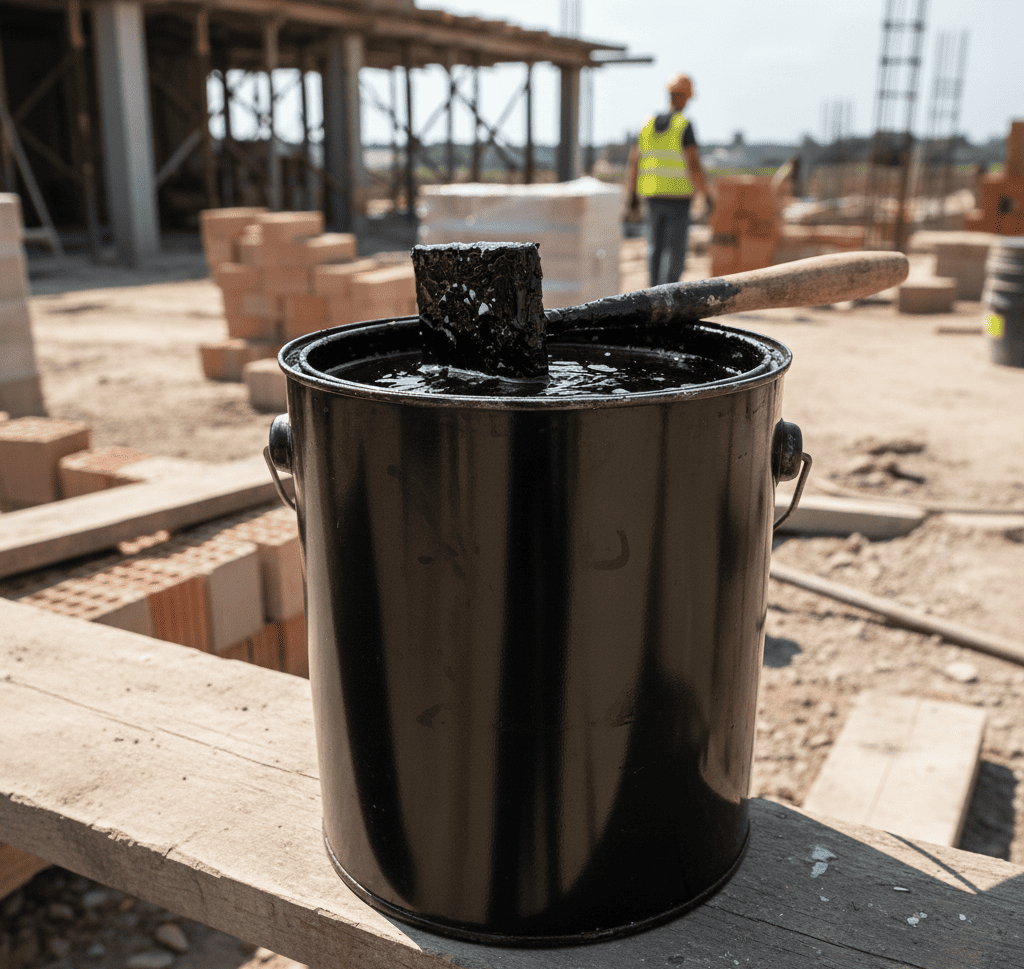
Bitumen mastics are a durable, waterproof, and reasonably inexpensive material that can be used on a variety of surfaces. This material is popular among engineers and builders due to its plasticity and versatile properties. Therefore, bitumen mastics are applied for waterproofing of balconies, concrete stairs, walkways, and floors.
Traditional Bitumen Mastic Production Methods
In the past, bitumen mastic was often made on site. The constituents were heated to the required temperature, manually mixed, in an attempted effort to obtain a homogeneous structure. This approach did not allow achieving a high production performance.
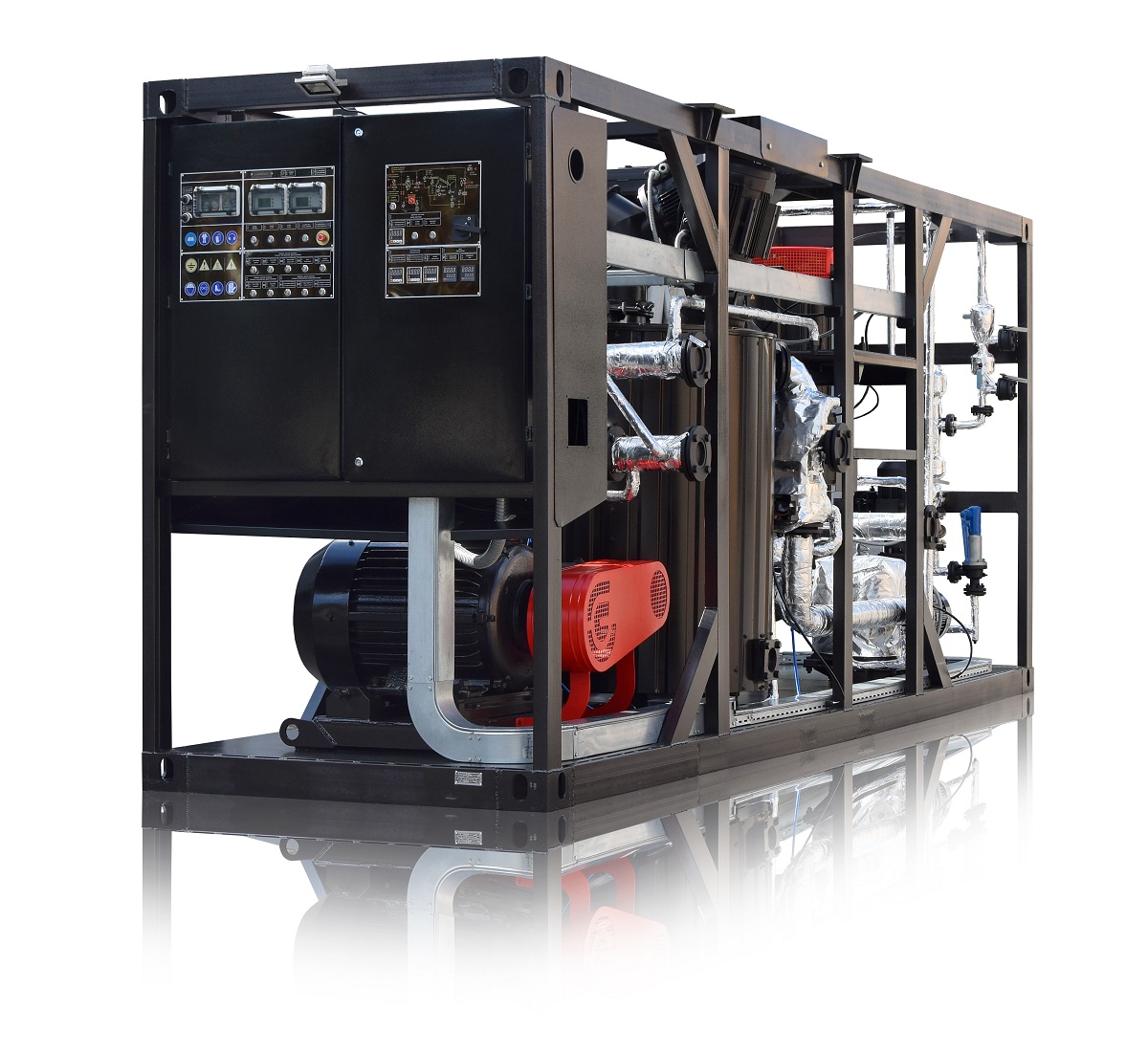
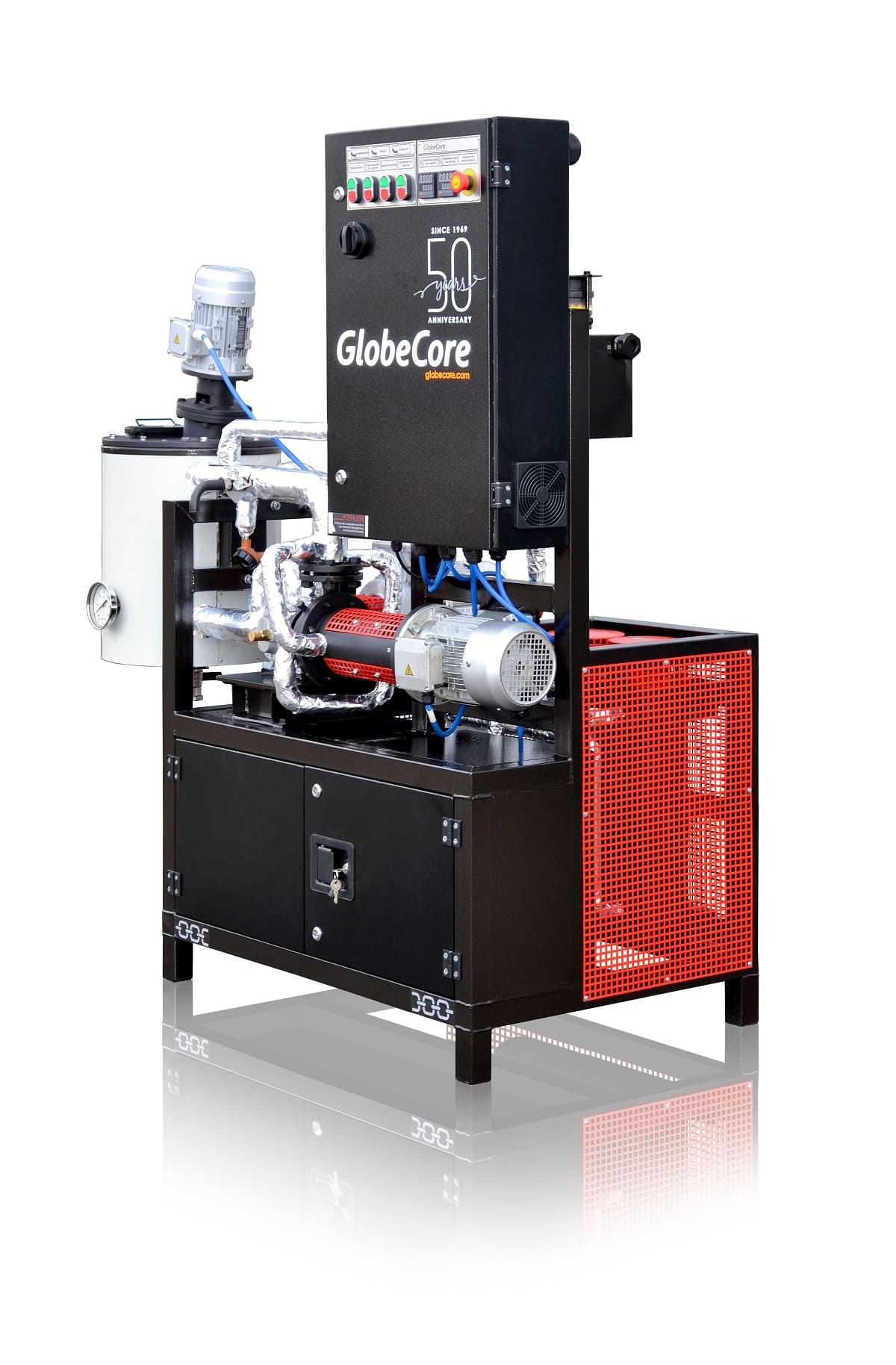
Modern Bitumen Mastic Production with USB-3 Plants
Modern bitumen mastic production is carried out on fixed-type industrial plants that allow precise monitoring for batching and mixing of materials under controlled heating conditions.
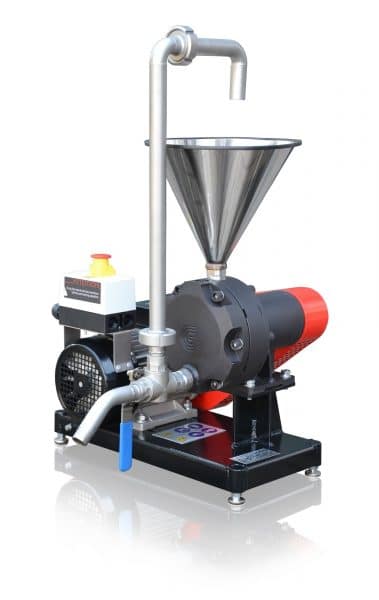
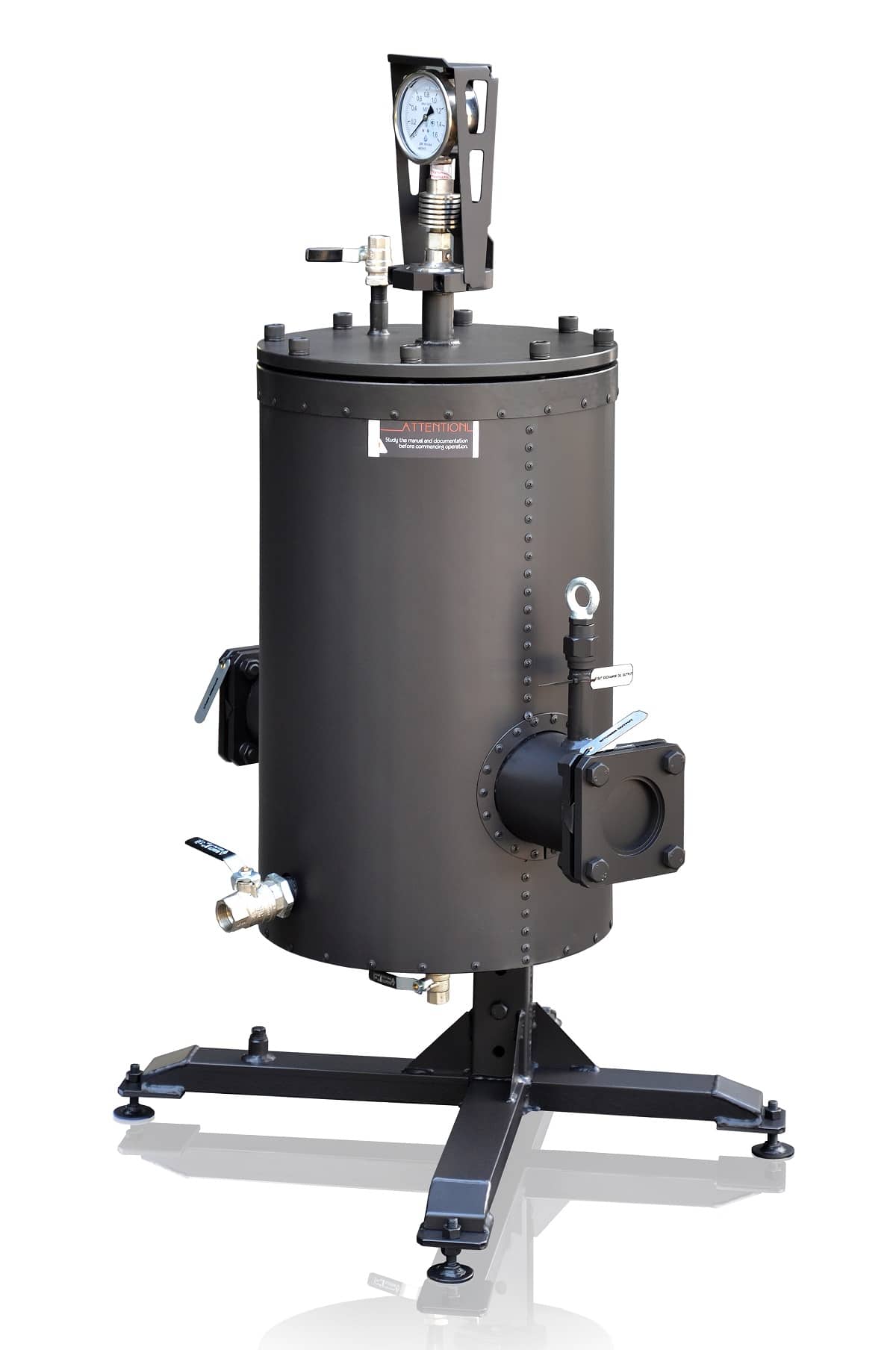
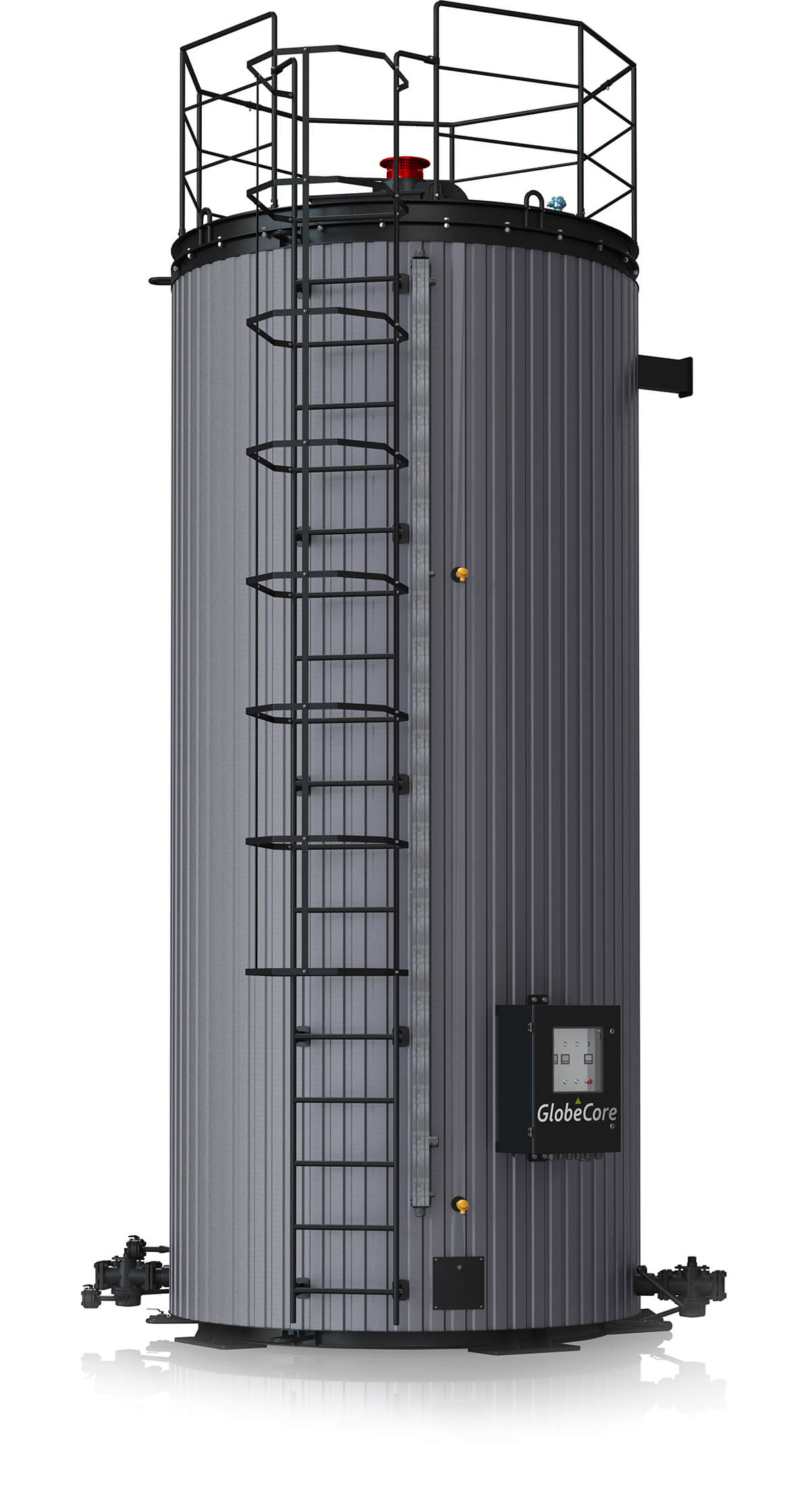
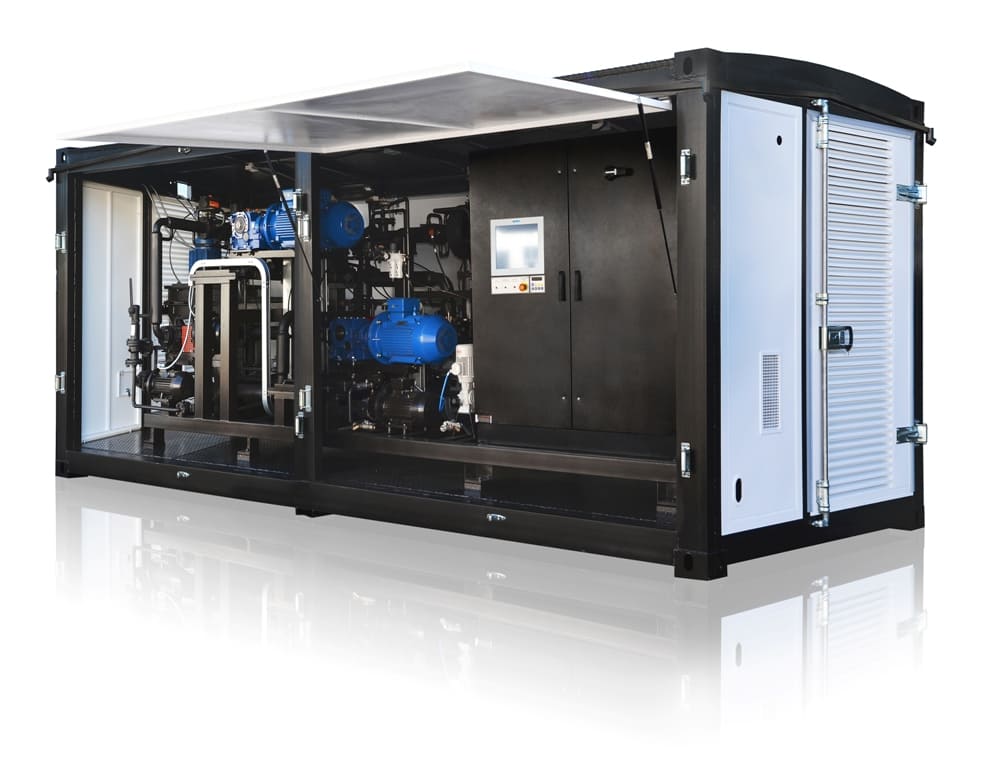
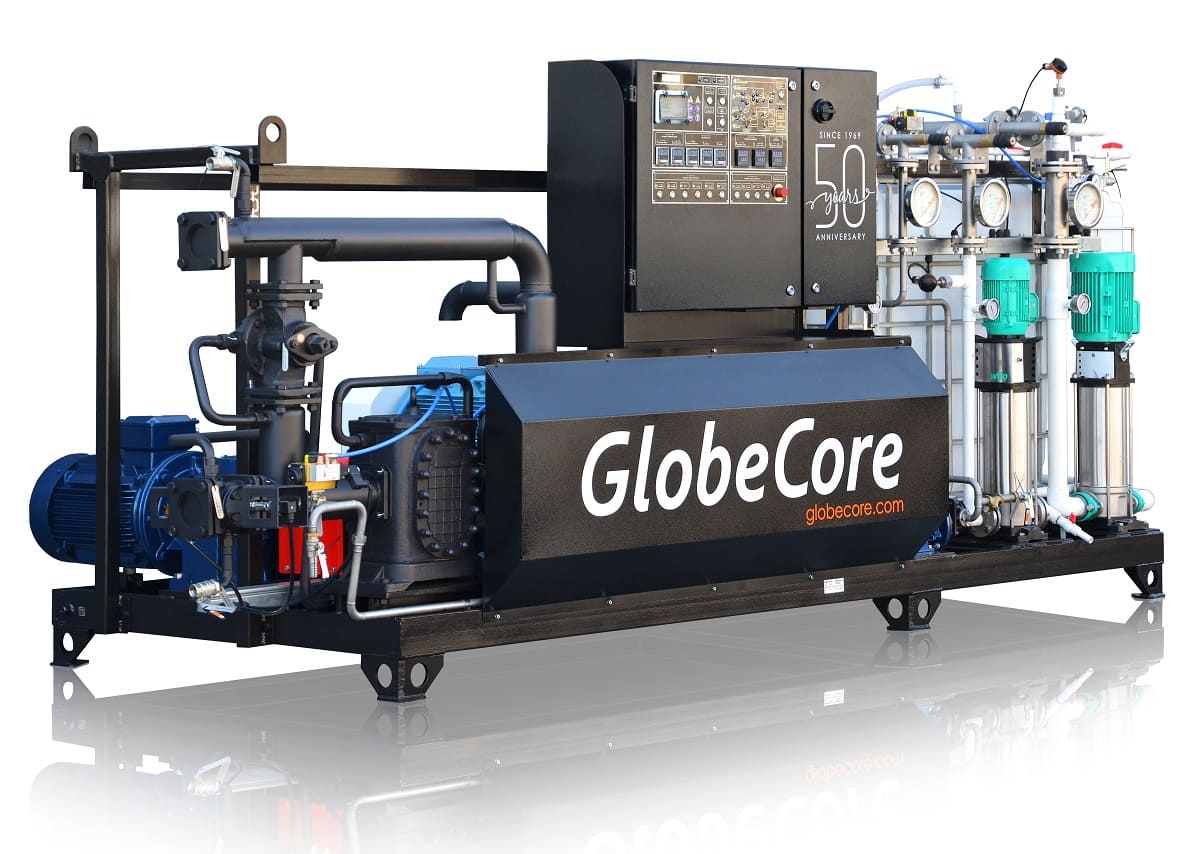
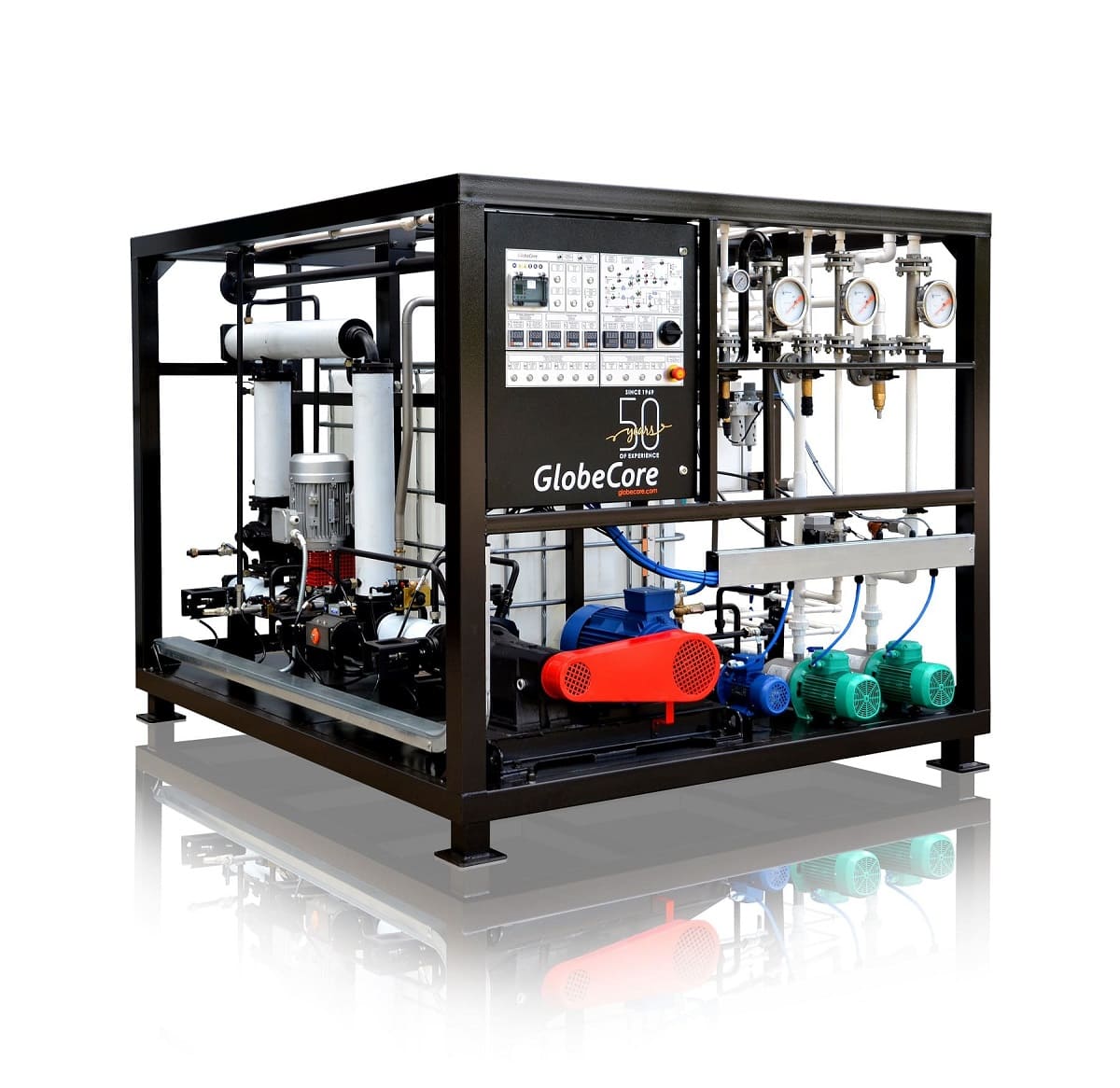
GlobeCore has gained extensive experience in manufacturing the equipment for producing modified bitumen and bitumen mastics, which is implemented in USB-3 plants. They make it possible to carry out all the processes of bitumen mastic production at one location — heating, batching, regrinding, and mixing of constituents in an automatically controlled environment with the use of colloid mills and impeller mixers.
Advantages of USB-3 Produced Bitumen Mastics
The output is bitumen mastics that do not spread or break down when applied to surfaces, but form high-quality coatings which ensure reliable protection against moisture.
In order to modify the properties of bitumen mastics, USB-3 plants allow using various filling compounds and additives, including solvents, polymer filling compounds, plasticizers, which improve the flexibility, adhesion, and other properties of the mastic. Depending on the model, USB-3 plants can operate in either cyclic or continuous mode and are easy to manage; therefore, operator training takes no longer than one or two business days.
USB-3 plants operate in any environment where there is a need to produce bitumen mastics. Its versatility and ability to use various raw stuff make it an indispensable tool in modern production of bituminous materials for civil engineering and road construction.