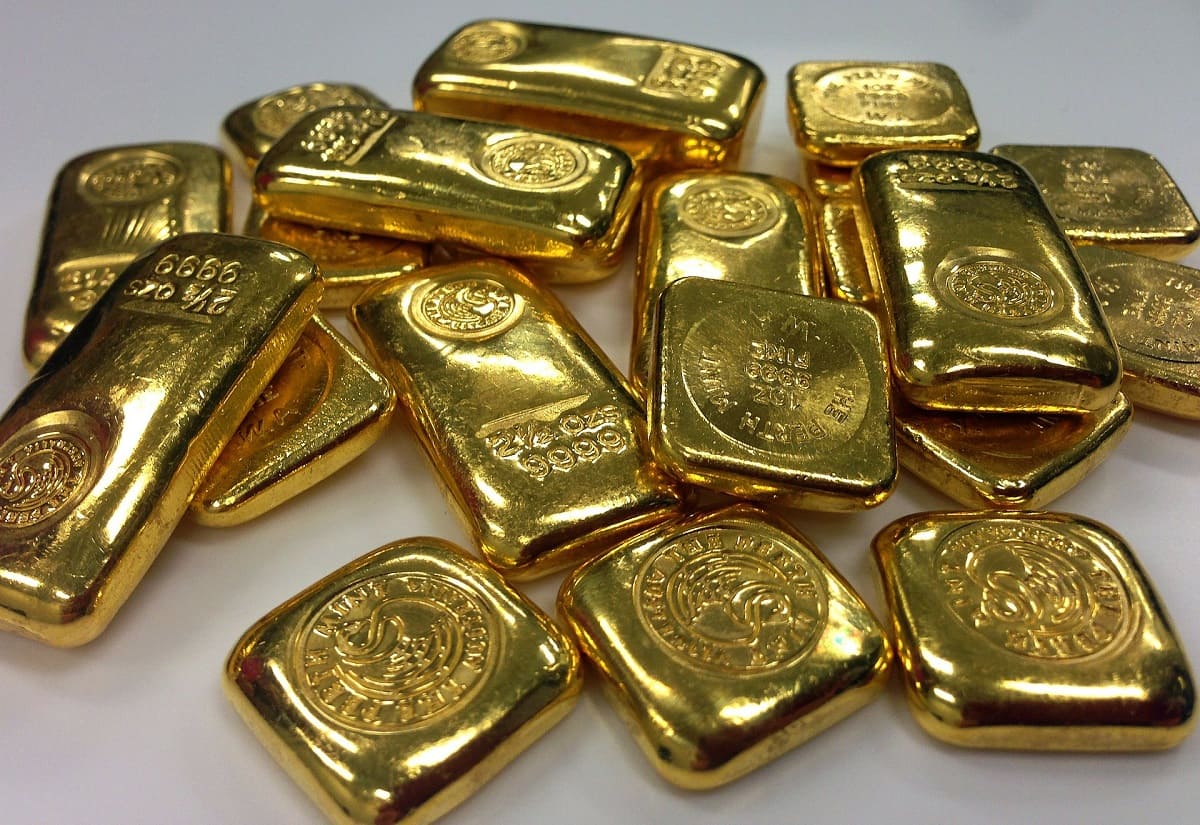
Gold production is a process in which not only specific industries, but also entire countries are interested. This noble metal is used in dentistry, electronics, chemistry, construction, and jewelry. Gold ingots are still used as part of gold and foreign currency reserves.
Gold is extracted from gold-bearing ores, but the ores contain a small amount of gold. In addition, depending on the type of ore, gold can be highly dispersed over the volume and form part of chemical compounds along with other metals. For some ores, gold extraction using conventional technologies is almost unfeasible. Such ores are called refractory. Therefore, non-standard innovative technologies for gold obtaining are more relevant now than ever before.
Types of gold-bearing ores
Let us single out five types of gold-bearing ores. These include:
- low-sulfide ledge ores;
- gold-pyrite ores;
- sulfide gold-copper ores;
- gold-arsenic ores;
- polymetallic ores.
Gold extraction from these ores can be performed by various methods. It depends on the composition, the disintegration and contamination degree of ore, as well as on the size of gold particles.
Cyanidation and flotation
Gold production is incomplete without flotation and cyanidation. These are basic processes of gold ore beneficiation. Cyanidation is recommended for processing most siliceous gold ores, and flotation is used in gold recovery from sulfide ores. There are also ores for processing of which both the first and the second methods are used. In this case, the method is selected according to a criterion of optimality which usually factors in the operating costs and the cost price of finished product. Combined methods based on cyanidation and flotation are used as well.
Gold production using the cyanidation method can be conveniently divided into two stages. At the first stage, the gold contained in ore is dissolved with cyanide. It is followed by solution separation and gold precipitation using metallic zinc. It has been found that fine grinding of ore ensures a number of beneficial advantages, including the shorter processing time, the higher gold extraction, and the possibility of applying the cyanidation method to more complex ores. Large-sized and energy-consuming mills are used for grinding.
Flotation also requires fine grinding of gold ore. The ground ore enters a special cell along with liquid and chemicals. Due to the operation of a high-speed mixer, the pulp is mixed with small air bubbles. At this moment, the сhemicals start acting and prevent gold-containing particles from wetting. These particles stick to small air bubbles and rise upward. Next, the obtained “golden” foam is dehydrated, and the formed concentrate is further processed.
Gold production by flotation separation of gold-arsenic-pyrite concentrates
All the methods for selection (separation) of arsenic-pyrite concentrates are based on different oxidizability of arsenopyrite and pyrite surfaces under the influence of oxidizing chemicals. However, all chemical-based selection methods have disadvantages, including:
- the need to follow the mode carefully, because even the slightest changes can lead to a considerable deterioration of the final result;
- high labor intensity due to multiple washes which are performed to remove the collector from the concentrate;
- multiple washes increase the amount of consumed chemicals that must be neutralized in order to protect the environment.
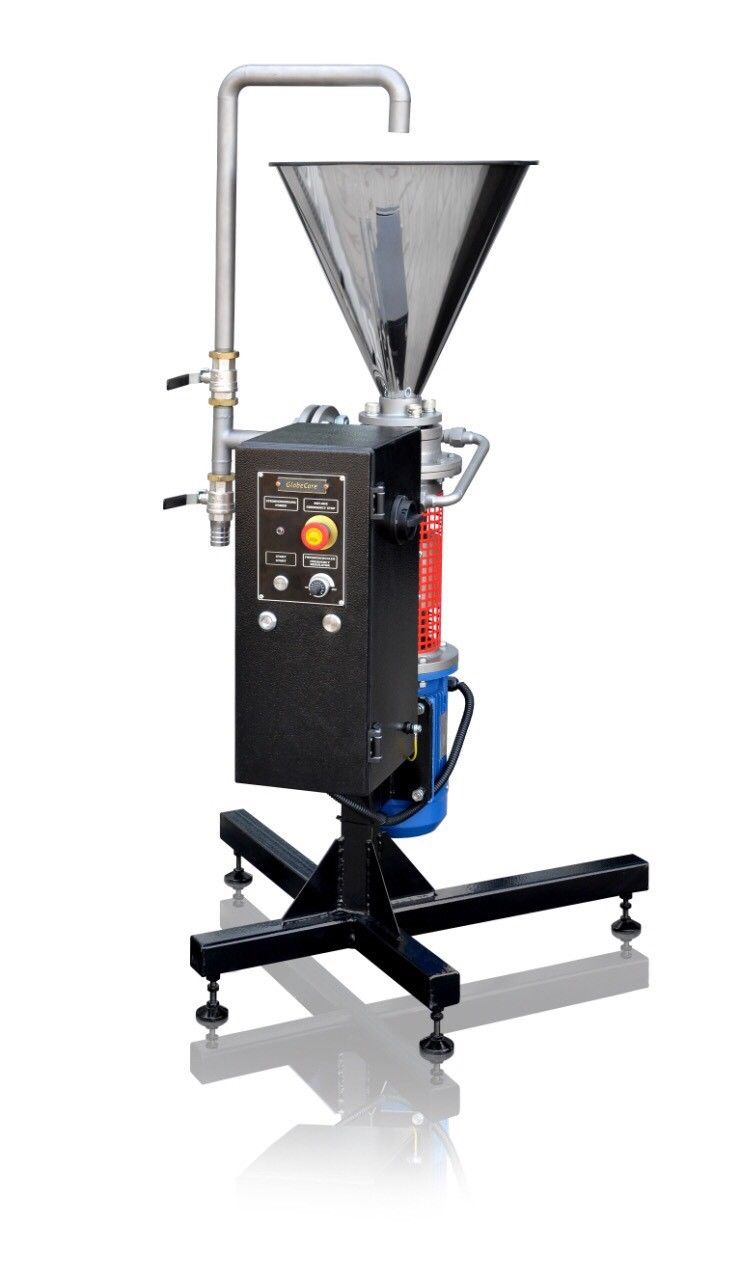
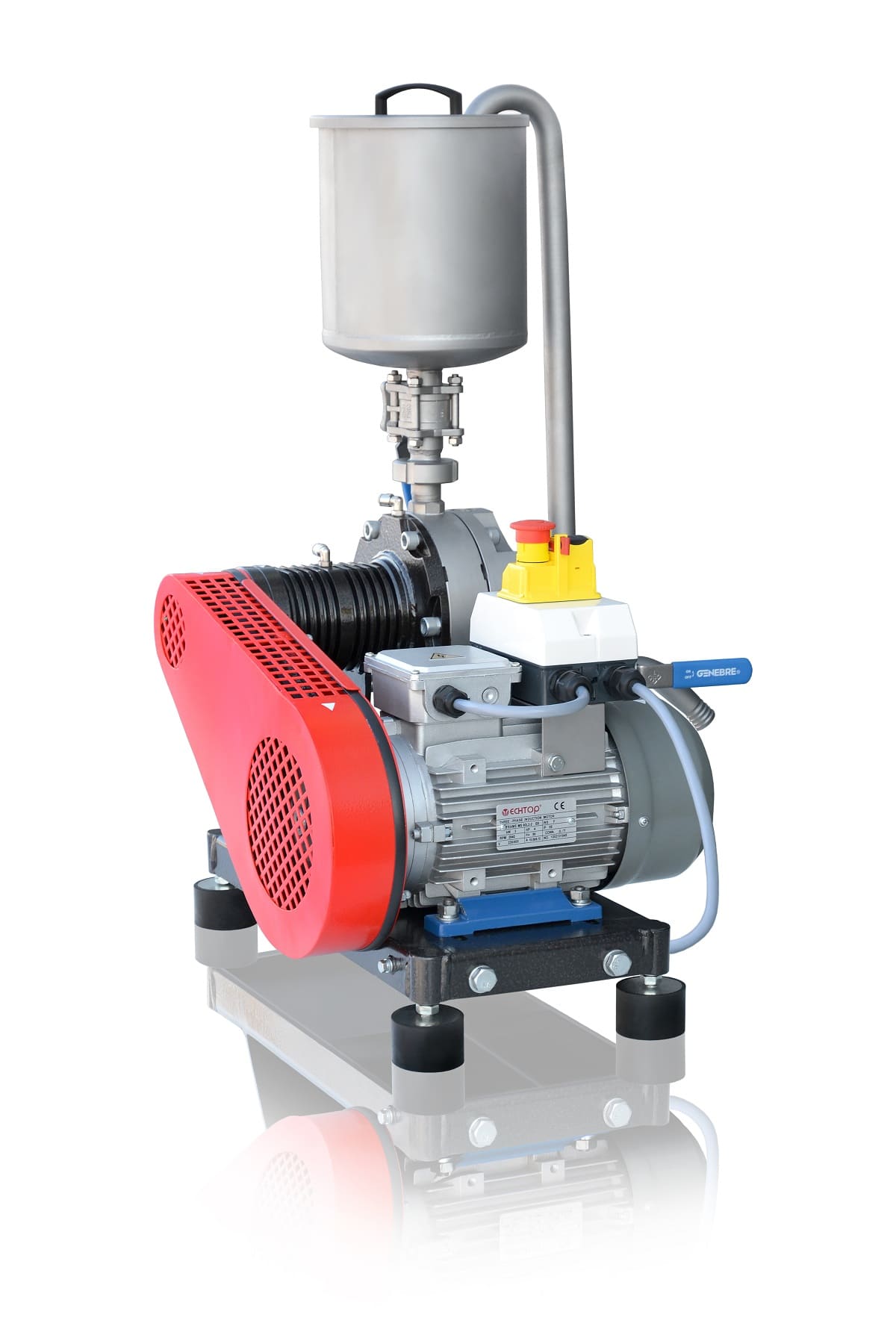
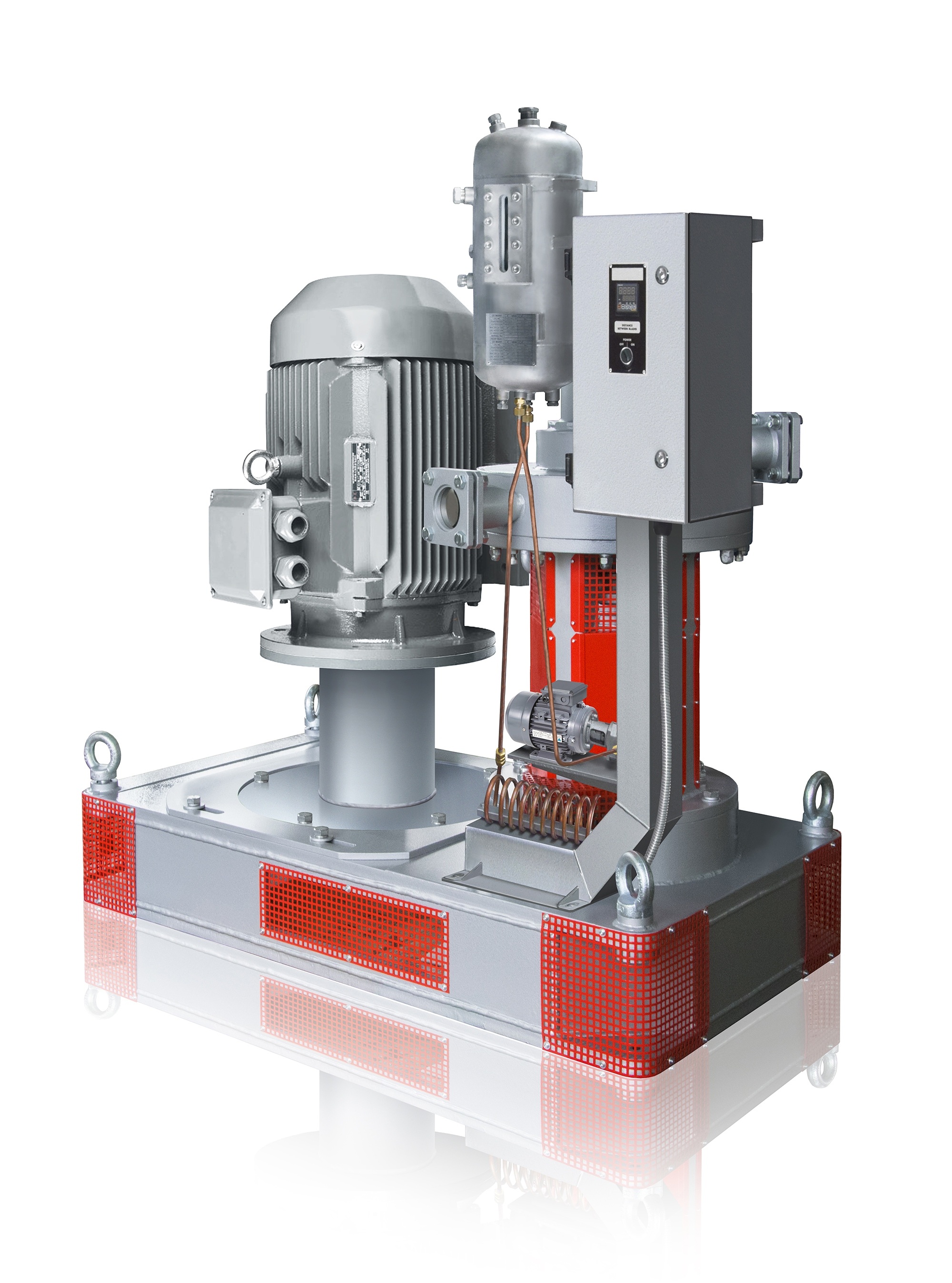
Vortex layer devices (AVS) are recommended in order to increase the flotation process efficiency and can be used for preliminary processing of ore in dry form or in the form of pulp before feeding it into the flotation machine.
What is a vortex layer device and why is it efficient in the gold obtaining process?
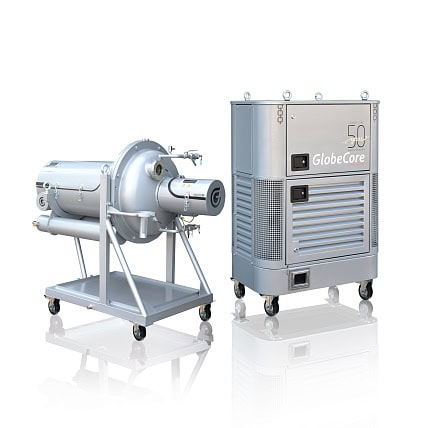
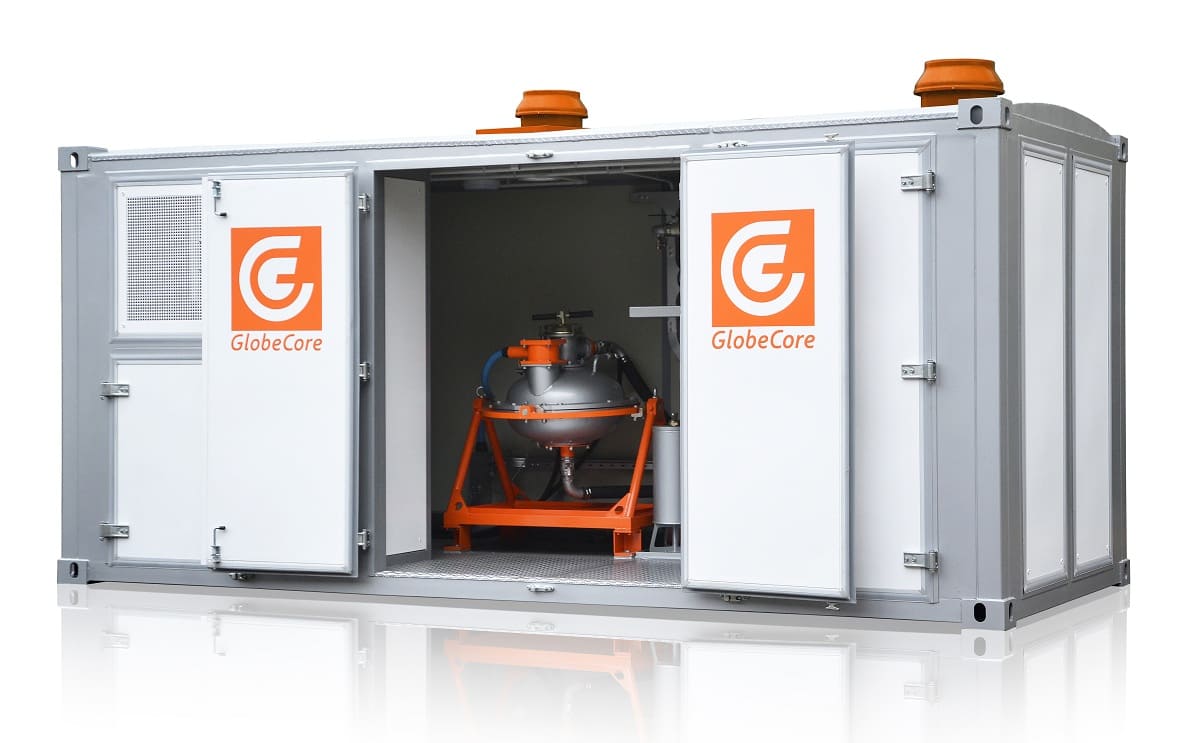
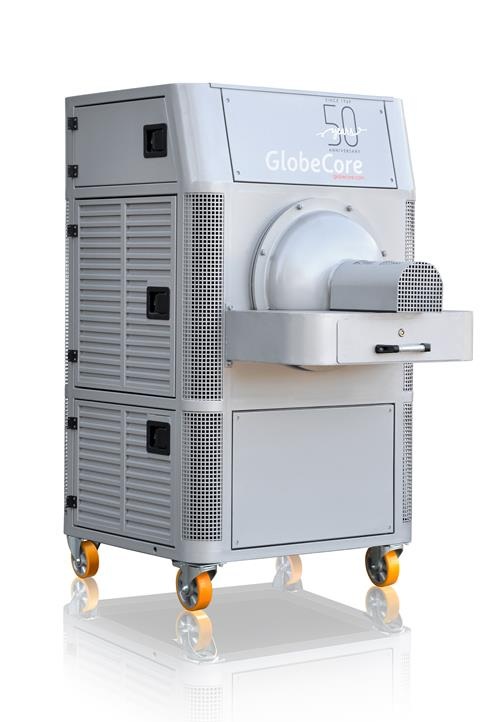
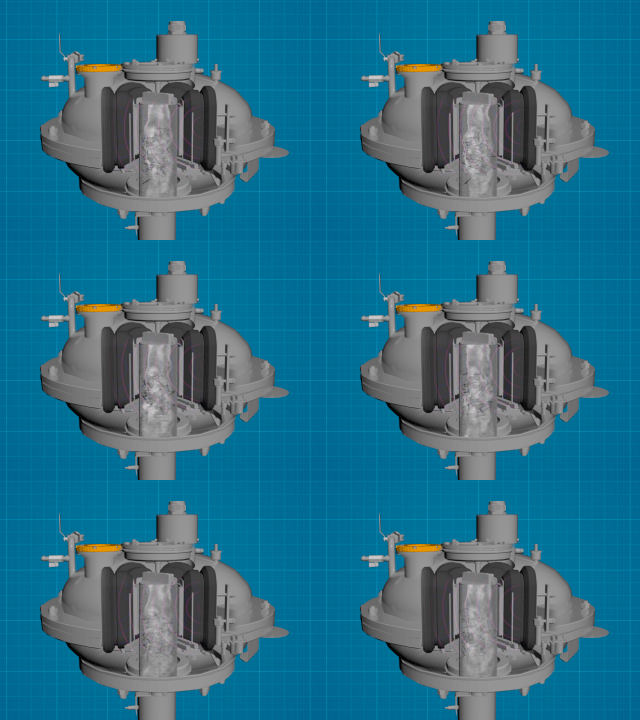 A vortex layer device is used for intensification of many technological processes, as well as for dispersion and activation of various substances. In terms of design, the device consists of inductor winding, an operating chamber made of non-magnetic material, and needle-shaped ferromagnetic particles with a certain length to diameter ratio.
The processed concentrate is fed into the device operating chamber where it is intensively mixed with ferromagnetic particles that move along complex trajectories when driven by a rotating electromagnetic field. In this case, the ferromagnetic particles collide with one another, with concentrate particles, and with the operating chamber walls generating a so-called vortex layer. Hence the name — “a vortex layer device”.
While mixing, the concentrate particles are exposed to additional factors and phenomena that arise in the operating chamber of AVS: electric and magnetic fields, induction currents and their discharges, acoustic vibrations, activation and temperature.
One of the features of AVS is that the processes in its operating chamber can be carried out both batchwise and continuously. Furthermore, the ferromagnetic particles are retained by a magnetic field rather than carried away from the operating chamber by a flow of liquid or gas.
Results of an experiment for processing the flotation concentrate in a vortex layer of ferromagnetic particles
The selected target of study is a flotation concentrate with the following composition:
- Au – 89 g/t;
- As – 13.0 %;
- Ssulf. – 20.32 %;
- FeO – 1.43 %;
- Fe2O3 – 32.11 %;
- Al2O3 – 8.0 %;
- SiO2 – 23.8 %;
- TiO2 – 1.34 %.
The attempts to separate this concentrate without preliminary processing in a vortex layer device did not yield encouraging results. During the flotation in an alkaline medium using lime and copper sulfate, the content of arsenic in the pyrite product decreases from 12–13 to 5% in the best-case scenario when it is recovered into arsenic concentrate (35%). The lack of a good result is explained by the physical and chemical resistance of sulfide gold-arsenic ores where ultrafine gold particles are dispersed in the sulfide minerals mainly represented by pyrite and arsenopyrite.
Therefore, further flotation separation was carried out after preliminary processing of the concentrate in a vortex layer device. After processing in the operating chamber of the vortex layer device (the weight of ferromagnetic particles was 30 g), 200 g of the concentrate was immediately fed into the flotation machine and floated with butyl xanthate (50 g/t).
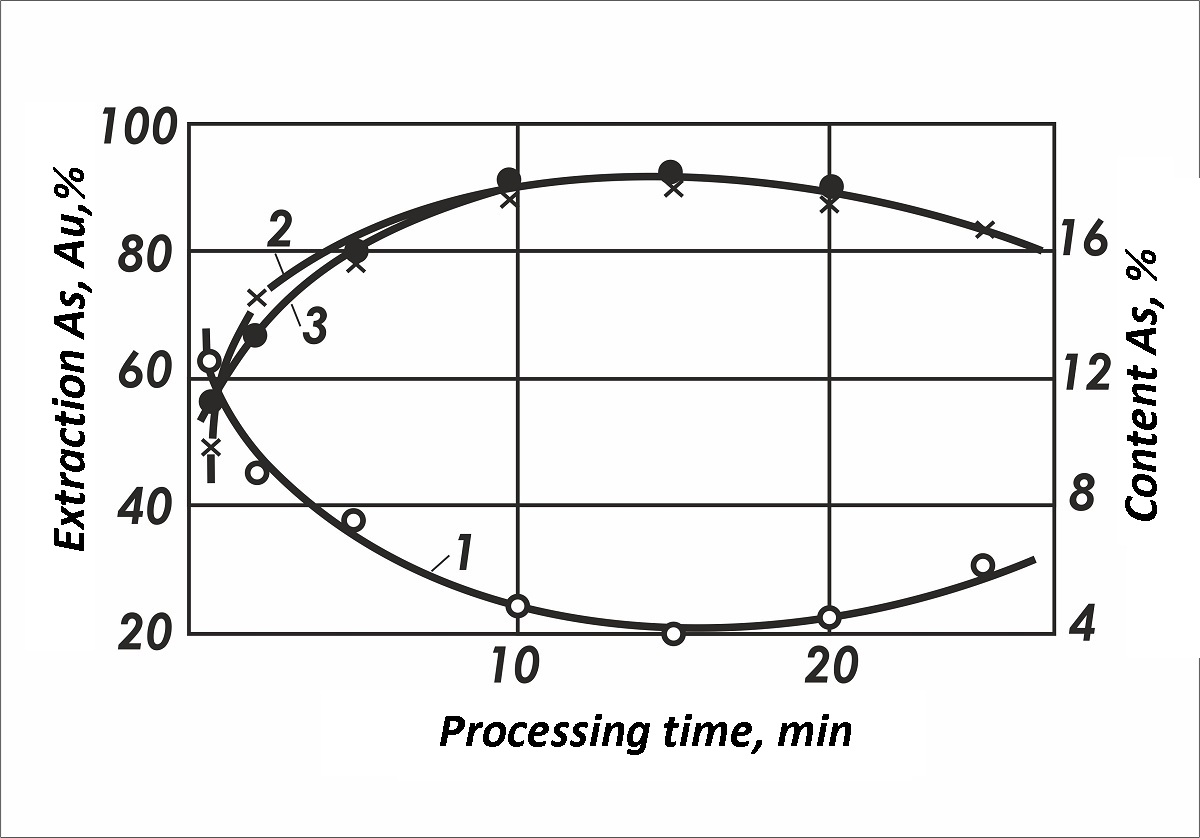
Figure 1 – Influence of the duration of concentrate processing in AVS on the technological parameters of selective flotation: 1 – arsenic content of pyrite concentrate; recovery of arsenic (2) and gold (3) into arsenic concentrate
The obtained data indicate that the content of arsenic in the pyrite product decreases from 16 to 4% with the processing time of up to 10–11 minutes. 89–90% of As and 90–91% of Au are recovered into arsenic concentrate which yield is about 62% at the content of 23–24% and 125–130 g/t (Figure 1).
When processing various materials in a vortex layer device, one of the important factors that determine the process efficiency is the amount of processed material per unit weight of ferromagnetic particles.
The lack of dipoles in the reaction zone does not ensure intensive mixing of the material and the necessary effect on the mineral surface. Excessive feeding of ferromagnetic particles adversely affects the subsequent selection of minerals as well.
The studies show that the optimal ratio between the weight of concentrate and the weight of ferromagnetic particles falls within the range of 8–12 in a closed system. Preliminary processing of concentrate at the ratio of 10 and subsequent flotation ensure obtaining a pyrite concentrate with the arsenic content of 2.4% when the recovery of arsenic into pyrite concentrate is 5–5.5% (Figure 2).
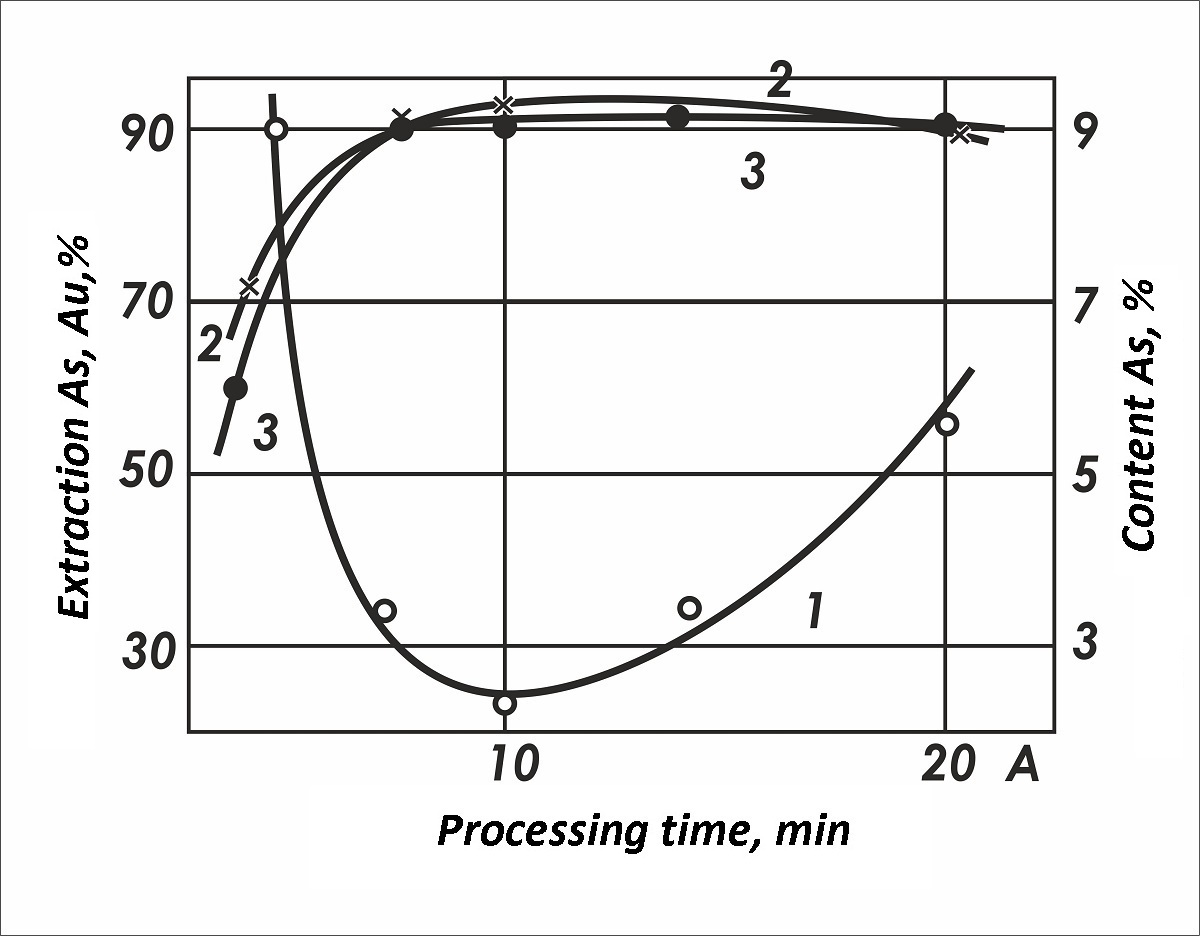
Figure 2 – Influence of the weight of ferromagnetic particles in concentrate processing on the technological parameters of selective flotation: 1 – arsenic content of pyrite concentrate; recovery of arsenic (2) and gold (3) into arsenic concentrate. On the A axis — the ratio between the weight of concentrate and the weight of ferromagnetic particles
The concentration of hydrogen ions in the pulp within the range of pH = 5.5–10.5 does not affect the results of flotation. During the flotation in sulfuric acid and lime media, the recovery of arsenopyrite into arsenic concentrate makes 94–95% in a wide range, and there is a slight depression of arsenopyrite in a highly alkaline medium (pH> 10.5) only (Figure 3).
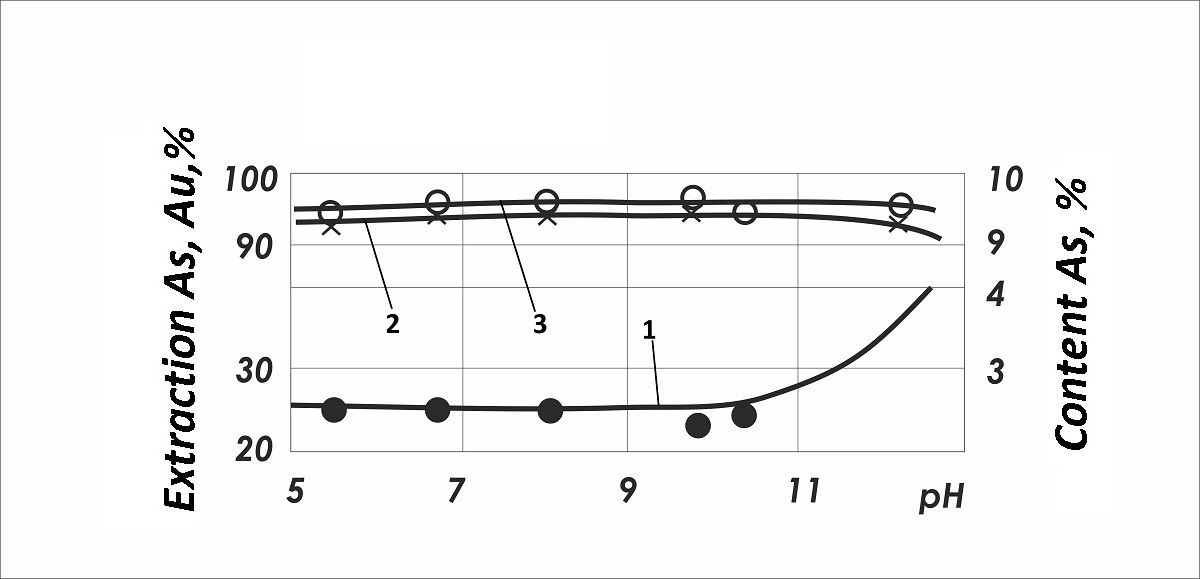
Figure 3 – Influence of the pulp pH on the technological parameters of selective flotation: 1 – arsenic content of pyrite concentrate; recovery of arsenic (2) and gold (3) into arsenic concentrate
When processing the concentrate in AVS, a set of factors (induction currents, electrical discharges, local pressure increase, temperature increase, abrasive effect, etc.) affect the mineral surface covered with a xanthate film as a result of which the collector is desorbed from the minerals and partially decomposes.
At the same time, after processing, the pulp still contains some part of the collector which is capable of being resorbed on the surface of minerals and having an adverse effect on subsequent selective flotation. Adding the activated charcoal (up to 1 kg/t) when processing the concentrate in AVS improves the parameters.
The resulting pyrite concentrate contains 1.7–1.8% of As which allows it to be reprocessed at a copper smeltery. Arsenic concentrate contains 26–27% of As, 130 g/t of Au with the recovery thereinto that equals 95–95.5 and 92–93% respectively.
Thus, short-term processing of gold-arsenic-pyrite concentrates in a vortex layer device considerably improves the results of subsequent selective flotation and ensures stable obtaining of the arsenic concentrate which is more replete in gold. Furthermore, vortex layer devices compare favorably with classic mills due to low power consumption (the power requirement of one device does not exceed 9.5 kW), compact size, and easy maintenance.
For further information on gold production by means of vortex layer devices, please contact our professionals using some of the contact details in the appropriate website section.