GlobeCore

  • Home
  • Products
    • Oil Regeneration
      • CMM-6RL Oil Regeneration Unit
      • CMM-10RL Transformer Oil Regeneration Plant
      • CMM-12R Oil Regeneration Systems
      • CMM-12R Oil Regeneration System (With Activated Bauxite)
      • CMM-8RSL/4000 Transformer Oil Regeneration Plant (With Fuller’s Earth)
      • USB-6 Oxidation Inhibitor injection unit
      • СММ-0,001U Laboratory Oil Filtration Unit
    • Oil Purification & Degassing Machines
      • CMM-0.6L Oil Degassing & Filtration Cart
      • СММur-1L mobile oil plant
      • CMM-1.0LT Transformer Oil Purification Unit
      • CMM-1H Oil Processing Unit
      • CMM-2.2LT Industrial Oil Purification Unit
      • CMM-4,0T Turbine oil filtration
      • CMM-4,0LT Transformer Oil Purification Unit
      • CMM-4/7 portable oil degassing unit
      • CMM-6LT Industrial Oil Purification Unit
      • CMM-6/7 Degassing Unit
      • CMM-8LT Oil Processing Unit
      • CMM-10 — Transformer Oil Purification Machine
      • CMM-15 Oil Degassing Plant
    • Oil Filtration Machines
      • CMM-1,0CF Unit for Removal of Water from Oil
      • CMM-2,0CF Unit for Removal of Water from Oil
      • CMM-1,2Fr Industrial oils filtration unit with self-cleaning filters
      • CMM-4,0F Oil filtration unit
    • Oil Drying Unit
      • ZP-130 Sorbent Cartridges
      • ZP-260 Sorbent Cartridges
    • Oil Heating
      • PPM Inline Oil Heater. Stream oil heating
    • Fuel Polishing
      • TOR-1 diesel fuel moisture content tester
      • CMM-6RL dark diesel fuel polishing machine
      • CMM-6RL dark heating fuel polishing machine
      • CMM-6RL low-viscosity marine fuel polishing machine
    • Online Transformer Dry-Out Systems
      • CMM-260C Online Transformer Dry-Out System
      • TOR-4 Online Transformer Dry-Out System
    • Online Transformer Monitoring Systems
      • TOR-5 Online Transformer Monitoring System
    • Transformer Maintenance
      • Mojave Heat (Sukhovey): Hot Air Dryer Unit
      • UVV Vacuum Cold Trap
      • US-6S Transformer vacuum furnace
      • LFD Low Frequency Heating Device
      • BV-3000 Transformer Evacuation System
      • BV-5000 Transformer Evacuation System
      • UVD Vacuum Oil Filling Unit
      • UVD-1000 Oil Filling and Transportation System
      • TSS Transformer Safety System
      • CMM-6RL Oil Regeneration Unit
      • CMM-10RL Transformer Oil Regeneration Plant
      • CMM-12R Oil Regeneration Systems
    • Vacuum Transformer Drying Ovens
      • US-6S Transformer vacuum furnace
    • Sorbent Processing
      • BRZ Zeolite Regeneration Block
      • BRPS Zeolite Regeneration Block
      • SSC-15 Zeolite Drying Cabinet
      • ZP-130 Sorbent Cartridges
      • ZP-260 Sorbent Cartridges
    • Instruments – Transformer Oil Testers
      • TOR-1 Oil Moisture Meter
      • TOR-2 Hydrogen and Moisture Analyzer for Transformer Oil Monitoring
      • TOR-3 (TOR-3 SL) Oil Tan Delta Tester
      • TOR-6 Transformer Oil Moisture and Particles Tester
      • TOR-7 Universal Transformer Oil Tester (moisture, gases, solid particles)
      • TOR-8 tester for residual gas content of insulating oil
      • TOR-60 (TOR-60 SL) Breakdown Voltage Tester
      • TOR-80 (TOR-80 LSL) Breakdown Voltage Tester
      • TOR-80A (TOR-80 ASL) Transformer Oils Breakdown Voltage Tester with Battery
      • TOR-100 (TOR-100 SL) Breakdown Voltage Tester
    • Wind Turbine Service
      • CMM-G wind turbine gearbox oil changer (with dimensions adapted to the customer’s trailer ones)
      • CMM-G Wind Turbine Gearbox Oil Changer
      • CMM-GL Wind Turbine Gearbox Oil Changer
      • CMM-0.6L Oil Degassing & Filtration Cart
      • CMM-4,0T Turbine oil filtration
    • Medical Equipment Maintenance
      • CMM-0.6 X-ray Transformer Oil Purifier
      • SSC-15 Zeolite Regeneration System for Oxygen Concentrators
      • AVSk-150 Hospital Wastewater Treatment Complex
    • Blending systems
      • USBL-1 Laboratory Blending System
      • USB-1 Fuel oil blending system
      • USB-5 high-speed mixing unit for production of sanitizers (0.15 – 0.3 m3/h)
      • USB-5 high-speed mixing unit for production of sanitizers (1.1 m3/cycle)
      • USB-6 Impeller Stirrer
      • Colloid Mill
      • Vortex Layer Devices
    • Colloid Mill
      • Colloid mills for food industry
        • CLM-100.3 Colloid mill
      • Colloid mills for bitumen emulsion production
        • CLM-0.25.1 Laboratory colloid mill
        • CLM-2/4 Colloid mill
        • CLM-16/25 Colloid mill
      • Colloid mills for bitumen modification
        • CLM-8/16 Colloid mill
        • CLM-10/20 Colloid mill
        • CLM-40.2 Colloid Mill
      • Colloid mills for different applications
        • CLM-100.2 Colloid Mill
        • CLM-200.2 Colloid Mill
    • Vortex Layer Devices
      • AVS-100 Mixing Machine. Vortex Layer Device
      • AVS-150 Chemical Mixing Machine
      • AVSp-100 Vortex Layer Device (Semi-Automated)
      • AVSp-150 vortex layer device (semi-automated)
      • AVSk-150 Wastewater Treatment Complex
    • Bitumen emulsion plant, Bitumen Emulsion Production
      • CLM-0.25.1 Laboratory colloid mill
      • USB-2 Bitumen emulsion unit 2 m3/hour production capacity
      • USB-2 Bitumen emulsion plant 8 m3/hour production capacity
      • FB Bitumen filter
      • USB-6 Impeller Stirrer
    • Bitumen Modification Plant. Modified Bitumen Production
      • USB-3 Bitumen modification laboratory system
      • USB-3 Continuous Bitumen Modification Unit (12 m3/hour)
      • USB-3 Bitumen modification unit 16 m3/hour production capacity
      • USB-4 Modified bitumen collection tank (USB-3)
      • USB-6 Impeller Stirrer
    • Laboratory system for Bitumen Emulsion Samples
      • CLM-0.25.1 Laboratory colloid mill
      • CLM-100.1 Bitumen Emulsion Laboratory System
      • USB-3 Bitumen modification laboratory system
    • Biodiesel Equipment
      • USB-1L Biodiesel laboratory equipment
      • USB-1 Biodiesel equipment
        • Filters
          • The filter GC Fine with a filtration factor β = 4000
        • Vacuum Pumps
          • GC Roots Vacuum Pumps
          • مضخات التفريغ GC Vane (مضخات دعم)
    • Custom Equipment
      • CMM-4R TRANSFORMER OIL REGENERATION MACHINE
      • CMM-1 MOBILE OIL PLANT
      • CMM-2.2 MOBILE OIL PLANT
      • CMM-4 MOBILE UNIT FOR POWERED TRANSFORMER OIL PROCESSING
      • CMM-12A DEGASSING UNIT
      • CMM-1CO CABLE OIL DEGASSING UNIT
      • CMM-5M INDUSTRIAL OIL PURIFICATION MACHINE
      • MCU ZEOLITE OIL DRYING UNIT
      • CMM-8RP Sorbent Reactivation Unit
      • BDK-3 CATALYTIC CONVERTER
      • CMM-600CF TRANSFORMER OIL FILTRATION AND REFILLING MACHINE
      • SN-1 PUMP ASSEMBLY
      • SBE-30 BITUMEN EMULSION COLLECTION TANK (UVB-1)
      • UVB-1 BITUMEN EMULSION UNIT 1 M3/HOUR PRODUCTION CAPACITY
      • UVB-1 EXTENSION 1 M3/HOUR PRODUCTION CAPACITY
      • INDUSTRIAL MIXER – COLLOID MILLS CLM-4 SMALL
      • BIG COLLOIDAL MILL CLM-18 GRINDING MACHINE
      • INDUSTRIAL MILL – GIANT COLLOIDAL MILL CLM-22
      • CMM-0.6 Clean Marine Oil Degassing Cart
      • Compressed Air Supply Unit UOV
    • Accessories & Components
  • Dealers
  • Tech School
    • Webinar Registration
  • News & Articles
  • History
  • Reviews
  • AskMe
  • Contacts
  • EN
    • FR
    • ES
    • PT
    • TH
    • VN
    • CN
    • HA
    • AZ
    • JP
    • DE
    • RO
    • Hun
    • Arabic
    • Ind
GlobeCore / Bitumen Emulsion / Improving Bitumen with Polymer Additives

Improving Bitumen with Polymer Additives

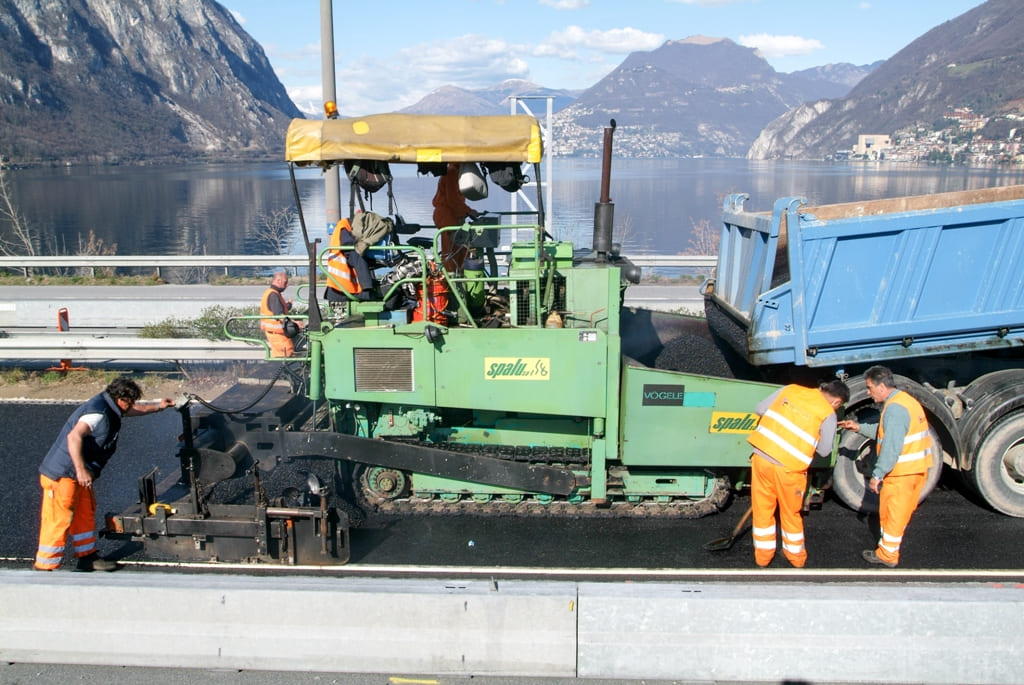
Petroleum bitumen is widely used in construction. It includes materials for  roofing, waterproofing, air tight material, piping protection (and other types of anti-corrosion and even radiation production), materials for road top, surfacing of canals, settling ponds, sludge collectors etc. Despite the growing production of bitumen, it is still in short supply. Some of the supply problems are due to the limitation inherent to bitumen, i.e. its brittleness in subzero temperatures. Bitumen surfaces in cold climates quickly deteriorate. Some roofs accumulate as many as 12 layers of bitumen after multiple repairs. The same is true for road construction. All this leads to overuse of bitumen. In the south, bitumen surfaces fail due to bitumen melting, with the added solar influence and significant temperature variations.

Polymer additives, especially rubber, can reduce the brittle temperature and increase bitumen temperature stability. Application of such polymer modified bitumen increases bitumen surface life. Accumulated results of many years of observation of various surfaces made with many different polymers are available. All of them have one thing in common: extended lifetime. Other properties improved by polymers are deformation stability in all range of operation temperatures, water resistance, structural strength etc.

Consequently, a new direction of polymer modified bitumen use has appeared; however, many questions remain: how polymers interact with the structure of bitumen, what are the effects of polymer, which polymer materials are the most efficient, can the properties of polymer-modified bitumen be predicted based on the known properties of the polymer and how to address the technical complications of combining bitumen with polymer.

The improved properties of polymer-bitumen composites are usually explained by the formation of chemical bonds between polymer and bitumen. Chemical methods are pointless in this case, due to the extremely complex structure of bitumen and polymer. Since the emergence of IR spectroscopy, almost none of the polymer bitumen composites were found to contain new chemical compounds, nevertheless, new attempts to prove formation of new substances in polymer bitumen mixes are still undertaken. Such attempts usually share a common methodological flaw: offering only qualitative description of spectra without quantitative evaluation.

Electronic microscopy and optical methods of research offered new materials, demonstrating the distribution of bitumen and polymer in a composite and particle size. Evidently, small amounts of polymer (1—2%) can solve in the low-molecular portion of bitumen, i.e. oils. In larger amounts, polymer is distributed in bitumen as separate, unconnected particles. Their effect on the composite is similar to that of a filler. At 5—10% content, particles increase in size, apparently due to aggregation, come close and at 10—15% form a loose web-line structure. With the content of polymer above 25%, bitumen is included into the structural cells of the polymer and the phases are inverted.

The mechanism behind increased strength and deformation stability of polymer bitumen materials can be considered as a composite materials, in which bitumen is the matrix, and polymer is the dispersed phase. The composite behaves as one material, where the connections between different particles can be imagined as mechanical interaction between components by surface connections. The properties of the composites as a rule are superior to the average or summarized properties of the separate components, displaying a pronounced synergy effect,

With small concentrations of polymer, the composite can be considered as dispersion strengthened. The increase in strength is due to the impedance of movement in the matrix by finely dispersed particles. The degree of strength increase is proportional to the resistance by the particles to such movement. This effect is observed with dispersed phase in the amount of 2—4% by volume. Considering the properties of polymer bitumen composites with 3—5% polymer content, one will notice a significant reduction of brittle temperature, without increase of deformation stability. It is obvious that brittle point is reduced due to increased strength.

With higher concentrations of polymer in bitumen, the composites can be viewed as fibers or layers. The matrix (bitumen) turns into a medium transferring the loads to the fibers, and redistributing the loads if the fibers break. Such materials are strong, elastic and resistant to fatigue, which is especially important to ensure operational reliability of the material. The process of deterioration of such composites usually begins with the formation of microcracks, which slows down with encountering a particles of rubber, and then decreases or even stops entirely due to relaxing of overloads at the apex of the crack.

In the theory of composite materials, a large role is played by the interfacial boundary and the transitional layer, which possesses special properties compared to each of the phases. Partial dissolution of polymer and the matrix is possible on the surface of the boundary, as well as the so called segmental solubility. Strengthening of the composite is due to the special properties of the transitional boundary, the cohesion energy of which is significantly lower than the average for the mix, ensuring higher rate of load relaxation. It is suggested that a crack meeting the transitional layer releases overloads. Such is the theoretical background for producing and using polymer bitumen composites with rubber and thermoplastic materials.

The requirements of the construction industry are so diverse that the practically used additives are beyond the scope of the discussion above. To increase cracking resistance (reduction of brittle point), cold resistant oil or oligomer is used. These reduce heat stability, but decrease the low temperature limit of bitumen application. Such additives are referred to as plasticizers. They enrich the oil medium in bitumen, including themselves in the colloidal structure. They do not expand the plasticity range of the material, their purpose is to increase cracking resistance at low temperatures.

Mineral powders, added to reduce bitumen fluidity, are of the third type – the stabilizers. They do not expand the application temperature range either. As a rule, they increase heat resistance, but also increase the brittle point.

Of all the additive types, structural additives are of most interest. They were instrumental in expanding the application temperature range to 200 (from —50 to + 150°С), making it possible to use polymer-modified bitumen both in the northern and southern regions.
    Leave Your Request


    • Home
    • Products
    • Dealers
    • Tech School
    • Contacts

    ® Copyright by - 2025 © GlobeCore

    GlobeCore, Sadovskogo 14, Poltava, Ukraine, 36034

    This website uses cookies to improve your experience. By continuing to browse, you agree to our use of cookies. Read more in our Privacy Policy.