GlobeCore

  • Home
  • Products
    • Oil Regeneration
      • CMM-6RL Oil Regeneration Unit
      • CMM-10RL Transformer Oil Regeneration Plant
      • CMM-12R Oil Regeneration Systems
      • CMM-12R Oil Regeneration System (With Activated Bauxite)
      • CMM-8RSL/4000 Transformer Oil Regeneration Plant (With Fuller’s Earth)
      • USB-6 Oxidation Inhibitor injection unit
      • СММ-0,001U Laboratory Oil Filtration Unit
    • Oil Purification & Degassing Machines
      • CMM-0.6L Oil Degassing & Filtration Cart
      • СММur-1L mobile oil plant
      • CMM-1.0LT Transformer Oil Purification Unit
      • CMM-1H Oil Processing Unit
      • CMM-2.2LT Industrial Oil Purification Unit
      • CMM-4,0T Turbine oil filtration
      • CMM-4,0LT Transformer Oil Purification Unit
      • CMM-4/7 portable oil degassing unit
      • CMM-6LT Industrial Oil Purification Unit
      • CMM-6/7 Degassing Unit
      • CMM-8LT Oil Processing Unit
      • CMM-10 — Transformer Oil Purification Machine
      • CMM-15 Oil Degassing Plant
    • Oil Filtration Machines
      • CMM-1,0CF Unit for Removal of Water from Oil
      • CMM-2,0CF Unit for Removal of Water from Oil
      • CMM-1,2Fr Industrial oils filtration unit with self-cleaning filters
      • CMM-4,0F Oil filtration unit
    • Oil Drying Unit
      • ZP-130 Sorbent Cartridges
      • ZP-260 Sorbent Cartridges
    • Oil Heating
      • PPM Inline Oil Heater. Stream oil heating
    • Fuel Polishing
      • TOR-1 diesel fuel moisture content tester
      • CMM-6RL dark diesel fuel polishing machine
      • CMM-6RL dark heating fuel polishing machine
      • CMM-6RL low-viscosity marine fuel polishing machine
    • Online Transformer Dry-Out Systems
      • CMM-260C Online Transformer Dry-Out System
      • TOR-4 Online Transformer Dry-Out System
    • Online Transformer Monitoring Systems
      • TOR-5 Online Transformer Monitoring System
    • Transformer Maintenance
      • Mojave Heat (Sukhovey): Hot Air Dryer Unit
      • UVV Vacuum Cold Trap
      • US-6S Transformer vacuum furnace
      • LFD Low Frequency Heating Device
      • BV-3000 Transformer Evacuation System
      • BV-5000 Transformer Evacuation System
      • UVD Vacuum Oil Filling Unit
      • UVD-1000 Oil Filling and Transportation System
      • TSS Transformer Safety System
      • CMM-6RL Oil Regeneration Unit
      • CMM-10RL Transformer Oil Regeneration Plant
      • CMM-12R Oil Regeneration Systems
    • Vacuum Transformer Drying Ovens
      • US-6S Transformer vacuum furnace
    • Sorbent Processing
      • BRZ Zeolite Regeneration Block
      • BRPS Zeolite Regeneration Block
      • SSC-15 Zeolite Drying Cabinet
      • ZP-130 Sorbent Cartridges
      • ZP-260 Sorbent Cartridges
    • Instruments – Transformer Oil Testers
      • TOR-1 Oil Moisture Meter
      • TOR-2 Hydrogen and Moisture Analyzer for Transformer Oil Monitoring
      • TOR-3 (TOR-3 SL) Oil Tan Delta Tester
      • TOR-6 Transformer Oil Moisture and Particles Tester
      • TOR-7 Universal Transformer Oil Tester (moisture, gases, solid particles)
      • TOR-8 tester for residual gas content of insulating oil
      • TOR-60 (TOR-60 SL) Breakdown Voltage Tester
      • TOR-80 (TOR-80 LSL) Breakdown Voltage Tester
      • TOR-80A (TOR-80 ASL) Transformer Oils Breakdown Voltage Tester with Battery
      • TOR-100 (TOR-100 SL) Breakdown Voltage Tester
    • Wind Turbine Service
      • CMM-G wind turbine gearbox oil changer (with dimensions adapted to the customer’s trailer ones)
      • CMM-G Wind Turbine Gearbox Oil Changer
      • CMM-GL Wind Turbine Gearbox Oil Changer
      • CMM-0.6L Oil Degassing & Filtration Cart
      • CMM-4,0T Turbine oil filtration
    • Medical Equipment Maintenance
      • CMM-0.6 X-ray Transformer Oil Purifier
      • SSC-15 Zeolite Regeneration System for Oxygen Concentrators
      • AVSk-150 Hospital Wastewater Treatment Complex
    • Blending systems
      • USBL-1 Laboratory Blending System
      • USB-1 Fuel oil blending system
      • USB-5 high-speed mixing unit for production of sanitizers (0.15 – 0.3 m3/h)
      • USB-5 high-speed mixing unit for production of sanitizers (1.1 m3/cycle)
      • USB-6 Impeller Stirrer
      • Colloid Mill
      • Vortex Layer Devices
    • Colloid Mill
      • Colloid mills for food industry
        • CLM-100.3 Colloid mill
      • Colloid mills for bitumen emulsion production
        • CLM-0.25.1 Laboratory colloid mill
        • CLM-2/4 Colloid mill
        • CLM-16/25 Colloid mill
      • Colloid mills for bitumen modification
        • CLM-8/16 Colloid mill
        • CLM-10/20 Colloid mill
        • CLM-40.2 Colloid Mill
      • Colloid mills for different applications
        • CLM-100.2 Colloid Mill
        • CLM-200.2 Colloid Mill
    • Vortex Layer Devices
      • AVS-100 Mixing Machine. Vortex Layer Device
      • AVS-150 Chemical Mixing Machine
      • AVSp-100 Vortex Layer Device (Semi-Automated)
      • AVSp-150 vortex layer device (semi-automated)
      • AVSk-150 Wastewater Treatment Complex
    • Bitumen emulsion plant, Bitumen Emulsion Production
      • CLM-0.25.1 Laboratory colloid mill
      • USB-2 Bitumen emulsion unit 2 m3/hour production capacity
      • USB-2 Bitumen emulsion plant 8 m3/hour production capacity
      • FB Bitumen filter
      • USB-6 Impeller Stirrer
    • Bitumen Modification Plant. Modified Bitumen Production
      • USB-3 Bitumen modification laboratory system
      • USB-3 Continuous Bitumen Modification Unit (12 m3/hour)
      • USB-3 Bitumen modification unit 16 m3/hour production capacity
      • USB-4 Modified bitumen collection tank (USB-3)
      • USB-6 Impeller Stirrer
    • Laboratory system for Bitumen Emulsion Samples
      • CLM-0.25.1 Laboratory colloid mill
      • CLM-100.1 Bitumen Emulsion Laboratory System
      • USB-3 Bitumen modification laboratory system
    • Biodiesel Equipment
      • USB-1L Biodiesel laboratory equipment
      • USB-1 Biodiesel equipment
        • Filters
          • The filter GC Fine with a filtration factor β = 4000
        • Vacuum Pumps
          • GC Roots Vacuum Pumps
          • مضخات التفريغ GC Vane (مضخات دعم)
    • Custom Equipment
      • CMM-4R TRANSFORMER OIL REGENERATION MACHINE
      • CMM-1 MOBILE OIL PLANT
      • CMM-2.2 MOBILE OIL PLANT
      • CMM-4 MOBILE UNIT FOR POWERED TRANSFORMER OIL PROCESSING
      • CMM-12A DEGASSING UNIT
      • CMM-1CO CABLE OIL DEGASSING UNIT
      • CMM-5M INDUSTRIAL OIL PURIFICATION MACHINE
      • MCU ZEOLITE OIL DRYING UNIT
      • CMM-8RP Sorbent Reactivation Unit
      • BDK-3 CATALYTIC CONVERTER
      • CMM-600CF TRANSFORMER OIL FILTRATION AND REFILLING MACHINE
      • SN-1 PUMP ASSEMBLY
      • SBE-30 BITUMEN EMULSION COLLECTION TANK (UVB-1)
      • UVB-1 BITUMEN EMULSION UNIT 1 M3/HOUR PRODUCTION CAPACITY
      • UVB-1 EXTENSION 1 M3/HOUR PRODUCTION CAPACITY
      • INDUSTRIAL MIXER – COLLOID MILLS CLM-4 SMALL
      • BIG COLLOIDAL MILL CLM-18 GRINDING MACHINE
      • INDUSTRIAL MILL – GIANT COLLOIDAL MILL CLM-22
      • CMM-0.6 Clean Marine Oil Degassing Cart
      • Compressed Air Supply Unit UOV
    • Accessories & Components
  • Dealers
  • Tech School
    • Webinar Registration
  • News & Articles
  • History
  • Reviews
  • AskMe
  • Contacts
  • EN
    • FR
    • ES
    • PT
    • TH
    • VN
    • CN
    • HA
    • AZ
    • JP
    • DE
    • RO
    • Hun
    • Arabic
    • Ind
GlobeCore / Vortex layer device / Marine composite fuels and their production by means of a vortex layer device

Marine composite fuels and their production by means of a vortex layer device

composite fuels

Marine composite fuels are combustible blends used in the operation of ship power plants. They serve as a basis on which ship movement support systems, on-board devices, mechanical units, instrumentation and equipment operate. Depending on the type of combustible product, marine fuel constitutes a mixture of ingredients such as fuel oil with diesel fuel or diesel fractions with additives.

Marine composite fuels

Marine fuel is used in units of various types and operation methods. These include the main engine, a motor of electric power generator, a hot water, steam boiler, and other systems. Moreover, individual composite fuels are used for each type of units.

However, in addition, various types of fuel are also used for the main engine. This is due to the requirements for sulfur emissions in certain regions, environmental regulations, and the economic effect of using a certain product.

There are special control zones. Low-sulfur marine diesel fuel is used therein. These are low-viscosity distillate products. They represent an alternative to automotive diesel fuel, but have a higher sulfur content and a lower cetane number.

Furthermore, ships operate on light fuel in ports, while maneuvering, when the engine often changes operation modes. And in the event of taking to the open sea, in zones without special restrictions, distillate fuel is сhanged for heavy, high-viscosity products, bunker fuel oil. It is used to ensure the operation of the powerful propulsion units which are not particular about the fuel quality.

Thus, composite fuels for the shipping industry are classified into the following types:

  • Diesel fuel

It is a clear, light product containing up to 0.5% of sulfur. And fuels with the sulfur content of up to 0.1% are used in zones with special rules and restrictions. Diesel fuel can also be used for river transport. It is clean, but expensive fuel; therefore, it is no longer advantageous to apply it for refueling large ships. Moreover, their engines are undemanding and do not require the use of this high-quality product.

  • Low-viscosity marine fuel

It is also a light petroleum product based on diesel fractions of petroleum. The share content of sulfur in the composition varies from 0.5 to 1.5%. Marine fuel production involves mixing the diesel fractions with light gas oils of secondary processes. It is cheaper than diesel fuel and does not require the use of additives to maintain the lubricating properties. It is used in medium-speed, high-speed ship units and gas turbine plants.

  • High-viscosity marine fuel

High-viscosity marine fuel production involves mixing the residual petroleum products with diesel fractions. It results in obtaining inexpensive high-viscosity heavy and super-heavy composite fuels for gas turbine equipment, low-speed and medium-speed engines. These are dark grades of petroleum products. These include marine fuels and bunker fuel oil. They are used in ship propulsion plants. Industrial fuel oil for ships falls into this category as well.

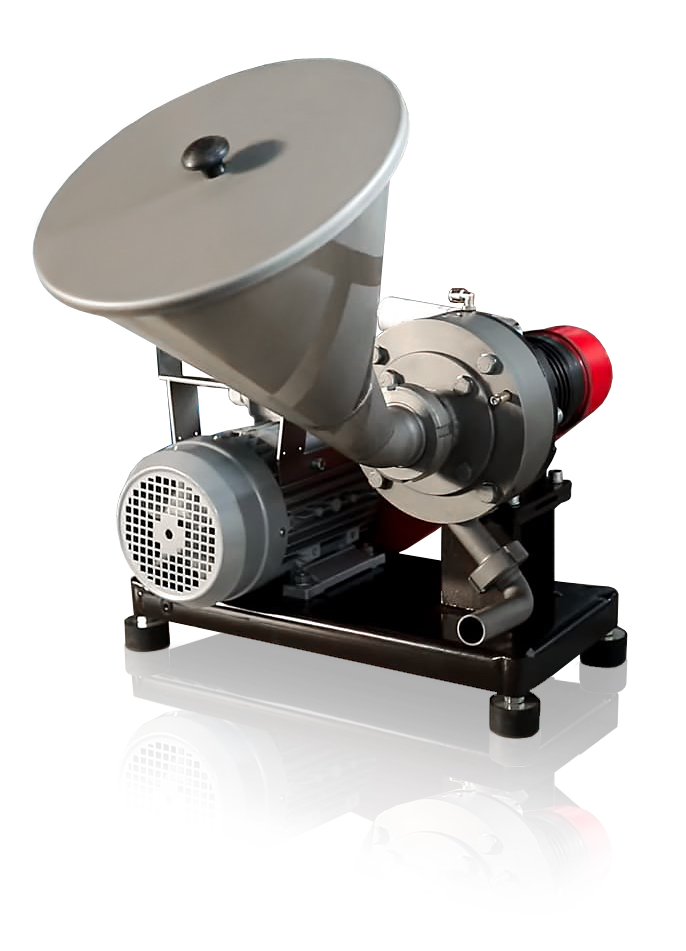
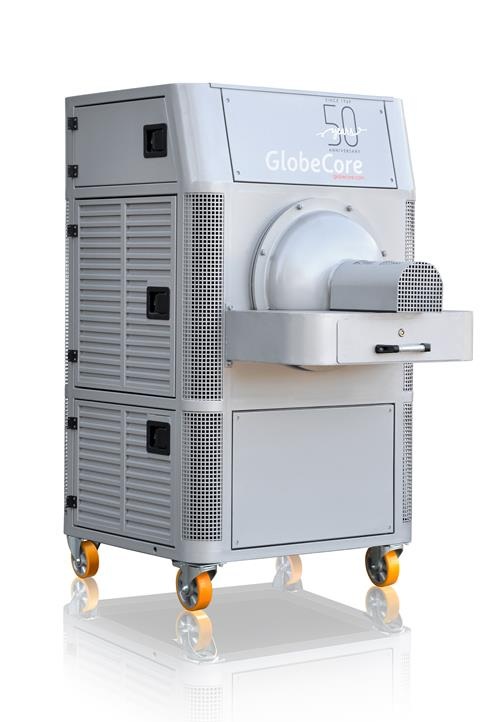
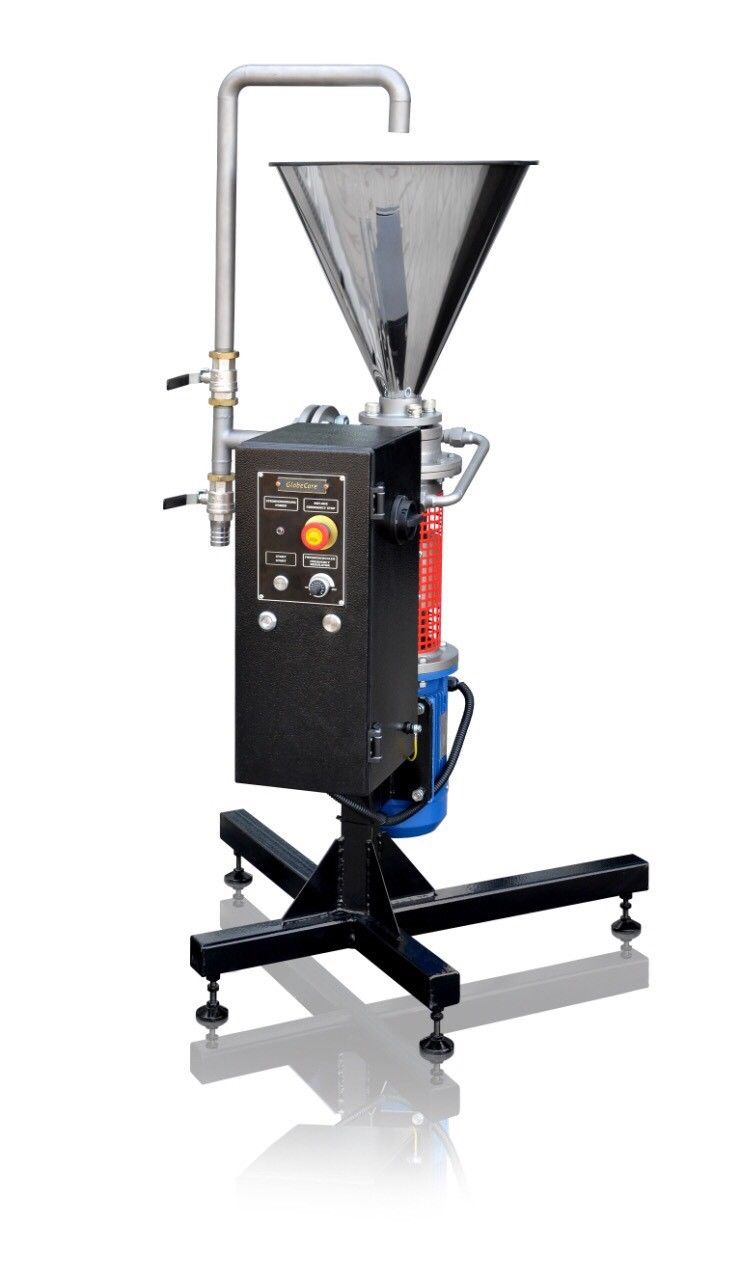
Specifically, heavy marine fuel production can be optimized by implementing GlobeCore vortex layer device (AVS) into the technological process.
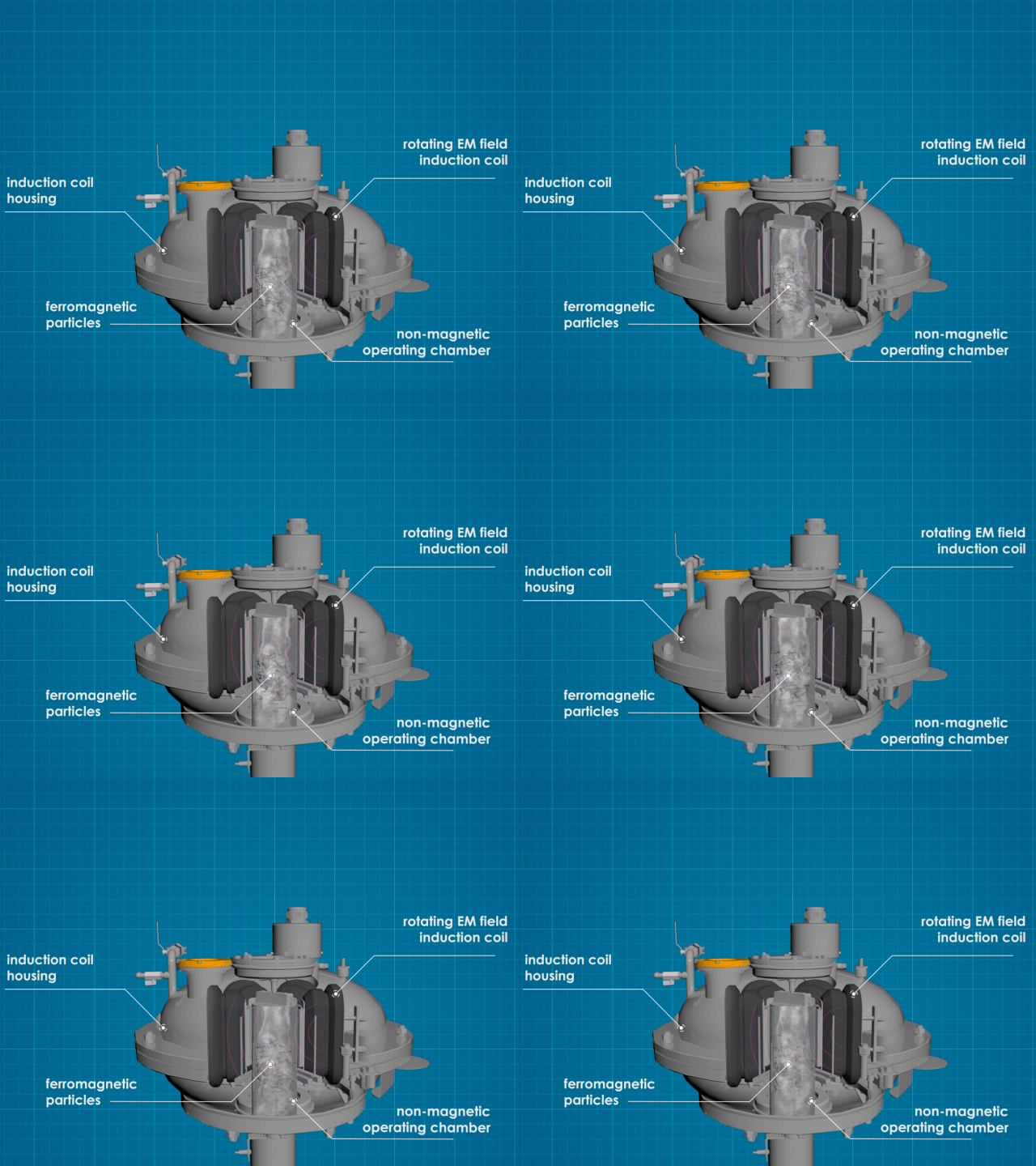
Figure 1 – Device with a vortex layer of ferromagnetic particles

Marine composite fuels — disadvantages of conventional preparation methods

According to the classic technology, marine diesel fuel is prepared using special mechanical mixers. In this case, mixing diesel fuel with fuel oil results in obtaining the poor-stability emulsions which contain fuel oil particles with 20 to 100 microns in size.

Moreover, mixed fuels may require additional purification by means of filters, separators due to the content of large mechanical impurities, contaminants, and water.

These problems of conventional methods for marine fuel preparation can be solved by using GlobeCore vortex layer device. The industrial tests and analysis carried out by D.D. Logvinenko confirm the reasonability of this method of preparing combustible blends for ship power plants. AVS is suitable for fuel preparation, fuel quality improvement, and intensification of combustion processes.

Preparation of marine composite fuels by means of a vortex layer device

When mixing diesel fuel with fuel oil in a vortex layer device, we obtain an emulsion of high quality and high stability. Marine diesel fuel is prepared in a matter of seconds. In this case, the dispersion ability of the fuel oil contained therein is less than 1 micron. The emulsion does not break down and has a high sedimentation stability. The composite fuels prepared by this method are suitable for use in marine diesel engines.

The result stems from processing the fuel in a vortex layer generated by ferromagnetic particles and an electromagnetic field. In the operating chamber, the needles turn into mixers and crushers when driven by an electromagnetic field. They rotate intensively and move through the chamber. Ferromagnetic elements collide with the operating cube walls, with one another, and with particles of processed materials. At the same time, temperature rise foci, high local pressures, magnetostriction, and cavitation are observed. Under such conditions, composite fuels are amenable to high-quality homogenization, and the fuel oil particles contained therein are efficiently ground.

As a result, we obtain stable marine diesel fuel, the production of which has consumed several times less energy than in the event of using conventional units. The processes associated with dispersion of particles and mixing of ingredients are intensified; composite fuels are produced several times faster.

Advantages of marine fuel preparation by means of a vortex layer device

It is convenient and advantageous to prepare marine fuel using a vortex layer device for the following reasons:

  •     High product quality

We obtain high-quality composite fuels with finely dispersed fuel oil particles and a good resistance to breakdown.

  • Cost-effectiveness

At the power requirement of 4.5 kW, AVS-100 model of vortex layer device prepares marine diesel fuel with the capacity of up to 5–6 cubic meters per hour. Thus, less than 1 kW of energy is spent per one cubic meter of fuel which is several times more advantageous than in the event of using conventional units.

  • Environmental friendliness

There is no waste, and the atmospheric emissions from fuel combustion are reduced, because fuel has a better quality and a more stable condition.

  •     Versatility

AVS replaces several marine fuel processing and preparation units at once, including separators, homogenizers, and filters. Furthermore, the device outperforms them and prevents the loss of fuel.

Marine fuel production by means of a vortex layer device allows accelerating the technological process severalfold, because it takes a few seconds to mix the ingredients which is much faster compared to conventional mechanical mixers. In addition, the equipment is distinguished by compactness and light weight; therefore, it can be used without any problems even on a relatively small ship. For example, compared to a homogenizer with the capacity of 1.83 m3/h, AVS-100 device is 2.5 times lighter by weight. And the capacity thereof is several times higher, which is sufficient to make a stock of composite fuels for the largest and most powerful ship plants.

For seeking advice and ordering a vortex layer device for marine fuel production, please contact GlobeCore sales representatives.
    Leave Your Request


    • Home
    • Products
    • Dealers
    • Tech School
    • Contacts

    ® Copyright by - 2025 © GlobeCore

    GlobeCore, Sadovskogo 14, Poltava, Ukraine, 36034

    This website uses cookies to improve your experience. By continuing to browse, you agree to our use of cookies. Read more in our Privacy Policy.