GlobeCore

  • Home
  • Products
    • Oil Regeneration
      • CMM-6RL Oil Regeneration Unit
      • CMM-10RL Transformer Oil Regeneration Plant
      • CMM-12R Oil Regeneration Systems
      • CMM-12R Oil Regeneration System (With Activated Bauxite)
      • CMM-8RSL/4000 Transformer Oil Regeneration Plant (With Fuller’s Earth)
      • USB-6 Oxidation Inhibitor injection unit
      • СММ-0,001U Laboratory Oil Filtration Unit
    • Oil Purification & Degassing Machines
      • CMM-0.6L Oil Degassing & Filtration Cart
      • СММur-1L mobile oil plant
      • CMM-1.0LT Transformer Oil Purification Unit
      • CMM-1H Oil Processing Unit
      • CMM-2.2LT Industrial Oil Purification Unit
      • CMM-4,0T Turbine oil filtration
      • CMM-4,0LT Transformer Oil Purification Unit
      • CMM-4/7 portable oil degassing unit
      • CMM-6LT Industrial Oil Purification Unit
      • CMM-6/7 Degassing Unit
      • CMM-8LT Oil Processing Unit
      • CMM-10 — Transformer Oil Purification Machine
      • CMM-15 Oil Degassing Plant
    • Oil Filtration Machines
      • CMM-1,0CF Unit for Removal of Water from Oil
      • CMM-2,0CF Unit for Removal of Water from Oil
      • CMM-1,2Fr Industrial oils filtration unit with self-cleaning filters
      • CMM-4,0F Oil filtration unit
    • Oil Drying Unit
      • ZP-130 Sorbent Cartridges
      • ZP-260 Sorbent Cartridges
    • Oil Heating
      • PPM Inline Oil Heater. Stream oil heating
    • Fuel Polishing
      • TOR-1 diesel fuel moisture content tester
      • CMM-6RL dark diesel fuel polishing machine
      • CMM-6RL dark heating fuel polishing machine
      • CMM-6RL low-viscosity marine fuel polishing machine
    • Online Transformer Dry-Out Systems
      • CMM-260C Online Transformer Dry-Out System
      • TOR-4 Online Transformer Dry-Out System
    • Online Transformer Monitoring Systems
      • TOR-5 Online Transformer Monitoring System
    • Transformer Maintenance
      • Mojave Heat (Sukhovey): Hot Air Dryer Unit
      • UVV Vacuum Cold Trap
      • US-6S Transformer vacuum furnace
      • LFD Low Frequency Heating Device
      • BV-3000 Transformer Evacuation System
      • BV-5000 Transformer Evacuation System
      • UVD Vacuum Oil Filling Unit
      • UVD-1000 Oil Filling and Transportation System
      • TSS Transformer Safety System
      • CMM-6RL Oil Regeneration Unit
      • CMM-10RL Transformer Oil Regeneration Plant
      • CMM-12R Oil Regeneration Systems
    • Vacuum Transformer Drying Ovens
      • US-6S Transformer vacuum furnace
    • Sorbent Processing
      • ZP-130 Sorbent Cartridges
      • ZP-260 Sorbent Cartridges
    • Instruments – Transformer Oil Testers
      • TOR-1 Oil Moisture Meter
      • TOR-2 Hydrogen and Moisture Analyzer for Transformer Oil Monitoring
      • TOR-3 (TOR-3 SL) Oil Tan Delta Tester
      • TOR-6 Transformer Oil Moisture and Particles Tester
      • TOR-7 Universal Transformer Oil Tester (moisture, gases, solid particles)
      • TOR-8 tester for residual gas content of insulating oil
      • TOR-60 (TOR-60 SL) Breakdown Voltage Tester
      • TOR-80 (TOR-80 LSL) Breakdown Voltage Tester
      • TOR-80A (TOR-80 ASL) Transformer Oils Breakdown Voltage Tester with Battery
      • TOR-100 (TOR-100 SL) Breakdown Voltage Tester
    • Wind Turbine Service
      • CMM-G wind turbine gearbox oil changer (with dimensions adapted to the customer’s trailer ones)
      • CMM-G Wind Turbine Gearbox Oil Changer
      • CMM-GL Wind Turbine Gearbox Oil Changer
      • CMM-0.6L Oil Degassing & Filtration Cart
      • CMM-4,0T Turbine oil filtration
    • Medical Equipment Maintenance
      • CMM-0.6 X-ray Transformer Oil Purifier
      • AVSk-150 Hospital Wastewater Treatment Complex
    • Blending systems
      • USBL-1 Laboratory Blending System
      • USB-1 Fuel oil blending system
      • USB-5 high-speed mixing unit for production of sanitizers (0.15 – 0.3 m3/h)
      • USB-5 high-speed mixing unit for production of sanitizers (1.1 m3/cycle)
      • USB-6 Impeller Stirrer
      • Colloid Mill
      • Vortex Layer Devices
    • Colloid Mill
      • Colloid mills for food industry
        • CLM-100.3 Colloid mill
      • Colloid mills for bitumen emulsion production
        • CLM-0.25.1 Laboratory colloid mill
        • CLM-2/4 Colloid mill
        • CLM-16/25 Colloid mill
      • Colloid mills for bitumen modification
        • CLM-8/16 Colloid mill
        • CLM-10/20 Colloid mill
        • CLM-40.2 Colloid Mill
      • Colloid mills for different applications
        • CLM-100.2 Colloid Mill
        • CLM-200.2 Colloid Mill
    • Vortex Layer Devices
      • AVS-100 Mixing Machine. Vortex Layer Device
      • AVS-150 Chemical Mixing Machine
      • AVSp-100 Vortex Layer Device (Semi-Automated)
      • AVSp-150 vortex layer device (semi-automated)
      • AVSk-150 Wastewater Treatment Complex
    • Bitumen emulsion plant, Bitumen Emulsion Production
      • CLM-0.25.1 Laboratory colloid mill
      • USB-2 Bitumen emulsion unit 2 m3/hour production capacity
      • USB-2 Bitumen emulsion plant 8 m3/hour production capacity
      • FB Bitumen filter
      • USB-6 Impeller Stirrer
    • Bitumen Modification Plant. Modified Bitumen Production
      • USB-3 Bitumen modification laboratory system
      • USB-3 Continuous Bitumen Modification Unit (12 m3/hour)
      • USB-3 Bitumen modification unit 16 m3/hour production capacity
      • USB-4 Modified bitumen collection tank (USB-3)
      • USB-6 Impeller Stirrer
    • Laboratory system for Bitumen Emulsion Samples
      • CLM-0.25.1 Laboratory colloid mill
      • CLM-100.1 Bitumen Emulsion Laboratory System
      • USB-3 Bitumen modification laboratory system
    • Biodiesel Equipment
      • USB-1L Biodiesel laboratory equipment
      • USB-1 Biodiesel equipment
        • Filters
          • The filter GC Fine with a filtration factor β = 4000
        • Vacuum Pumps
          • GC Roots Vacuum Pumps
          • مضخات التفريغ GC Vane (مضخات دعم)
    • Custom Equipment
      • CMM-4R TRANSFORMER OIL REGENERATION MACHINE
      • CMM-1 MOBILE OIL PLANT
      • CMM-2.2 MOBILE OIL PLANT
      • CMM-4 MOBILE UNIT FOR POWERED TRANSFORMER OIL PROCESSING
      • CMM-12A DEGASSING UNIT
      • CMM-1CO CABLE OIL DEGASSING UNIT
      • CMM-5M INDUSTRIAL OIL PURIFICATION MACHINE
      • CMM-8RP Sorbent Reactivation Unit
      • BDK-3 CATALYTIC CONVERTER
      • CMM-600CF TRANSFORMER OIL FILTRATION AND REFILLING MACHINE
      • SN-1 PUMP ASSEMBLY
      • SBE-30 BITUMEN EMULSION COLLECTION TANK (UVB-1)
      • UVB-1 BITUMEN EMULSION UNIT 1 M3/HOUR PRODUCTION CAPACITY
      • UVB-1 EXTENSION 1 M3/HOUR PRODUCTION CAPACITY
      • INDUSTRIAL MIXER – COLLOID MILLS CLM-4 SMALL
      • BIG COLLOIDAL MILL CLM-18 GRINDING MACHINE
      • INDUSTRIAL MILL – GIANT COLLOIDAL MILL CLM-22
      • CMM-0.6 Clean Marine Oil Degassing Cart
      • Compressed Air Supply Unit UOV
    • Accessories & Components
  • Dealers
  • Tech School
    • Webinar Registration
  • News & Articles
  • History
  • Reviews
  • AskMe
  • Contacts
  • EN
    • FR
    • ES
    • PT
    • TH
    • VN
    • CN
    • HA
    • AZ
    • JP
    • DE
    • RO
    • Hun
    • Arabic
    • Ind
GlobeCore / Air Drying / Moisture in oil: influencing the quality characteristics of insulating liquids

Moisture in oil: influencing the quality characteristics of insulating liquids

Transformer Oil Sampling

It is common knowledge that moisture significantly reduces the insulating properties of transformer oil. The influence of moisture in oil is different depending on the temperature and the amount of moisture and the state  it is present in a dielectric fluid.

The moisture in oil can be present in three states: emulsion, solution and sedimented (settled at the bottom of the tank). Emulsified water significantly reduces dielectric strength of oil. Dissolved water and sediment do not affect the breakdown voltage of transformer oil, however with high temperatures moisture can disperse. Therefore, the maximum allowable moisture content in oil should be below 0.001%. It is not only water by itself that influences insulating fluid. Water interacting with a variety of impurities, products of oxidation and decomposition determines the degree of influence on the dielectric strength of insulating oil.

At the same time, it has been proven that carbon molecules in oil have the ability to absorb and retain 30-40% of the moisture. Also moisture in oil is absorbed by polar substances in oil. Thus, it is impossible to determine the exact amount of water in a liquid dielectric by any known methods.

Bound water greatly reduces the dielectric strength of oil and the resistance to partial discharges in hard insulation.

It should also be noted that at minus temperatures water turns from the liquid aggregate state to solid, which can cause damage to the windings inside the tank.

Methods to determine moisture content in oil

Moisture determination is carried out through three main methods. The first is based on the extraction of oil samples and chemical analysis. This method is carried out in two ways:

  • A calcium hydride test measures moisture content in oil reacting with calcium hydride and releasing hydrogen gas;
  • Karl Fischer titration is based on moisture in oil interacting with the titrant (containing iodine and sulfur dioxide dissolved in methanol). The moisture content is calculated according to the  amount of water expended on electrolysis. The method is more accurate than the previous one, but is not suitable for oxidized oils.

The second method is gas chromatography that analyses the distribution of gases in liquid phase.

The third method is based on electrical conductivity as water is more conductive than oil  with the AC/DC equipment sensing changes in a sample due to moisture saturation of oil.

Drying of transformer oil

Before being filled into the power equipment, the oil is checked for impurities, decomposition products, gases and dissolved water. And although many years of experience showed that it is impossible to completely get rid of polluting elements, you can still improve the quality characteristics of the used and fresh oils

The methods used to remove moisture in oil are a thermal vacuum dehydration and absorption purification.

The principle of the first method is based on the separation of moisture from oil under vacuum. The oil containing water is sprayed in a vacuum column, where the water evaporates, and the dried oil precipitates to the bottom of the chamber.

The effectiveness of this method increases when oil is heated to a higher temperature. Heating evaporates more moisture, and loses less oil.

The second method, namely the drying of electrical insulation with adsorbents, is the most common among power engineers today. The adsorbents used for oil purification are artificial or natural minerals. Due to their absorbing properties, they collect moisture and some impurities that contaminate the oil on their surface. One of the most common adsorbers of this class is zeolite.

The microporous structure of zeolite surface allows to absorb and release a large amount of moisture. Zeolite absorbing surface is more than half of its total volume.

Dehydration of transformer oil with zeolite:

  • pore spaces are determined by structure of zeolite
  • effective interaction with water molecules;
  • when heated demonstrates high moisture absorption;
  • zeolite reactivation allows its repeated use;
  • fast adsorption processes;
  • maintaining a high degree of purification throughout;
  • low power consumption.

Removing moisture in oil with GlobeCore equipment

Special plants have been developed for transformer oils purification from aging and decomposition products with the help of zeolite.

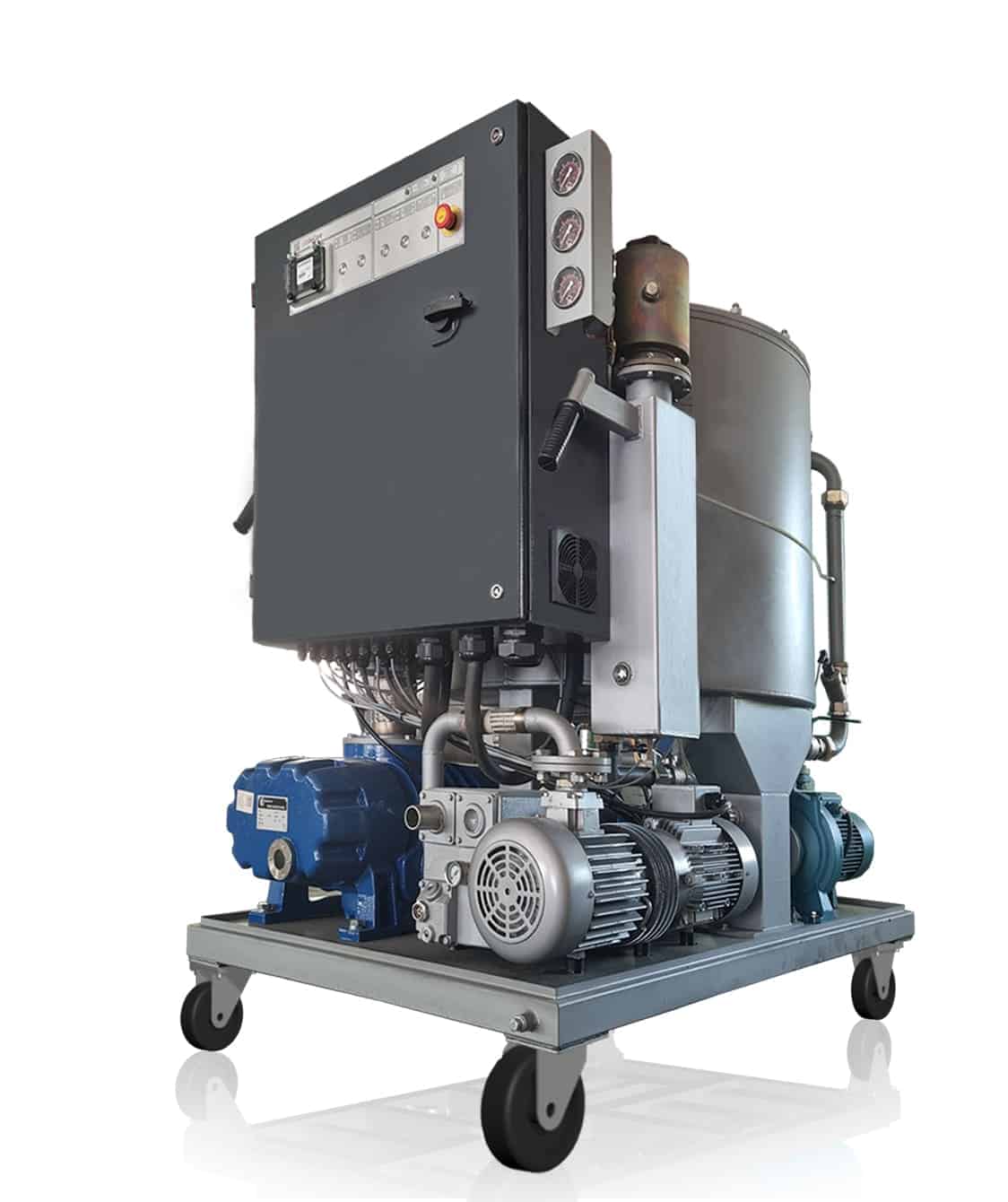
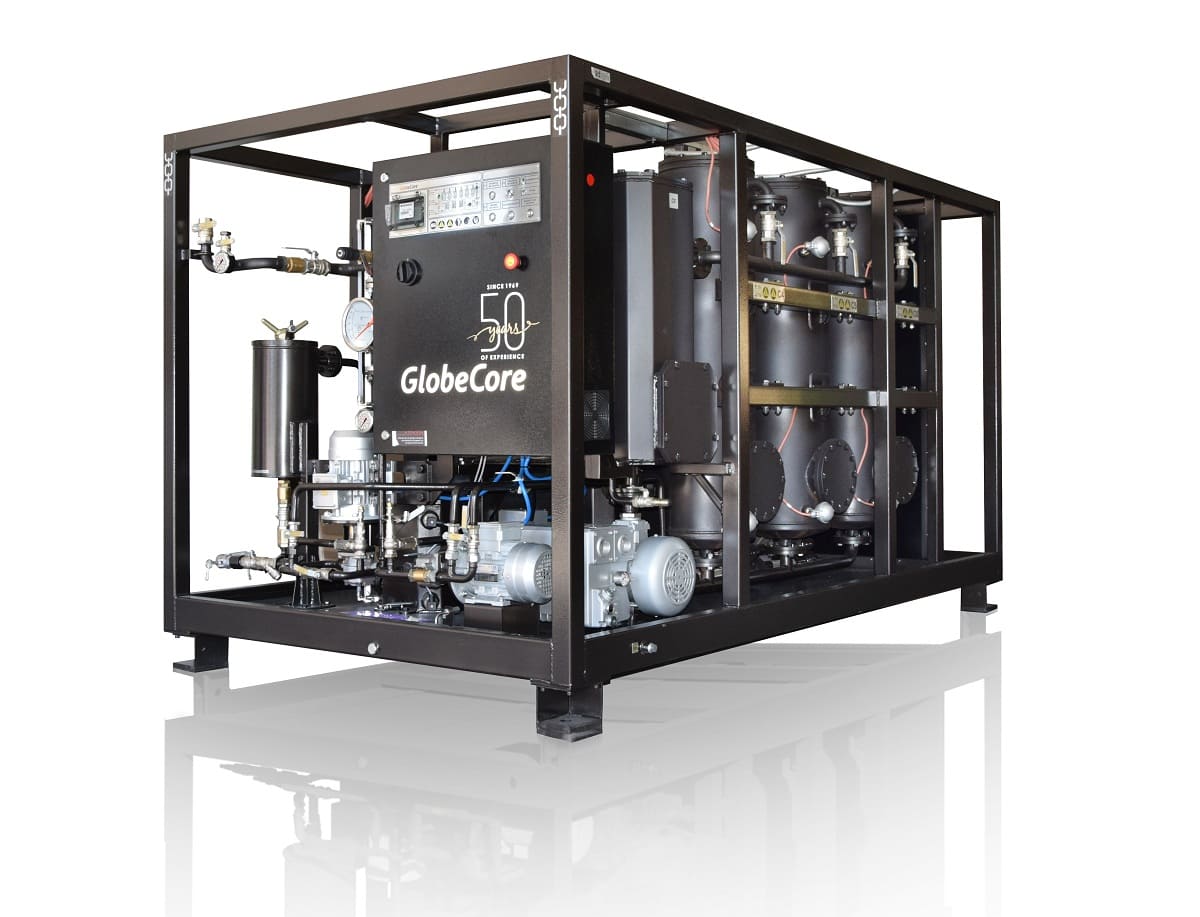
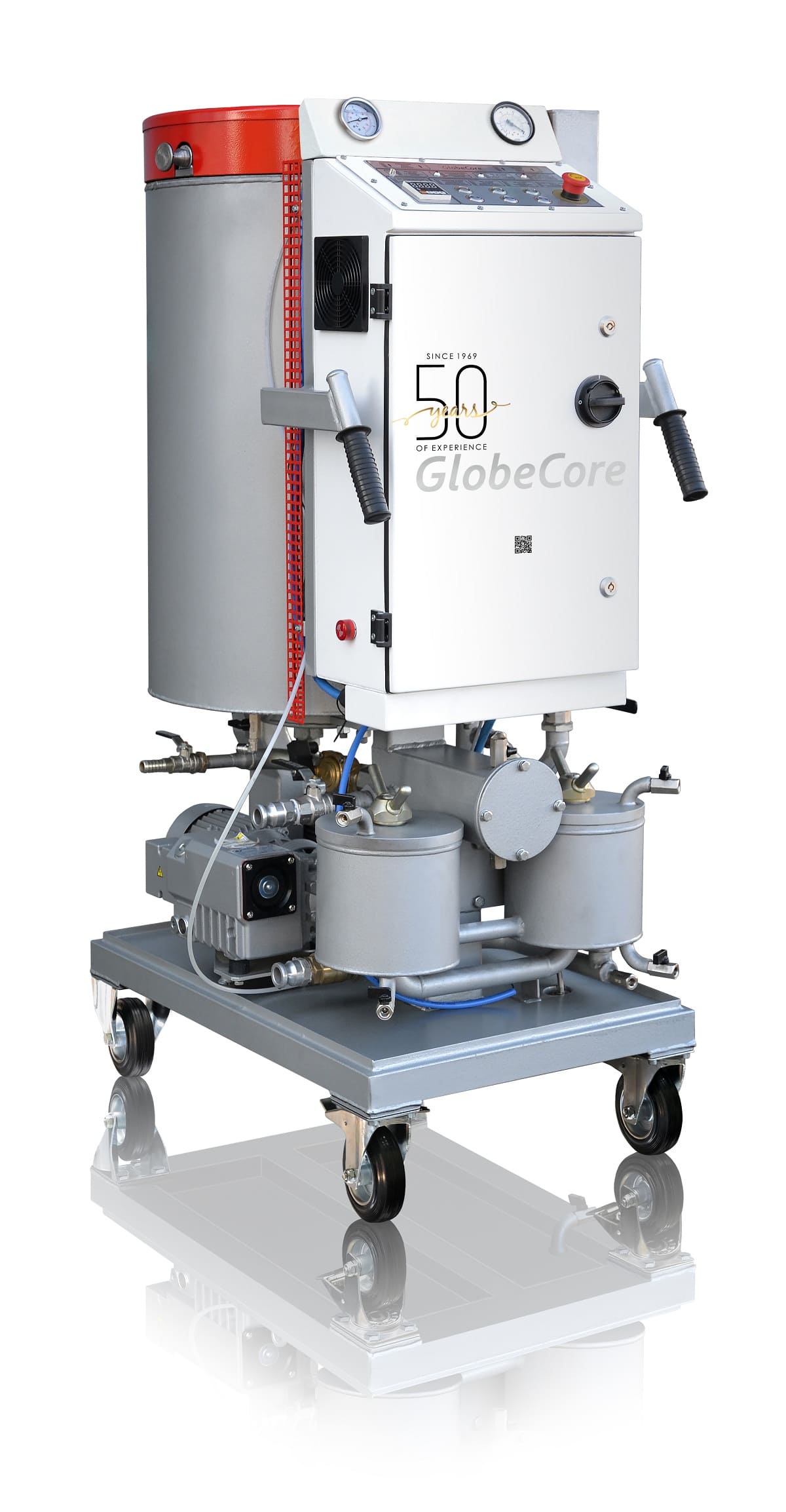
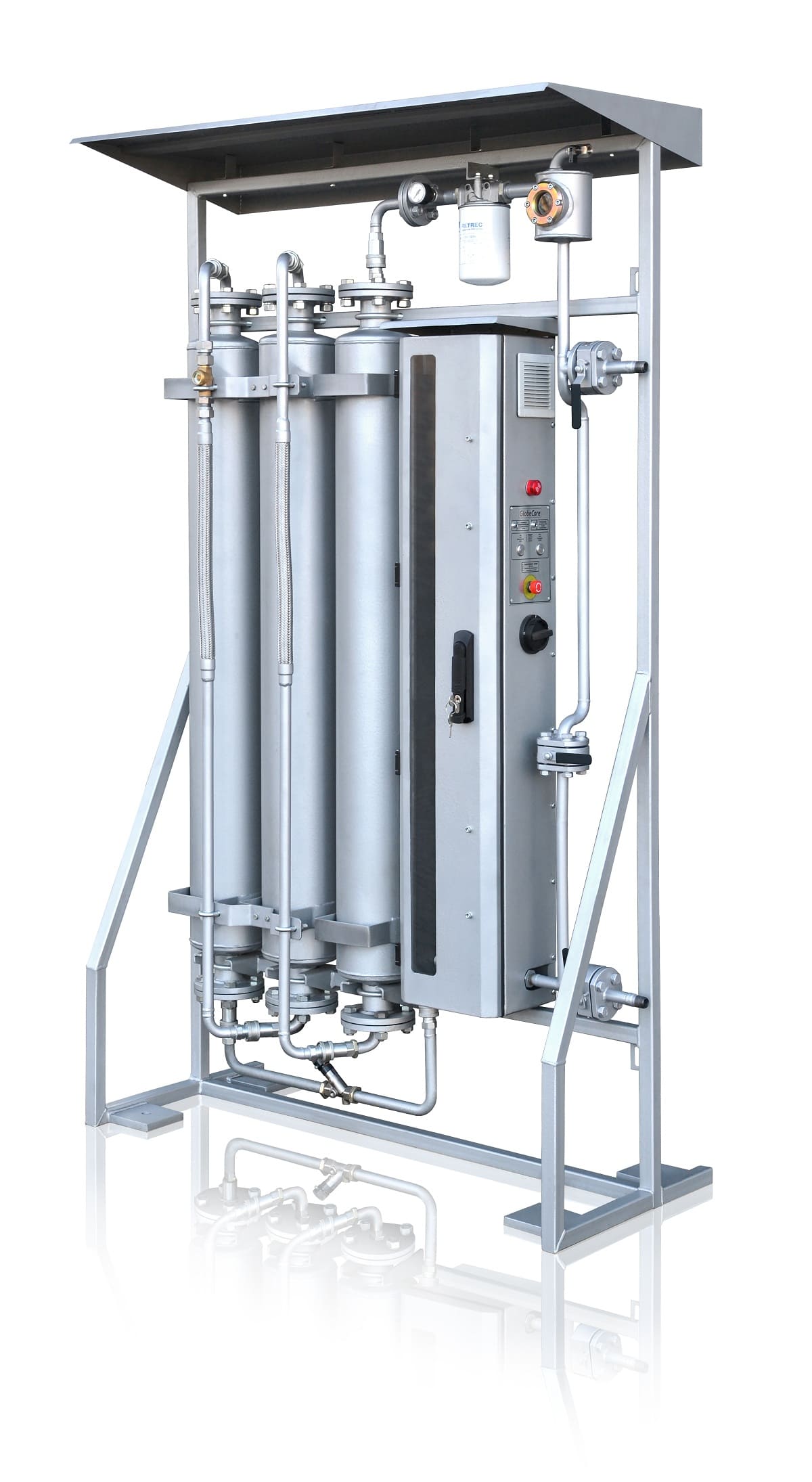
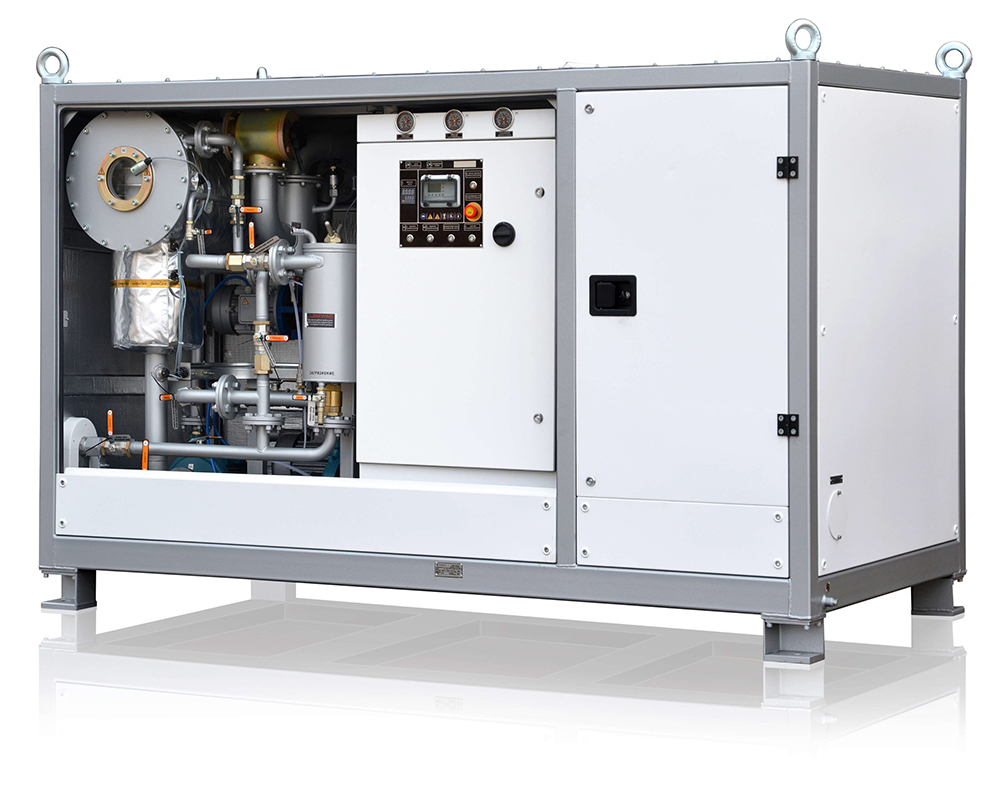
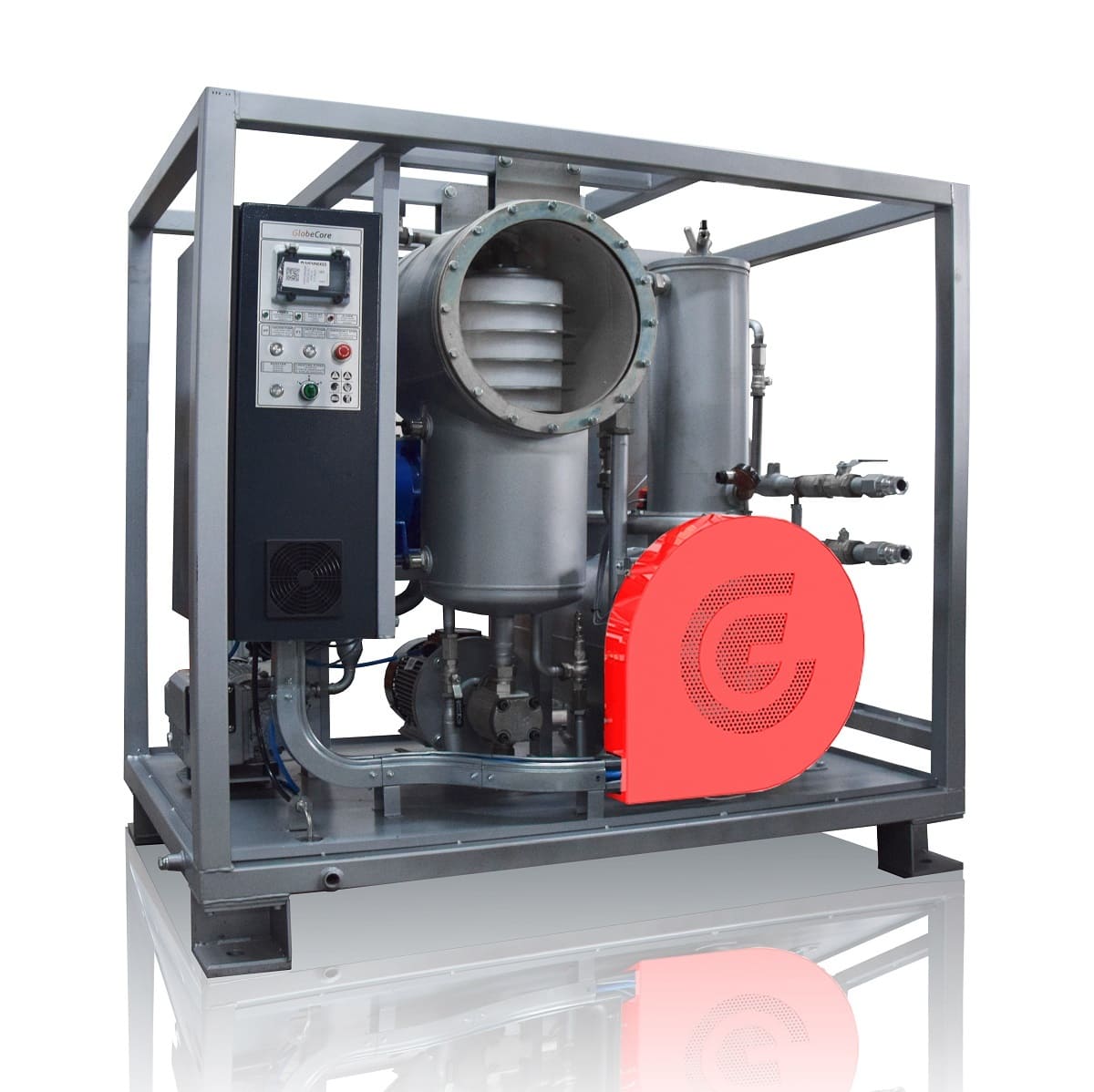
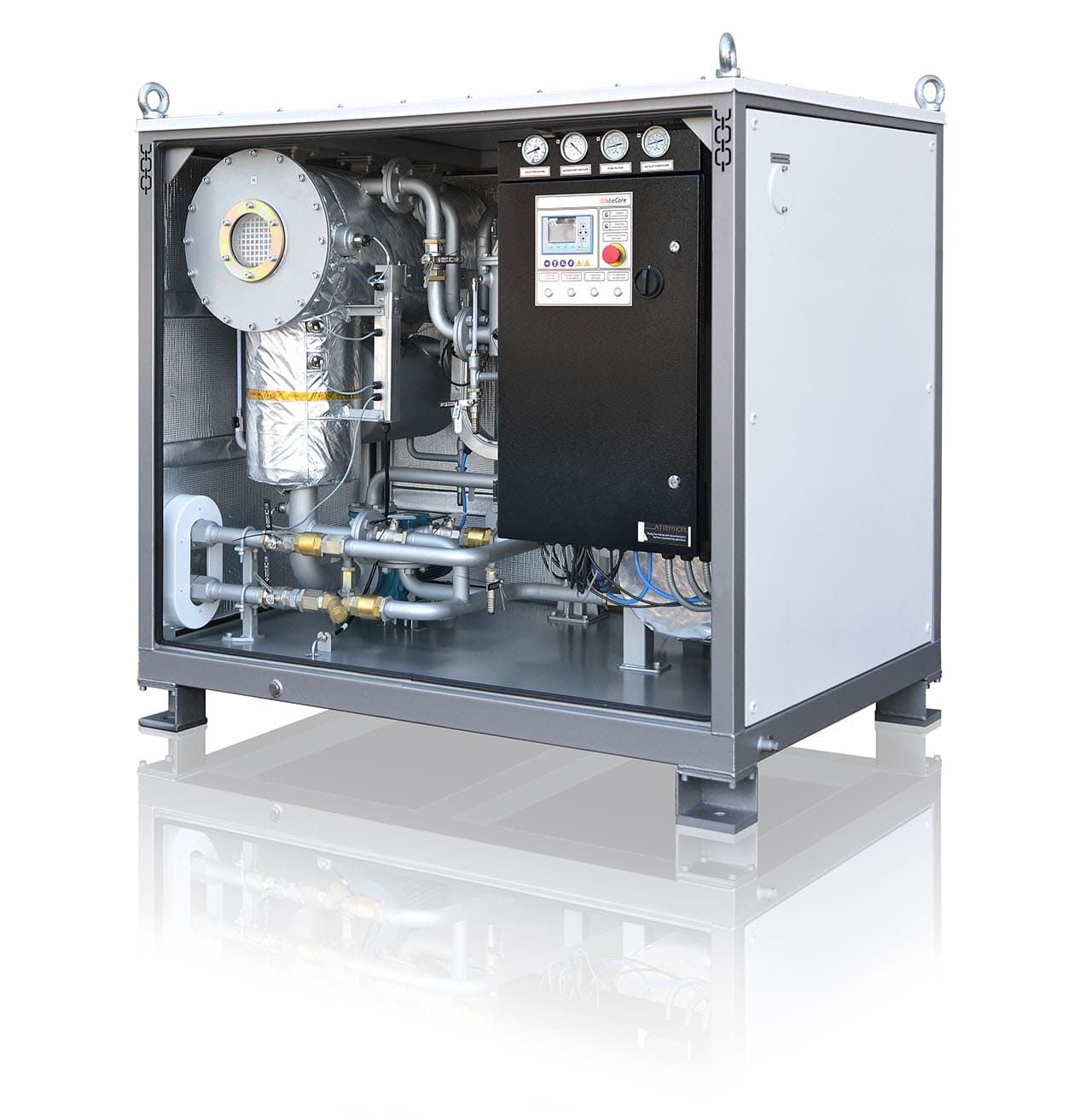
GlobeCore developed a special ZP – plant for oil regeneration with zeolite. It cleans insulating oils with viscosity below 70 cSt at 50 ° C and removes moisture and also products of aging and oxidation (mechanical impurities, air, aging products of equipment).

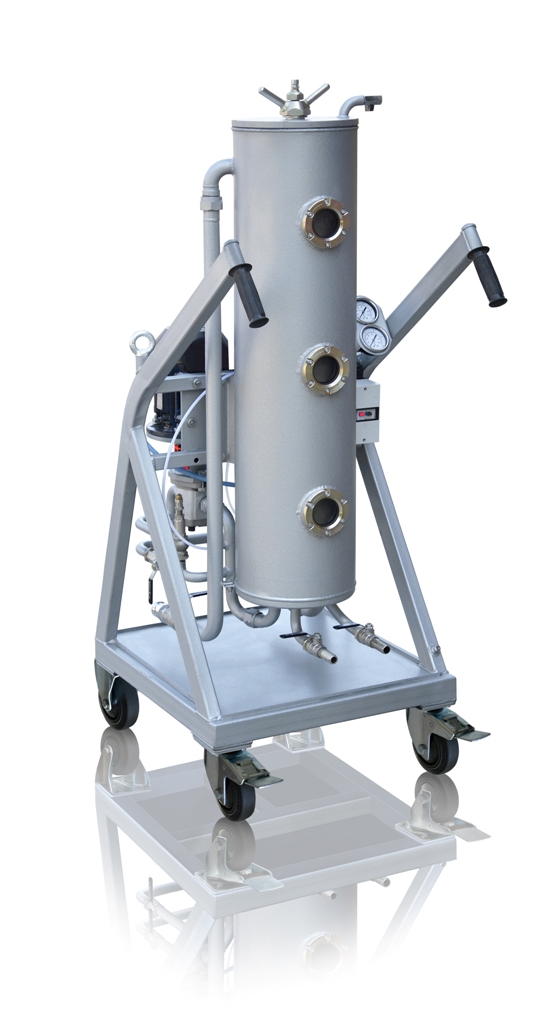
The unit consists of a heating and filtration section, and a section with sorbent cartridges. It is also equipped with spare parts:

  • a cross-joint;
  • a heating element;
  • cuffs;
  • A check valve;
  • A gasket pump.

The zeolite oil drying unit MCU operates in two modes:

  • heating and filtration;
  • deacidification.

The processing rate is 4.3 m3 / h. The oil purity is shows in a moisture content below 10 g / t (with an initial moisture content below 50 g / t) and filtration fineness 5 μm.

The operation of the GlobeCore MCU-4.3 require the following safety requirements:

  • operation and maintenance is done only by personnel familiar with technical documentation on the use of this equipment;
  • proper grounding of equipment;
  • exit valves are closed before operation;
  • maintenance and repair work is done only on switched off equipment.

Equipment for drying zeolite after adsorption

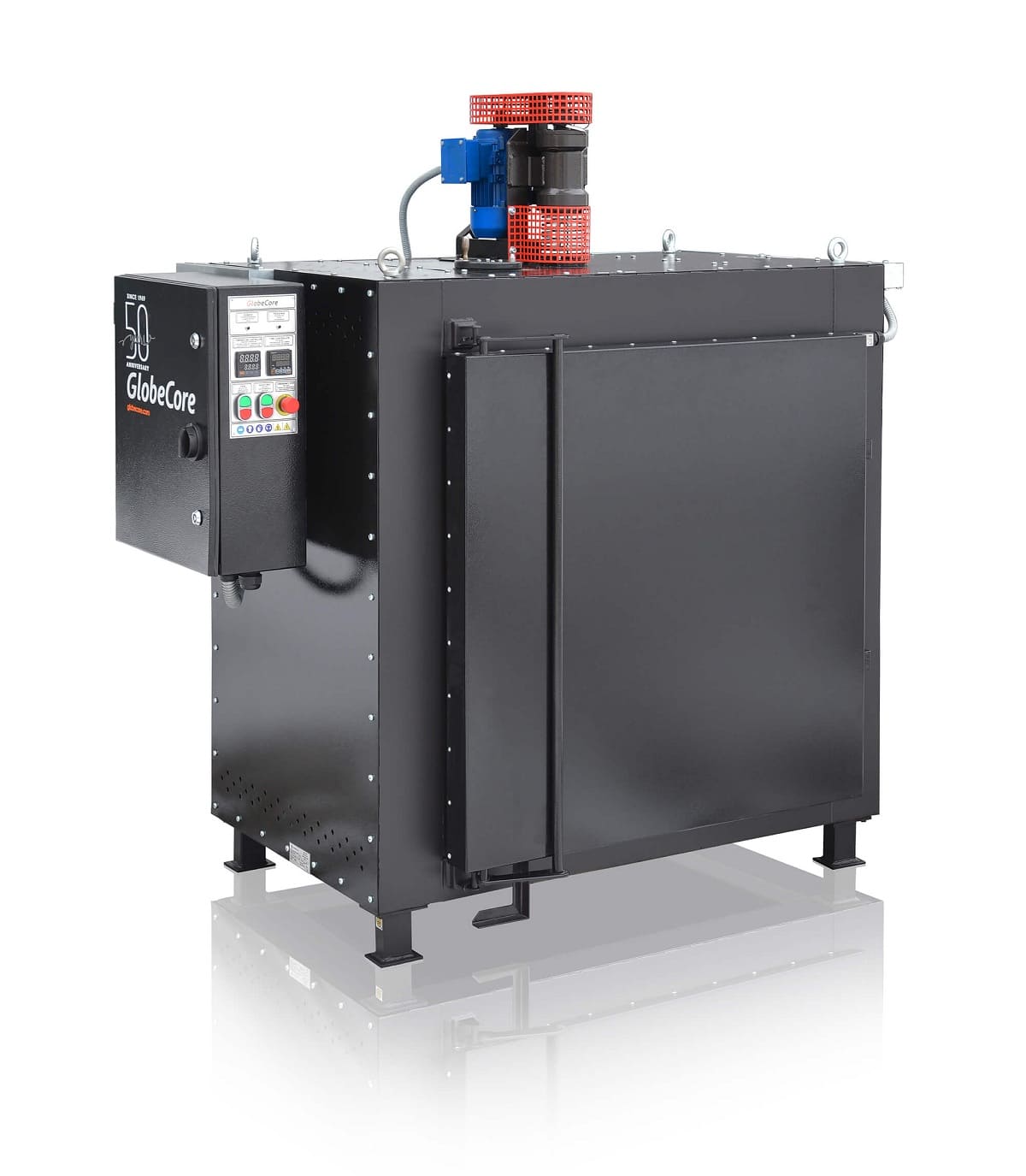
The advantage of zeolite over other adsorbents that remove moisture in oil is its ability to be reactivated and reused. Zeolite reactivation equipment such as a drying cabinet SSC-15 from GlobeCore is used for preliminary drying of zeolite  and deep dehydration.

It is a metal cabinet that is a drying chamber with heaters installed at both sides. The back panel is equipped with a fan. It drives the air from the electric heaters and back through the side openings in the cabinet walls. A zeolite drying cabinet is equipped with a control panel that is attached to the cabinet  in a separate container.

Each regeneration cycle uses less than 130 dm3 of zeolite.

GlobeCore constantly works on improving its equipment and is ready to cooperate with companies engaged in the repair and maintenance of transformer equipment, taking into account the wishes of each customer.

    Leave Your Request


    • Home
    • Products
    • Dealers
    • Tech School
    • Contacts

    ® Copyright by - 2025 © GlobeCore

    GlobeCore, Sadovskogo 14, Poltava, Ukraine, 36034

    This website uses cookies to improve your experience. By continuing to browse, you agree to our use of cookies. Read more in our Privacy Policy.