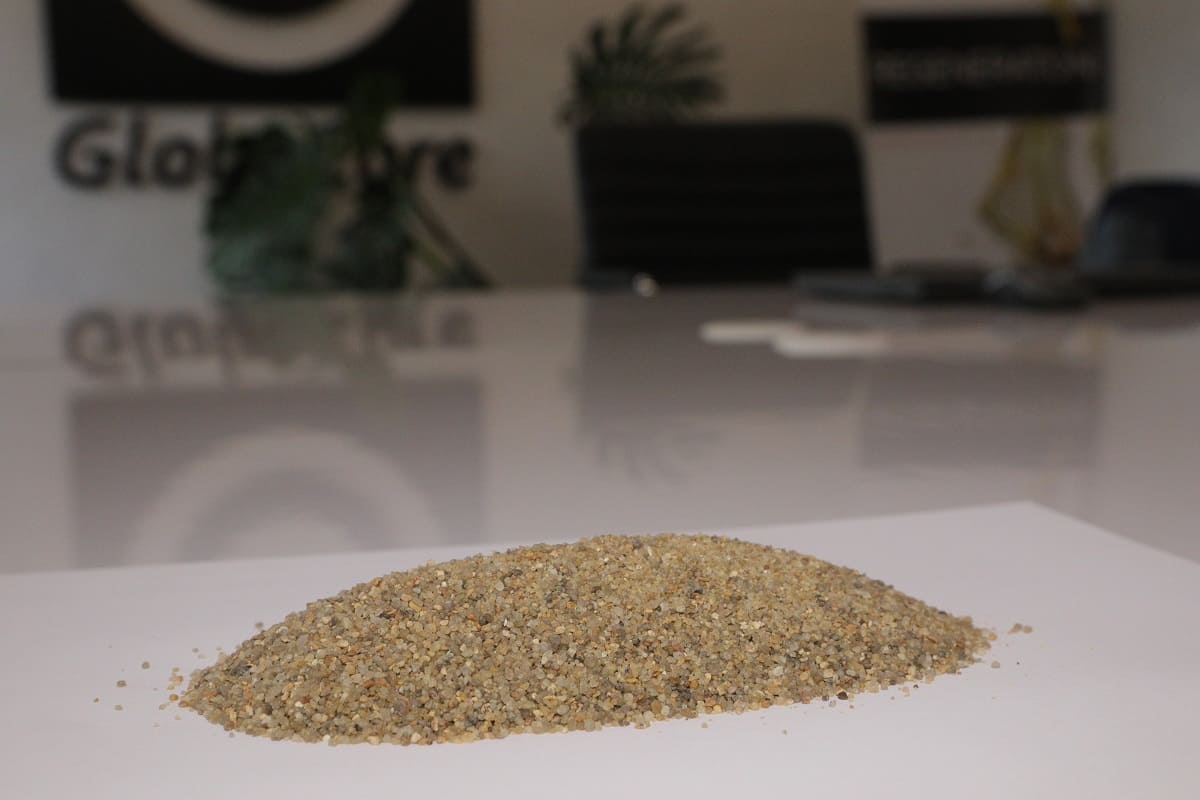
Sand grinding is a necessary stage in preparing the material for its further use in construction and industry. It is one of the basic ingredients for exterior surface finishing, plasters, mortars, and floorings. It is used in production of paving flagstones, dry mortars, glass, paints and varnishes, etc. At the same time, the quality of materials, structures, and surfaces in which sand is used depends on how fine and good this material is in terms of activation for interaction with other ingredients.
Why is sand ground?
Sand dispersion is required to create a finely dispersed construction material with a high concentration of silicon dioxide and a certain milling fineness. It mainly depends on these two parameters how well sand can be used in mortars and in production of materials.
The product ground to required parameters and activated will become the basis for creating rugged, wear-resistant structures and surfaces that are not amenable to strong shrinkage, abrasion, and external influence.
Thus, sand of different fractions is suitable for different purposes and materials:
- 2.5 mm — mortar for brickwork;
- 2–2.8 mm — for rough plasterwork;
- 1.25 mm — for finish plasterwork, paste filler.
Fine and very fine sand is used for production of construction and finishing materials. In order to achieve such parameters, the material is subject to milling and activation at the same time to impart it with required properties.
Sand grinding — conventional methods, their advantages and disadvantages
Sand grinding is carried out using various mills. A wide range of device varieties which allow optimizing the material production one way or the other is represented in the market:
- Ball mills
These are drums with balls or other milling elements contained inside which grind the sand by breaking, pulverizing, and smashing when the operating chamber rotates. The technology is distinguished by its energy consumption, and in the best case scenario, the device efficiency coefficient reaches 20%. In addition, the devices are subject to high wear and tear and periodically require replacement of components and working members. However, in this case, we obtain a high-quality product with the fineness of up to 2 microns at the outlet.
- Vibration mills
These represent equipment with a milling chamber and a vibrator which allows obtaining small particles. However, in order to grind the material in this unit, it must be prepared first which entails additional consumption of energy, time, and power.
- Planetary mills
In design, they are similar to ball units, but more cost-efficient compared to them. In addition to rotation along the central axis, the drums rotate around their own axis creating a pressure of tens of G. They allow grinding the sand down to 3 microns.
- Jet mills
These are devices for sand grinding by directing the air flows containing the material ground toward one another. When exposed to friction forces and impacts, the sand grains are broken and become removed from the chamber when they reach a certain size. The technology allows obtaining the particles of less than 1 micron. However, in order to operate the unit, a constant supply of a great amount of compressed air and a uniform feed of the material ground are required which makes the equipment not always economically reasonable. The efficiency coefficient reaches 58%.
Although these types of sand mills show satisfactory results, and the product obtained at the outlet is suitable for construction, they do not always allow achieving the desired degree of substance activity, and as part of the technological process, they consume an unreasonably great amount of energy. Most units are noisy and bulky, require constant maintenance and regular replacement of components.
Sand disintegrator AVS as a sand grinding optimization method
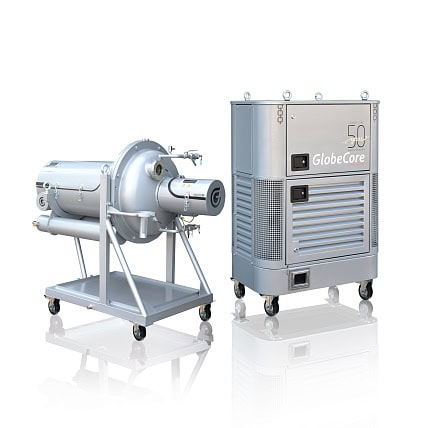
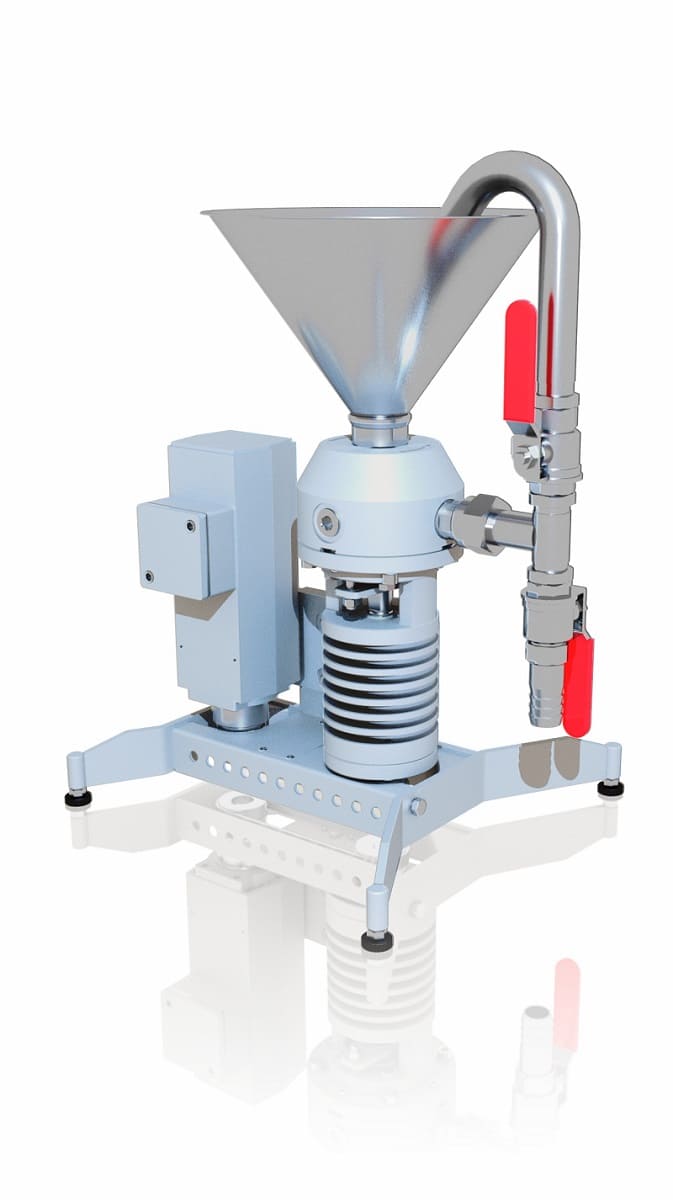
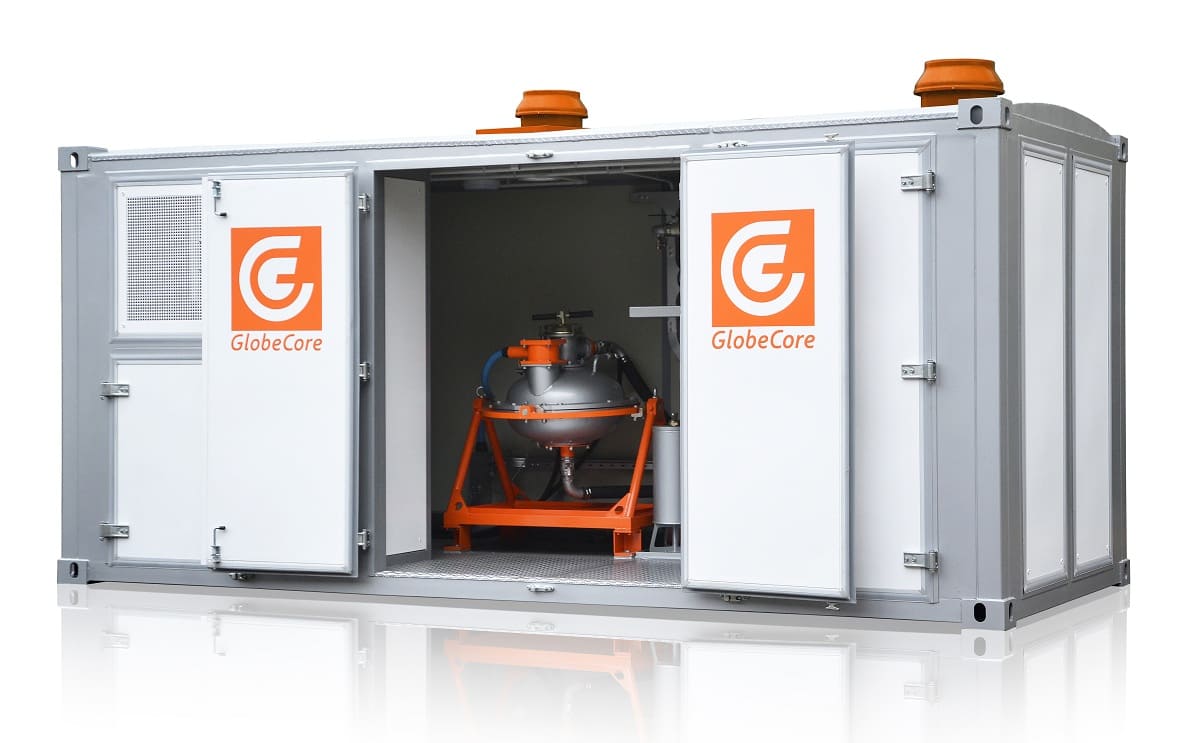
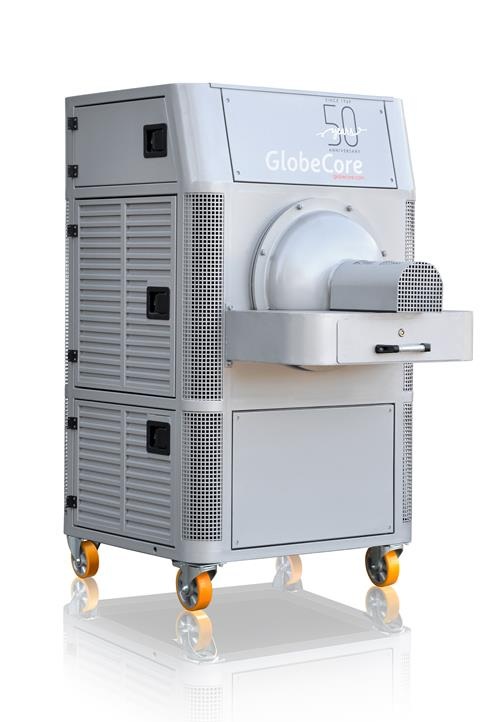
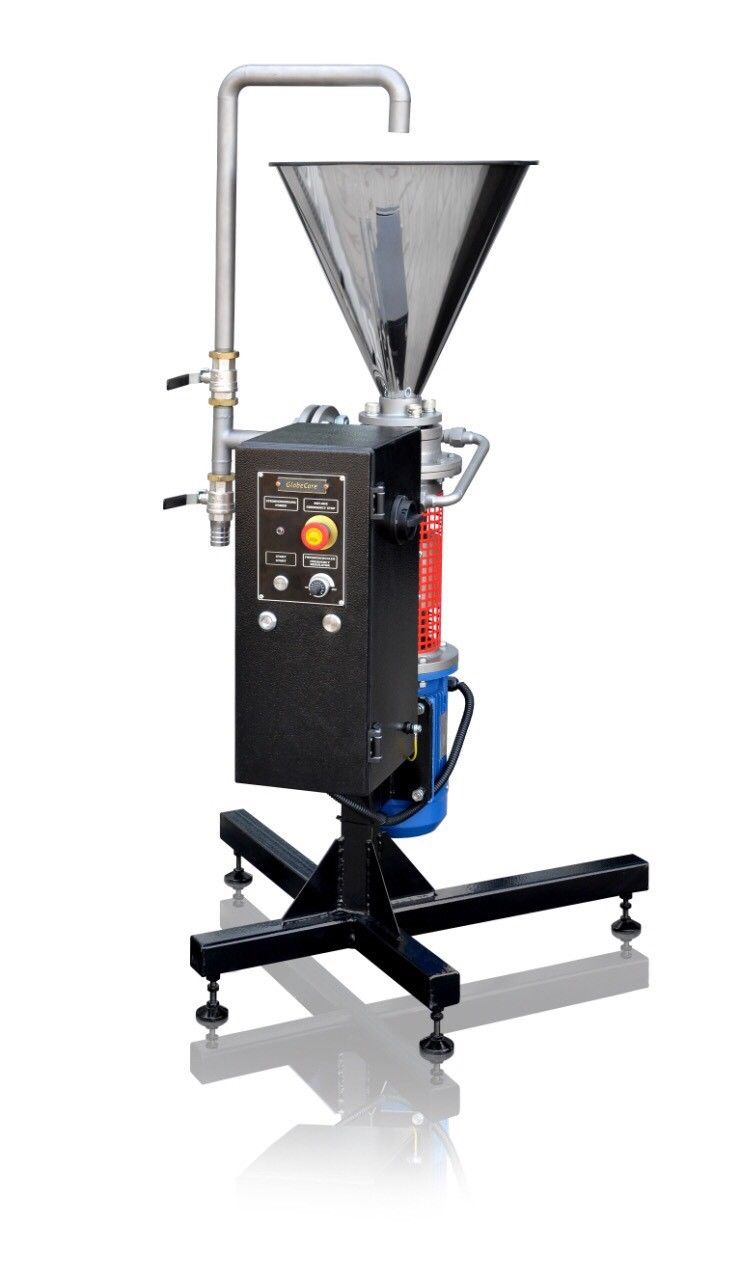
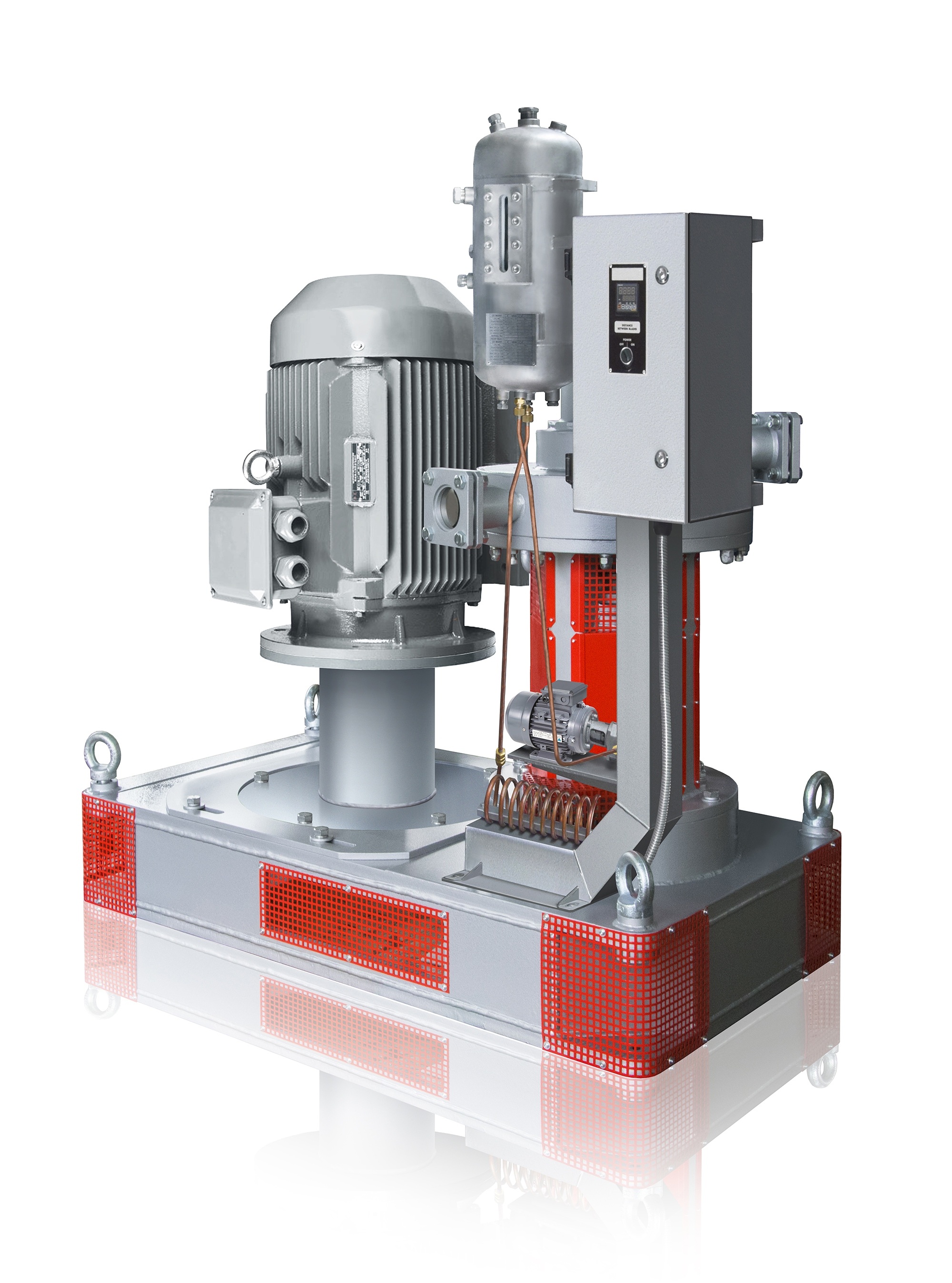
Sand disintegrator (AVS), or an electromagnetic vortex sand mill constitutes innovative versatile equipment used for obtaining finely dispersed materials as well. GlobeCore designs and manufactures AVS-100 and AVS-150 sand disintegrator. These vortex mill models solve the problems of conventional sand milling methods.
The design of AVS contains an operating chamber with a rotating electromagnetic field created by an inductor. Ferromagnetic needles are added here as an operating medium. The ferromagnetic particles rotating in the electromagnetic field collide with the chamber walls, one another, and the material ground. It results in creating a favorable environment for rapid sand grinding and activation.
Due to the possibility to change the period of processing the material in the chamber, different coarseness of milling is successfully achieved. The longer the sand is ground, the finer it becomes. Therefore, sand disintegrator AVS can produce material of different fractions for certain tasks in construction and production. With the finest possible processing, particles of only 1 micron are obtained.
Sand grinding is driven by a number of processes including:
- dispersion;
- mixing;
- electromagnetic processing;
- electrolysis (in the event of wet sand milling);
- acoustic vibrations;
- high local pressure, etc.
In conjunction with one another, these processes ensure efficient grinding and activation of finely dispersed substance. At the outlet, we obtain high-quality sand suitable for preparation of mixtures and production of materials. They will subsequently serve as the basis for creating stable, reliable surfaces, structures, wall finishes, floors, ceilings, and facades. Please note that all the processes occur simultaneously and in one operating chamber which considerably increases the electromagnetic vortex mill efficiency.
At the same time, owing to mechanical effect and splitting of sand grains, the material becomes more active. Active centers and free radicals evolve on the newly formed surface. This is due to Si-O bond cleavage. The sum of surface and internal energies changes in sand; excessive energy evolves on the surface which is useful when sand interacts with other ingredients. The structure-forming function of the material considerably increases.
Results of an experiment for sand grinding in AVS-100 sand disintegrator
GlobeCore carried out experiments for grinding quartz sand in AVS-100 sand disintegrator. In this case, the principle of “dry” milling was used: a portion of sand was placed into the device operating chamber and processed in a vortex layer of ferromagnetic particles for three minutes.
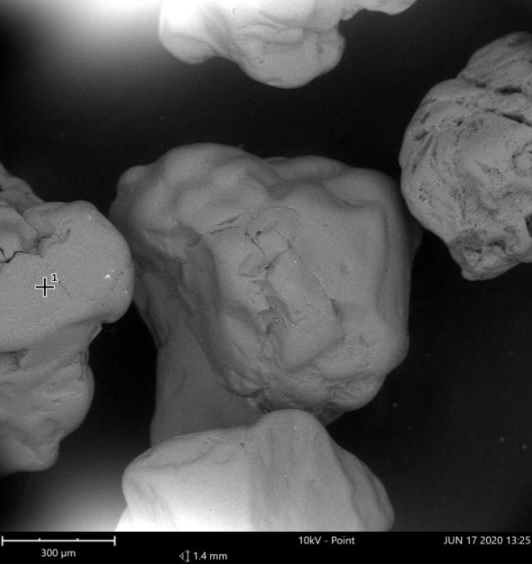
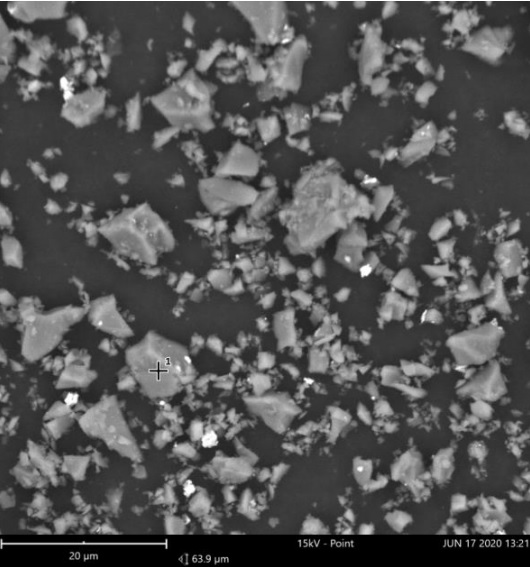
After taking out, samples of processed sand were examined under a microscope and compared with samples of initial sand that had not been processed in the vortex layer. Photos of the microscope view are shown in Figure 1.
 |
 |
|
Before |
After |
Figure 1 – Comparison of initial sand and the sand ground in a vortex layer device
It can be seen from the figure that before grinding, particles with the size of more than 300 microns predominated in the sand, and after grinding in the vortex layer device, the size of most particles was no greater than 3–5 microns.
Advantages of using disintegrator AVS for sand grinding
- High sand milling fineness
As part of practical research, it was possible to achieve quartz sand grinding to the size of 3–5 microns just in 3 minutes.
- Good sand activation rate
Almost all sand grains become several times more active for further interaction with other products and water in preparation of mortars and production of finishing materials.
- Cost-effectiveness
In 2–3 minutes of operation, sand disintegrator AVS shows the same results that take several hours of effort while operating the unit in the event of conventional milling methods. At the same time, it consumes several times less electricity than classical equipment. And in some cases, energy efficiency indicators differ tenfold.
- Usability
Before milling, sand requires no preliminary preparation, drying, grinding, and no other processes.
Owing to these advantages, the use of a sand disintegrator AVS for sand milling at production and construction facilities makes it possible to optimize the processes by reducing the energy and time consumption for preparing finely dispersed material. In addition, you will obtain a higher-quality, more active product than that resulting from the application of conventional sand processing methods.