


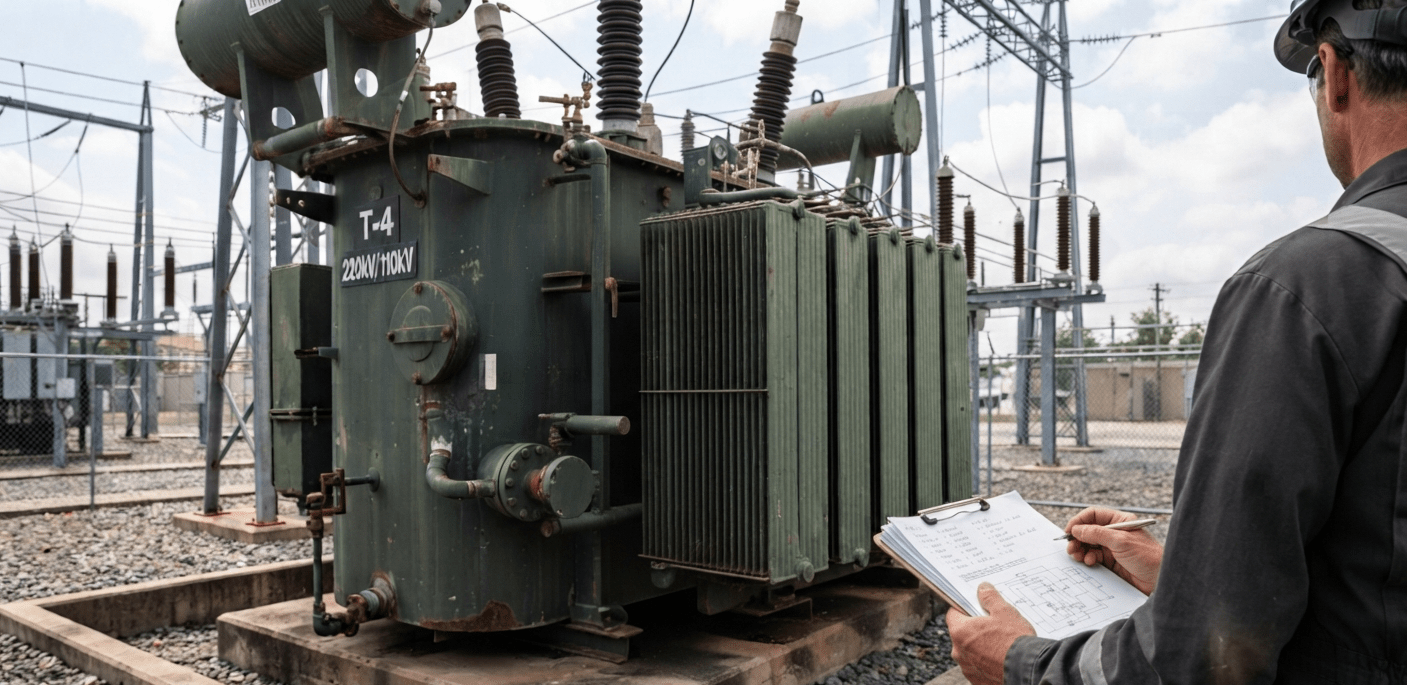
Hydrogen is one of the earliest indicators that something is wrong with a transformer’s insulation. It appears in the insulating oil before most other fault gases and often signals processes that can eventually lead to serious equipment failure. The challenge is that many utilities and industrial facilities only discover rising hydrogen levels after a dissolved gas analysis (DGA) report reveals critical values—typically from laboratory tests performed quarterly or even annually. By then, the defect may have progressed to a stage where repairs are far more expensive than preventive maintenance.
This article explains why hydrogen deserves special attention and outlines the most practical methods for monitoring it.
Why Hydrogen Matters More Than Other Gases
When insulating oil decomposes due to elevated temperatures or electrical discharges, hydrogen is typically the first gas to form—and often in the greatest quantity. It begins to evolve at temperatures of approximately 150°C (302°F) and can account for up to 59% of the total gas volume generated during oil decomposition.
Hydrogen is also produced during partial discharges, where ionization breaks the weakest hydrocarbon bonds in the insulating oil, leading to a gradual accumulation of hydrogen.
One of hydrogen’s greatest advantages as a diagnostic indicator is its physical behavior. Although it has relatively low solubility in insulating oil, it diffuses through the oil very quickly. As a result, even a small amount generated at a localized fault—for example, near a partial discharge—rapidly spreads throughout the oil, making it detectable long before the defect becomes critical.
Method 1: Periodic On-Site Express Testing
If continuous online monitoring is unnecessary or impractical, the minimum recommended approach is regular on-site measurement of hydrogen and moisture without sending oil samples to a laboratory.
This can be accomplished using a TOR-2 portable express tester, which measures hydrogen and moisture content (ppm) in transformer oil as well as other mineral and ester insulating fluids.
The primary advantage of this method is speed and repeatability. A measurement takes only a few minutes instead of several days or weeks required for laboratory analysis. This makes it practical to perform tests as frequently as needed—weekly, monthly, or during scheduled maintenance inspections.
More important than a single measurement is the trend. If hydrogen concentration consistently increases from one inspection to the next, further diagnostic investigation is recommended even if the absolute value has not yet reached a critical level.
Method 2: Continuous Online Monitoring
For particularly critical transformers-where a defect can develop within hours, where the equipment is located at a remote substation, or where partial discharge activity is already suspected-even weekly manual measurements leave significant periods without information.
In these situations, continuous monitoring with the TOR-5 system is a more appropriate solution. The hydrogen sensor is available as an optional addition to the system’s standard moisture monitoring configuration.
Compared with laboratory testing or periodic measurements using the TOR-2, continuous monitoring provides several practical advantages:
- Measurements are recorded every minute, 24/7, rather than once a week or once a month. A rapid increase in hydrogen becomes visible the same day instead of weeks later.
- Data is transmitted via a cellular connection directly to the cloud, eliminating the need to visit the site to check transformer condition. Hydrogen concentration trends are available remotely at any time.
- The system calculates additional diagnostic parameters-including insulation condition and estimated oil breakdown voltage—based on sensor data, providing a more comprehensive assessment than hydrogen measurements alone.
- If moisture exceeds preset limits, the connected oil drying and filtration unit can start automatically without operator intervention, regardless of the time of day or whether personnel are on site.
The key advantage over periodic measurements is not higher measurement accuracy, but faster detection of changing trends. Instead of discovering a developing problem days or weeks later, operators can identify abnormal behavior almost as soon as it begins.
Choosing the Right Approach
If a transformer is relatively new, operating under stable conditions, and there are no signs of active fault development, periodic testing with the TOR-2 during scheduled maintenance is generally sufficient. It is cost-effective, easy to implement, and still provides valuable trend information over time.
If the transformer is older, critical to production, located far from maintenance personnel, or there are already indications of partial discharges or overheating, continuous monitoring with the TOR-5 equipped with the optional hydrogen sensor is the better choice. It allows dangerous changes to be detected immediately rather than after the fact.
A dangerous increase in hydrogen concentration is rarely identified by looking at a single measurement. What truly matters is how rapidly hydrogen levels change over time.
The most important practical rule is simple: if hydrogen concentration rises significantly between successive measurements, immediate investigation is warranted-even if the measured value is still below traditional alarm thresholds.
The objective is not merely to measure hydrogen once, but to establish a monitoring strategy that makes it impossible to miss a developing trend—whether through regular testing with a portable analyzer or through continuous real-time online monitoring.