Every year, thousands of tons of waste petroleum oils are generated worldwide and discharged from transformers, machine tools, presses, and compressors. This waste must not be discharged into the environment, because it pollutes water and soil, as well as kills animals and worsens human health.
Therefore, disposal of used oil or regeneration thereof for reuse is required. From an economic and environmental perspective, regeneration is a more preferable solution. It allows saving the petroleum from which oils are made, reducing the expenses associated with purchase of new oils and disposal of used ones, as well as decreasing the amount of hazardous waste.
In this article, we will discuss the regeneration technologies and equipment using the example of the oil used in transformers for electrical insulation of components and for heat removal.
Causes of transformer oil aging
The causes of transformer oil aging lie in their operation conditions. When heat is removed from the transformer heating parts, the oil absorbs the effect of high temperature, and when it is insulated, it absorbs that of high voltage. In addition, there are other factors that deteriorate the condition of transformer oil. These include:
- water (reduces the oil breakdown voltage);
- gases (become a source of partial discharges);
- mechanical impurities: coal, cellulose fibers, metal particles;
- oxidative oil aging products.
Even though the presence of water, gases, and mechanical impurities is hazardous for oil and a transformer, it is not so critical. These impurities are periodically removed from the oil using special equipment. The emergence of aging products indicates that the processes associated with a change in the structural composition of oil take place therein. Oil oxidation contributes to formation of new impurities. Acidic products and asphalt-resin substances accumulate in oil. Сolloidal particles grow in size, and there appears oil sludge. The sludge settles on the windings and impairs the heat removal. Increased acidity causes cellulose aging. Thus, aging of insulating oil reduces the reliability of the entire transformer insulating system.
Estimation of transformer oil aging
A change in two parameters: acid number (neutralization number) and interfacial tension can be used as a marker of transformer oil aging processes.
Acid number of oil is the number of milligrams of potassium hydroxide required to neutralize acidic compounds contained in one gram of transformer oil. Estimation of oil acidity is carried out using laboratory methods and requires preliminary oil sampling from the transformer.
At the initial stage of operation (the first 6–8 years), the acid number of transformer oil is usually low — 0.1 mg KOH/g. After another 8–10 years, the acid number will reach 0.5 mg KOH/g which indicates aging and the presence of sludge in oil. Transformer oil with the acid number of 1 mg KOH/g is considered old and shall be either changed or regenerated.
Monitoring of oil aging by acid number yields good results, but it is insensitive to contaminants other than acidic compounds. It means that initial aging processes can already be observed in oil, and the acid number will be within the normal range.
The interfacial tension of transformer oil is used to identify even small amounts of polar contaminants and oxidation products. A high value of this parameter indicates the absence of such contaminants. As a result of oil aging, hydrophilic surfactants accumulate in oil and increase its ability to absorb water. It causes a decrease in the interfacial tension at the oil-water interface.
Thus, in order to obtain more complete information related to transformer oil aging, it is necessary to use at least two parameters: acid number and interfacial tension.
Ways to decelerate transformer oil aging
The question arises: is it possible to somehow decelerate transformer oil aging? In practice, two methods are most often used for this purpose — adding the inhibitors and passivation.
Oil inhibitors shall mean special substances which are added to oil in order to decelerate oxidation. Ionol is often used for this purpose.
Passivation shall mean the formation of a protective film on metal surfaces that prevents oxidation and corrosion. For example, passivation is used for protecting the metal surfaces from contact with sulfur to prevent the formation of copper sulfide, a conductive compound that reduces the dielectric strength of transformer insulation. Special chemical solutions are used as passivators.
General oil regeneration principles
The main reasons for transformer oil regeneration include deterioration of the acid number and performance of oil. Let us discuss the basic approaches to regeneration.
The first approach is oil regeneration on a periodic basis in order to prevent the problem. The oil is regenerated before irreversible changes occur to its structural composition. The second approach is based on maintenance of transformer oil, in other words, on monitoring the acid number and performing the regeneration if this parameter falls within the undesired range of values.
Technologies for regeneration of used oils involve comprehensive processing which includes the following processes:
- oil purification with water, gases, and mechanical impurities removed;
- restoration of the structural composition of oil by removing the oxidation products;
- oil clarification by removing the aging products.
As the oil refining industry developed, different approaches to regeneration of oils were used, but currently, the simplest and most practical approach is associated with the use of sorbents.
A sorbent is a substance of natural or artificial origin which has high adsorbing properties with regard to oil oxidation and aging products. One of the main indicators of transformer oil aging is formation of acidic compounds. Therefore, using a sorbent, acid removal and sulfur removal are carried out.
What sorbents are used in regeneration of oils
The sorbents used in regeneration of oils can be conveniently divided into three groups. The first group includes those that absorb only water and do not affect oil oxidation products in any way. Zeolite has become best known among such sorbents. The second group includes the sorbents more aimed at absorbing the oxidation and aging products. Various clays and earths are used to that end, for example, Fuller’s earth. The third group includes the sorbents that absorb water well and affect the transformer oil acidity in part. The most prominent representative of this group is silica gel.
Clay-based purification of oil yields good results in terms of restoring its color and performance.
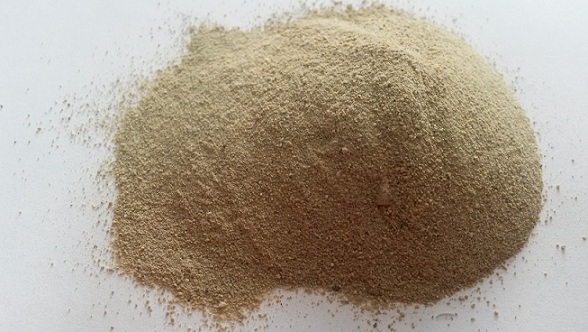
Fuller’s Earth sorbent
GlobeCore oil regeneration equipment
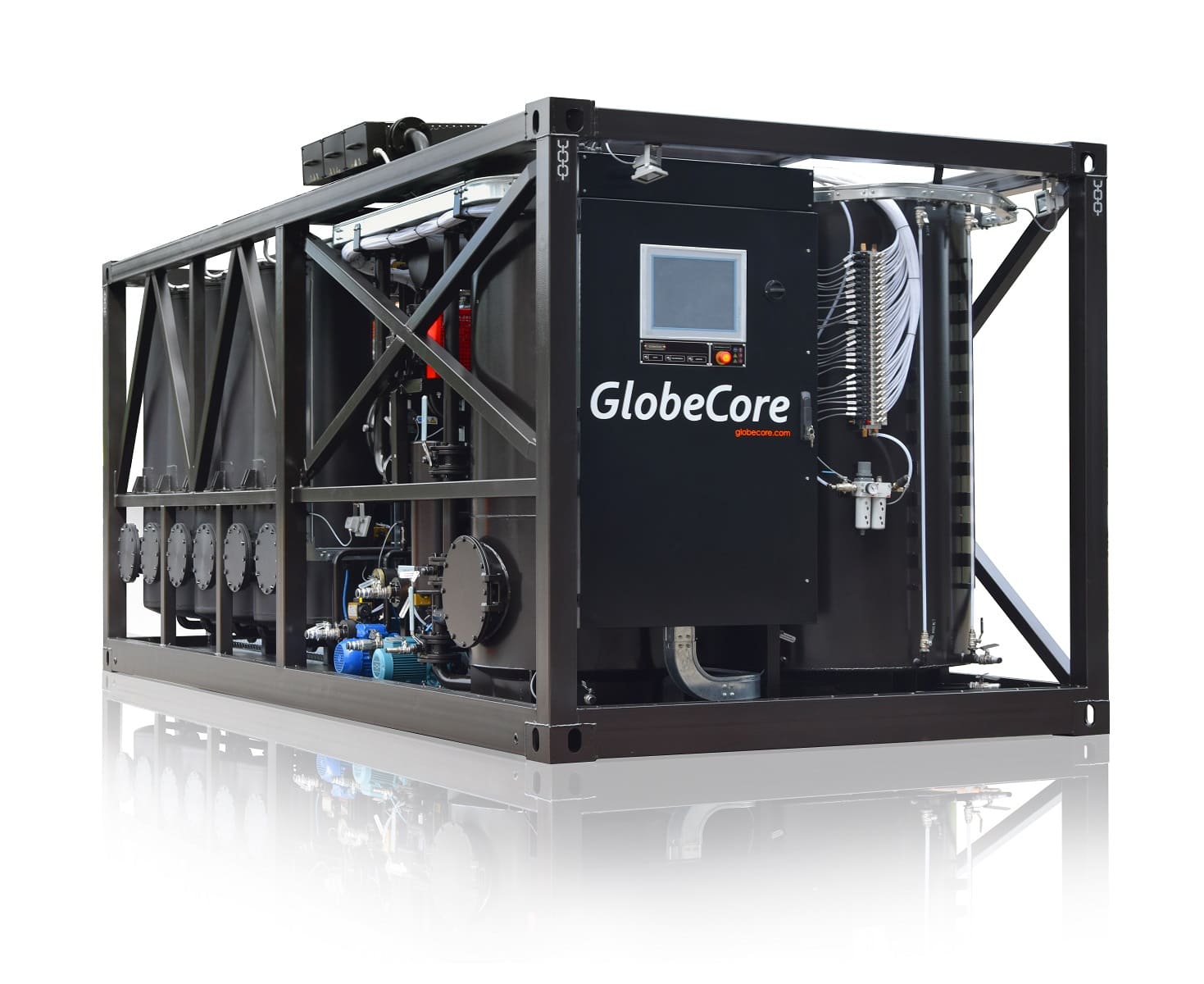
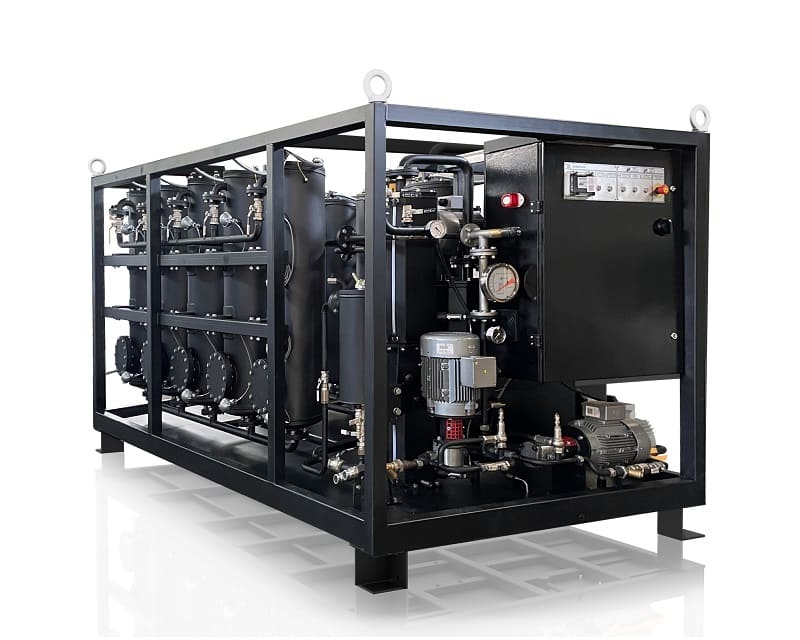
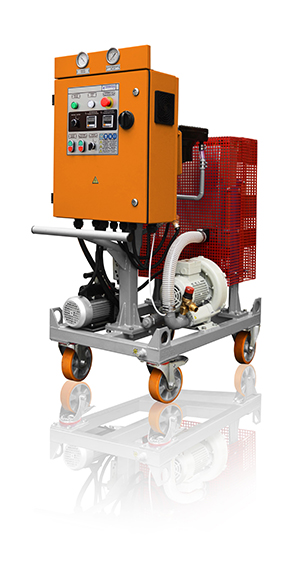
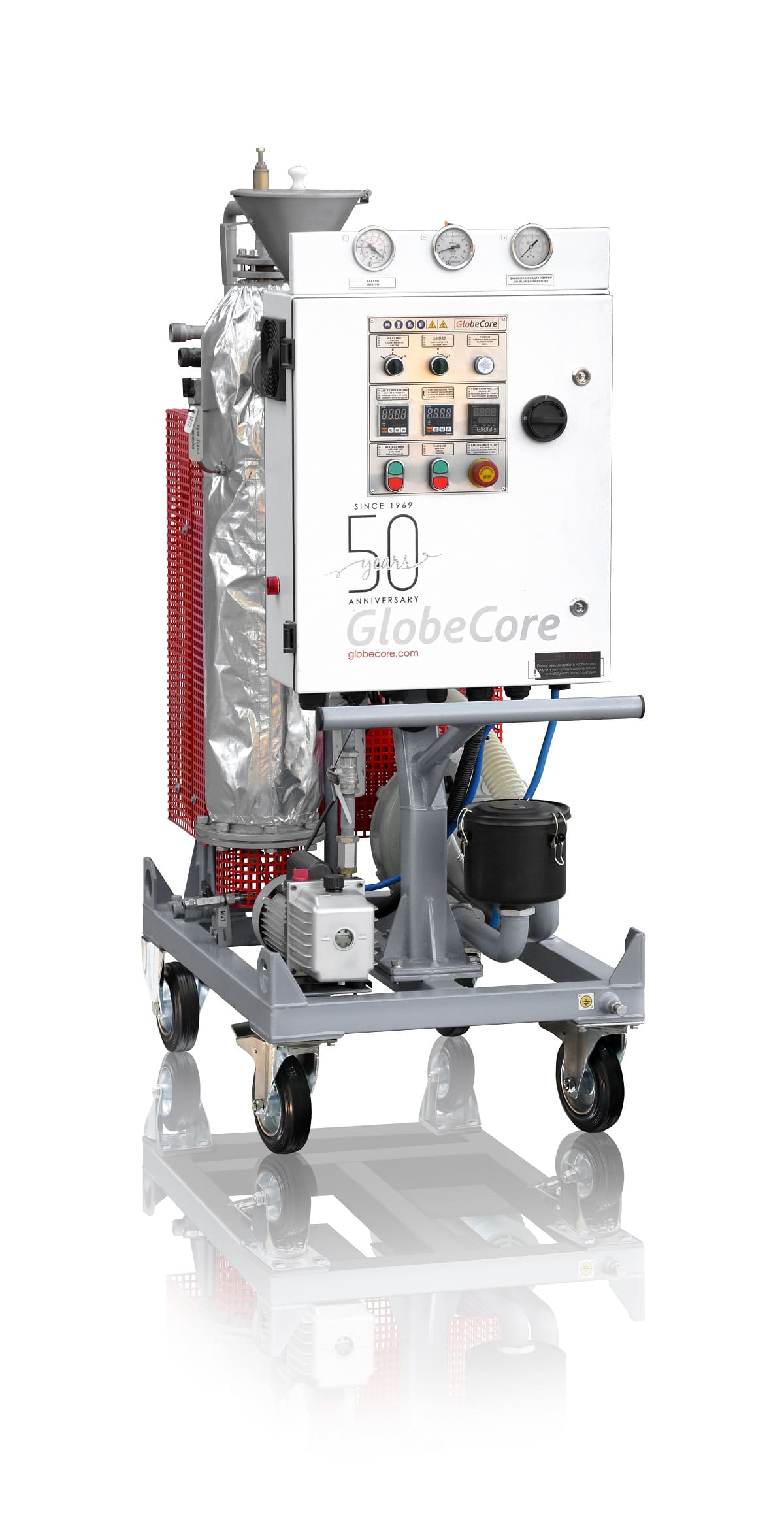
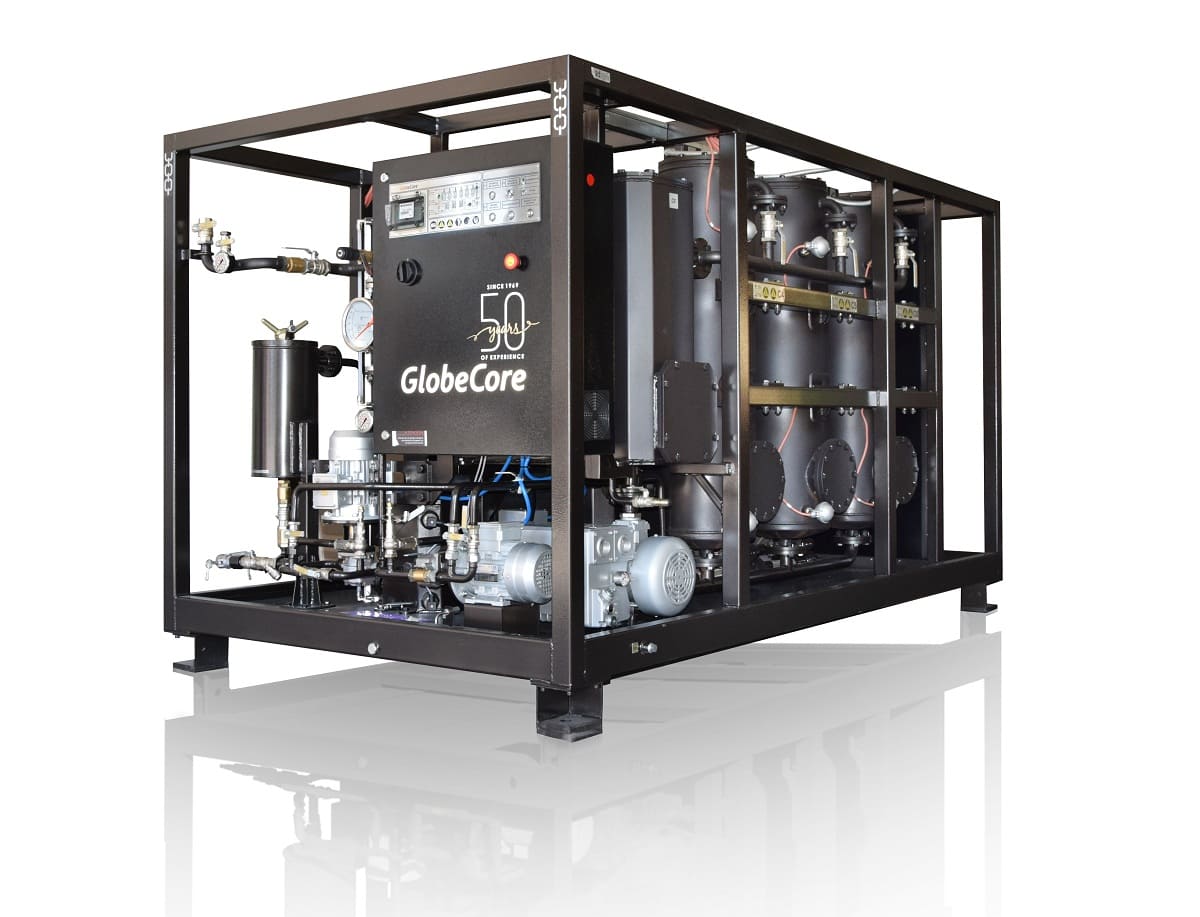
GlobeCore has developed a transformer oil regeneration technology using Fuller’s earth which is implemented in CMM-R units. If oil requires comprehensive regeneration, such units are made up as a full set according to the building-block concept. In the drying and degassing section, the oil is heated after which the gases and water evaporate under vacuum. The regeneration section consists of several columns each of which is filled with Fuller’s earth sorbent. The oil is pumped through the columns and undergoes the removal of oxidation and aging products in the meantime — oil reactivation takes place.
The regeneration of used transformer oil by means of GlobeCore technologies and equipment allows:
- reducing the acid number;
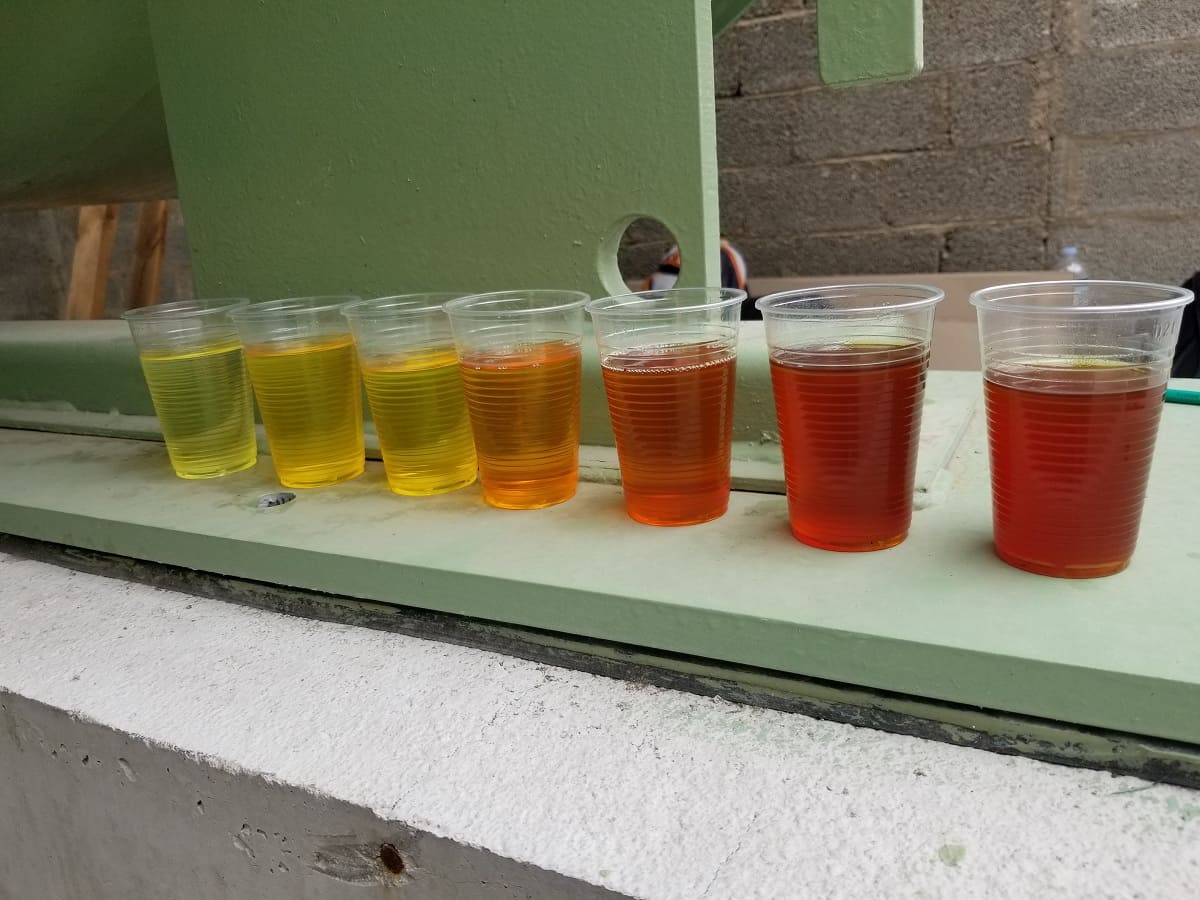
- change the color of oil from cloudy and dark brown to light yellow;
- reduce the water content;
- increase the breakdown voltage;
- reduce the gas content;
- reduce the dielectric loss tangent, etc.
All the parameters of processed oil are restored to the level of new oil parameters.
After that, the oil passes through the inhibitor injection package. In this package, a special additive that decelerates the oil oxidation processes during the future operation is applied to the oil.
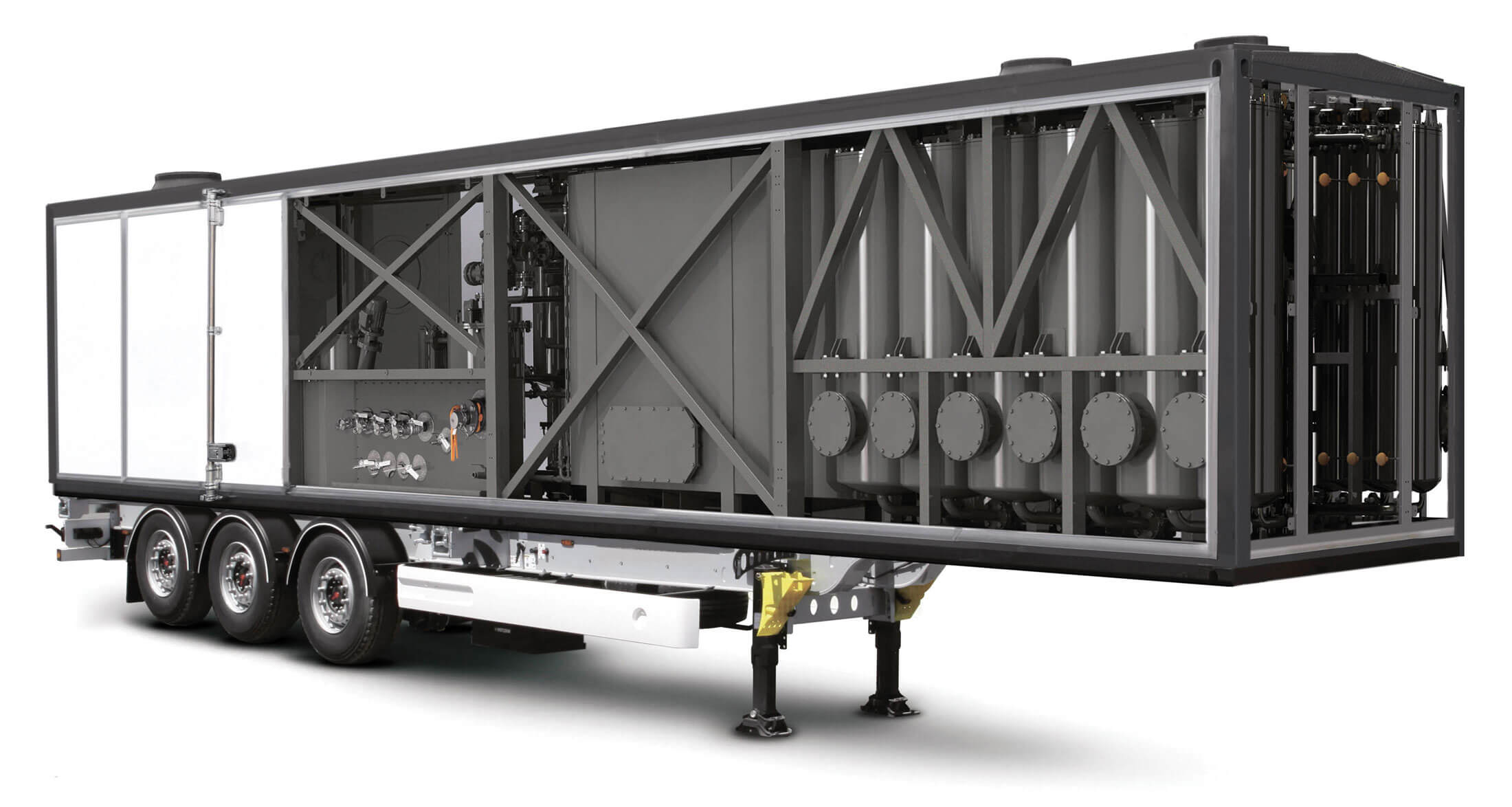
СMM-R oil regeneration unit can be completed with a different number of columns: two, four, six, twelve, twenty four, etc. The greater the number of columns where the oil is simultaneously regenerated, the higher the overall capacity of the equipment.
In order to ensure more efficient maintenance of GlobeCore transformers, provision is made for implementing the regeneration technology without disconnecting the transformer from power. In this case, oil reclamation is performed by connecting CMM-R unit to the transformer and due to continuous circulation of oil in a closed loop (transformer-unit-transformer). Regeneration of oil in energized transformer saves time and makes the maintenance process more convenient (it is not required to engage the reserve or to disconnect electricity consumers)
Timely application of GlobeCore regeneration technology extends the life span of power transformers by 15–20 years due to improving the insulation system status.
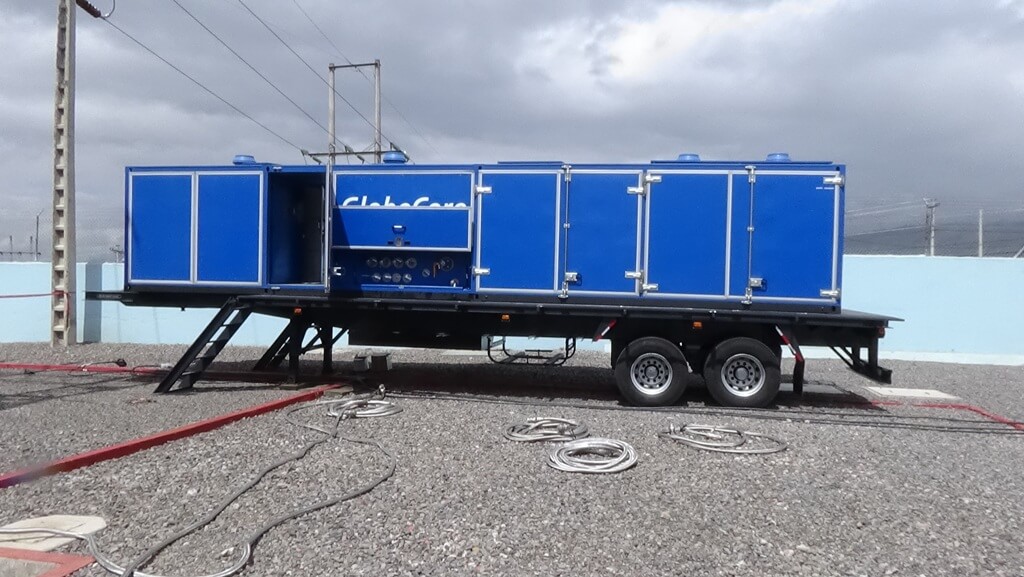
CMM-12R oil regeneration unit
What is to be done to used sorbent
Transformer oil regeneration using sorbents shows excellent results; however, a sorbent becomes saturated with impurities over time. Regeneration of sorbents is more often carried out in external equipment. GlobeCore technology is implemented in such a manner that sorbent reclamation is performed without removing the sorbent from CMM-R regeneration unit by burning it at a high temperature. First, you start the oil regeneration cycle, and after the sorbent is saturated, the oil regeneration cycle is activated. Thus, the sorbent requires no disposal and can be used multiple times over several years.
What other petroleum products can be regenerated using GlobeCore technologies
Regeneration of used oil is a comprehensive task, and industrial needs are not limited to regeneration of transformer oils only. GlobeCore technologies can be successfully used to address the following tasks:
- hydraulic oil regeneration;
- industrial oil regeneration;
- turbine oil regeneration;
- fuel clarification.
Since the viscosity of different types of oils and fuels may differ, the regeneration capacity slightly changes when using CMM-R units, but the equipment remains versatile and handles various petroleum products.
Advantages of oil regeneration
Regeneration of mineral oils in the industrial sector provides the following advantages:
- saving the raw materials (petroleum) by reusing the used oils and thus reducing the consumption volume of new oils;
- saving money due to the fact that the cost price of regeneration is lower than the cost price of new oil;
- there is no need to dispose of used oil;
- timely regeneration extends the service life of oil-filled equipment and increases the reliability of its operation;
- improving the environmental situation by supporting the Zero Waste principles in the context of oil-contaminated waste.
For getting technical advice with regard to regeneration of mineral oils, please use some of the contact details contained in the appropriate website section.