GlobeCore

  • Home
  • Products
    • Oil Regeneration
      • CMM-6RL Oil Regeneration Unit
      • CMM-10RL Transformer Oil Regeneration Plant
      • CMM-12R Oil Regeneration Systems
      • CMM-12R Oil Regeneration System (With Activated Bauxite)
      • CMM-8RSL/4000 Transformer Oil Regeneration Plant (With Fuller’s Earth)
      • USB-6 Oxidation Inhibitor injection unit
      • СММ-0,001U Laboratory Oil Filtration Unit
    • Oil Purification & Degassing Machines
      • CMM-0.6L Oil Degassing & Filtration Cart
      • СММur-1L mobile oil plant
      • CMM-1.0LT Transformer Oil Purification Unit
      • CMM-1H Oil Processing Unit
      • CMM-2.2LT Industrial Oil Purification Unit
      • CMM-4,0T Turbine oil filtration
      • CMM-4,0LT Transformer Oil Purification Unit
      • CMM-4/7 portable oil degassing unit
      • CMM-6LT Industrial Oil Purification Unit
      • CMM-6/7 Degassing Unit
      • CMM-8LT Oil Processing Unit
      • CMM-10 — Transformer Oil Purification Machine
      • CMM-15 Oil Degassing Plant
    • Oil Filtration Machines
      • CMM-1,0CF Unit for Removal of Water from Oil
      • CMM-2,0CF Unit for Removal of Water from Oil
      • CMM-1,2Fr Industrial oils filtration unit with self-cleaning filters
      • CMM-4,0F Oil filtration unit
    • Oil Drying Unit
      • ZP-130 Sorbent Cartridges
      • ZP-260 Sorbent Cartridges
    • Oil Heating
      • PPM Inline Oil Heater. Stream oil heating
    • Fuel Polishing
      • TOR-1 diesel fuel moisture content tester
      • CMM-6RL dark diesel fuel polishing machine
      • CMM-6RL dark heating fuel polishing machine
      • CMM-6RL low-viscosity marine fuel polishing machine
    • Online Transformer Dry-Out Systems
      • CMM-260C Online Transformer Dry-Out System
      • TOR-4 Online Transformer Dry-Out System
    • Online Transformer Monitoring Systems
      • TOR-5 Online Transformer Monitoring System
    • Transformer Maintenance
      • Mojave Heat (Sukhovey): Hot Air Dryer Unit
      • UVV Vacuum Cold Trap
      • US-6S Transformer vacuum furnace
      • LFD Low Frequency Heating Device
      • BV-3000 Transformer Evacuation System
      • BV-5000 Transformer Evacuation System
      • UVD Vacuum Oil Filling Unit
      • UVD-1000 Oil Filling and Transportation System
      • TSS Transformer Safety System
      • CMM-6RL Oil Regeneration Unit
      • CMM-10RL Transformer Oil Regeneration Plant
      • CMM-12R Oil Regeneration Systems
    • Vacuum Transformer Drying Ovens
      • US-6S Transformer vacuum furnace
    • Sorbent Processing
      • BRZ Zeolite Regeneration Block
      • BRPS Zeolite Regeneration Block
      • SSC-15 Zeolite Drying Cabinet
      • ZP-130 Sorbent Cartridges
      • ZP-260 Sorbent Cartridges
    • Instruments – Transformer Oil Testers
      • TOR-1 Oil Moisture Meter
      • TOR-2 Hydrogen and Moisture Analyzer for Transformer Oil Monitoring
      • TOR-3 (TOR-3 SL) Oil Tan Delta Tester
      • TOR-6 Transformer Oil Moisture and Particles Tester
      • TOR-7 Universal Transformer Oil Tester (moisture, gases, solid particles)
      • TOR-8 tester for residual gas content of insulating oil
      • TOR-60 (TOR-60 SL) Breakdown Voltage Tester
      • TOR-80 (TOR-80 LSL) Breakdown Voltage Tester
      • TOR-80A (TOR-80 ASL) Transformer Oils Breakdown Voltage Tester with Battery
      • TOR-100 (TOR-100 SL) Breakdown Voltage Tester
    • Wind Turbine Service
      • CMM-G wind turbine gearbox oil changer (with dimensions adapted to the customer’s trailer ones)
      • CMM-G Wind Turbine Gearbox Oil Changer
      • CMM-GL Wind Turbine Gearbox Oil Changer
      • CMM-0.6L Oil Degassing & Filtration Cart
      • CMM-4,0T Turbine oil filtration
    • Medical Equipment Maintenance
      • CMM-0.6 X-ray Transformer Oil Purifier
      • SSC-15 Zeolite Regeneration System for Oxygen Concentrators
      • AVSk-150 Hospital Wastewater Treatment Complex
    • Blending systems
      • USBL-1 Laboratory Blending System
      • USB-1 Fuel oil blending system
      • USB-5 high-speed mixing unit for production of sanitizers (0.15 – 0.3 m3/h)
      • USB-5 high-speed mixing unit for production of sanitizers (1.1 m3/cycle)
      • USB-6 Impeller Stirrer
      • Colloid Mill
      • Vortex Layer Devices
    • Colloid Mill
      • Colloid mills for food industry
        • CLM-100.3 Colloid mill
      • Colloid mills for bitumen emulsion production
        • CLM-0.25.1 Laboratory colloid mill
        • CLM-2/4 Colloid mill
        • CLM-16/25 Colloid mill
      • Colloid mills for bitumen modification
        • CLM-8/16 Colloid mill
        • CLM-10/20 Colloid mill
        • CLM-40.2 Colloid Mill
      • Colloid mills for different applications
        • CLM-100.2 Colloid Mill
        • CLM-200.2 Colloid Mill
    • Vortex Layer Devices
      • AVS-100 Mixing Machine. Vortex Layer Device
      • AVS-150 Chemical Mixing Machine
      • AVSp-100 Vortex Layer Device (Semi-Automated)
      • AVSp-150 vortex layer device (semi-automated)
      • AVSk-150 Wastewater Treatment Complex
    • Bitumen emulsion plant, Bitumen Emulsion Production
      • CLM-0.25.1 Laboratory colloid mill
      • USB-2 Bitumen emulsion unit 2 m3/hour production capacity
      • USB-2 Bitumen emulsion plant 8 m3/hour production capacity
      • FB Bitumen filter
      • USB-6 Impeller Stirrer
    • Bitumen Modification Plant. Modified Bitumen Production
      • USB-3 Bitumen modification laboratory system
      • USB-3 Continuous Bitumen Modification Unit (12 m3/hour)
      • USB-3 Bitumen modification unit 16 m3/hour production capacity
      • USB-4 Modified bitumen collection tank (USB-3)
      • USB-6 Impeller Stirrer
    • Laboratory system for Bitumen Emulsion Samples
      • CLM-0.25.1 Laboratory colloid mill
      • CLM-100.1 Bitumen Emulsion Laboratory System
      • USB-3 Bitumen modification laboratory system
    • Biodiesel Equipment
      • USB-1L Biodiesel laboratory equipment
      • USB-1 Biodiesel equipment
        • Filters
          • The filter GC Fine with a filtration factor β = 4000
        • Vacuum Pumps
          • GC Roots Vacuum Pumps
          • مضخات التفريغ GC Vane (مضخات دعم)
    • Custom Equipment
      • CMM-4R TRANSFORMER OIL REGENERATION MACHINE
      • CMM-1 MOBILE OIL PLANT
      • CMM-2.2 MOBILE OIL PLANT
      • CMM-4 MOBILE UNIT FOR POWERED TRANSFORMER OIL PROCESSING
      • CMM-12A DEGASSING UNIT
      • CMM-1CO CABLE OIL DEGASSING UNIT
      • CMM-5M INDUSTRIAL OIL PURIFICATION MACHINE
      • MCU ZEOLITE OIL DRYING UNIT
      • CMM-8RP Sorbent Reactivation Unit
      • BDK-3 CATALYTIC CONVERTER
      • CMM-600CF TRANSFORMER OIL FILTRATION AND REFILLING MACHINE
      • SN-1 PUMP ASSEMBLY
      • SBE-30 BITUMEN EMULSION COLLECTION TANK (UVB-1)
      • UVB-1 BITUMEN EMULSION UNIT 1 M3/HOUR PRODUCTION CAPACITY
      • UVB-1 EXTENSION 1 M3/HOUR PRODUCTION CAPACITY
      • INDUSTRIAL MIXER – COLLOID MILLS CLM-4 SMALL
      • BIG COLLOIDAL MILL CLM-18 GRINDING MACHINE
      • INDUSTRIAL MILL – GIANT COLLOIDAL MILL CLM-22
      • CMM-0.6 Clean Marine Oil Degassing Cart
      • Compressed Air Supply Unit UOV
    • Accessories & Components
  • Dealers
  • Tech School
    • Webinar Registration
  • News & Articles
  • History
  • Reviews
  • AskMe
  • Contacts
  • EN
    • FR
    • ES
    • PT
    • TH
    • VN
    • CN
    • HA
    • AZ
    • JP
    • DE
    • RO
    • Hun
    • Arabic
    • Ind
GlobeCore / Oil Regeneration / Oil reclaiming

Oil reclaiming

Oil reclaiming

It would be hard to imagine the modern industries without a variety of machines and mechanisms that improve the production processes in all branches of the national economy. Typically, these machines include knots of friction and adhesion, which wear out in time, due to intensive abrasion of metal parts. The friction is reduced by the coating of oil that acts as a lubricant and maintains the machine parts. Over time, oil was also used as an insulating liquid in electrical equipment since it practically does not conduct current. Consequently, the industrial oils have become extremely important in many industrialists. Let’s consider  the types of oil and their main functions.

Industrial oils can be organic (vegetable and animal origin), mineral and synthetic. Organic oils are less used as lubricants for mechanisms of industrial equipment, since they do not have high thermal properties. However, sometimes they are combined with mineral oils. Mineral oils are the most common lubricants used for machinery. They are distilled from crude oil. The properties of mineral oils are enhanced by a variety of additives that are added to it before it is fed into the equipment.

The “new” members are synthetic oils. They are synthesized chemical compounds and carbon monoxide and carbon dioxide. And although the production of synthetic oil is a laborious and costly process, the quality of the final product pays off. This oil is practically not contaminated and does not oxidize. In some cases, a mixture of synthetic and mineral oils produces a high quality lubricant.

The past few decades was marked by the appearance of many new devices and machines, that demanded regular servicing and maintenance, including oil maintenance. Oil in different equipment have different functions and imposed requirements: viscosity, durability, operating temperature, corrosion resistance, oxidation stability, chemical composition, etc.

According to properties, and industrial application the oils are classified:

  • industrial;
  • transformer;
  • turbine;
  • aviation;
  • hydraulic, etc.

Causes and consequences of oil contamination

Any lubricant discussed above, in one way or another, becomes contaminated during a long-term operation or storage. The contamination with mechanical impurities, water, gas, wear products, and oxidation products significantly reduces  the quality of oil.

The presence of moisture in oil reduces its anti-corrosion properties. At low temperatures, the water in oil crystallizes, which can damage parts and mechanisms. Also, moisture is a reason of electrical erosion. Since moisture increases the conductivity of the current, it causes partial discharges and breakdown of dielectric, with  breakaway particles of mechanisms. Microorganisms can also form in water molecules, which also reduce oil properties.

These are three types of gases in oil:

  • dissolved atmospheric air;
  • process gases;
  • evolved gases that occur in chemical reactions in lubricant.

Depending on gas content, its effect on oil may be different.  Gas and vapor cavitation bubbles lead to a destruction of equipment.

The most negative effect on the quality of lubricants is provided by mechanical particles. A large number of particles in oil contributes to abrasive processes, which accelerates the wear of parts and all equipment in general. Basically, such pollution occurs as a result of various chemical reactions, as well as the chipping of particles. Solid particles in oil are a result of chemical reactions, corrosion, chipping of metal parts. Under the influence of high temperatures in oil are formed various acids, asphaltenes, resins. There are also other, slower processes, which lead to a rapid oil “aging”.

Aged Oil reclaiming

Contaminated oil is subject to disposal, as it can not fully perform its functions. But a single use of lubricating oil is uneconomical and not cost-effective. Used oil is subjected to regeneration and reuse.

Aged oil reclamation methods are divided into:

  • physical (sedimentation, separation, filtration);
  • chemical (acid and alkaline treatment);
  • physicochemical (adsorption, coagulation, thermal vacuum drying, selective dissolution).

The choice of a reclamation method is influenced by the following factors:

  • oil composition;
  • nature of pollution;
  • degree of purification.

If oil is contaminated by several contaminants it can be reclaimed through a complex purification, consisting of several methods. The first stage removes the “easily separable” oxidation and aging products, and then the oil goes through fine cleaning. Oil reclamation could be performed by a number of oil plants with different modifications and performance.

Oil plant that has to work with different types of oil would have additional components.

GlobeCore oil reclaiming equipment

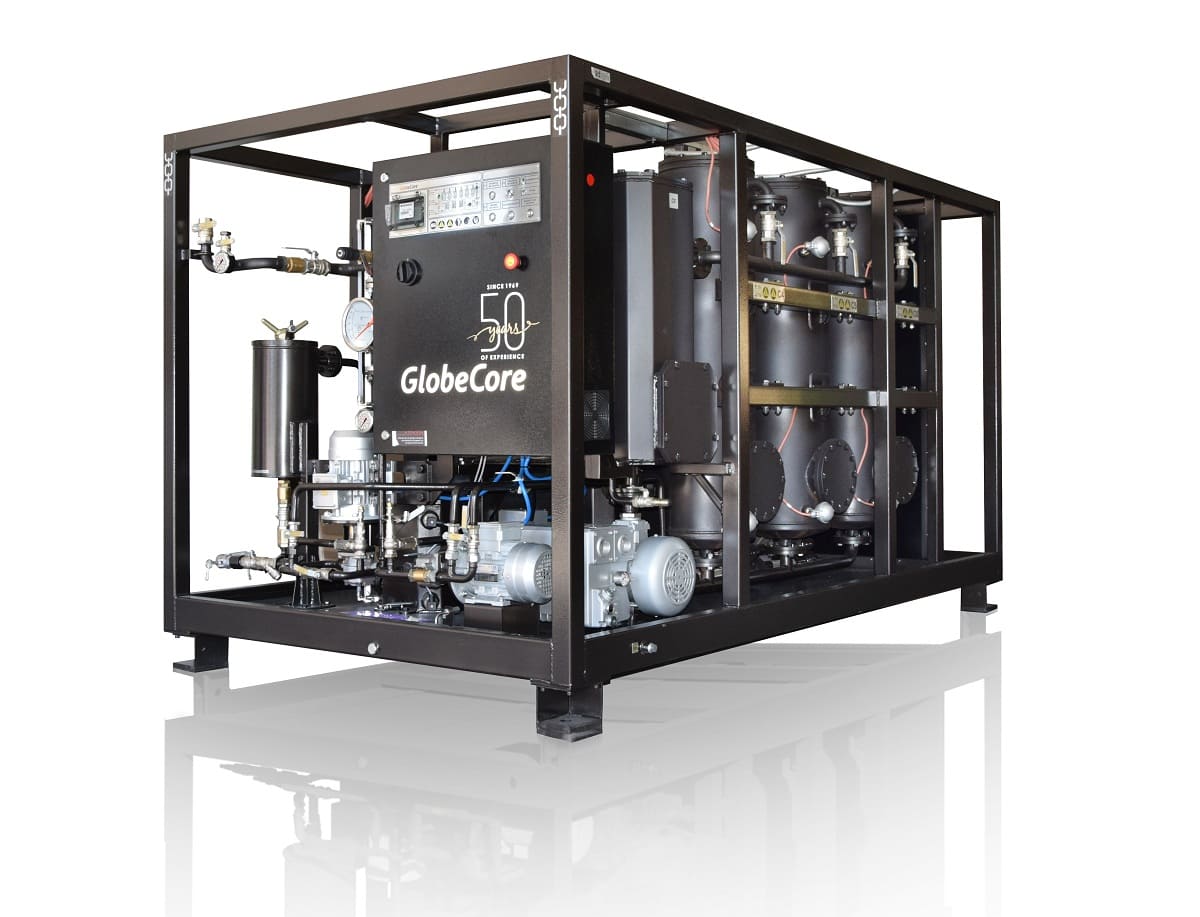
GlobeCore represents equipment for regeneration and restoration of physical and chemical properties of industrial oils. CMM-R and UVR are two perfect examples, we will consider in more detail.

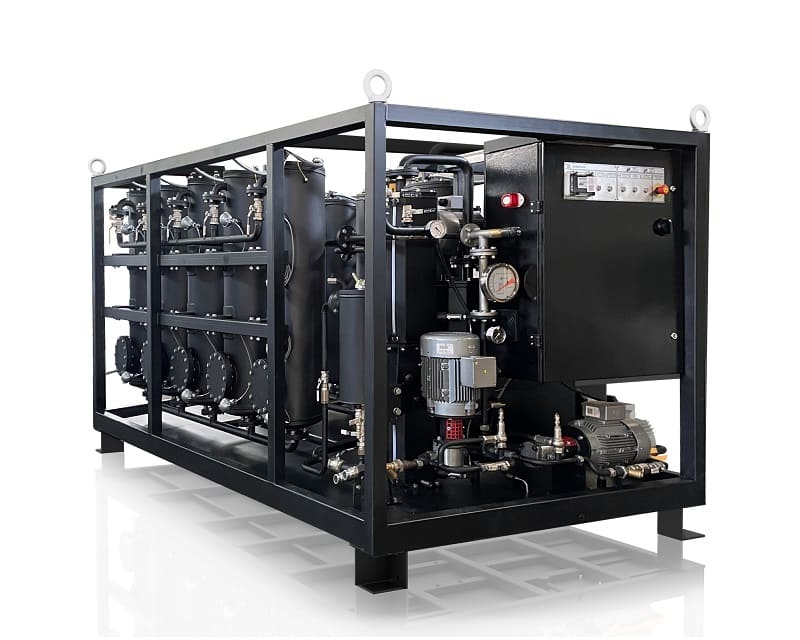
GlobeCore CMM-R oil reclaiming system

Mobile oil regeneration stations СММ-R are intended for reclamation of physical and chemical properties of transformer insulating fluid. Oil reclaiming is done through “Fuller’s earth” sorbent, which is a natural mineral with a high absorption capacity. Its microporous structure  has a capacity to “retain” contaminants on its surface. Sorbent used in CMM-R  units can be reactivated and used more than once. The equipment extracts oil decay products and harmful impurities from the pores of this mineral sorbent in reactivation mode. Using CMM-R units  for oil reclaiming, it is possible to achieve  normalized oil parameters as the dielectric loss tangent and the acid number that characterize the oil dielectric properties. Also, an important feature of this method  – is removal of settled sludge.

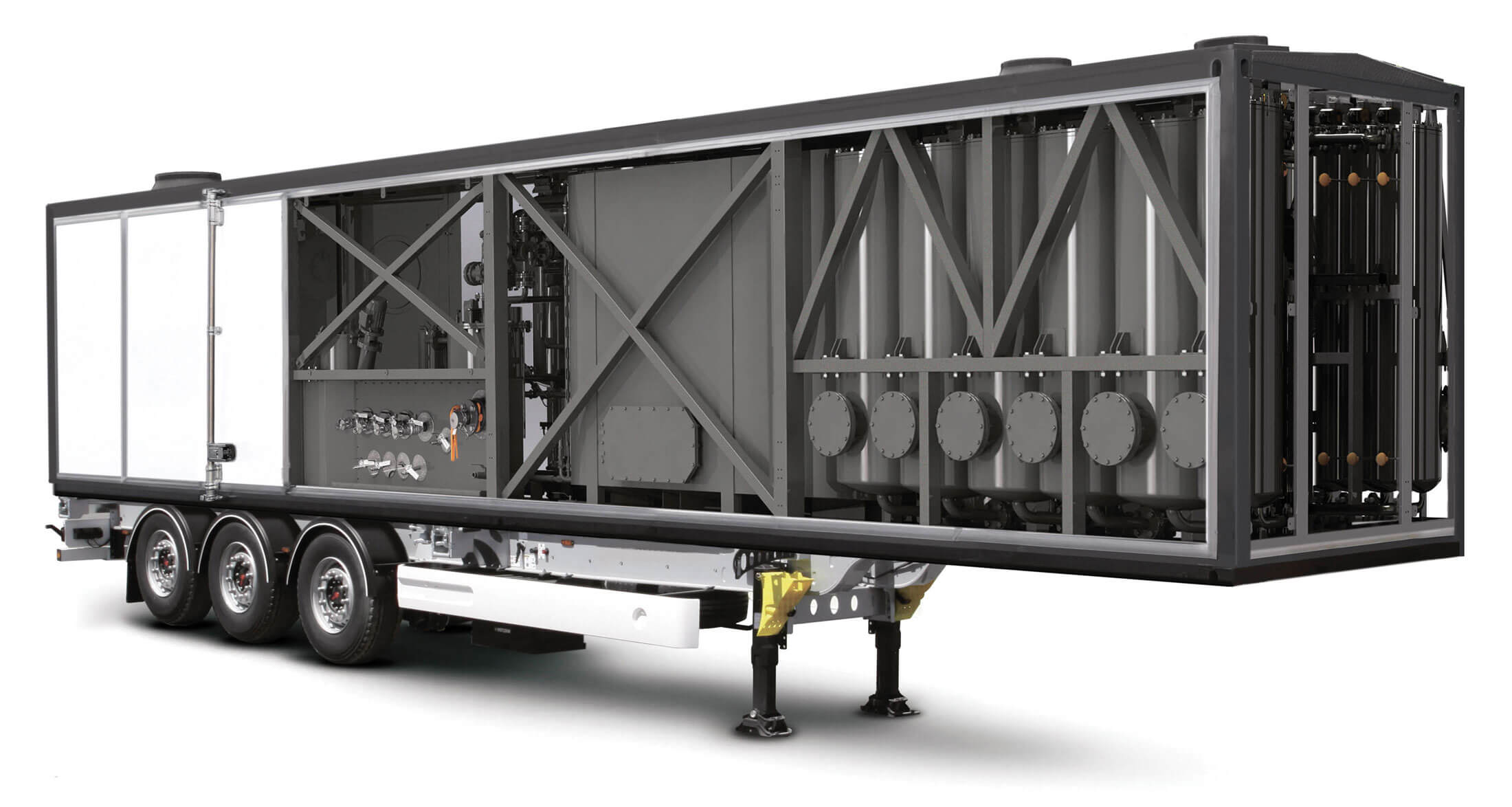
СММ-R  consists from a regeneration and degassing blocks and carries out a complex cleaning of used transformer oils. The compact design of the equipment allows it to be transported to transformers by vehicles.  The unit is containerised and set in a container vehicle.

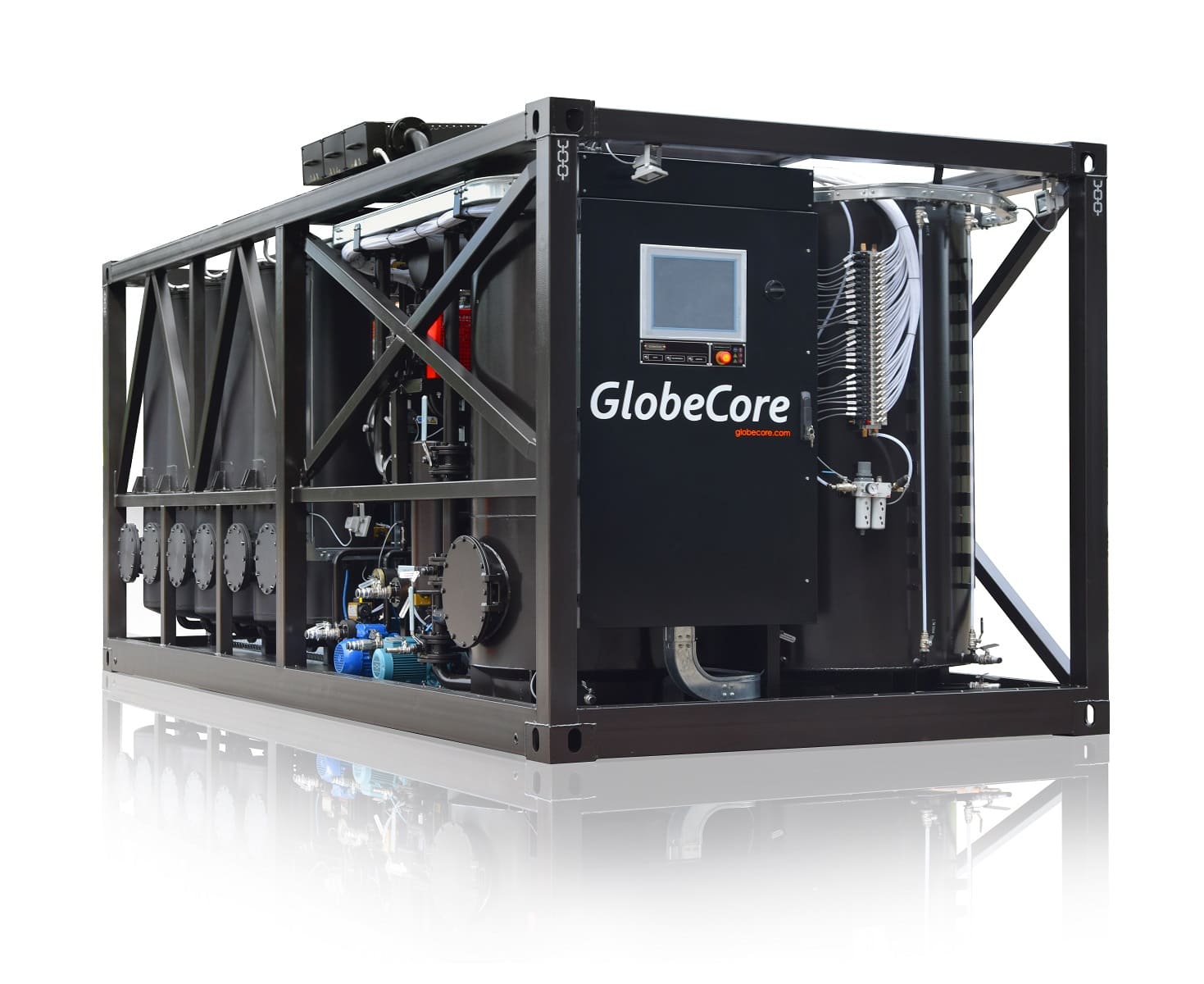
Oil reclaiming from GlobeCore is operated by the touch panel  that sets and controls the programs (there is no need for an operator).

UVR units from GlobeCore

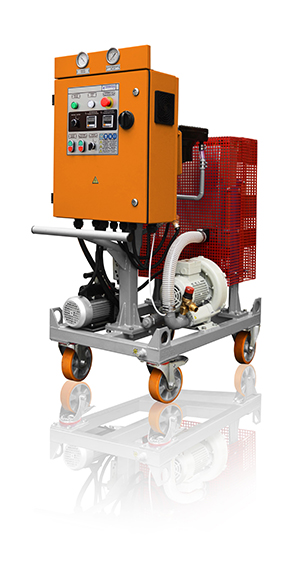
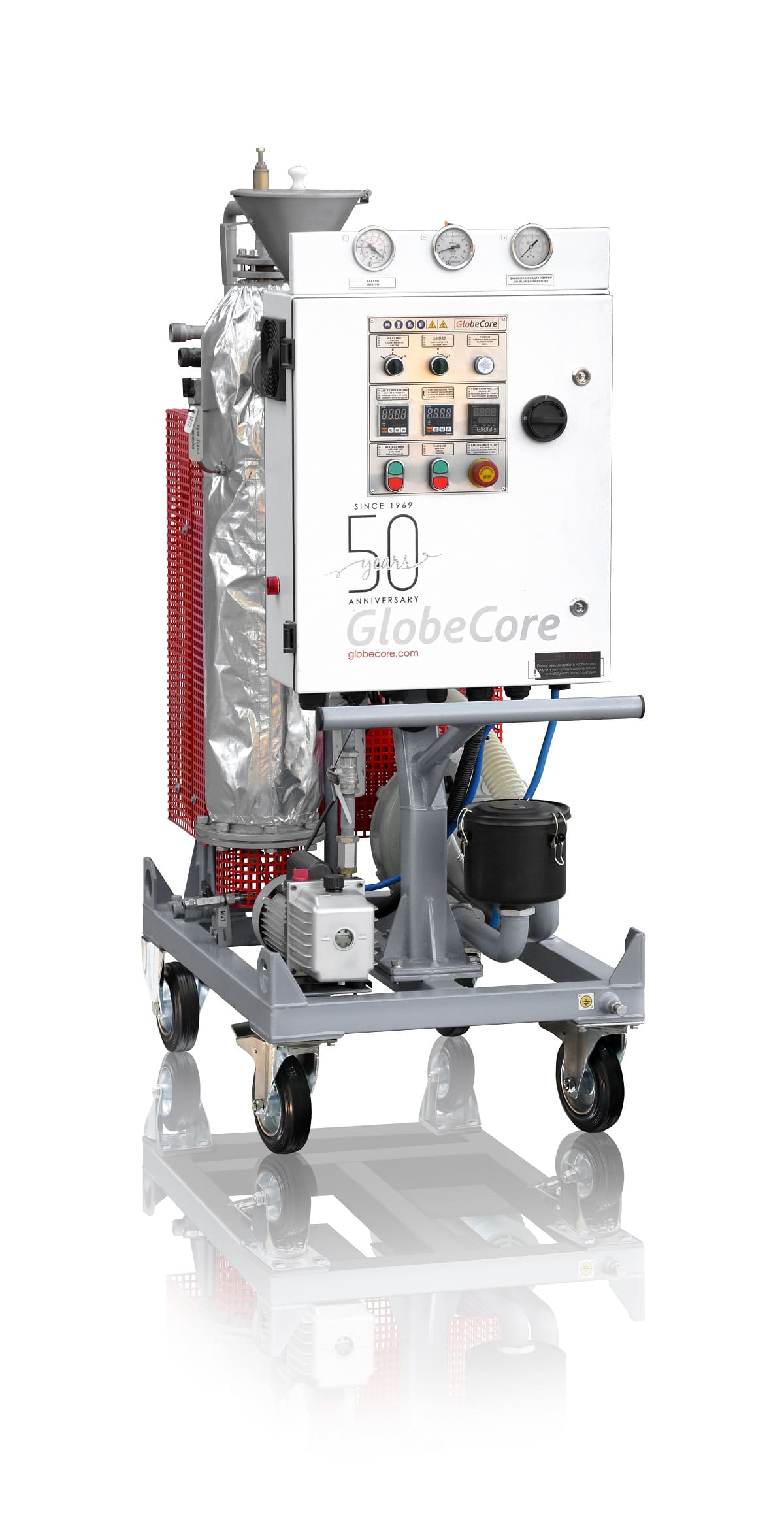
UVR units are designed for regeneration, recovery and clarification of the following types of industrial fluids – transformer, industrial and turbine oils,  and also  for clearing a heating oil, gasoline, kerosene, gas condensate, etc.

This unit guarantees high-quality cleaning of oil from sulfur, resins, mechanical impurities and gases. The regenerated product acquires the performance characteristics of new oil and retains them for a long time. UVR does not require reconfiguration when switching  from one oil to another. The only parameter that will change, is the flow rate because it directly depends on the viscosity and density of the processed product.

Oil reclaiming unit UVR from GlobeCore is equipped with a control panel, which can be located separately from the installation. UVR is a transportable and compact unit.

    Leave Your Request


    • Home
    • Products
    • Dealers
    • Tech School
    • Contacts

    ® Copyright by - 2025 © GlobeCore

    GlobeCore, Sadovskogo 14, Poltava, Ukraine, 36034

    This website uses cookies to improve your experience. By continuing to browse, you agree to our use of cookies. Read more in our Privacy Policy.