

GlobeCore FAQ
Good day, I am looking for a machine for degassing transformer oil, but I am not sure which one to choose. I need it for oil recirculation in transformers with capacities of around 500 liters and 10,000 liters. Could you advise what type of equipment would be suitable?
- This topic has 3 replies, 4 voices, and was last updated 4 months, 3 weeks ago by .
Answers
-
March 27, 2026 at 10:10 am by Ahmed Abdullah
For transformer oil degassing, the choice mainly depends on the volume and how intensively you plan to process the oil. For smaller volumes like 500 liters, a compact single-stage vacuum unit is usually sufficient for recirculation and basic moisture/gas removal.
For larger volumes around 10,000 liters, a more powerful system – typically a two-stage vacuum degassing unit – is a better option, as it provides deeper gas removal and faster processing, especially if the oil condition is already degraded.
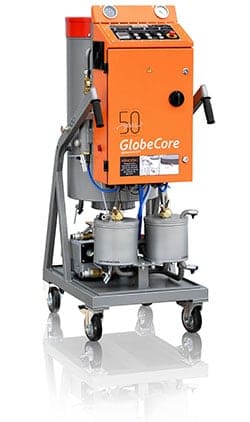
In practice, GlobeCore offers both compact and high-capacity units designed specifically for transformer oil recirculation, allowing you to select the configuration based on tank size, required processing speed, and final oil quality targets. -
April 22, 2026 at 6:49 am by Craig Price
Another practical aspect to keep in mind is that modern degassing units are rarely used in a single fixed mode — operational flexibility can be just as important as capacity.
In real conditions, the same unit is often required to perform different tasks at different stages of transformer maintenance: simple oil circulation, heating, deep degassing, or even transformer tank vacuuming. Due to this, many systems are designed with multiple operating modes and adjustable performance, allowing operators to switch between functions depending on the situation.
For example, thermal vacuum units typically combine heating, filtration, and vacuum treatment in one process, which allows them to remove gases, moisture, and particles simultaneously rather than separately.
In addition, features like automatic recirculation based on oil quality parameters help maintain consistent results without constant operator intervention.
So when choosing the suitable equipment, it’s worth giving attention not only to capacity, but also to how adaptable the unit is to different operating scenarios, especially if you plan to use it for both small and large transformers.
If you want to better understand how such degassing systems are designed, what operating modes they include, and how they work in practice, I recommend reading this article: https://globecore.com/oil-processing/degassing-equipment/. -
April 22, 2026 at 7:01 am by Daniel Brown
You’re absolutely right that operational flexibility matters as much as raw capacity: modern vacuum degassing systems combine heating, filtration, and vacuum stages so you can switch between simple circulation, heating, deep degassing and tank evacuation without changing kit. For a 500 L transformer a compact multifunctional unit like the CMM‑6/7 is a very practical choice — it provides pumping, heating (up to about 90 °C), filtration and vacuum degassing with effective throughputs in the 2–6 m3/h range for degassing/drying and 6–7 m3/h for heating/filtration, so cycle times are short and you can select the mode that matches the oil condition and target moisture/gas levels.
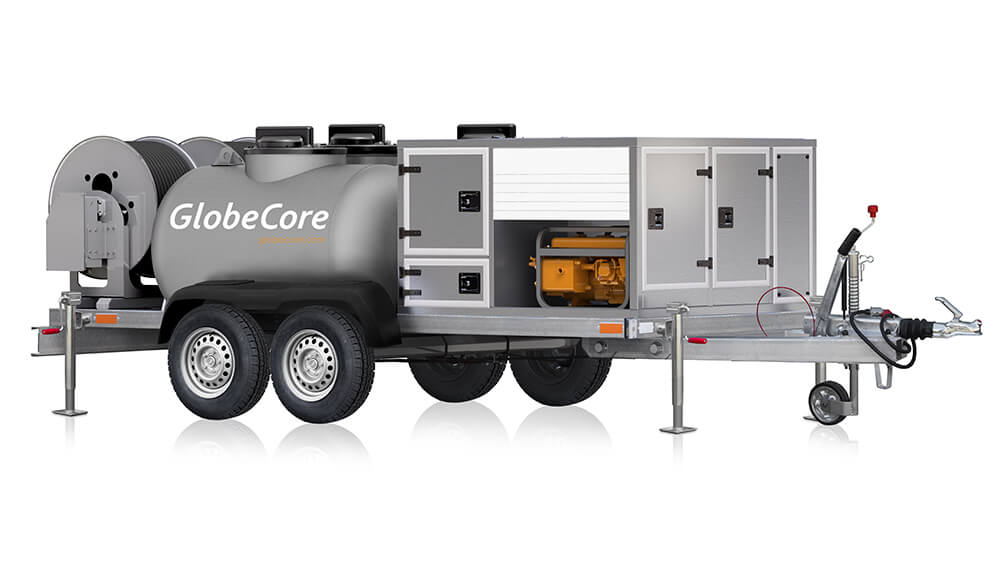
For around 10,000 L, choose a higher‑capacity mobile plant such as the CMM‑8LT (about 8 m3/h) or step up to the CMM‑10 mobile oil plant if you need faster continuous throughput; if you require very fast tank evacuation or deep drying of the transformer tank itself, use a dedicated evacuation unit like the BV‑5000 alongside your degasser. When sizing, consider the actual mode throughput (degassing/drying is typically slower than simple heating/filtration), whether you prefer one larger unit or parallel smaller units, and whether automatic recirculation and oil‑quality based control is required to minimize operator intervention and ensure consistent oil purification.