

Wind turbine transformer oil
How do wind turbine transformer oil degassing and purification work together?
- This topic has 5 replies, 5 voices, and was last updated 4 months ago by .
Answers
-
October 7, 2024 at 12:59 pm by Natalie Dupont
Wind turbine transformer oil degassing and purification work together by removing gases, moisture, and solid contaminants from the oil. Degassing eliminates dissolved gases and moisture, while purification processes like filtration and chemical treatment remove particulates and neutralize acids. Together, they maintain the oil’s insulating and cooling properties, ensuring the transformer operates efficiently.
-
May 18, 2026 at 1:33 pm by Craig Price
Wind turbine transformer oil degassing and purification work together by removing gases, moisture, and solid contaminants from the oil. Degassing eliminates dissolved gases and moisture, while purification processes such as filtration and chemical treatment remove particulates and neutralize acids. Together, they maintain the insulating and cooling properties of oil, ensuring that the transformer operates efficiently.
Attachments:
-
May 18, 2026 at 1:33 pm by Craig Price
Wind turbine transformer oil degassing and purification work together by removing gases, moisture, and solid contaminants from the oil. Degassing eliminates dissolved gases and moisture, while purification processes such as filtration and chemical treatment remove particulates and neutralize acids. Together, they maintain the insulating and cooling properties of oil, ensuring that the transformer operates efficiently.
Attachments:
-
May 18, 2026 at 1:38 pm by Jessica Mitchell
Your summary is correct: degassing removes dissolved gases and moisture while purification (filtration and chemical/adsorptive stages) removes particulates, oxidation products and acids, and together they restore the oil’s dielectric strength and heat-transfer performance. In practice the workflow is coordinated so oil is first heated and filtered to remove solids and free water, then passed through a vacuum/thermal degasser (or an integrated drying/degassing stage) to strip dissolved gases and residual moisture, and finally polished to the required ISO particle class and moisture/gas targets before being returned to the transformer.
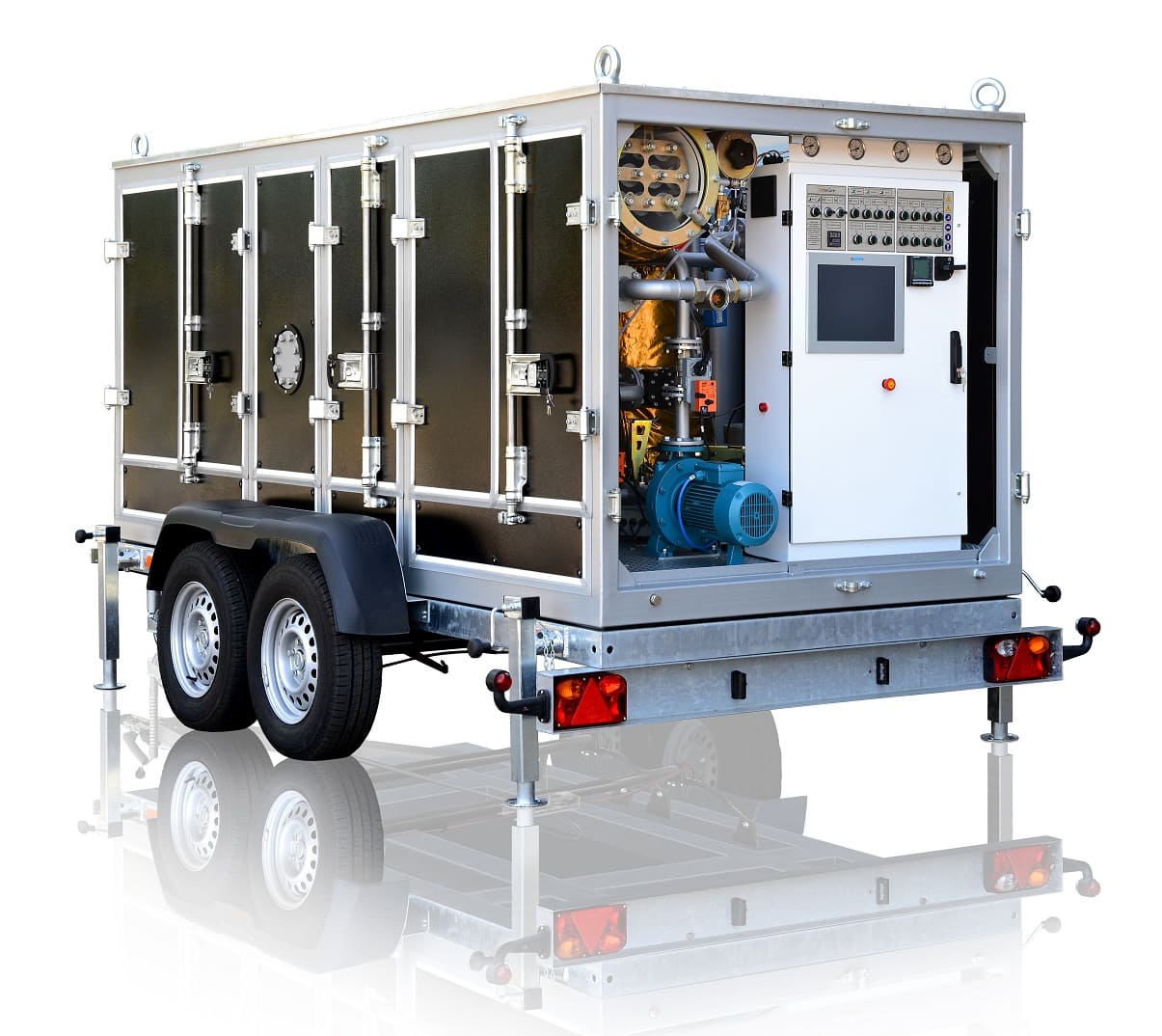
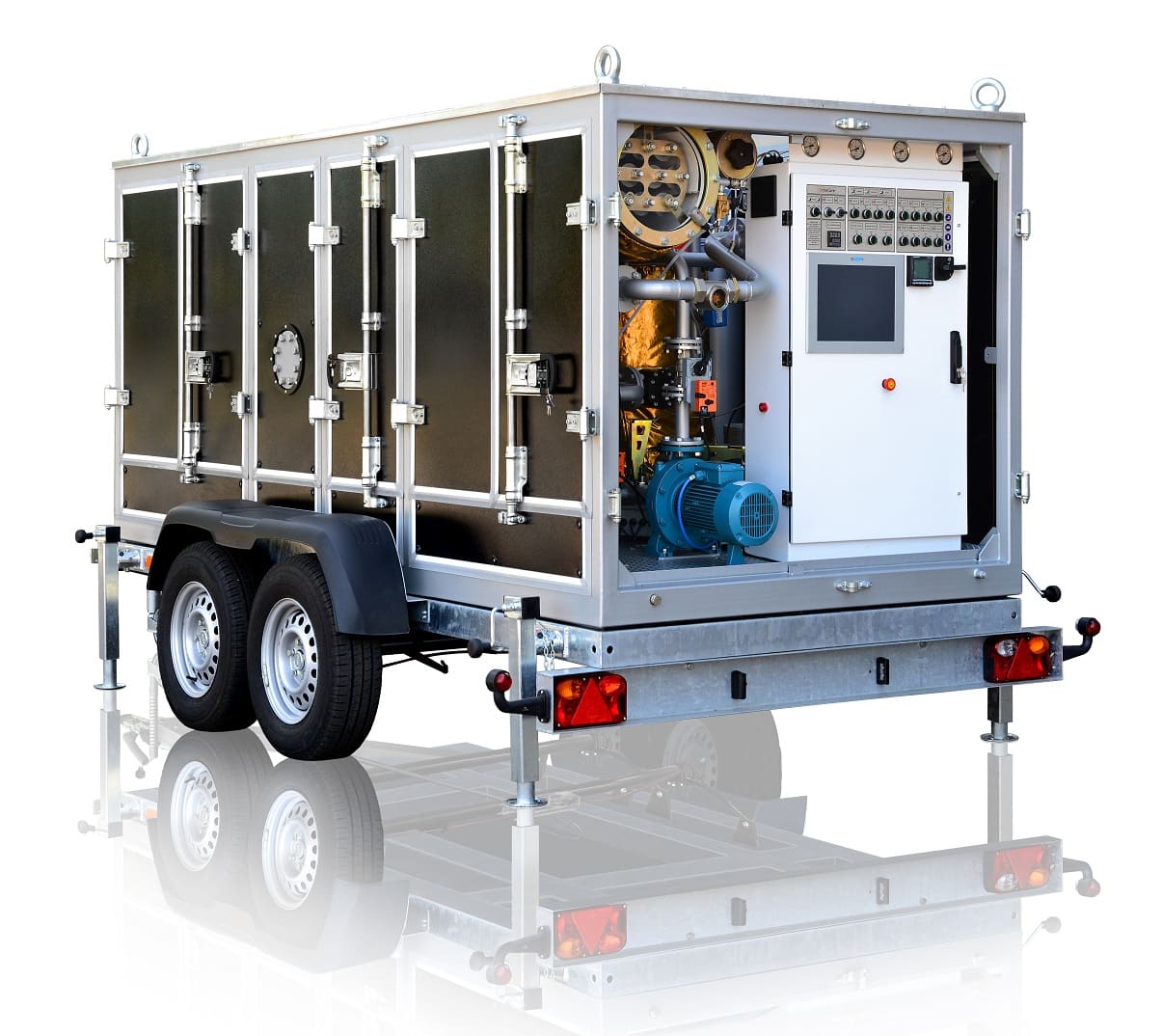
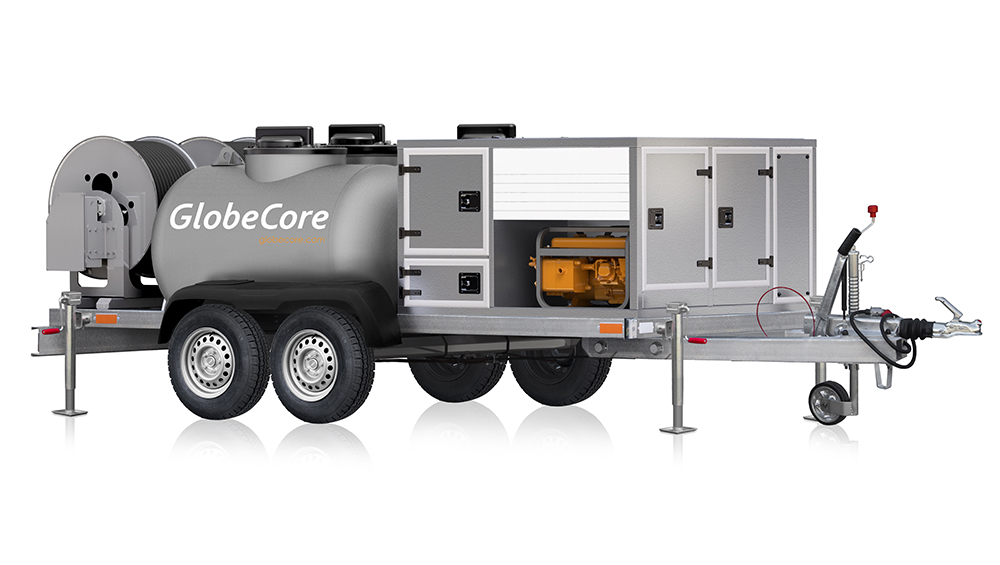
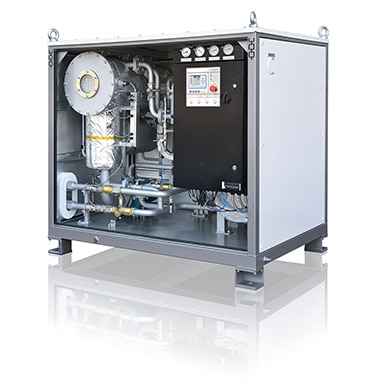
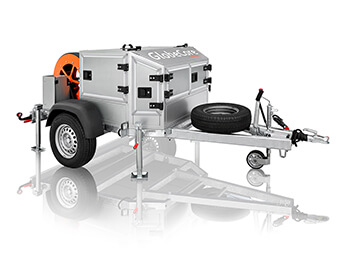
The unit shown in your photos (a CMM-10A style mobile oil plant) is designed for exactly this combined on‑site work: multi‑stage filtration, thermal vacuum degassing/drying and transformer evacuation capability in a single mobile package so you can evacuate, dry and purify wind‑turbine transformer oil without lengthy downtime. For best results evacuate the transformer beforehand when possible, heat oil to the vendor‑recommended temperature, run thermal vacuum degassing until moisture and gas readings stabilize, and verify results with particle counts, moisture (ppm or dew point) and dissolved gas readings. If you use synthetic fluids like Midel 7131, pair the equipment with online oil monitoring to trigger purification/degassing based on real-time oil quality; where required, the Transformer Safety System lets you work safely on energized units.
-
May 18, 2026 at 1:43 pm by Ashley Hall
Your description is accurate and the CMM‑style mobile oil plants in your photos are built to do exactly that: they combine heating, coarse and fine filtration, dehydration and deep vacuum degassing in a single pass so dissolved gases, free and bound moisture, particulates and aging products are removed and the oil’s dielectric and cooling performance is restored. These units use a two‑stage vacuum (fore‑vacuum pump plus booster) to reach a deep vacuum and reduce dissolved gas content to around 0.1% or lower, while built‑in heaters and filter trains handle free water, solids and oxidation by‑products. Typical processing capacities range from about 1,000 to 17,000 L/h depending on model, and the intended post‑processing cleanliness often targets roughly ISO 4406 16/14/12 (or NAS 6) so the oil is suitable for reliable wind‑turbine step‑up transformer service.
For on‑site use at wind farms, follow a simple sequence: heat the oil to the recommended temperature, run coarse/fine filtration to remove solids and free water, then pass the oil through the vacuum degassing/dehydration stage until moisture and gas readings stabilise. Verify results with particle counts, moisture (ppm or dew point) and dissolved‑gas checks — optional gas‑content sensors and online monitors can automate go/no‑go decisions and reduce repeat interventions. If you need to work on energized transformers, use a transformer safety/online degassing option designed for in‑situ treatment. Remember that stated flow rates and purity targets are model‑dependent and real performance varies with oil condition and ambient factors, but combining vacuum degassing with filtration/dehydration is the most effective practical method to minimise downtime and extend transformer life in wind applications.