

GlobeCore FAQ
Recommend for on-site transformer oil purification and regeneration
- This topic has 3 replies, 4 voices, and was last updated 5 months, 2 weeks ago by .
Answers
-
February 4, 2026 at 1:59 pm by rost
What equipment do you recommend for on-site transformer oil purification and regeneration, and what are the key parameters to control?
-
February 4, 2026 at 2:11 pm by Joshua Roberts
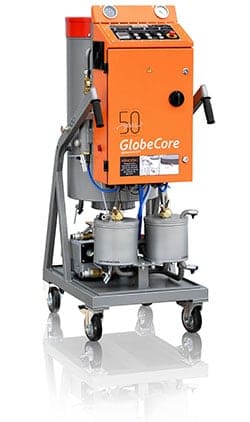
For on-site transformer oil purification and regeneration the recommended choice is the CMM-12R oil regeneration system: it’s designed specifically to regenerate and degas transformer insulating oil (including operation integrated with or adjacent to a transformer and in some configurations while energized), delivers long-lasting sorbent performance, and can be customized with remote control, moisture meters, extra vacuum capacity and a climate-controlled operator cabin. In practical terms the CMM-12R will reduce moisture content to very low ppm levels, lower acidity and restore dielectric strength toward new‑oil values, and its sorbent can often be reactivated in the field rather than replaced, which lowers lifecycle cost.
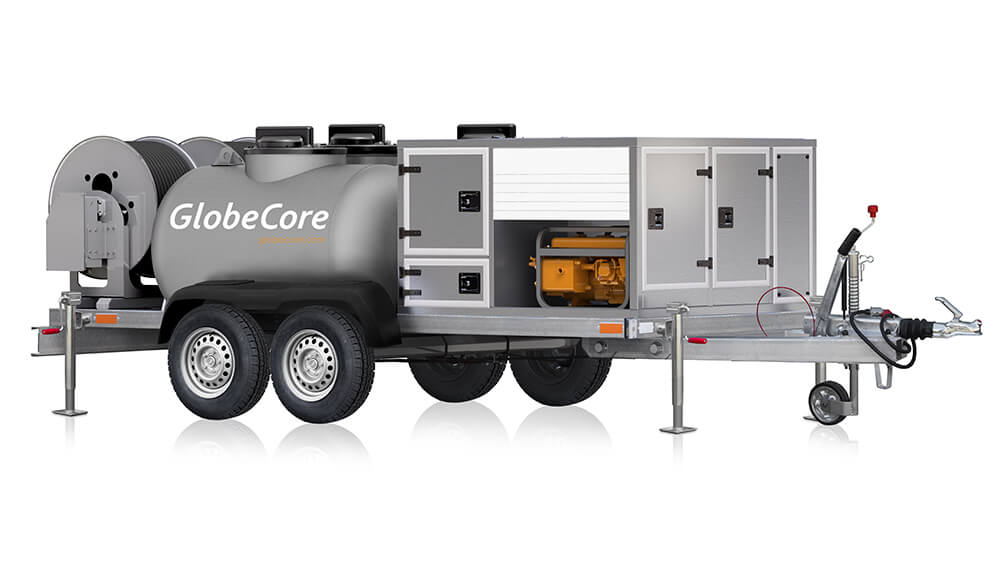
For smaller sites or tighter budgets consider the CMM-6RL (compact, sorbent-based regeneration, ~0.45 m3/h in the transformer variant) or the CMM-8LT when higher throughput (about 8 m3/h) with heating, drying and degassing is required. For mobile traction-transformer work the CMM-600CF gives multi-stage filtration, dehydration and degassing at roughly 600 L/h and can include online humidity monitoring (TOR-5). If you want to run on-site lab checks before committing to a field unit, use the CMM-0.001U laboratory filtration unit for controlled testing. Tell me your site scale, required throughput and whether you need mobile or fixed equipment and I’ll recommend the best configuration and key options (degassing/drying modules, vacuum pumps, moisture monitoring, sorbent reactivation) for your workflow.
-
April 21, 2026 at 7:06 am by Craig Price
Another important point to consider is that in on-site transformer oil treatment, the effectiveness of the equipment is determined not only by the unit type, but also by how well the key process parameters are controlled during operation. Even advanced regeneration systems can deliver very different results depending on process stability.
In practice, the most critical parameters to control include:
• Oil temperature, which directly affects viscosity and the efficiency of moisture and gas removal (typically limited to around 80–90 °C for the avoidance of oil degradation);
• vacuum level and exposure time, which define how effectively dissolved gases and moisture are extracted;
• flow rate (throughput vs. number of passes), since full regeneration often requires multiple circulation cycles through the system;
• filtration degree and sorbent condition, which determine how well aging by-products such as acids, sludge precursors, and oxidation compounds are removed;
• moisture content, acidity, dielectric strength, and dissipation factor, as these are the primary indicators of oil condition and insulation performance.
The key operational insight is that regeneration does not mean a single-pass process, because restoring the oil to near-new condition typically requires controlled multipass treatment with continuous monitoring, especially when working directly on energized transformers.
Furthermore, when operating on-site, it is often beneficial to balance throughput and treatment depth rather than simply maximizing capacity. Running at slightly reduced flow can improve contact time in both the vacuum and sorbent sections, leading to better overall oil reclamation and longer transformer service life.
If you want a more detailed overview of how industrial oil regeneration systems are configured and how these parameters are managed in real applications, I recommend reviewing this resource: https://globecore.com/oil-processing/industrial-oils-regeneration/. -
April 21, 2026 at 7:10 am by Ryan Adams
You’re absolutely right — equipment choice matters, but process control is what delivers repeatable, near‑new oil results. In practice you want tight control of oil temperature (warm enough to reduce viscosity and aid moisture/gas release but below thermal degradation — typically run in the 60–80 °C window and avoid sustained temperatures approaching 90 °C), a deep vacuum (single‑digit mbar absolute where practical) with sufficient exposure time to strip dissolved gases and water, and a managed flow strategy that balances throughput and contact time so the oil makes multiple effective passes through the degassing and sorbent stages. Filtration fineness and sorbent health are equally critical: remove particles to the micron level before adsorption, track sorbent breakthrough and use on‑site reactivation where available, and don’t underestimate the value of pre‑treatment (mechanical filtration and gross dehydration) to protect the regeneration columns.
Measure and log core indicators during the job — moisture by Karl Fischer or a reliable online meter, dielectric strength (BDV), dissipation factor (tan δ), and acidity (neutralization number) — and use those targets to decide when to stop circulating. Stabilize temperature slowly, control flow with valves/recirculation to increase residence time in vacuum and adsorption sections rather than simply maxing pump speed, and perform iterative multi‑pass treatment until acceptance criteria are met. For energized transformer work, add the appropriate safety/interface kit (transformer safety system) and monitor dissolved gas changes (DGA) before and after treatment. If you tell me transformer size, initial lab values, and desired turnaround rate I can suggest concrete setpoints (target temp, vacuum, recommended flow per model, and monitoring checkpoints) tailored to your site and the GlobeCore unit you’ll run.