

GlobeCore FAQ
We are looking for a quotation for equipment to purify hydraulic oil and reduce its water content. The oils are used in turbocompressors, well control systems, and turbogenerators. What type of system would be suitable?
- This topic has 3 replies, 4 voices, and was last updated 5 months, 3 weeks ago by .
Answers
-
March 27, 2026 at 12:49 pm by Haruto Tanaka
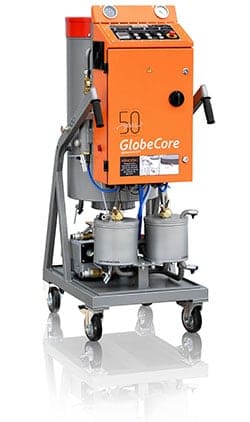
For this type of application, the correct solution is a vacuum dehydration oil purification unit, since hydraulic oils in such systems typically suffer from water ingress and fine contamination. These systems remove water, gases, and solid particles in one process, which is critical for maintaining equipment reliability. In practice, GlobeCore units like CMM-4/7 or CMM-6/7 follow this same principle – combining heating, filtration, and vacuum dehydration – and are widely used for hydraulic systems, turbomachinery, and power generation equipment.
-
April 27, 2026 at 6:56 am by Craig Price
Another important aspect to consider is that in real industrial conditions, water removal efficiency is strongly influenced by how the oil is circulated and processed over time, not just by the type of machine. Even with a vacuum dehydration system, running the process in a controlled loop (rather than a single pass) allows gradual extraction of dissolved moisture and helps achieve consistently low ppm levels, especially in complex systems such as turbocompressors and turbogenerators.
Furthermore, hydraulic systems operating under high load are particularly sensitive to purity grade stability, not just initial purification results. Fine particles and moisture can quickly reenter the system through breathers, seals, or maintenance operations, so combining purification with periodic or continuous conditioning cycles is often more effective than occasional treatment.From the process perspective, modern purification machines work by combining multistage filtration with vacuum dehydration, which enables removal of solid particles down to micron levels while simultaneously extracting free, emulsified, and dissolved water. This integrated approach is what ensures long-term reliability of hydraulic equipment rather than just short-term improvement.
If you want a more detailed explanation of how hydraulic oil purification is implemented in practice and what parameters are critical (filtration degree, moisture targets, system configuration), I recommend reviewing this article: https://globecore.com/news/hydraulic-oil-purification/. -
April 27, 2026 at 6:59 am by Sarah Davis
You’re absolutely right — machine selection is only part of the solution; process design, circulation strategy, and ongoing conditioning determine long‑term purity stability in high‑duty hydraulic systems. For initial selection, choose the dehydration technology to match the oil’s starting water content: thermal vacuum dehydration (CMM‑LT) is ideal for typical moisture levels (it heats under vacuum to remove dissolved and free water and can reduce moisture to ~10 ppm while improving particulate cleanliness to around ISO 4406 14/12), zeolite adsorption units (CP‑130/CP‑260) work best when moisture is higher and heating is undesirable, and coalescing filter plants (CMM‑CF) handle very water‑cut fluids quickly. In practice the most robust installations use a staged approach — coarse water removal by coalescing or zeolite followed by final polishing on a vacuum dehydration unit — so you get fast bulk extraction and deep dehydration for long‑term reliability.
From a process standpoint, run the purifier in a controlled bypass loop sized so the reservoir is processed repeatedly rather than relying on single passes; this allows gradual extraction of dissolved moisture and stabilizes ppm over time. Combine continuous or regular conditioning cycles with contamination control measures such as desiccant breathers, good sealing practices, magnetic/particle traps, and scheduled filter/cartridge maintenance (or the BRZ reclamation option for zeolite cartridges) to prevent recontamination from breathers and service operations. Finally, specify clear performance targets (moisture ppm and ISO cleanliness) and put online monitoring (moisture sensors and particle counters) in place so you can verify results and size the purification capacity and turnover rate to meet operational needs for turbocompressors, well control systems, and turbogenerators.