

GlobeCore FAQ
We need equipment for processing oil used in X-ray transformers and X-ray tubes. What equipment and technologies would you recommend for this application?
- This topic has 5 replies, 5 voices, and was last updated 4 months ago by .
Answers
-
January 28, 2026 at 5:17 pm by Gabriel Silva
For oil used in X-ray transformers and X-ray tubes you typically need two things: deep removal of dissolved moisture/gases (to prevent electrical breakdown) and clean, controlled vacuum filling/top-up for small volumes. GlobeCore’s CMM-0.4 / CMM-0.6 units are positioned specifically for X-ray machine oil purification, combining heat + vacuum dehydration/degassing with mechanical filtration to remove particles. For service work on compact HV assemblies, the GlobeCore UVD Vacuum Oil Filling Unit is a practical match: it prepares/degasses oil and supports vacuum filling/top-up for high-voltage ports, with small batch handling (30 L preparation, 4 L filling section).
-
May 1, 2026 at 8:18 am by Craig Price
In addition to the equipment already mentioned (such as compact vacuum purification units and vacuum filling systems), it’s important to consider that oil processing for X-ray transformers is not just about cleaning — it’s about achieving and maintaining very strict dielectric and purity parameters over time.
For instance, even small amounts of moisture or dissolved gas can drastically reduce dielectric strength — in some cases by several times, which is critical for high-voltage X-ray systems. Therefore, technologies based on thermal vacuum dehydration and degassing combined with fine filtration are essential, especially in compact units such as the CMM-0.4, or the CMM-0.6, which are specifically designed for small oil volumes and precise applications.
Another important aspect is multi-stage processing: oil is typically passed through coarse and fine filters, then heated and exposed to vacuum to remove both free and dissolved contaminants. This staged technique ensures restoration of dielectric properties and long-term stability of the equipment. In practice, this also allows maintenance teams to reuse oil safely instead of changing it, which is particularly relevant for service centers handling multiple X-ray machines.
If you want a detailed overview of how compact purification systems are applied, specifically in X-ray machines, including the operation principles and the equipment configurations, it’s worth reviewing this article: https://globecore.com/oil-processing/purification-of-transformer-oil-in-x-ray-machines-with-the-cmm-0-4-unit/. -
May 1, 2026 at 8:23 am by Emily Jones
You’re absolutely right that achieving and sustaining strict dielectric and purity parameters is the core requirement for X-ray transformer and tube oils, so choose equipment that combines staged mechanical filtration, thermal treatment and vacuum degassing. For compact, on‑site service work the CMM-0.4 and CMM-0.6 vacuum purification units are specifically configured for X‑ray oil: they provide coarse and fine filtration, controlled heating and vacuum dehydration/degassing to restore dielectric strength, and meet stringent outlet targets (breakdown performance in the high kV range and ISO cleanliness suitable for HV equipment). For clean, repeatable top‑ups and to avoid air recontamination, use a vacuum filling unit (UVD) that degasses small batches and performs sealed vacuum fills; for higher throughput or workshop/service-center needs you can step up to the wider CMM family models.
In practice, operate the system as a multi‑stage process: coarse filtration to remove bulk solids, fine filtration for particles to meet ISO cleanliness targets, then thermal vacuum dehydration/degassing to remove free and dissolved moisture and gases. Verify results with routine testing — breakdown voltage, moisture by Karl Fischer (ppm), particle counts (ISO 4406), and dissolved gas analysis (DGA) when relevant — and monitor vacuum level and processing temperature to ensure effective degassing. Use dedicated sorbent cartridges for final drying when necessary, store processed oil sealed and inerted if possible, and perform periodic rechecks to maintain dielectric stability; this lets maintenance teams safely reuse oil and extend service intervals while protecting high‑voltage X‑ray equipment.
-
June 4, 2026 at 6:40 am by Craig Price
Another consideration for X-ray equipment is about maintaining oil quality over time rather than only treating the oil when a fault occurs. Even small amounts of moisture, oxidation products, or particulate contaminants can gradually affect insulation performance and heat dissipation inside high-voltage components. Regular condition monitoring and preventive oil treatment can help extend service intervals and reduce the risk of unexpected equipment downtime.
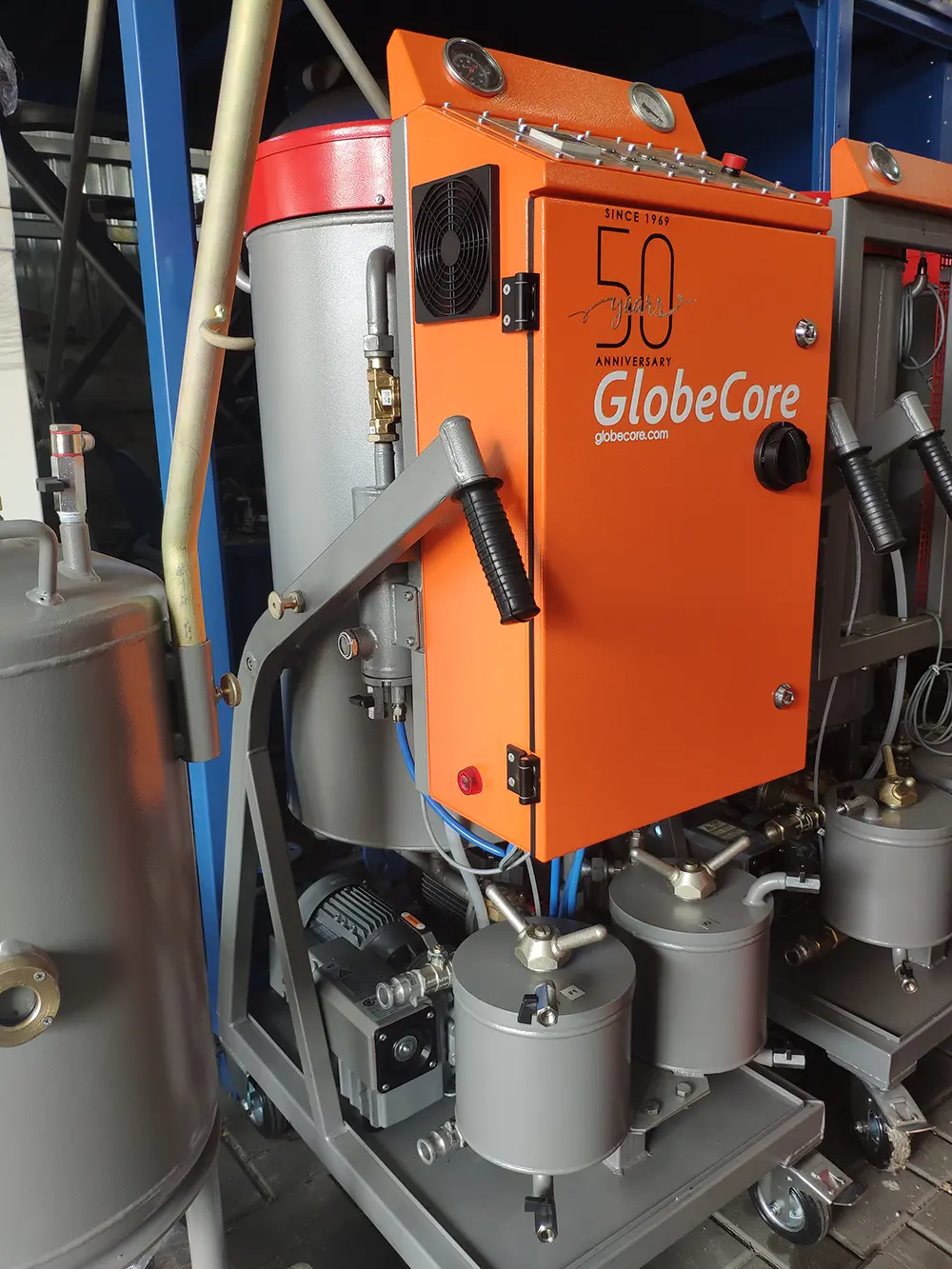
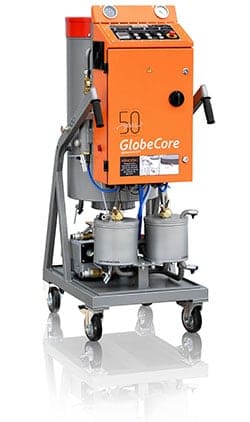
It is also important to use the equipment designed for processing of reasonably small oil volumes with precise process control, since many X-ray transformers and tube assemblies contain much less oil than conventional power transformers. The image below shows a CMM-0.6 machine, an example of equipment used for purification and conditioning of insulating oils in high-voltage applications.Attachments:
-
June 4, 2026 at 6:49 am by Plinio Leiva-Bou
You’re spot on that a shift from reactive repairs to a preventive oil‑maintenance program is the most reliable way to protect X‑ray transformers and tubes. Build your program around condition monitoring (routine laboratory tests) plus regular, controlled processing with compact vacuum purification and vacuum filling equipment. Key field tests to run are breakdown voltage, moisture by Karl Fischer, particle counts to ISO 4406, and dissolved gas analysis when a transformer is involved; use these results as your pass/fail and trending metrics rather than just elapsed time. For critical or heavily used equipment check oil at commissioning and after any service, then at intervals driven by risk: typically every 3–6 months for critical clinical/industrial systems and every 6–12 months for lower‑use assets. Log trends so you can spot slow degradation from moisture ingress, oxidation products or particulate contamination before they reduce dielectric strength or thermal performance.
For routine corrective and preventive work use compact thermal vacuum dehydration/degassing units with multi‑stage filtration so you remove bulk solids, then fine particles, and finally eliminate free and dissolved moisture and gases. Units like the CMM‑0.4 and CMM‑0.6 are designed for small oil volumes and precise applications and have validated performance targets (e.g., breakdown restoration into the high‑kV range and outlet cleanliness around ISO 14/12 for the 0.6 model), while vacuum filling units (UVD) let you do sealed, degassed top‑ups without reintroducing air. Keep processed oil sealed and, where practical, inerted; use final sorbent drying cartridges (ZP series) when you need ultra‑low moisture; and avoid overheating or aggressive chemical treatments that could accelerate oxidation. If you want, I can help you draft a sample monitoring schedule and specify which CMM or sorbent cartridge model to match your typical batch volumes and throughput.