

GlobeCore FAQ
We want to produce humic fertilizers from peat, leonardite, and vermicompost (biohumus). What equipment and processing technologies would you recommend for efficient extraction and production (liquid concentrate and/or dry product)?
- This topic has 5 replies, 5 voices, and was last updated 4 months, 1 week ago by .
Answers
-
January 29, 2026 at 12:32 am by Matthew Johnson
For efficient production of humic fertilizers from peat, leonardite, and vermicompost, I recommend alkaline extraction (KOH/NaOH) with process intensification using the GlobeCore AVS vortex layer device. AVS significantly increases extraction yield by activating particles in an electromagnetic vortex layer and accelerating mass transfer. A typical line is: mixing tank with alkali ? AVS (inline or recirculation) ? solid separation ? filtration ? concentration for liquid fertilizer or drying/granulation for dry product. AVS-100 or AVS-150 can be selected depending on capacity.
-
April 20, 2026 at 7:30 am by Craig Price
One more important aspect to consider is that the efficiency of humic fertilizer production depends not only on the chemical extraction stage, but also on how effectively the raw material structure is broken down beforehand. Materials such as peat and leonardite contain humic substances locked inside lignin–cellulose matrices, and if this structure is not properly disintegrated, even strong alkaline extraction will result in relatively low yields.
For this reason, modern technologies increasingly combine extraction with mechanical or mechanochemical activation. For example, intensive dispersion (such as vortex layer processing) significantly increases the contact surface between the raw material and the extracting agent, improves mass transfer, and allows a higher percentage of humic and fulvic acids to be released into solution. In practice, this can also reduce processing time and, in some cases, even minimize the need for aggressive chemical reagents.
Another practical advantage is process flexibility: depending on the setup, the same production line can be adapted for different feedstocks (peat, leonardite, biohumus) and for producing either liquid concentrates or solid products by adding downstream steps such as concentration, drying, or granulation.
If you’d like to see how this approach is implemented in real process flowcharts and what kind of results can be achieved with vortex layer technology, I recommend taking a look at this article: https://globecore.com/milling/humic-fertilizers-production-from-peat/. -
April 20, 2026 at 7:38 am by Tyler Walker
You’re absolutely right: breaking the lignin–cellulose matrix ahead of chemical extraction is critical for good humic and fulvic acid yields. That’s exactly where mechanochemical activation and intensive dispersion add value — by increasing specific surface area, opening cell walls, and improving mass transfer so alkaline extraction (KOH/NaOH) is far more effective. A vortex‑layer device (AVS family) performs that activation in‑line or in a recirculation loop, delivering the kind of high shear/energetic particle activation that reduces extraction time and often lowers the need for aggressive reagent doses while keeping the line flexible for peat, leonardite or biohumus feedstocks.
Practically, build the line around robust pre‑size reduction (shredders/hammer or disc mills to a fine, uniform particle size and good wetting/hydration), followed by a mixing/homogenizing tank for controlled alkali addition, then the AVS (AVS‑100/AVS‑150 or AVSp‑100 variant) for mechanochemical/intensified extraction, and standard downstream steps — solid separation, fine filtration and either evaporation/concentration for liquid concentrates or drying/granulation for dry products. Control energy input per volume, residence time and number of recirculation passes, and manage heat with jacketed tanks and heat exchangers to maximize yield and stability. This configuration gives high extraction efficiency, lower reagent consumption, and the process flexibility to switch between liquid fertilizers and solid humates as your product strategy requires.
-
May 27, 2026 at 6:02 am by Craig Price
One thing that is often underestimated in humic fertilizer production is the importance of raw material preparation and particle activation before the extraction stage. Peat, leonardite, and vermicompost can differ greatly in density, moisture content, and organic structure, which directly affects extraction efficiency and final humic acid concentration. In industrial production, many manufacturers therefore focus not only on the chemical formulation, but also on increasing the contact area between the alkali solution and the organic particles as much as possible.
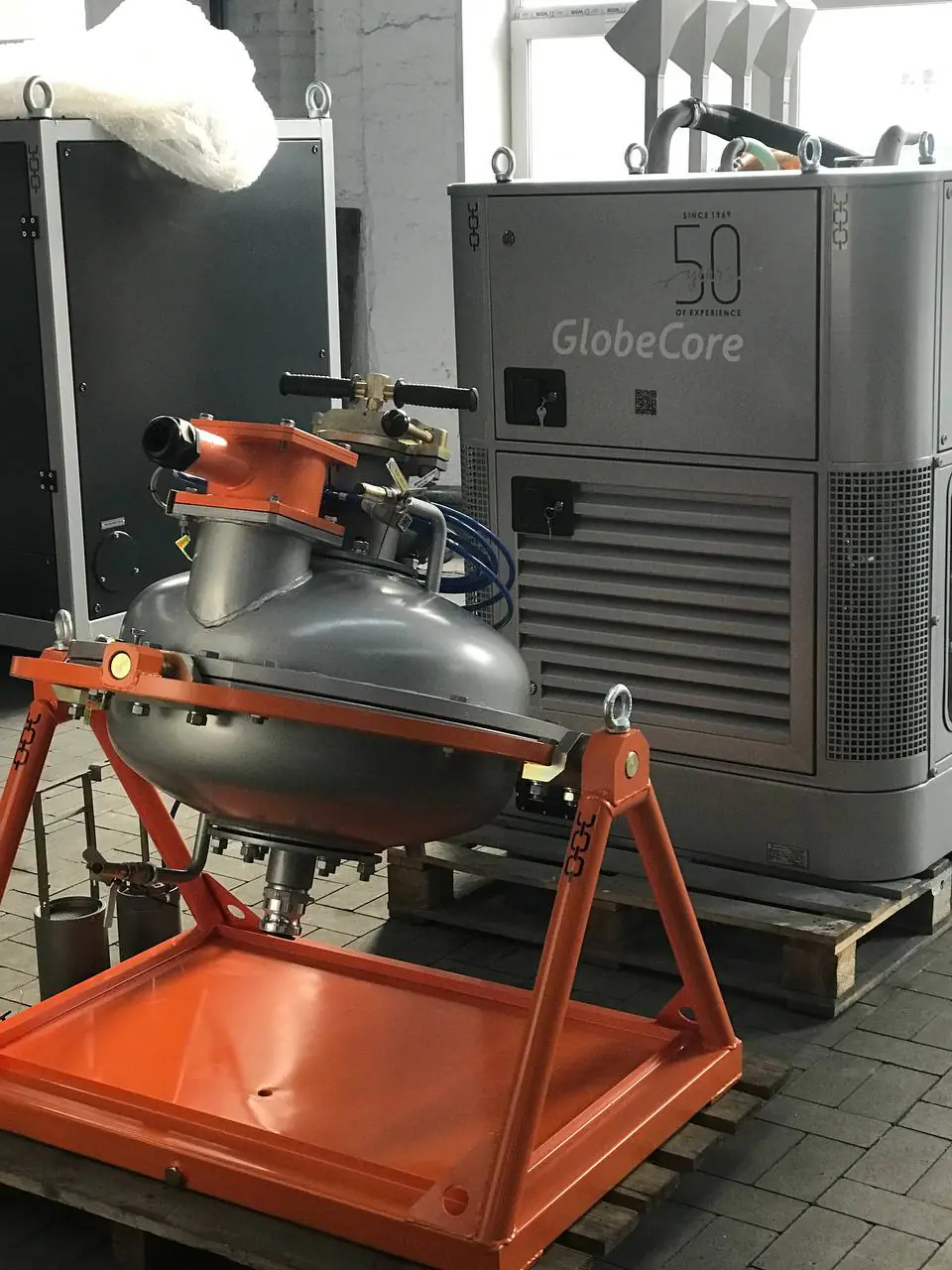
Another important factor involves reducing extraction time without overheating the material and damaging the biologically active compounds. This is where electromagnetic vortex processing becomes particularly useful, since it accelerates particle disintegration, improves homogenization, and enhances the release of humic and fulvic substances into the liquid phase. In practical applications, systems such as the AVS-150 shown below are often used for continuous or recirculation-based processing when higher productivity and stable fertilizer quality are required.Attachments:
-
May 27, 2026 at 6:11 am by Ahmed Abdullah
You’re absolutely right to flag raw material preparation and particle activation as critical control points for consistent, high‑yield humic fertilizer production. Peat, leonardite and vermicompost vary widely in density, moisture and lignocellulosic structure, so reducing and homogenizing particle size and ensuring good wetting before alkaline extraction (KOH/NaOH) is essential. Practical measures are coarse shredding or hammer/disc milling followed by a finer activation stage; the vortex‑layer approach works well here because it combines mechanochemical activation with intense dispersion, opening cell walls and increasing specific surface area so the alkali can access humic and fulvic fractions more effectively.
Equally important is process control to shorten extraction time without overheating or degrading biologically active fractions. Use a mixing/homogenizing tank for controlled alkali addition, then AVS‑based activation inline or in a recirculation loop (AVS‑150 for higher throughput and stable continuous operation). Monitor and control energy input per unit volume, residence time and number of recirculation passes, and manage temperature with jacketed vessels or heat exchangers. Downstream, choose robust solid–liquid separation (centrifuge or decanter), fine filtration, and either membrane concentration for stable liquid concentrates or drying/granulation for dry humates. If you want, share typical feedstock properties (moisture, particle size, target throughput) and I can suggest a tailored AVS‑based configuration and equipment sizing.