

GlobeCore FAQ
What unit can be used for purification of industrial oils with water and solid contamination?
- This topic has 3 replies, 4 voices, and was last updated 5 months, 2 weeks ago by .
Answers
-
March 27, 2026 at 6:45 pm by Maria Fernandez
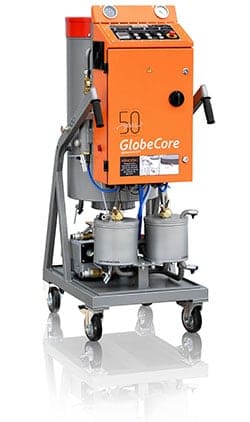
A CMM-6/7 oil purification unit is a suitable choice. It performs filtration, dehydration, and degassing in one process, ensuring stable oil quality.
-
April 30, 2026 at 7:04 am by Craig Price
In addition to filtration, dehydration, and degassing, it is important to consider how stable the purification process is under real operating conditions. Industrial oils often contain not only solids and water, but also dissolved gases, oxidation products, and fine contaminants that can gradually affect equipment reliability.
For this reason, a plant such as the CMM-6/7 should be evaluated not only by its flow rate, but also by the treatment technology it uses: heating, vacuum processing, and multi-stage filtration. This combination helps restore oil performance more effectively than simple filtration alone, especially when the oil is used in hydraulic systems, turbines, transformers, or other critical equipment.
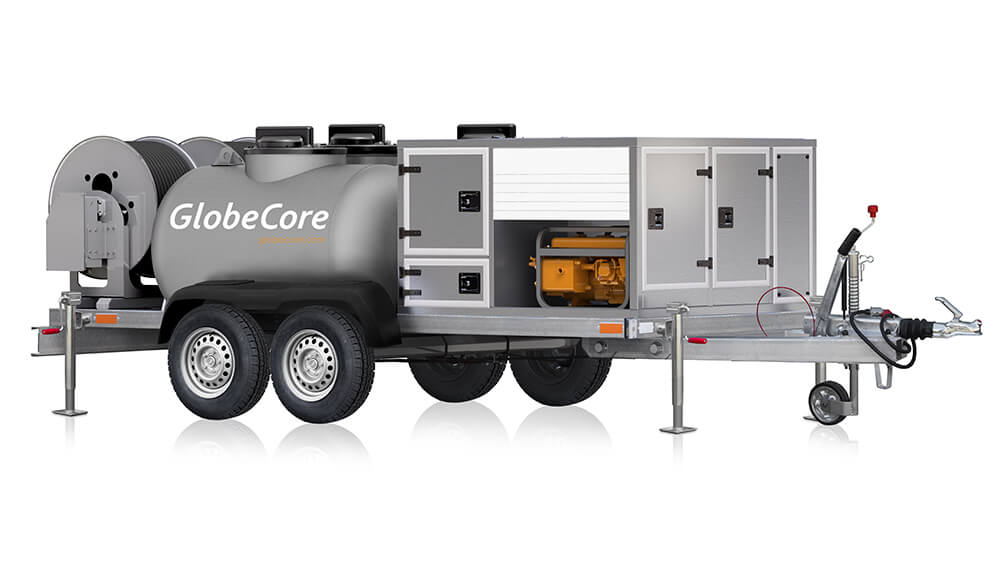
Another practical advantage is mobility. A mobile oil purification plant can be moved between different tanks, machines, or service points, which is particularly useful for industrial facilities where several oil-filled systems require periodic maintenance.
For a broader overview of oil purification methods and appropriate equipment selection, I recommend checking out this article: https://globecore.com/oil-processing/oil-purification/. -
April 30, 2026 at 7:12 am by Ana Garcia
You’re right to look beyond nominal flow rate: effective, stable purification in real operating conditions depends on the combination of heating, vacuum (thermovacuum) processing and multi‑stage filtration, plus routine condition monitoring and appropriate follow‑up treatments for oxidation products. A mobile thermovacuum unit such as the CMM‑6LT is designed for that combined approach: it heats and vacuum‑processes oil to remove free and dissolved water and gases, then passes oil through high‑efficiency filters to capture solids. Typical performance targets to verify during evaluation are oil moisture ≤10 g/t (ppm), total gas content ≤1.5%, particle cleanliness around ISO 4406 -/14/12, output temperature ~55–60 °C and practical capacities of ~6 m3/h in filtration mode and 4–6 m3/h in thermovacuum mode.
For oils with very high water content or persistent oxidation products, consider complementary technologies and operational checks. Pre‑coagulation/coalescing units such as CMM‑2,0CF or adsorption/chemical reclamation and vacuum distillation may be needed to remove emulsified water and dissolved degradation products that thermovacuum alone won’t eliminate. In service, maintain a sampling and trending program (moisture ppm, particle count, acid number, interfacial tension and dissolved gases) and confirm degassing efficiency and filter integrity during passes. Mobility is a practical advantage at multi‑machine sites, enabling targeted maintenance and reducing oil replacement costs while restoring hydraulic, turbine and transformer oil performance more reliably than filtration-only solutions.