

- You must be logged in to create new topics.
Oleksandr Dannyk
Oleksandr Dannyk
Forum Replies Created
-
AuthorPosts
-
February 13, 2026 at 12:59 pm in reply to: What purification methods are available for restoring turbine oil quality? #333597Oleksandr DannykModerator
In practice, the effectiveness of these methods often depends not only on the principle itself, but also on how they are combined and applied in real operating conditions. Turbine oils usually degrade gradually, so maintenance teams are increasingly looking for solutions that can work continuously or be integrated into routine service without long shutdowns. Another important factor is the ability to handle multiple contamination types at once — for example, moisture, dissolved gases, and aging by-products — rather than addressing them one by one with separate equipment.
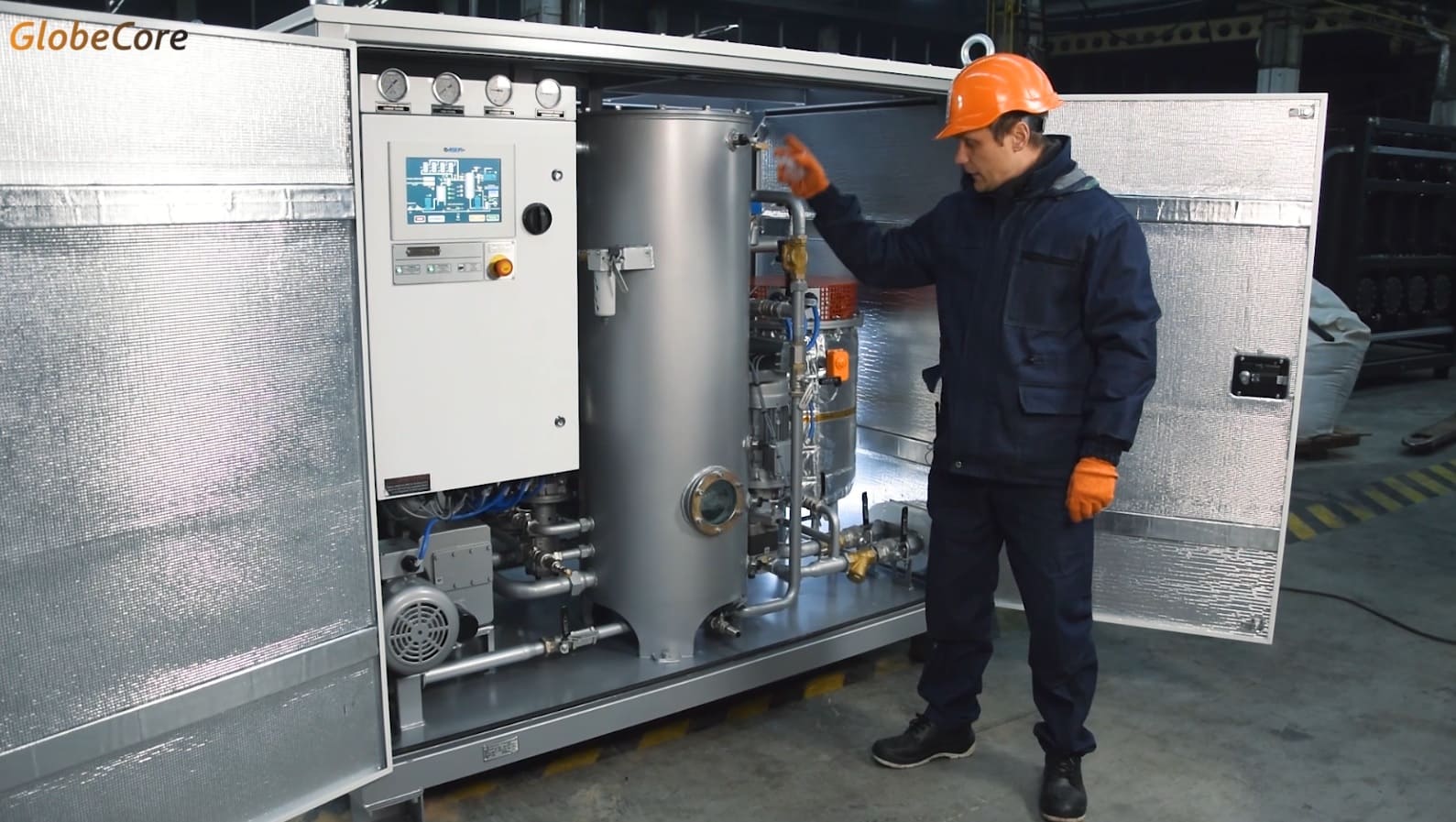
This is why integrated oil purification units have gained attention in recent years. They are designed as complete systems, where several purification stages are arranged in a single process flow, making oil treatment more predictable and easier to control. The photo below shows an example of such a turbine oil purification unit, illustrating how these technologies are implemented in an industrial setup rather than just in theory.
Attachments:
Oleksandr DannykModeratorIn addition to thermal regeneration, it is important to consider the specific operating conditions and the properties of the zeolite itself when choosing a drying method. For example, it can be useful to evaluate:
Particle size and shape of the zeolite, since fine grains heat up faster but may create higher flow resistance;
Degree of saturation or contamination, which affects the required temperature and regeneration time;
Energy and operational constraints, such as the availability of dry purge gas or the possibility of heat recovery.
In some cases, combining a preliminary purge with dry gas at a lower temperature followed by thermal regeneration can reduce overall energy consumption and shorten the process time.
For a more detailed explanation of zeolite regeneration mechanisms, especially in the context of gas dehydration and process efficiency, it is worth reading this article:
https://globecore.com/news/zeolite-regeneration-intended-for-gas-dehydration.
It provides useful technical insights that are often not covered in brief forum answers.January 15, 2026 at 11:48 am in reply to: Best tester for high-voltage transformer oil dielectric strength #330103Oleksandr DannykModeratorIn my opinion, the TOR-80 is the best tester for determining the breakdown voltage of transformer oil. I have seen it in operation, and I can say that the level of process automation is impressive.
-
AuthorPosts