


Before we go for an in depth discussion of oil purification, let us look at the history and development of lubrication materials.
It is impossible to say for certain, when a lubrication material first came into use. It probably happened about the time when humans started using tools. Ancient Egyptians used olive oil to reduce friction when moving stone and wood for their construction projects. Much later, when trams first appeared in the streets, the axles were lubricated with animal fat.
Newer and more complex machinery made of metal warranted the use of castor, rapeseed and other lubrication oils. However, they were not much better than previous materials, since their use was based mostly on practical and personal experience, not scientific research.
The 19th century saw a revolution in lubrication material industry due to the first drilling of oil wells in the US. It turned out that if whale oil was mixed with crude oil, the lubricated spinning and weaving looms worked for 10 years longer.
Lubrication materials developed even faster in the 20th century, with the appearance of complex machinery, such as automobiles, diesel engines, ships, planes, rockets etc. Petrol based oils firmly established their place. Selective purification, hydrocracking and hydroisomerization further helped in lubrication material development.
Lubrication oils are now available in several kinds, each with its own application in a certain industry:
- gear oil;
- hydraulic oil;
- turbine oil;
- electrical insulation oil;
- industrial oil;
- compressor oil and many more.
When oil purification is necessary
Depending on the equipment, these mineral oils may perform various functions, such as lubrication, cooling, insulation of energized parts, protection against corrosion, cleaning of surfaces etc. In most cases, the oil is under a lot of strain due to high pressure and temperature, high friction, contact with water and oxygen, as well as contamination with solid particles. All of these cause the oil to age, losing its properties. Contaminated oil cannot function normally, and must be either replaced or purified.
From the economic viewpoint, oil purification is a more viable solution, since it allows to maintain the oil’s performance parameters and keep it in use for as long as possible. The longer the oil’s life cycle, the less money is spent on buying new oil.
Contaminants in industrial oils
Let us look into the types of contaminants with adverse effect on industrial oil.
Nearly every oil contains solid particles. These particles form when the construction materials of the machinery breaks: metal filings, chips, rubber crumbs, fibers of insulation etc. Solid particles increase foaming of the oil. Particles of some metals may catalyze oxidation. In many cases, solid particles were the cause of equipment failure, breakdowns and expensive repairs.
Yet another contaminant is water. It can come into the oil in one of the two ways. Externally, it comes from the atmosphere. It can also appear as the result of degradation processes in the oil itself. Water accelerates corrosion and increases foaming and oxidation, decreasing the oil’s lubrication properties.
Gases are also undesirable. For instance, gas formed in transformer electrical insulation oil turns into bubbles reducing the overall dielectric strength of the oil. This is due to the fact that dielectric strength of gases at atmospheric pressure is much less than that of the oil. A discharge passes first through the gas, and only then through the oil. Just like water, atmospheric air intensifies corrosion, oxidation and foaming.
Another contamination source are the products of oil oxidation and aging. They include phenol, acids, alcohols, peroxides etc. Sludge formed from aging products deposits on transformer parts and significantly hinders cooling of transformer core.
Oil purification allows to remove particulate matter, moisture and gases from oil. To remove aging products, regeneration technologies are more appropriate.
Oil purification methods
All known oil purification methods can be grouped into three broad categories:
- physical methods;
- chemical methods;
- combined physical and mechanical approaches.
Physical oil purification methods work well when the chemical composition of oil has changed significantly and allow to remove particulate matter and water from the oil.
The simplest physical method from technical viewpoint is settling. Special containers (settling tanks) are filled with oil. Water and particles have density different from that of the oil and will sink to the bottom of the tanks with time, where they can be collected and removed. To accelerate the settling process, oil can be heated to 35-40°С to reduce viscosity. The limitation of this method is its inability to completely remove particulate matter and water.
Filtration can remove particles from the oil by making the oil pass through porous barriers. Filtration efficiency depends on the initial contamination degree and pre-treatment, which can be performed by a strainer or other methods (settling or centrifuging).
Centrifugal oil purification can partially remove water and particulate matter. This method is based on the centrifugal forces which can separate oil into several layers, one being pure oil, the other two being water and solid particles.
Chemical oil purification methods are based on chemical reactions between the contaminants and introduced reagents. These processes result in formation of substances which are removed with much more ease than the original contaminants. Sulfuric acid treatment and hydro-treatment are among the most common chemical purification methods.
Acidic treatment usually involves sulfuric acid, which reacts with the contaminants. Asphalts, tar, unsaturated hydrocarbons and other contaminants sediment into what is collectively referred to as acidic tar, which can be easily separated from the oil. The process is concluded with alkali to neutralize the remaining acid and acidic tar.
Hydro-treatment serves to reduce the concentration of sulfur and oxygen compounds in the oil. The process involves treating of the oil with hydrogen at high temperature and pressure.
The combined physical and chemical oil purification methods include coagulation, adsorption, selective purification and ion exchange.
Coagulation is used to improve purification efficiency by filtration or settling. The oil is mixed with special substances which facilitate enlargement of contaminant particles in colloid or finely dispersed state. The larger particles are much easier to filter out of the oil or to settle to the bottom of a settling tank. Efficiency may depend on the following:
– the amount of coagulation agent used;
– duration of coagulant contact with the oil;
– oil temperature;
– the way the agent is mixed with the oil.
Adsorption is based on interaction of the oil with adsorbent media. Adsorbents capture contaminants and trap them in their pores. The specific adsorbent is selected based on the task. Water is removed by zeolite. Silica gels work well to extract acidic compounds. Fuller’s earth can extract oil aging products. Adsorbents can be natural or synthetic.
There are three types of adsorption oil purification:
- contact;
- percolation;
- counter-current.
In the first case, oil and fine adsorbent are mixed. After the adsorbent becomes saturated, it is separated from the oil. The second type of purification involves percolation of oil through a layer of adsorbent, while in the counter-current method the oil and the adsorbent move in the opposite directions to one another.
Selective purification involves the use of special solvents, which selectively interact with oil: they only solve contaminants and leave the regular oil intact. The simplest case of selective oil purification is “mixing-settling-distillation”. Some of the commonly used solvents are acetone, furfural, a mixture of phenol with kresol, nitrobenzene etc.
Another combined method uses ion exchange resins. These substances capture the part of contaminants which dissociates into ions when dissolved. Technically, it is similar to adsorption, since it can be performed by mixing or percolation.
Oil purification processes
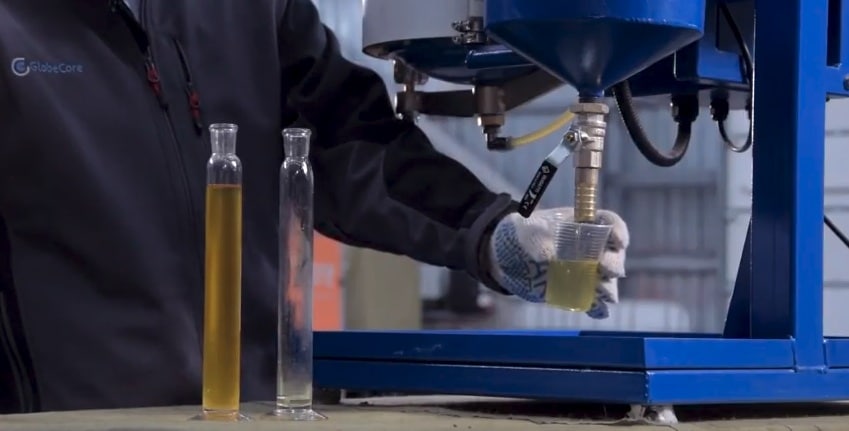
GlobeCore equipment uses the following oil purification processes:
- heating;
- filtration;
- vacuum;
- adsorption.
The first process is based on the different boiling points of water and oil. Water boils at 100°С, while oil boils at a much higher temperature, in excess of 300°С. This means that water can evaporate from the oil and removed by condensation.
Filtration usually involves several stages. First, a coarse filter removes the largest solid particles, then the oil passes through fine filters. Filtration fineness is selected based on the degree of oil contamination and the requirements of regulations and standards.
Vacuum is employed for water and gas removal. One or two stage vacuum system are used in GlobeCore equipment. In the first case, one vacuum pump creates low vacuum (760 mmHg -10 mmHg). Such systems are used for purification of electric insulation oils from free breathing transformers, as well as other oil types (turbine, industrial, hydraulic etc). In the second case, a backing pump and a Roots blower create high vacuum (10 mmHg – 0 mmHg), required for processing of oil used in sealed transformers.
Interaction of oil with Fuller’s earth makes it possible to regenerate oil: remove oxidation and aging products. Fuller’s earth is a naturally occurring substance which can be reactivated many times over.
The types of oil purification systems

Oil can be purified not only with coarse and fine filters, but also with filter presses. The main component of a filter press is porous media through which a pump pushed the oil at high pressure. While the oil passes through the filter media, all particles larger than 10-15 micron are captured in its capillaries.
The vacuum chamber is another oil purification system. Depending on degassing and dehydration method, the design of the chamber may vary. One of the ways is to spray contaminated oil into the vacuum chamber through a nozzle. Water vapors separate from the oil and are removed from the chamber by the vacuum pump. Droplets of dry oil fall to the bottom of the chamber. Another option is to fill the chamber with special elements to make the oil flow down their surfaces in a thin film. Spiral rings or Raschig rings can be used for that purpose.
Adsorbers are special systems to facilitate adsorption of contaminants from the oil. Those are usually cylindrical vessels which contain the adsorbent, such as zeolite, silica gel or Fuller’s earth. When the sorbent is saturated, it is replaced or reactivated.
Oil purification settling systems are large tanks. The bottom of such a tank may be equipped with a valve to carefully drain the sediment from the oil.
The drum is the main component of the centrifuge. It contains plates, attached to the shaft in parallel. The distance between the plates is so small that oil can be divided into several thin layers, improving efficiency of centrifuge purification.
Transformer oil purification machines
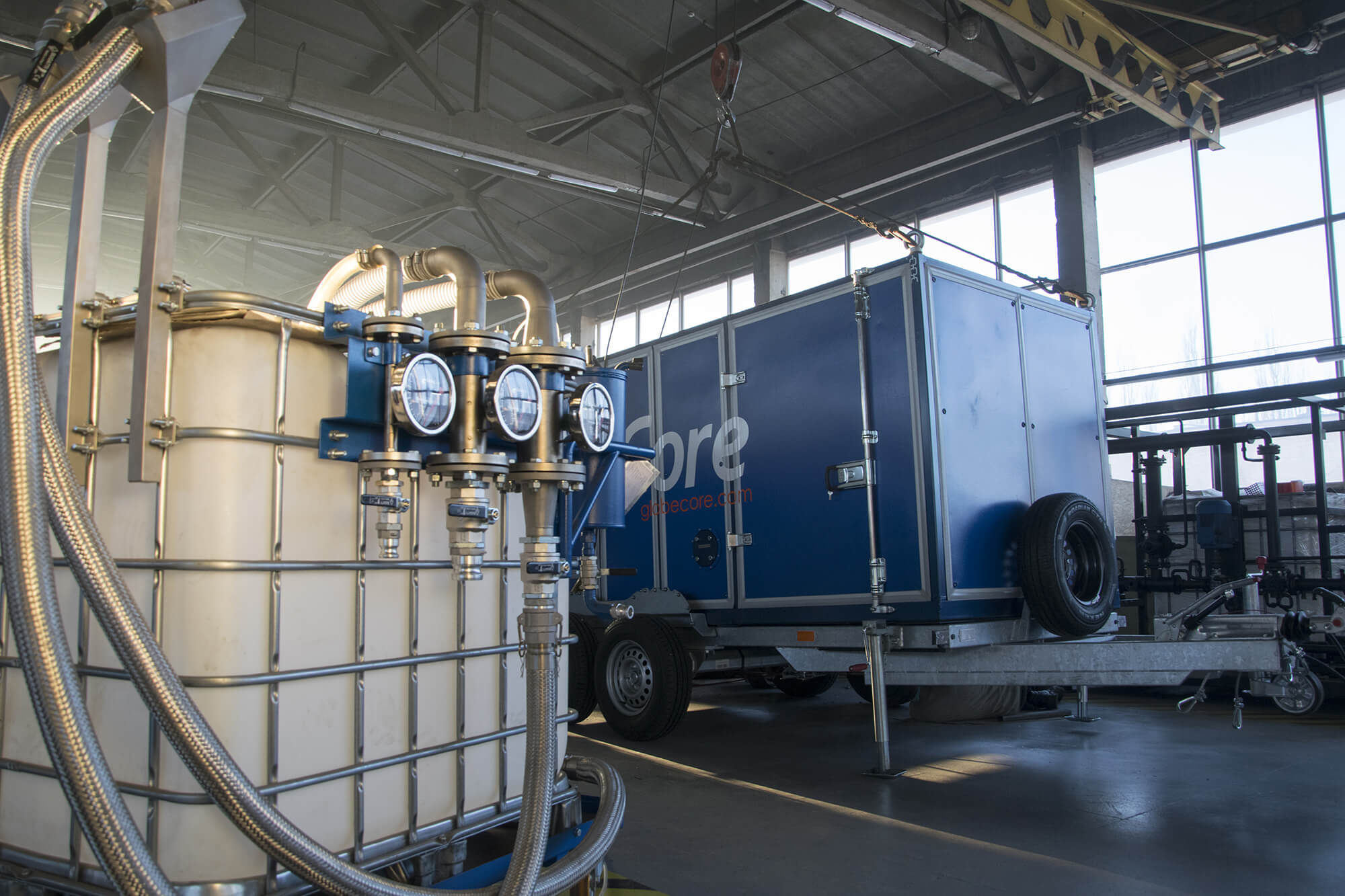
GlobeCore manufactures the following types of transformer oil purification machines:
- СММ;
- СММ-CF;
- CFU;
- MCU;
- CMM-R;
- UVR.
The CMM transformer oil purification machines use heating, filtration and vacuum. Comprehensive purification of oil is achieved, with the removal of particulate matter, water and gas. The СММ-CF machines use two filters: one regular filter to remove particulate matter and a coagulator filter to remove water. This machine can process oil with moisture content up to 50% and, in some cases, more. The CFU machines work well when oil particles must be removed from transformer oil. The oil is pumped through cartridge filters which capture particulate matter.
Adsorption purification is performed by MCU, CMM-R and UVR machines. The MCU can be used with zeolite or silica gel. In the former case the oil is thoroughly dried, while in the latter the oil is also processed to remove acidic compounds. The CMM-R machines not only purify oil, but regenerate it, including the final stage of mixing inhibition additives into the oil. These machines are used with Fuller’s earth, which can be reactivated after saturation multiple times without extraction from the CMM-R. The UVR transformer oil purification machines use a different adsorbent, which requires a special external unit for reactivation. However, while the CMM-R can only process transformer oil, the UVR is more versatile and can regenerate other types of oil and fuel.
GlobeCore oil purification units: main advantages
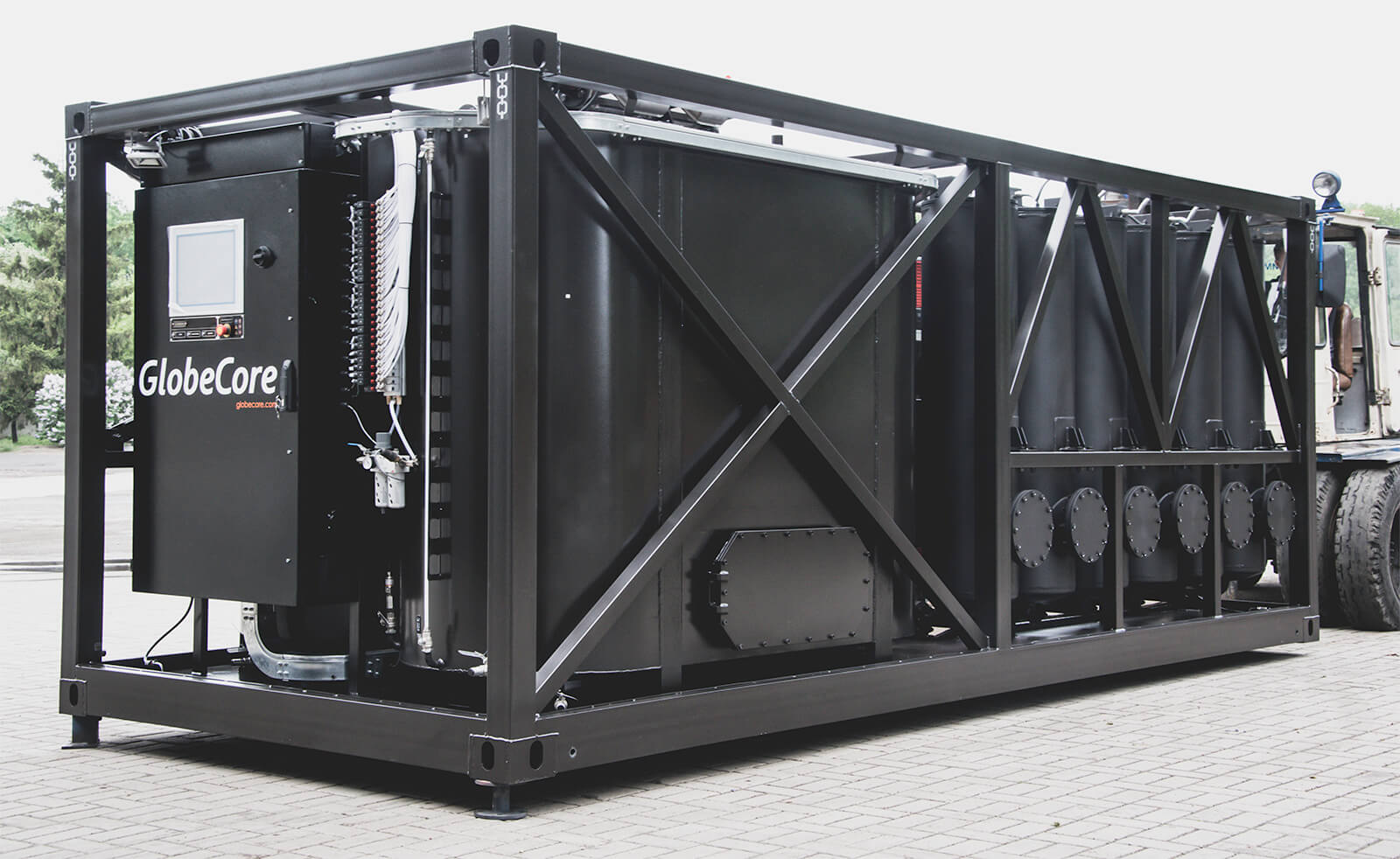
GlobeCore’s oil purification units have the following benefits:
- the are adapted for transportation by various means (maritime, air and ground transport);
- they are versatile. Apart from oil purification, these units can perform other tasks, such as transformer evacuation;
- the are mobile. The oil purification units may be produced on wheels, on trailers etc, allowing transformer servicing in the field;
- Low power consumption. All components and the design of the units are selected so as to consume the least amount of electricity while remaining highly efficient in oil processing;
- Safety. The units are equipped with fault protection, to prevent foaming, leaks etc;
- Simple operation and servicing. In most cases, on person is sufficient to operate the oil purification units;
- A wide range of extra options. For client convenience, GlobeCore can enhance the capabilities of the equipment (control by cell phone, processing of oil in energized transformers, particle counter etc).