GlobeCore

  • Home
  • Products
    • Oil Regeneration
      • CMM-6RL Oil Regeneration Unit
      • CMM-10RL Transformer Oil Regeneration Plant
      • CMM-12R Oil Regeneration Systems
      • CMM-12R Oil Regeneration System (With Activated Bauxite)
      • CMM-8RSL/4000 Transformer Oil Regeneration Plant (With Fuller’s Earth)
      • USB-6 Oxidation Inhibitor injection unit
      • СММ-0,001U Laboratory Oil Filtration Unit
    • Oil Purification & Degassing Machines
      • CMM-0.6L Oil Degassing & Filtration Cart
      • СММur-1L mobile oil plant
      • CMM-1.0LT Transformer Oil Purification Unit
      • CMM-1H Oil Processing Unit
      • CMM-2.2LT Industrial Oil Purification Unit
      • CMM-4,0T Turbine oil filtration
      • CMM-4,0LT Transformer Oil Purification Unit
      • CMM-4/7 portable oil degassing unit
      • CMM-6LT Industrial Oil Purification Unit
      • CMM-6/7 Degassing Unit
      • CMM-8LT Oil Processing Unit
      • CMM-10 — Transformer Oil Purification Machine
      • CMM-15 Oil Degassing Plant
    • Oil Filtration Machines
      • CMM-1,0CF Unit for Removal of Water from Oil
      • CMM-2,0CF Unit for Removal of Water from Oil
      • CMM-1,2Fr Industrial oils filtration unit with self-cleaning filters
      • CMM-4,0F Oil filtration unit
    • Oil Drying Unit
      • ZP-130 Sorbent Cartridges
      • ZP-260 Sorbent Cartridges
    • Oil Heating
      • PPM Inline Oil Heater. Stream oil heating
    • Fuel Polishing
      • TOR-1 diesel fuel moisture content tester
      • CMM-6RL dark diesel fuel polishing machine
      • CMM-6RL dark heating fuel polishing machine
      • CMM-6RL low-viscosity marine fuel polishing machine
    • Online Transformer Dry-Out Systems
      • CMM-260C Online Transformer Dry-Out System
      • TOR-4 Online Transformer Dry-Out System
    • Online Transformer Monitoring Systems
      • TOR-5 Online Transformer Monitoring System
    • Transformer Maintenance
      • Mojave Heat (Sukhovey): Hot Air Dryer Unit
      • UVV Vacuum Cold Trap
      • US-6S Transformer vacuum furnace
      • LFD Low Frequency Heating Device
      • BV-3000 Transformer Evacuation System
      • BV-5000 Transformer Evacuation System
      • UVD Vacuum Oil Filling Unit
      • UVD-1000 Oil Filling and Transportation System
      • TSS Transformer Safety System
      • CMM-6RL Oil Regeneration Unit
      • CMM-10RL Transformer Oil Regeneration Plant
      • CMM-12R Oil Regeneration Systems
    • Vacuum Transformer Drying Ovens
      • US-6S Transformer vacuum furnace
    • Sorbent Processing
      • BRZ Zeolite Regeneration Block
      • BRPS Zeolite Regeneration Block
      • SSC-15 Zeolite Drying Cabinet
      • ZP-130 Sorbent Cartridges
      • ZP-260 Sorbent Cartridges
    • Instruments – Transformer Oil Testers
      • TOR-1 Oil Moisture Meter
      • TOR-2 Hydrogen and Moisture Analyzer for Transformer Oil Monitoring
      • TOR-3 (TOR-3 SL) Oil Tan Delta Tester
      • TOR-6 Transformer Oil Moisture and Particles Tester
      • TOR-7 Universal Transformer Oil Tester (moisture, gases, solid particles)
      • TOR-8 tester for residual gas content of insulating oil
      • TOR-60 (TOR-60 SL) Breakdown Voltage Tester
      • TOR-80 (TOR-80 LSL) Breakdown Voltage Tester
      • TOR-80A (TOR-80 ASL) Transformer Oils Breakdown Voltage Tester with Battery
      • TOR-100 (TOR-100 SL) Breakdown Voltage Tester
    • Wind Turbine Service
      • CMM-G wind turbine gearbox oil changer (with dimensions adapted to the customer’s trailer ones)
      • CMM-G Wind Turbine Gearbox Oil Changer
      • CMM-GL Wind Turbine Gearbox Oil Changer
      • CMM-0.6L Oil Degassing & Filtration Cart
      • CMM-4,0T Turbine oil filtration
    • Medical Equipment Maintenance
      • CMM-0.6 X-ray Transformer Oil Purifier
      • SSC-15 Zeolite Regeneration System for Oxygen Concentrators
      • AVSk-150 Hospital Wastewater Treatment Complex
    • Blending systems
      • USBL-1 Laboratory Blending System
      • USB-1 Fuel oil blending system
      • USB-5 high-speed mixing unit for production of sanitizers (0.15 – 0.3 m3/h)
      • USB-5 high-speed mixing unit for production of sanitizers (1.1 m3/cycle)
      • USB-6 Impeller Stirrer
      • Colloid Mill
      • Vortex Layer Devices
    • Colloid Mill
      • Colloid mills for food industry
        • CLM-100.3 Colloid mill
      • Colloid mills for bitumen emulsion production
        • CLM-0.25.1 Laboratory colloid mill
        • CLM-2/4 Colloid mill
        • CLM-16/25 Colloid mill
      • Colloid mills for bitumen modification
        • CLM-8/16 Colloid mill
        • CLM-10/20 Colloid mill
        • CLM-40.2 Colloid Mill
      • Colloid mills for different applications
        • CLM-100.2 Colloid Mill
        • CLM-200.2 Colloid Mill
    • Vortex Layer Devices
      • AVS-100 Mixing Machine. Vortex Layer Device
      • AVS-150 Chemical Mixing Machine
      • AVSp-100 Vortex Layer Device (Semi-Automated)
      • AVSp-150 vortex layer device (semi-automated)
      • AVSk-150 Wastewater Treatment Complex
    • Bitumen emulsion plant, Bitumen Emulsion Production
      • CLM-0.25.1 Laboratory colloid mill
      • USB-2 Bitumen emulsion unit 2 m3/hour production capacity
      • USB-2 Bitumen emulsion plant 8 m3/hour production capacity
      • FB Bitumen filter
      • USB-6 Impeller Stirrer
    • Bitumen Modification Plant. Modified Bitumen Production
      • USB-3 Bitumen modification laboratory system
      • USB-3 Continuous Bitumen Modification Unit (12 m3/hour)
      • USB-3 Bitumen modification unit 16 m3/hour production capacity
      • USB-4 Modified bitumen collection tank (USB-3)
      • USB-6 Impeller Stirrer
    • Laboratory system for Bitumen Emulsion Samples
      • CLM-0.25.1 Laboratory colloid mill
      • CLM-100.1 Bitumen Emulsion Laboratory System
      • USB-3 Bitumen modification laboratory system
    • Biodiesel Equipment
      • USB-1L Biodiesel laboratory equipment
      • USB-1 Biodiesel equipment
        • Filters
          • The filter GC Fine with a filtration factor β = 4000
        • Vacuum Pumps
          • GC Roots Vacuum Pumps
          • مضخات التفريغ GC Vane (مضخات دعم)
    • Custom Equipment
      • CMM-4R TRANSFORMER OIL REGENERATION MACHINE
      • CMM-1 MOBILE OIL PLANT
      • CMM-2.2 MOBILE OIL PLANT
      • CMM-4 MOBILE UNIT FOR POWERED TRANSFORMER OIL PROCESSING
      • CMM-12A DEGASSING UNIT
      • CMM-1CO CABLE OIL DEGASSING UNIT
      • CMM-5M INDUSTRIAL OIL PURIFICATION MACHINE
      • MCU ZEOLITE OIL DRYING UNIT
      • CMM-8RP Sorbent Reactivation Unit
      • BDK-3 CATALYTIC CONVERTER
      • CMM-600CF TRANSFORMER OIL FILTRATION AND REFILLING MACHINE
      • SN-1 PUMP ASSEMBLY
      • SBE-30 BITUMEN EMULSION COLLECTION TANK (UVB-1)
      • UVB-1 BITUMEN EMULSION UNIT 1 M3/HOUR PRODUCTION CAPACITY
      • UVB-1 EXTENSION 1 M3/HOUR PRODUCTION CAPACITY
      • INDUSTRIAL MIXER – COLLOID MILLS CLM-4 SMALL
      • BIG COLLOIDAL MILL CLM-18 GRINDING MACHINE
      • INDUSTRIAL MILL – GIANT COLLOIDAL MILL CLM-22
      • CMM-0.6 Clean Marine Oil Degassing Cart
      • Compressed Air Supply Unit UOV
    • Accessories & Components
  • Dealers
  • Tech School
    • Webinar Registration
  • News & Articles
  • History
  • Reviews
  • AskMe
  • Contacts
  • EN
    • FR
    • ES
    • PT
    • TH
    • VN
    • CN
    • HA
    • AZ
    • JP
    • DE
    • RO
    • Hun
    • Arabic
    • Ind
GlobeCore / Vortex layer device / Production of cutting fluids by means of a vortex layer device

Production of cutting fluids by means of a vortex layer device

production of cutting fluids

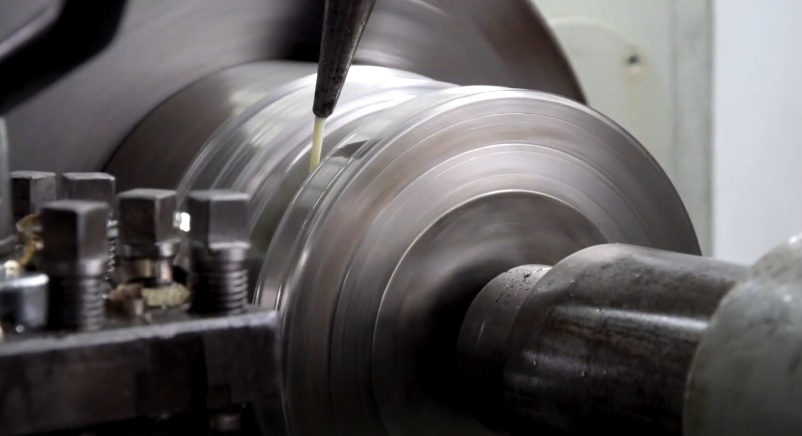
Cutting fluids are emulsions used in the field of mechanical processing of metals, stone, ceramics, and plastics. Such means are used to lubricate and cool the workpiece and the working tool in the zone of their contact while drilling, cutting, and pressing are performed. Basically, cutting fluids are used for turning and milling the workpieces. The production of cutting fluids except oil products can be established directly at the enterprise that uses the product in operation, or at a specialized factory.

The use of cutting fluids has an effect on improving the quality of processing the products and reducing the tool wear. The likelihood of burrs and defects is minimized. Cutting fluids flush out abrasive particles and the cuttings formed while processing the material. Cutting fluids protect the equipment against corrosion and improve sanitation and hygiene conditions of work.

Main types of cutting fluids and quality requirements

Depending on the composition and the production technology, cutting fluids are divided into the following types:

  • Oil-containing cutting fluids

Composed of properly refined mineral oil (60–95%). They may also include anti-friction, anti-foam, anti-burr, and anti-corrosion additives. The special feature of this type of cutting fluid is high lubricating ability, but low cooling effect.

  • Water-soluble cutting fluids

Water-soluble cutting fluids may contain mineral oils, water, alcohols, glycols, corrosion inhibitors, other additives, organic and inorganic substances. The special feature of this type of fluids is high cooling ability, relatively low stability, and poor lubricating properties.

  • Mineral cutting fluids

The production of cutting fluids of this type is based on catalytic hydrogenation of petroleum fractions.

  • Synthetic products

Solutions with a high degree of cooling prepared on the basis of surfactants, water-soluble polymers, additives, and water.

  • Semi-synthetic fluids

Not more than half composed of mineral oils, water, emulsifiers, and additives. Distinguished by optimal cooling and lubricating properties.

  • Emulsions

They contain up to 85% of medium-viscosity mineral oils. The coarsely dispersed product is distinguished by high lubricating properties.

The appropriate requirements apply to different types of cutting fluids for the purposes of dispersing the main ingredient. Coarsely dispersed products are used in emulsions. The production of semi-synthetic and synthetic cutting fluids involves dispersion to the colloidal and molecular levels respectively.

Conventional technologies for production of cutting fluids

The production of cutting fluids involves mixing the base ingredient with additives. During the product preparation, the ingredients are preliminarily dosed, mixed, and dispersed to form small droplets of oil phase. The quality of emulsion depends on the size of these droplets — the smaller they are, the better. Conventional methods of dispersion do not always allow achieving a sufficiently high-quality result; therefore, the cutting fluid does not come out that stable.

 Mechanical agitators, compressed air based mixing technologies, homogenization, steam bubbling, circulation mixing, and shock-impulse mixing are used. In this case, coarsely dispersed mixtures, emulsions of poor sedimentation stability are obtained. They break down, and the additives settle. Under this method of production, part of petroleum products does not almost emulsify. The production of cutting fluids by means of hydrodynamic mixers with superposition of high-frequency and low-frequency vibrations is also conventionally applied in practice. But when working with this equipment, the formation of stagnant zones is observed.

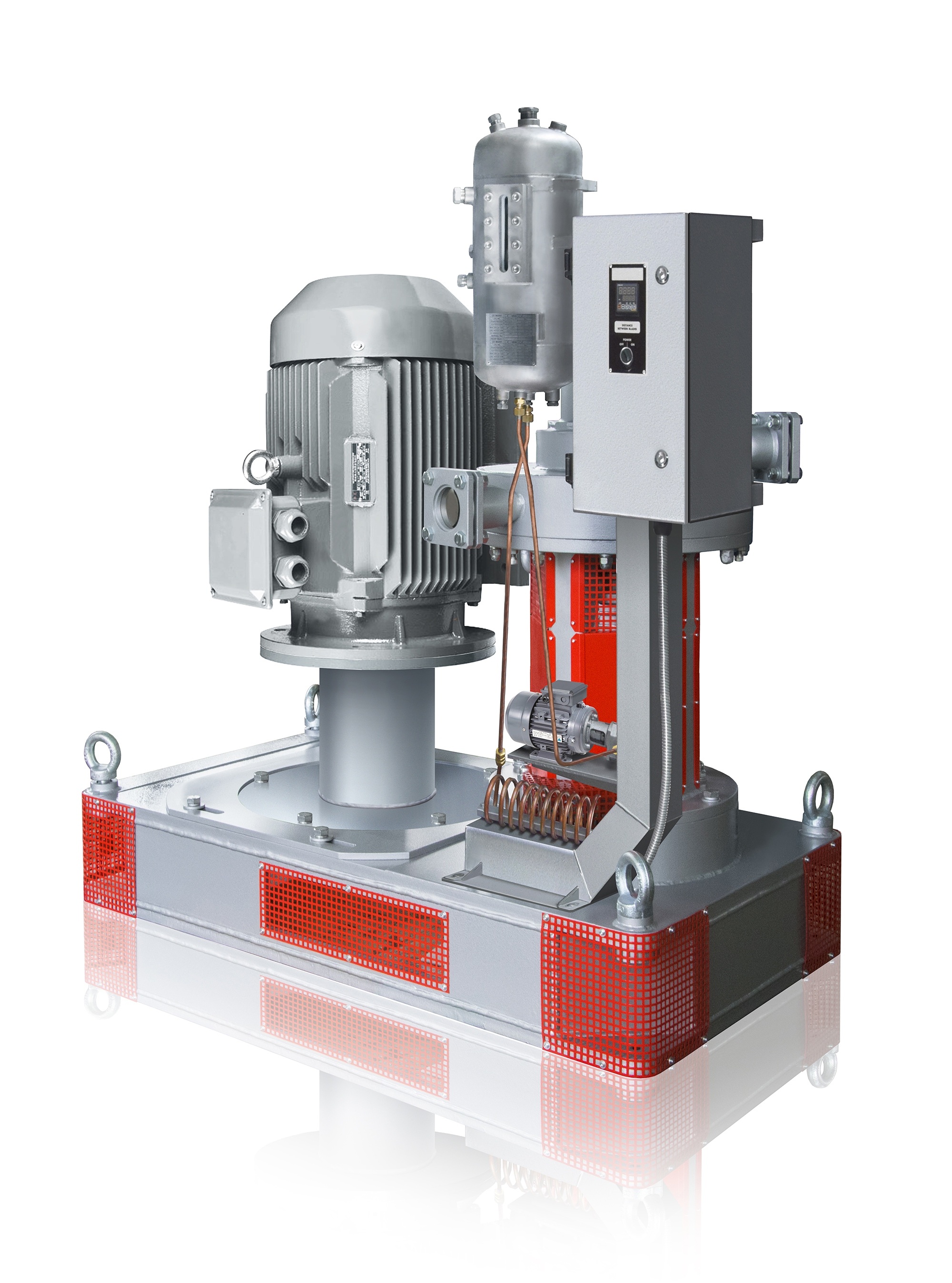
A vortex layer device (AVS) will help in solving the problems associated with conventional methods of production of cutting fluids. This equipment is represented in GlobeCore catalog.

Technology for production of cutting fluids by means of AVS
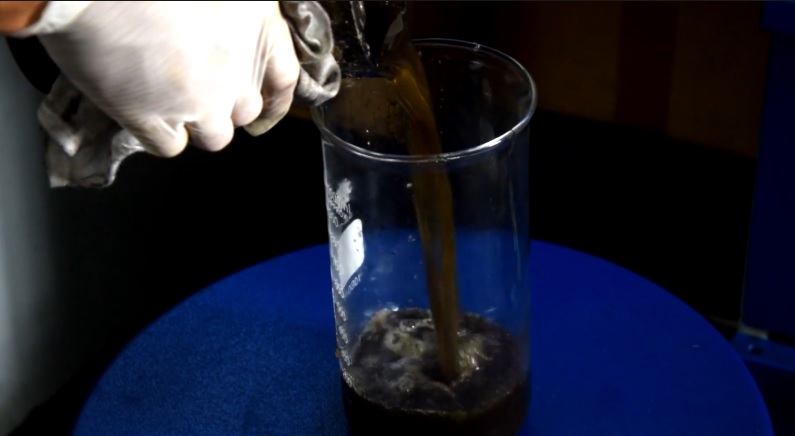
Сutting fluids obtained during the experiment on the device of the vortex layer AVS-150

A vortex layer device is a vortex layer device with a non-magnetic operating chamber. Ferromagnetic needles are placed inside it. When the device is turned on, the inductor creates a magnetic field therein which causes intensive mixing of ingredients and dispersion. In this case, each ferromagnetic needle in the operating chamber acts as a diminutive mixer. The cutting fluid ingredients are intensively mixed and dispersed due to colliding with one another, the chamber walls, and the ferromagnetic needles. In addition to direct dispersion and mixing, the processes of electrolysis, electromagnetic processing, acoustic vibrations, and high local pressure are observed here.

AVS can be used as the main unit for mixing the cutting fluid ingredients and obtaining a high-quality product. Continuous production of cutting fluids using a vortex layer device shall include:

  • feedstock tanks for feeding and preheating the initial components;
  • dosing pump;
  • AVS-100 or AVS-150;
  • receiving tank.

Since AVS allows obtaining more stable mixtures with good fluidity unlike conventional methods of production, the equipment can be used on technological lines not only as the main unit, but also as auxiliary equipment. Processing of cutting fluids in the vortex layer device allows obtaining a high-quality, homogeneous emulsion from the product previously prepared by classical methods. In this case, AVS is installed at the end of the conventional line and used for final processing of the mixture.

Advantages of production of cutting fluids by means of a vortex layer device

The vortex layer devices represented at GlobeCore are distinguished by the following advantages compared to conventional equipment for production of cutting fluids:

  • High capacity

When AVS-150 is used on the technological line for continuous production of cutting fluids, the device is able to prepare 5 cubic meters of product per hour.

  • Versatility

The unit is suitable for direct production of cutting fluids and for processing of cutting fluids prepared by conventional methods.

  • Cost-effectiveness

The energy consumption of AVS-150 during the experiment for production of cutting fluids made 9.5 kW/h.

  • Ease of use

The device with a control section is distinguished by compact dimensions and light weight; therefore, it requires no pedestal or additional structures for installation.

  • High intensification of processes

Production of cutting fluids and preparation of conventionally produced cutting fluids take just a few seconds.

AVS will become the main or ancillary equipment at the enterprise for production of cutting fluids. Using this technique, you will manage to increase the efficiency of production lines, to simplify the technological process, and to make it less energy-consuming, and the final product will be distinguished by high quality, stability, and homogeneity.
    Leave Your Request


    • Home
    • Products
    • Dealers
    • Tech School
    • Contacts

    ® Copyright by - 2025 © GlobeCore

    GlobeCore, Sadovskogo 14, Poltava, Ukraine, 36034

    This website uses cookies to improve your experience. By continuing to browse, you agree to our use of cookies. Read more in our Privacy Policy.