

Zeolite regeneration
What is the batch size in kg of the zeolite regeneration machine BRPS?
- This topic has 3 replies, 3 voices, and was last updated 1 month ago by .
Answers
-
August 21, 2026 at 1:59 pm by Emily Jones
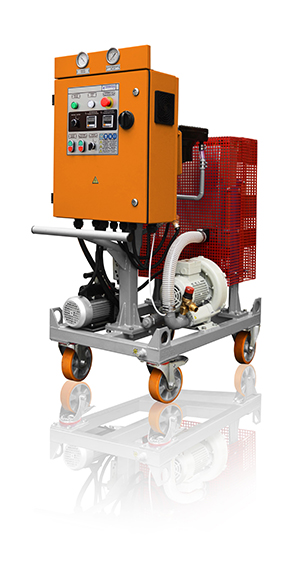
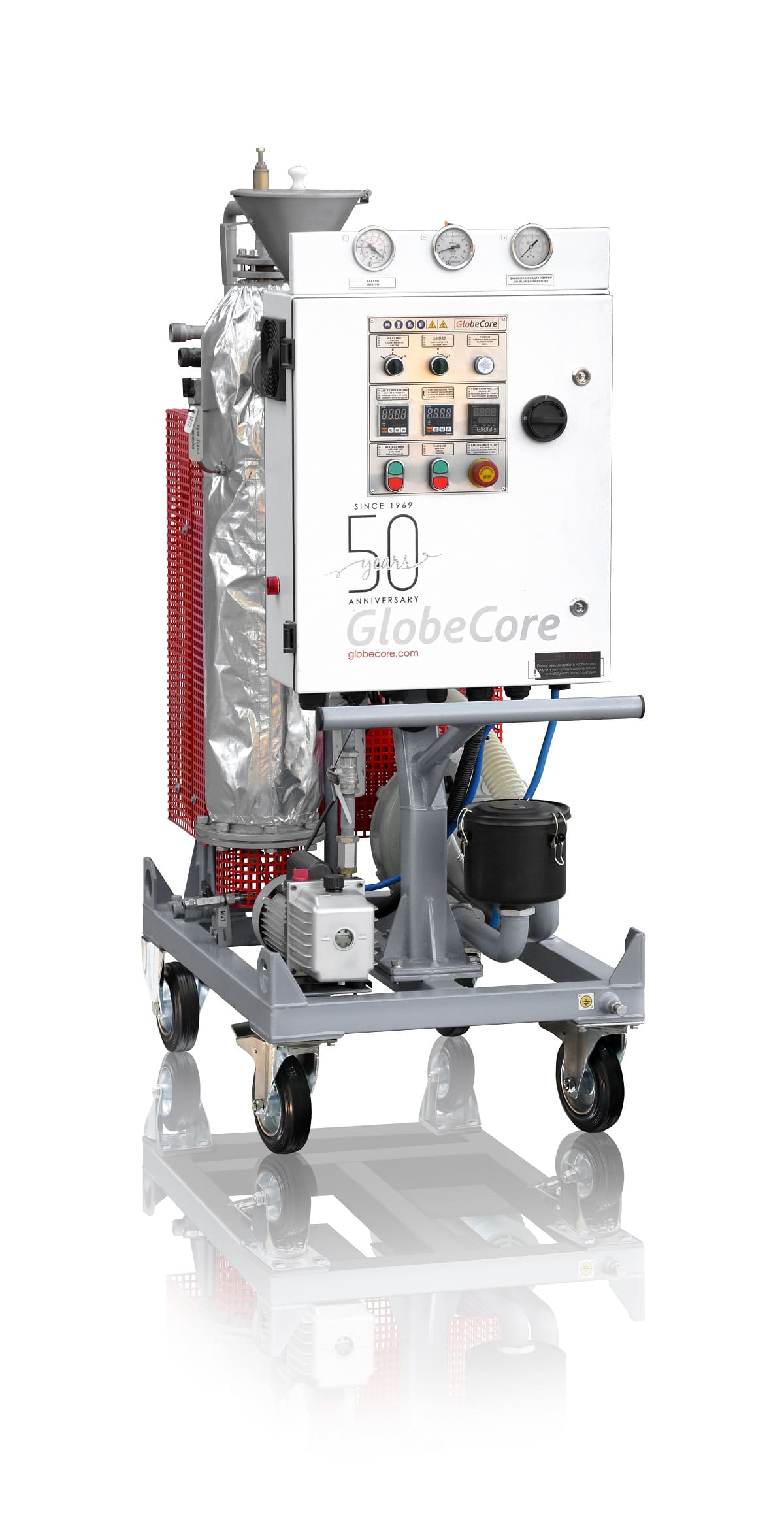
The manufacturer does not publish a nominal batch mass for the BRPS. Given the unit’s compact skid size (1100 × 650 × 1350 mm), 2.3 m³/min blower and 210 kg maximum weight, it’s intended for small-to-medium sorbent loads; a reasonable industry estimate is roughly 50–150 kg of zeolite per regeneration cycle, depending on grain size and packing.
To estimate more precisely, multiply the sorbent vessel or cartridge internal volume by zeolite bulk density (typical range 600–900 kg/m³). If you share the adsorber/cartridge dimensions or number of cartridges you plan to process, I can run that calculation for you, or you can request the exact batch capacity directly from GlobeCore for confirmation.
-
September 1, 2026 at 6:42 am by Craig Price
The BRPS zeolite regeneration machine by GlobeCore is designed for regeneration of used zeolite and restoration of its moisture adsorption properties. The machine handles a batch load of up to 25 kg of zeolite per regeneration cycle. It uses a combination of thermal treatment, steam cleaning, drying, and vacuumization modes to remove accumulated moisture and contaminants, allowing the sorbent to be reused multiple times.
For facilities with zeolite applications in natural gas drying or similar adsorption processes, the GlobeCore BRPS zeolite regeneration machine provides a compact and efficient solution that reduces the need for frequent sorbent replacement and helps maintain stable drying performance. -
September 1, 2026 at 6:51 am by 伊藤 聡太郎
Yes — the GlobeCore BRPS is specified for batch processing of up to 25 kg of zeolite per regeneration cycle. It employs combined thermal treatment, steam cleaning, drying and vacuumization to remove moisture and contaminants and restore the sorbent’s adsorption capacity.
That 25 kg limit makes the BRPS a compact, efficient solution for small-to-medium applications such as natural gas drying or other adsorption processes where periodic on‑site regeneration reduces sorbent replacement and helps maintain steady drying performance. For higher throughput needs you can run multiple cycles per shift or deploy additional units, or consider larger continuous/regenerative systems for industrial-scale operations.