

Bitumen Modification
What solution is for the production of bitumen-rubber mastics?
- This topic has 3 replies, 4 voices, and was last updated 3 weeks, 6 days ago by .
Answers
-
August 21, 2026 at 2:13 pm by Emily Jones
What equipment solution is required for the production of bitumen-rubber mastics at an existing asphalt plant?
-
August 21, 2026 at 2:47 pm by Gabriel Silva
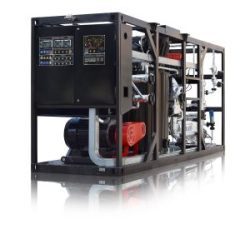
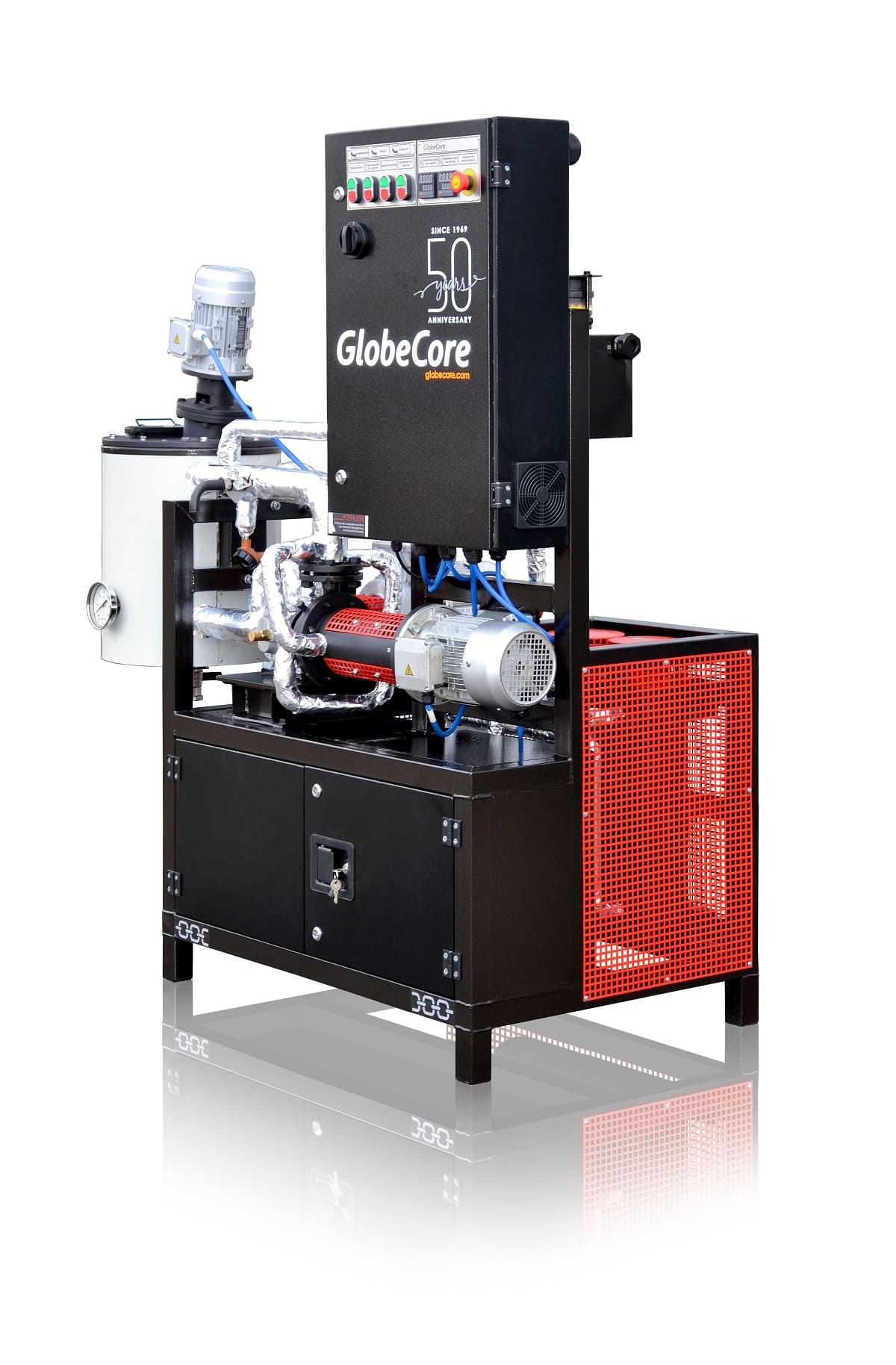
For producing bitumen-rubber mastics at an asphalt plant the most practical solution is a dedicated bitumen modification unit paired with an inline colloid mill: a USB-3 series modification unit (choice between compact USB-3/12 or higher‑capacity USB-3/16) together with a CLM-8/16 colloid mill. The USB-3 line handles heating, batching, regrinding and high‑shear mixing so you can introduce rubber, polymers, plasticizers or solvents and produce polymer‑modified bitumen and elastomer-containing mastics reliably, while the CLM-8/16 provides the ultrafine inline dispersion and homogenization required for stable bitumen‑rubber mastics and even liquid rubber blends.
These units are designed to be installed at an existing asphalt plant, operate cyclically or continuously, and use thermal‑oil heating for consistent temperature control; training and commissioning are short (typically 1–2 days). For higher throughput the USB-3/16 offers about 16 m3/h capacity; the USB-3/12 is a more compact, transportable option for smaller operations. If you tell me your current plant throughput and available space I can recommend the best SKU mix and configuration to integrate a mastics production line that meets your production and quality targets.
-
September 9, 2026 at 8:38 am by Craig Price
For the production of bitumen-rubber mastics at an existing asphalt plant, the required solution should ensure efficient mixing and uniform dispersion of rubber particles in bitumen while integrating with the existing production process. GlobeCore USB-3 equipment can be used for the production of polymer-modified and rubber-modified bitumen materials, which provides intensive mixing and activation of components to achieve stable and consistent properties of the final product.
The system can be adapted for installation at an existing asphalt plant and selected according to the required capacity, bitumen characteristics, rubber content, and production requirements. The GlobeCore technology helps improve the quality of bitumen-rubber mastics, enhance durability of road materials, and optimize the production process without the need for complete reconstruction of the asphalt plant. -
September 9, 2026 at 8:49 am by Christopher Hansen
Your summary is spot on: a purpose‑built bitumen modification unit from the USB‑3 family is the practical route to produce bitumen‑rubber mastics at an existing asphalt plant because it combines heating, precise dosing, intensive mixing and regrinding (via an inline colloid mill or high‑shear mixer) to achieve uniform dispersion and stable product properties without a plant rebuild. Select a USB‑3 Small Plant for low throughput (~4 m3/h) or USB‑3/12 or USB‑3/16 for medium‑to‑high capacity so the unit matches your binder consumption; these systems accept crumb rubber, SBS and other polymers in granule, powder or liquid form, use thermal‑oil heating for stable process temperatures and can run in cyclic or continuous modes with minimal operator training.
To choose the correct configuration, match unit capacity to your target mastic output and typical rubber loading, confirm the rubber type/particle size and desired final binder properties (softening point, penetration, viscosity and storage stability), and verify space, power and tank‑routing at your plant so the USB‑3 can be integrated with existing heating and pumping infrastructure. Expect process temperatures in the typical modification range, short residence times controlled by mixer design for high shear dispersion, and routine QC (penetration, softening point, viscosity, storage tests) to validate consistency. If you give me your current binder throughput (m3/h or t/day), desired rubber content (%), and available footprint, I can recommend the specific USB‑3 model and basic integration layout that will meet your production and quality targets.