

Bitumen Modification
What type of colloid mill is required for modifying asphalt with SBS polymer?
- This topic has 3 replies, 4 voices, and was last updated 3 weeks, 5 days ago by .
Answers
-
August 21, 2026 at 1:32 pm by Sandra Green
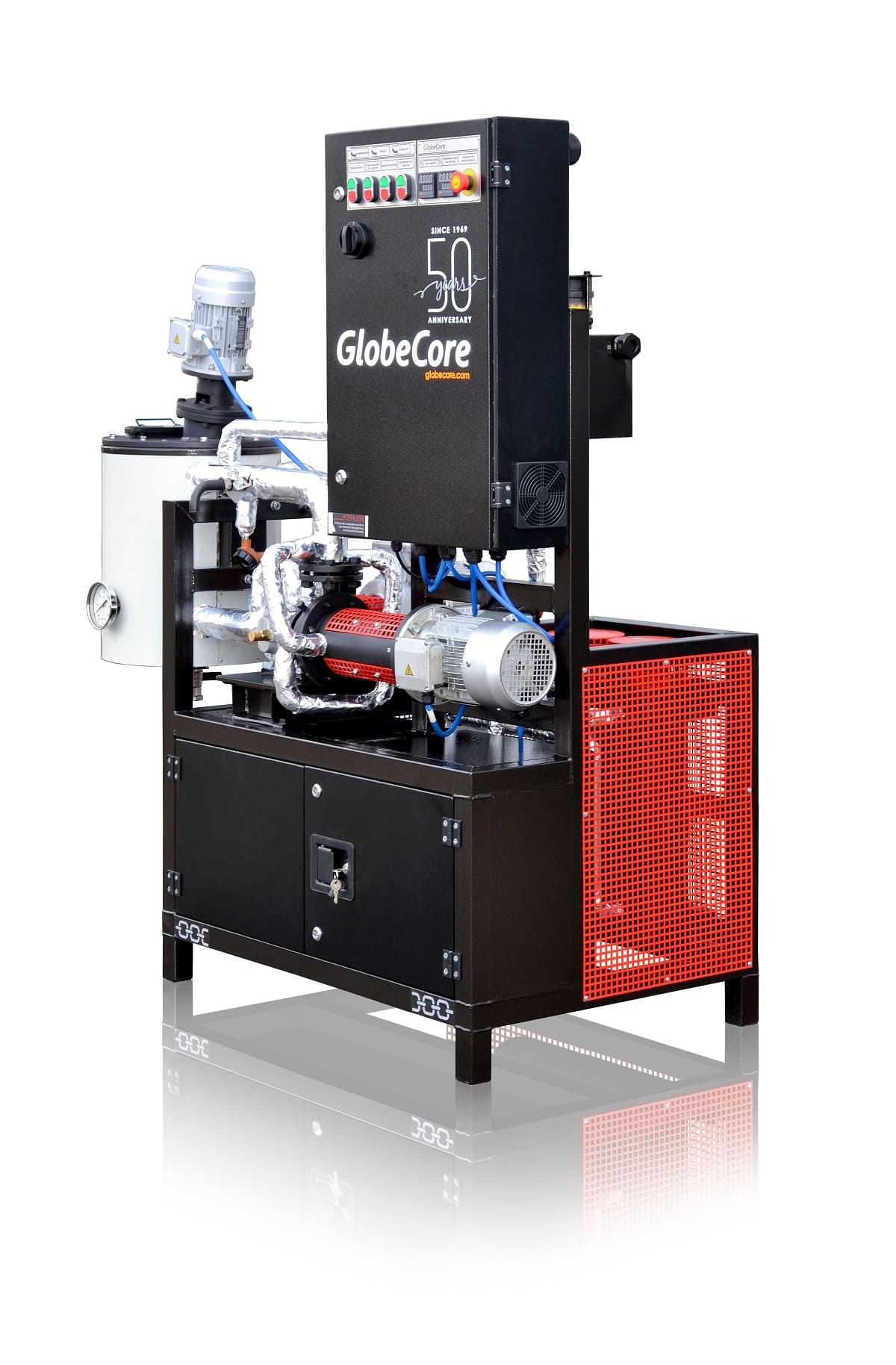
For modifying asphalt with SBS the key is a high‑shear rotor‑stator colloid mill sized for your throughput and polymer form (granules, powder or liquid). For medium to large continuous production where you need to grind and disperse granulated SBS into hot bitumen at industrial throughputs, a heavy‑duty unit such as the CLM‑40.2 is a common choice — it’s built for SBS grinding, high shear and elevated process temperatures and can be supplied as part of a new plant or retrofitted into an existing line. For general‑purpose, high‑shear polymer‑modified bitumen work across a range of products the CLM‑200.2 is a versatile option, while the smaller CLM‑8/16 is appropriate for inline homogenization/emulsification and lower‑rate SBS grinding tasks where adjustable gap and robust rotor/stator tooling matter.
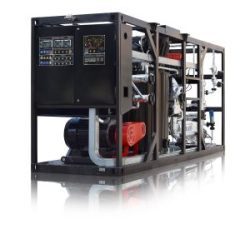
If you want a turnkey continuous modification solution (controlled heating, mixing, dosing and circulation) consider a dedicated continuous modification unit rated for SBS handling — these are sized for moderate throughputs and simplify integration and process control. Ultimately select the mill by required capacity, whether you run continuous or batch, the physical form of the polymer, temperature and pressure needs, and how you’ll integrate heating and dosing; discuss your exact throughput and process temperatures with the supplier so they can match the correct CLM model or a continuous unit to your plant.
-
September 10, 2026 at 11:26 am by Craig Price
For modifying asphalt with SBS polymer, a high-shear colloid mill with sufficient dispersion capability is required to ensure uniform polymer distribution and stable properties of the modified bitumen. GlobeCore offers a CLM-100.3 laboratory colloid mill for formulation development and testing, as well as industrial CLM-10 and CLM-20 colloid mills for application in the production process. Globecore’s USB-3 PMB plant equipped with integrated colloid mill technology is recommended to ensure continuous production of polymer-modified bitumen. These solutions provide intensive SBS polymer dispersion, efficient mixing, and consistent quality of the final modified binder for road construction activities.
-
September 10, 2026 at 11:32 am by Ashley Hall
Your summary is accurate: for SBS‑modified asphalt you need a high‑shear colloid mill that provides intensive dispersion and homogenization so the polymer is uniformly distributed and the polymer‑modified bitumen (PMB) properties remain stable. Using the CLM‑100.3 for laboratory formulation and CLM‑10/20 for industrial production is appropriate, and a turnkey USB‑3 PMB plant with integrated colloid mill technology is a sensible recommendation when you want continuous production, consistent quality and simplified integration.
You might add that there are other production models (for example CLM‑40.2 for heavy‑duty SBS grinding and CLM‑8/16 for inline homogenization of thick slurries) and that final selection should be driven by actual throughput, polymer form (granules, powder or liquid), required process temperature, and whether you run batch or continuous. Provide those parameters to the supplier so they can match the correct rotor‑stator configuration and mill model to your plant for reliable, reproducible PMB production.