

Diesel bleaching
What type of small Fuller’s earth diesel purification unit is suitable?
- This topic has 3 replies, 4 voices, and was last updated 1 month ago by .
Answers
-
August 21, 2026 at 1:22 pm by Emily Jones
What type of small Fuller’s earth diesel purification unit is suitable for removing submicron carbon contamination from marine diesel fuel and restoring its original color?
-
August 21, 2026 at 2:19 pm by Eric King
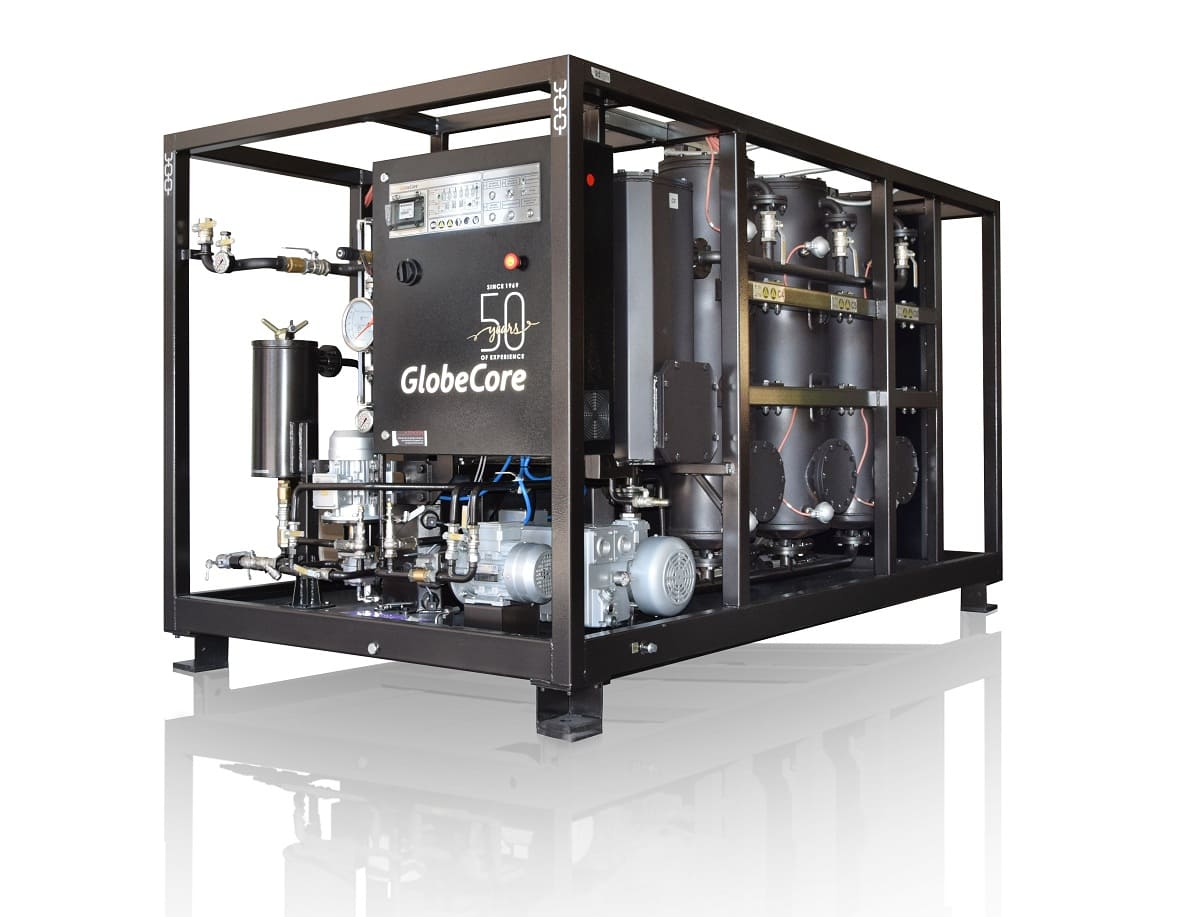
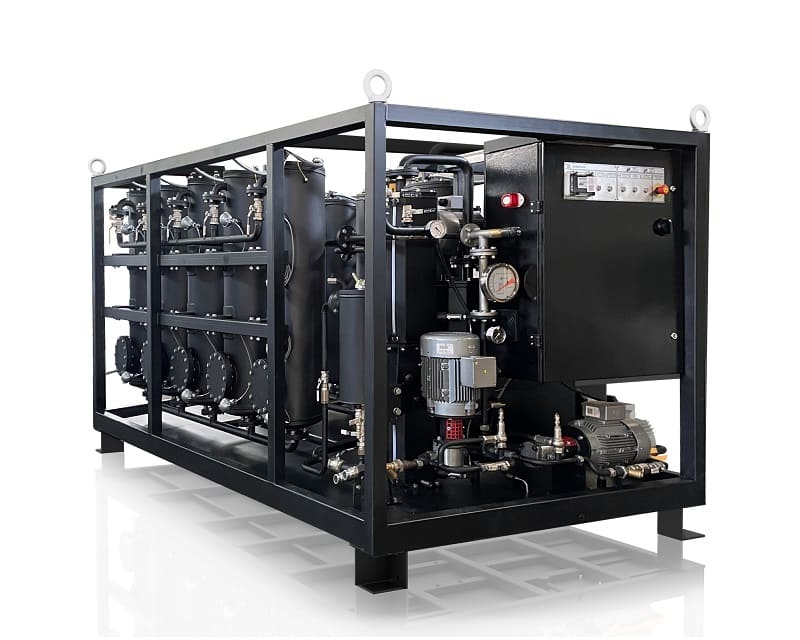
For a small Fuller’s earth–based polishing unit the CMM-6RL six‑column adsorption diesel polishing machine is the right fit: it’s built for diesel fuel polishing and color restoration using an adsorption column array with Fuller’s earth, runs automatically and its adsorbent can be reactivated multiple times (typically 300–500 cycles). If you need a marine version for low‑viscosity fuels there’s a dedicated CMM‑6RL low‑viscosity marine polishing variant; for larger throughput the same family includes ten‑column units (e.g., CMM‑10RL) that also use Fuller’s earth.
For best results plan mechanical filtration ahead of adsorption and remove free water first — typically with a coarse filter unit (e.g., CMM‑4.0F) and a dehydration stage (e.g., CMM‑1.0CF) — so the adsorbent life and polishing performance are maximized. Note adsorption polishing is excellent for restoring color and removing many dissolved and colloidal contaminants, but if you’re specifically targeting submicron carbon particulates or very heavy contamination you should size pre‑treatment and polishing stages accordingly; I can put together a short checklist (throughput, power, and pre‑treatment needs) if you tell me your flow rate and fuel condition.
-
September 4, 2026 at 8:25 am by Craig Price
Removing submicron carbon contaminantion from marine diesel fuel and restoring its original color involve the use of a GlobeCore Fuller’s earth purification unit such as the CMM-R. These units are designed for deep purification of petroleum products using adsorptive treatment with Fuller’s earth combined with fine filtration.
During the purification process, the Fuller’s earth adsorbent removes oxidation products, resinous compounds, carbon particles, and other contaminants that cause darkening of diesel fuel. The system allows the fuel to be restored to better color characteristics while reducing the need for fuel disposal and replacement.
The GlobeCore CMM-R units are available in different capacities and can be configured for marine applications where continuous or periodic treatment of diesel fuel is required. The equipment provides controlled fuel circulation, efficient contact with the sorbent, and reliable removal of contaminants down to very fine particle sizes. For selecting the correct configuration, it is recommended to consider the required flow rate, fuel condition, and contamination levels.
-
September 4, 2026 at 8:35 am by Ana Garcia
Your description is correct in essence: GlobeCore’s CMM‑R family (examples include the CMM‑6RL polishing machines and larger CMM‑12R units) uses Fuller’s earth adsorption combined with fine filtration and controlled circulation to remove oxidation products, resinous compounds and carbon particulates that darken diesel, restoring color and reducing disposal needs. Those machines are designed for continuous or periodic marine fuel polishing and give good contact time and uniform sorbent exposure to capture very fine contamination that standard mechanical filters miss.
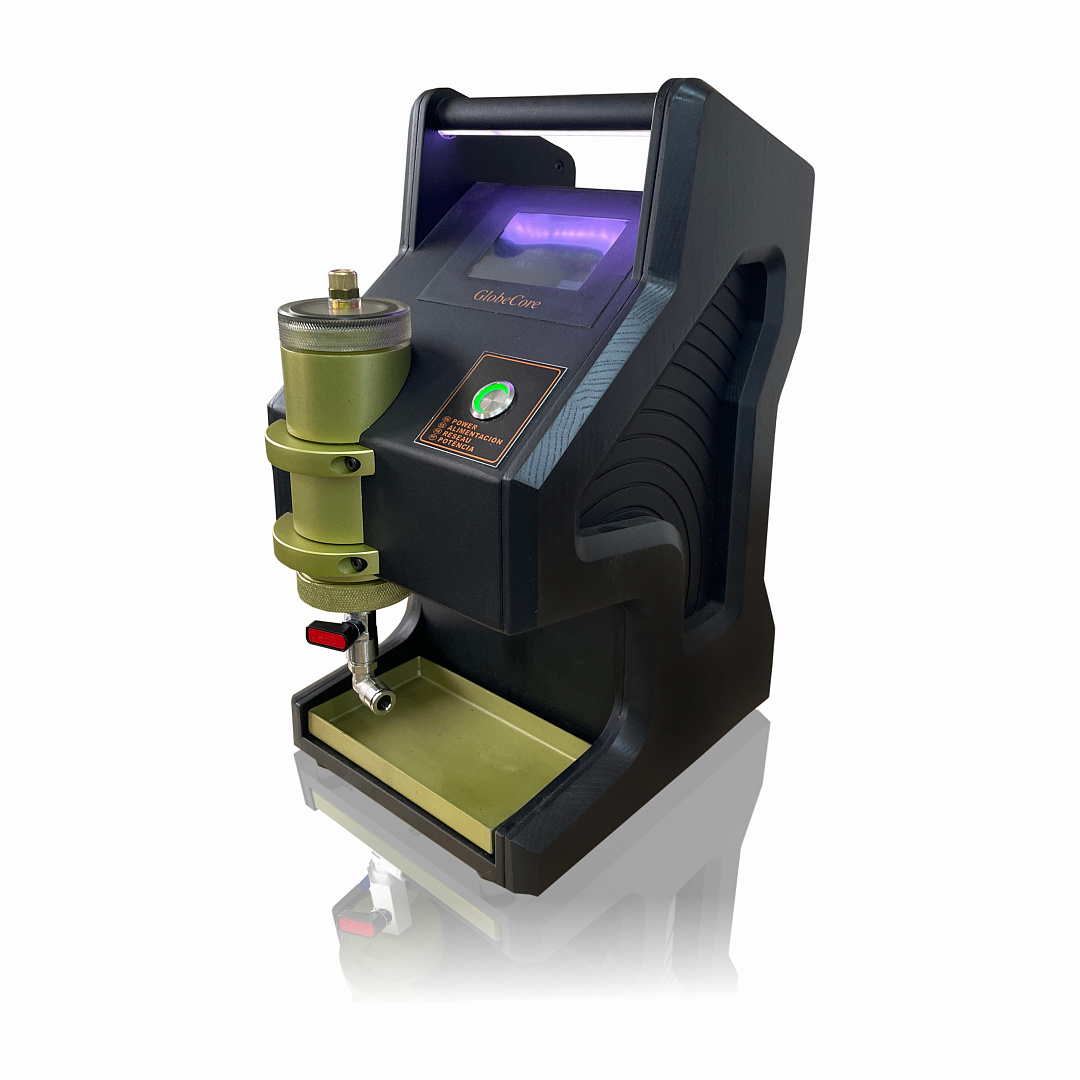
For small installations, however, consider the cartridge‑based ZP series as well — the ZP‑130 (≈2 m3/h) and ZP‑260 (≈4 m3/h) cartridges can be filled with Fuller’s earth for a compact, lower‑throughput Fuller’s earth polishing solution. Whatever model you choose, plan pre‑treatment to remove free water and coarse solids (dehydration and coarse filtration) because that dramatically extends adsorbent life and polishing performance. If you tell me your required flow rate and the fuel’s condition (water content, API gravity, particle load, color), I can recommend a specific model and basic pretreatment layout.