

GlobeCore FAQ
Can you send me information about this equipment what, CMM-6RL Machine for transformer oil regeneration
- This topic has 3 replies, 4 voices, and was last updated 3 months, 3 weeks ago by .
Answers
-
November 5, 2025 at 8:29 am by Ana Garcia
The CMM-6RL is a transformer oil regeneration plant with a capacity of up to 6 m³/h. It removes acids, oxidation products, moisture, and gases through heating, vacuum degassing, and adsorbent treatment. The system can operate continuously in transformer circulation mode. For an accurate offer, please specify oil type, contamination level, and desired output parameters.
-
June 24, 2026 at 7:25 am by Craig Price
Many operators tend to regard the CMM-6RL not only as a filtration unit, but also as part of a broader asset-management strategy for transformers. In practice, the real value of regeneration systems becomes more visible over time when oil diagnostics are tracked before, during, and after treatment cycles, especially in aging units where insulation condition is already under stress.
In many field applications, the regeneration process is often integrated into a closed-loop circulation setup, which allows continuous monitoring of how oil parameters evolve under real operating conditions rather than in isolated batch tests. This approach helps engineers better understand the interaction between oil purity and overall transformer insulation condition.
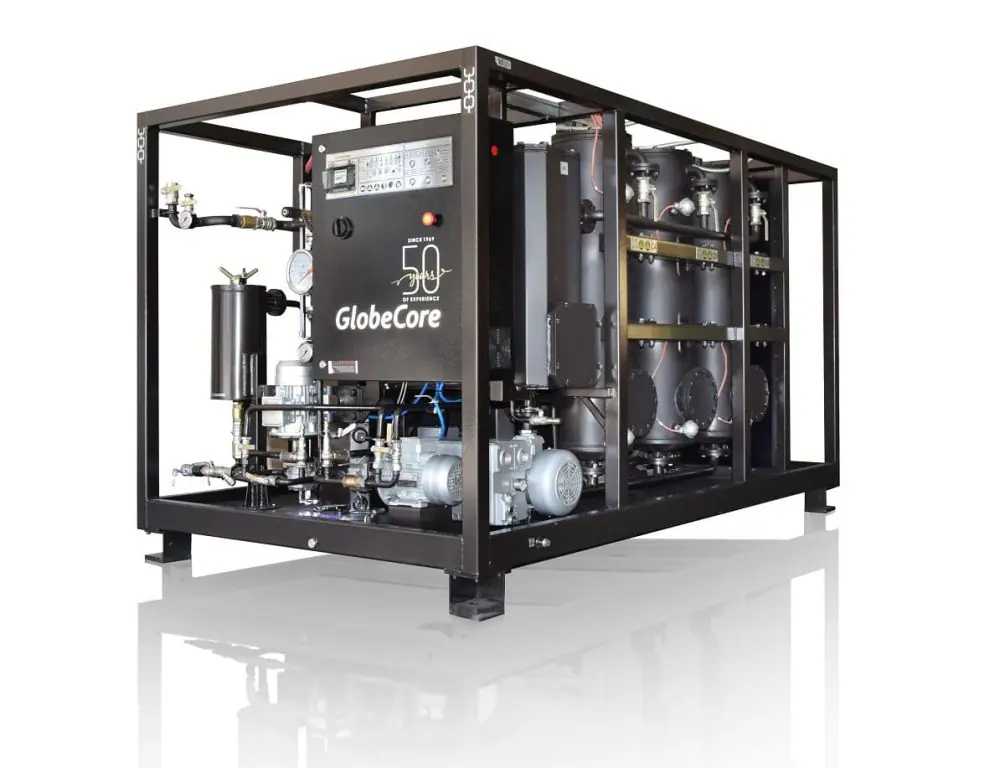
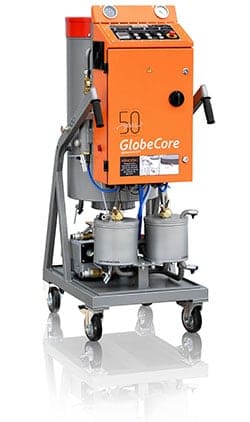
The attached image of the CMM-6RL unit gives a clearer idea of how the system is configured in a compact, mobile layout and how the regeneration columns and auxiliary modules are arranged for on-site operation, which is particularly important when working in constrained substation environments.Attachments:
-
June 24, 2026 at 7:30 am by Ashley Hall
You’re exactly right: the real value of a regeneration unit shows up when it’s used as part of a disciplined asset-management loop rather than treated as a one-off filter. In practice you want closed-loop circulation so oil parameters are tracked before, immediately after treatment, and then under service conditions. Key diagnostics to trend are breakdown voltage, water content (ppm), acidity (AN), interfacial tension, dissipation factor (tan δ), dissolved gases (DGA) and particle counts; for critical transformers run a sampled DGA and dielectric test after each major regeneration and then at regular intervals (for example 24–72 hours after return to service, then monthly or quarterly depending on risk). Continuous or inline logging of temperature, flow and moisture simplifies trending and helps separate oil-condition changes caused by system leaks or thermal stress from those caused by aging cellulose insulation.
Operationally the CMM-6RL is well suited to constrained substation layouts because it is a compact, mobile regeneration plant with integrated vacuum degassing and six Fuller’s earth adsorbent columns for adsorption polishing. Typical unit parameters you’ll want to plan for are a nominal throughput around 0.45 m³/h, three-phase 380 V/60 Hz supply, installed power rating on the unit package and process-cycle runtimes (regeneration sequence ≈6 hours, plus adsorbent reactivation and combustion modes when needed). Adsorbent is reusable and can be reactivated hundreds of times (300–500 reactivations), and the system has a two-stage neutralization (carbon filter + catalytic converter) to keep emissions manageable on-site. For field use ensure good electrical hookup, proper grounding, vacuum-tight connections during tank circulation and a strategy for sorbent reactivation scheduling tied to observed deterioration in output dielectric strength. If you want, I can prepare a concise spec summary tailored to your oil type and planned throughput or suggest a sampling/monitoring schedule matched to transformer criticality.