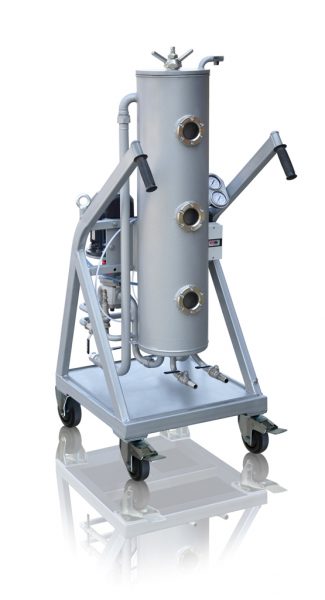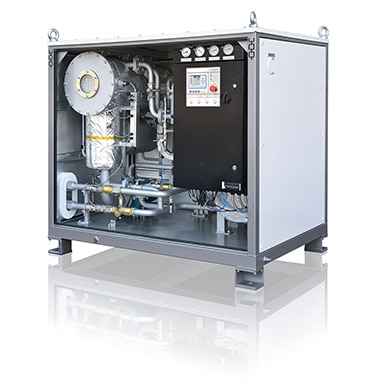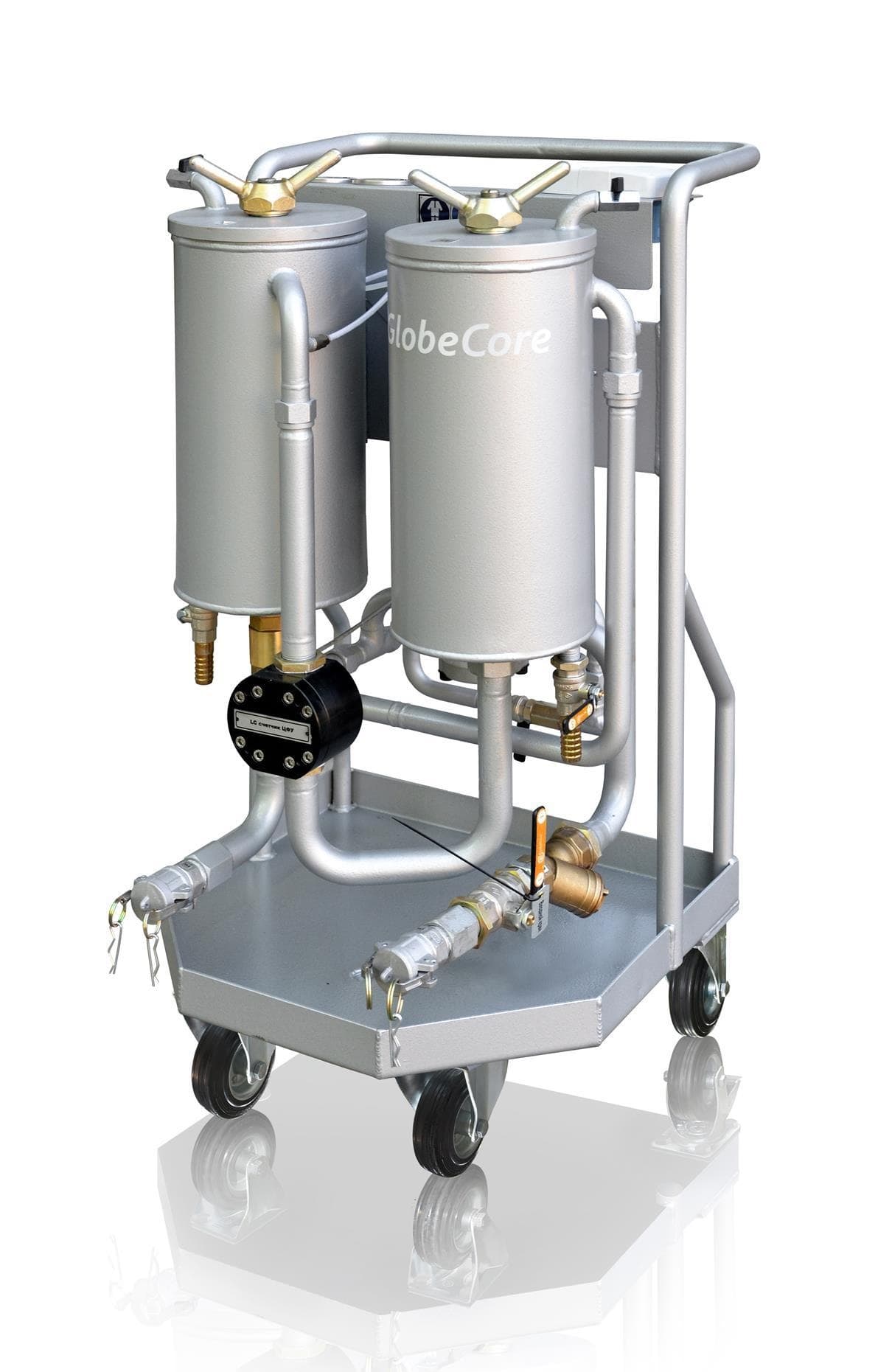


Gear oil purification
What innovative solutions exist for gear oil purification?
- This topic has 3 replies, 4 voices, and was last updated 1 week, 4 days ago by .
Answers
-
October 2, 2024 at 12:25 pm by Rachel Wright
Innovative solutions include:
IoT-Enabled Systems: Real-time monitoring and remote control of purification processes.
Nanofiltration Technologies: Utilizing nano-scale filters for ultra-fine purification.
Electrostatic Separators: Removing sub-micron particles with electric fields.
Biodegradable Filters: Environmentally friendly materials that reduce waste.
Hybrid Systems: Combining multiple purification methods for enhanced efficiency.
These advancements improve purification effectiveness, reduce environmental impact, and lower operational costs. -
March 17, 2026 at 7:44 am by Craig Price
What I find particularly interesting is that many of these “innovations” only show their real value when they are applied in combination with the actual degradation mechanisms of gear oil, rather than as standalone technologies.
In real operating conditions, gear oil contamination is rarely uniform — you often face a mix of abrasive particles, moisture, and chemically degraded compounds. Considering this, even advanced solutions like nanofiltration or electrostatic separation tend to be most effective when integrated into a multistage process rather than used independently. This aligns with the broader industry trend toward combining filtration, dehydration, and adsorption into a single treatment cycle, especially for heavily loaded gearboxes.
Another important nuance is that purification is not always about achieving “maximum purity,” but about restoring the functional properties of the oil, such as lubricity and resistance to oxidation. In some cases, removing oxidation by-products can have a greater impact on gearbox reliability than further reducing particle size.
If you want to see how these principles are applied in practical systems (especially for gearboxes operating under real industrial loads), this article provides a clear and structured overview: https://globecore.com/oil-processing/gear-oil-purification/. -
March 17, 2026 at 7:52 am by Fatima Alhassan
You’re absolutely right — the value of any “innovative” purifier shows up only when its functions are matched to the actual degradation mechanisms in service. In practice that means treating particulates, dissolved and free water, and chemically altered oil fractions together rather than in isolation. The most effective field solutions combine multistage mechanical filtration (coarse-to-fine cartridge stages selectable in the 25 → 0.3 µm range) with active dehydration (vacuum dehydration for dissolved water and sorbent/zeolite dryers for deep drying) and a regeneration/adsorption stage to remove oxidation products and restore additive balance. Those combined platforms, often built as mobile on‑site units, let you target wear‑causing particles, collapse emulsions and dissolved moisture, and strip polar oxidation products — restoring lubricity and oxidation resistance without necessarily driving purity to an arbitrary maximum.
Operationally, make decisions from oil condition data: particle counts (ISO 4406), water ppm, TAN, viscosity and FTIR/TBO analyses guide whether you need finer filtration, vacuum degassing, sorbents, or chemical regeneration. Aim for practical cleanliness targets tied to gearbox specs (for example, achievable ISO 4406 classes and NAS ratings) rather than “lowest micron” alone, monitor differential pressure across cartridges to avoid bypass and to schedule changeouts, and use throughput-capable units sized to your maintenance windows (many field units handle up to several thousand liters per hour). In short, integrate filtration, dehydration and regeneration into a single treatment cycle, follow condition‑based sampling, and prioritize restoring functional oil properties (lubricity, oxidation stability) for the greatest reliability gain.