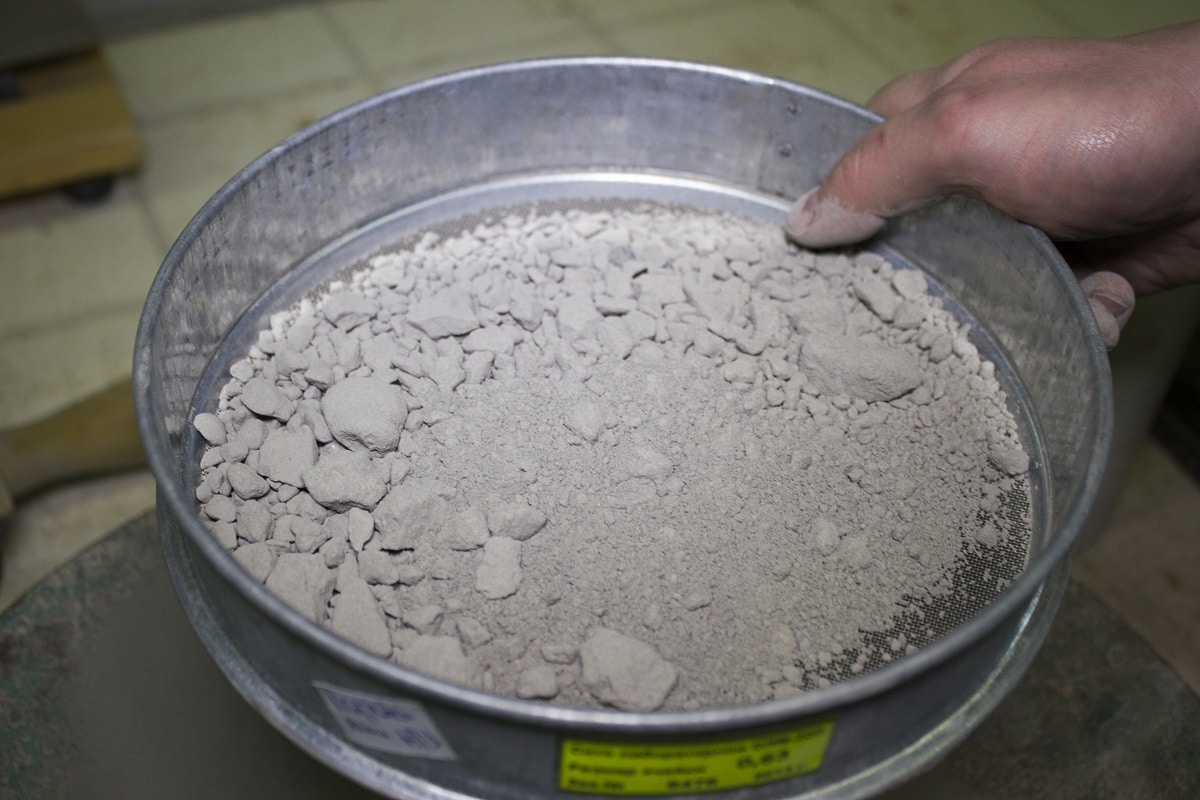
Cement and concrete are among the most widely used materials on Earth, second only to water. On average, up to one ton of cement is consumed per person per year. This material is commonly used as a cementitious component in the production of concrete, reinforced concrete, and various mortars. The demand for cement in the construction of new buildings and structures, as well as for their repair and rehabilitation, remains consistently high.
The technological process of cement production includes several stages and ends with grinding clinker with the addition of gypsum. Grinding fineness is a very important characteristic of cement, as it determines the amount of material capable of hydration. The rate of hydration and strength development also depend on it. Grinding processes are energy-intensive, consuming up to 20% of the world’s generated electricity. At the same time, about 70% of the total energy used in cement production is spent on clinker grinding. Based on this, the key tasks of the cement industry at the current stage can be formulated as follows:
- Increasing the grinding fineness of raw materials.
- Implementing reliable and easy-to-operate grinding equipment.
- Reducing the energy intensity of the grinding process.
Use of Ball Mills for Cement Grinding
The operating principle of ball mills is simple. Such devices consist of a drum and grinding media (rods, balls, etc.). The material to be ground is fed into the drum, which then begins to rotate. As a result, the grinding media and material initially move along a circular trajectory and then fall at a certain point. Grinding occurs due to abrasion (relative movement of particles and grinding media) and impact. The most common applications of ball mills in cement plants are raw material grinding and fine cement grinding.
The widespread use of ball mills in cement grinding processes is due to several factors, including relatively simple design and high productivity. However, these devices also have disadvantages. Studies show that only 2–20% of the consumed energy is directly used for grinding, while the rest is spent overcoming friction, vibration, and noise, and is dissipated as heat. Ball mills are also highly material-intensive due to rapid wear of working elements and are characterized by high noise levels.
Are there devices that could replace ball mills in cement grinding in the near future? One promising option is the use of equipment with a vortex layer of ferromagnetic particles.
Operating Principle of Vortex Layer Devices
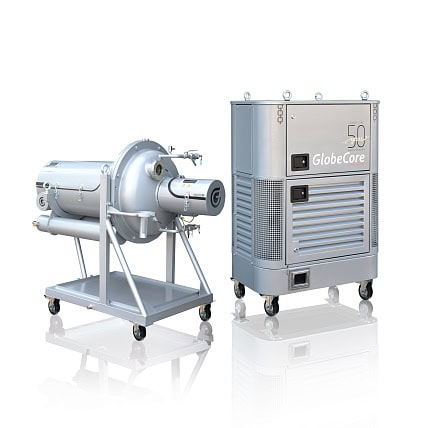
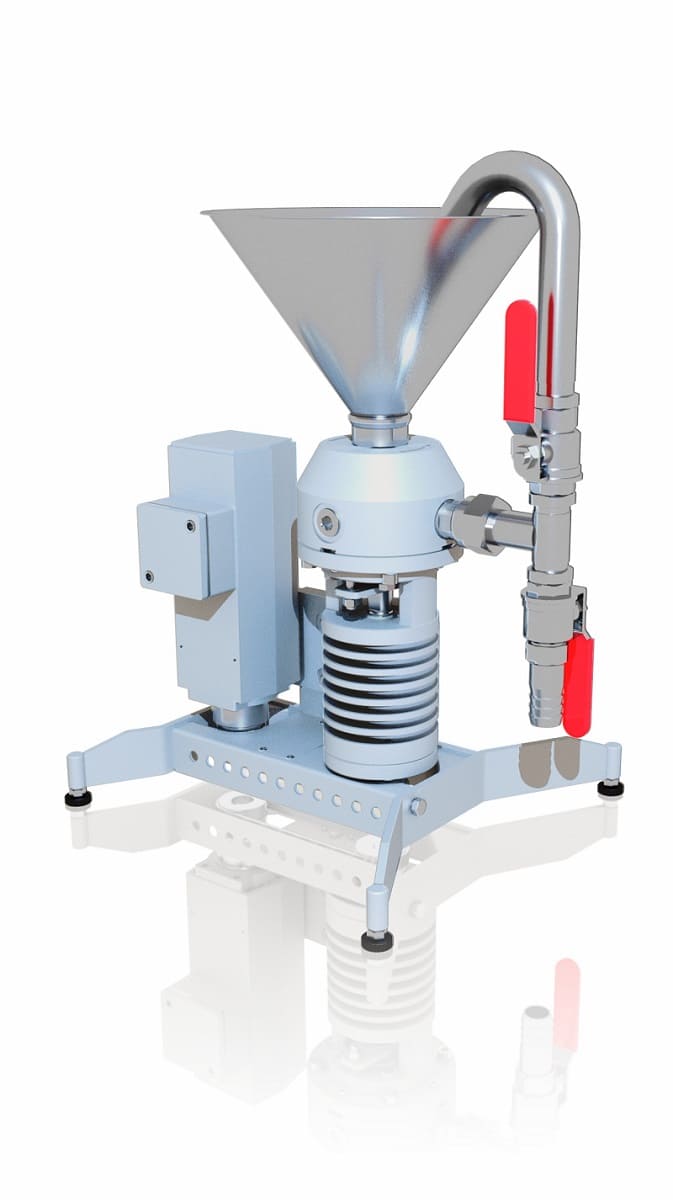
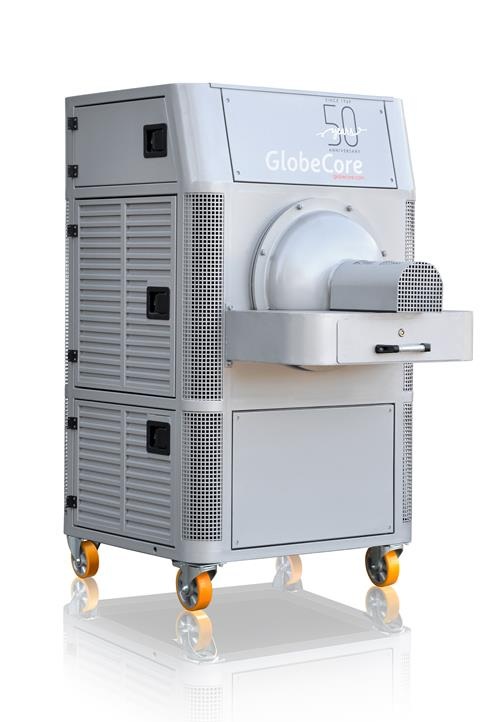
A Vortex Layer Device somewhat resembles a ball mill but operates on a fundamentally different principle. The first similarity is the presence of a working chamber where grinding occurs. However, unlike a ball mill drum, the working chamber of a vortex layer device is stationary, smaller, and must be made of non-magnetic material. The second similarity is the presence of working elements (cylindrical ferromagnetic particles). In ball mills, these elements move due to drum rotation, whereas in Vortex Layer Devices, they move along complex trajectories under the influence of a rotating electromagnetic field generated by coils.
In essence, the design of a vortex layer device resembles an asynchronous motor with a removed rotor, replaced by a pipe (working chamber). The primary electromagnetic field interacts with the fields of ferromagnetic particles, producing several additional effects that positively influence the processed material (cement):
- direct particle impact on the material;
- magnetostriction (mechanostriction);
- electrophysical phenomena, etc.
The intensity of these effects is so high that cement is not only ground but also activated. Each ferromagnetic particle acts simultaneously as a grinder and a mixer. Moving along complex trajectories, the particles fill the entire working chamber volume, which is another key difference from ball mills. While processing in conventional mills may take tens of minutes or hours, Vortex Layer Devices complete processing in seconds or a few minutes.
The efficiency of grinding and activation depends on several parameters:
- intensity and rotation speed of the magnetic field;
- working chamber volume;
- filling factors of the chamber with ferromagnetic particles and material;
- ratio of particle length to diameter, etc.
These parameters can be optimized experimentally depending on the processed material.
Comparison of Vortex Layer Devices and Ball Mills
A comparison shows that Vortex Layer Devices outperform ball mills in several aspects. They are multifunctional and capable of ultrafine grinding without loss of efficiency while simultaneously activating materials under electromagnetic influence. All processes occur significantly faster. For example, the specific surface area of cement can increase from 2800 to 6800 cm²/g within just 120 seconds of processing.
Unlike ball mills, these devices operate almost silently. Cement can also be activated without ferromagnetic particles by simply passing it through the chamber, with significantly higher process efficiency.
Short-term processing in a vortex layer leads to faster concrete hardening under natural conditions, reduced cement consumption, improved concrete quality, and increased mixture plasticity. The use of activated cement enhances physical, mechanical, and performance properties of products.
Vortex Layer Devices can also magnetize water used in concrete mixing. Using magnetized water significantly increases stone strength. While conventional mixing shows a noticeable induction period of crystallization, mixing with magnetized water leads to immediate growth of plastic strength.
Perhaps one of the most important advantages of Vortex Layer Devices is their higher energy efficiency. The specific energy consumption per ton of cement is several times lower than that of ball mills.
Thus, Vortex Layer Devices with ferromagnetic particles as grinding elements effectively address three key tasks of the modern cement industry: increasing cement fineness, reducing energy consumption, and ensuring simple and reliable operation.