GlobeCore

  • Home
  • Products
    • Oil Regeneration
      • CMM-6RL Oil Regeneration Unit
      • CMM-10RL Transformer Oil Regeneration Plant
      • CMM-12R Oil Regeneration Systems
      • CMM-12R Oil Regeneration System (With Activated Bauxite)
      • CMM-8RSL/4000 Transformer Oil Regeneration Plant (With Fuller’s Earth)
      • USB-6 Oxidation Inhibitor injection unit
      • СММ-0,001U Laboratory Oil Filtration Unit
    • Oil Purification & Degassing Machines
      • CMM-0.6L Oil Degassing & Filtration Cart
      • СММur-1L mobile oil plant
      • CMM-1.0LT Transformer Oil Purification Unit
      • CMM-1H Oil Processing Unit
      • CMM-2.2LT Industrial Oil Purification Unit
      • CMM-4,0T Turbine oil filtration
      • CMM-4,0LT Transformer Oil Purification Unit
      • CMM-4/7 portable oil degassing unit
      • CMM-6LT Industrial Oil Purification Unit
      • CMM-6/7 Degassing Unit
      • CMM-8LT Oil Processing Unit
      • CMM-10 — Transformer Oil Purification Machine
      • CMM-15 Oil Degassing Plant
    • Oil Filtration Machines
      • CMM-1,0CF Unit for Removal of Water from Oil
      • CMM-2,0CF Unit for Removal of Water from Oil
      • CMM-1,2Fr Industrial oils filtration unit with self-cleaning filters
      • CMM-4,0F Oil filtration unit
    • Oil Drying Unit
      • ZP-130 Sorbent Cartridges
      • ZP-260 Sorbent Cartridges
    • Oil Heating
      • PPM Inline Oil Heater. Stream oil heating
    • Fuel Polishing
      • TOR-1 diesel fuel moisture content tester
      • CMM-6RL dark diesel fuel polishing machine
      • CMM-6RL dark heating fuel polishing machine
      • CMM-6RL low-viscosity marine fuel polishing machine
    • Online Transformer Dry-Out Systems
      • CMM-260C Online Transformer Dry-Out System
      • TOR-4 Online Transformer Dry-Out System
    • Online Transformer Monitoring Systems
      • TOR-5 Online Transformer Monitoring System
    • Transformer Maintenance
      • Mojave Heat (Sukhovey): Hot Air Dryer Unit
      • UVV Vacuum Cold Trap
      • US-6S Transformer vacuum furnace
      • LFD Low Frequency Heating Device
      • BV-3000 Transformer Evacuation System
      • BV-5000 Transformer Evacuation System
      • UVD Vacuum Oil Filling Unit
      • UVD-1000 Oil Filling and Transportation System
      • TSS Transformer Safety System
      • CMM-6RL Oil Regeneration Unit
      • CMM-10RL Transformer Oil Regeneration Plant
      • CMM-12R Oil Regeneration Systems
    • Vacuum Transformer Drying Ovens
      • US-6S Transformer vacuum furnace
    • Sorbent Processing
      • BRZ Zeolite Regeneration Block
      • BRPS Zeolite Regeneration Block
      • SSC-15 Zeolite Drying Cabinet
      • ZP-130 Sorbent Cartridges
      • ZP-260 Sorbent Cartridges
    • Instruments – Transformer Oil Testers
      • TOR-1 Oil Moisture Meter
      • TOR-2 Hydrogen and Moisture Analyzer for Transformer Oil Monitoring
      • TOR-3 (TOR-3 SL) Oil Tan Delta Tester
      • TOR-6 Transformer Oil Moisture and Particles Tester
      • TOR-7 Universal Transformer Oil Tester (moisture, gases, solid particles)
      • TOR-8 tester for residual gas content of insulating oil
      • TOR-60 (TOR-60 SL) Breakdown Voltage Tester
      • TOR-80 (TOR-80 LSL) Breakdown Voltage Tester
      • TOR-80A (TOR-80 ASL) Transformer Oils Breakdown Voltage Tester with Battery
      • TOR-100 (TOR-100 SL) Breakdown Voltage Tester
    • Wind Turbine Service
      • CMM-G wind turbine gearbox oil changer (with dimensions adapted to the customer’s trailer ones)
      • CMM-G Wind Turbine Gearbox Oil Changer
      • CMM-GL Wind Turbine Gearbox Oil Changer
      • CMM-0.6L Oil Degassing & Filtration Cart
      • CMM-4,0T Turbine oil filtration
    • Medical Equipment Maintenance
      • CMM-0.6 X-ray Transformer Oil Purifier
      • SSC-15 Zeolite Regeneration System for Oxygen Concentrators
      • AVSk-150 Hospital Wastewater Treatment Complex
    • Blending systems
      • USBL-1 Laboratory Blending System
      • USB-1 Fuel oil blending system
      • USB-5 high-speed mixing unit for production of sanitizers (0.15 – 0.3 m3/h)
      • USB-5 high-speed mixing unit for production of sanitizers (1.1 m3/cycle)
      • USB-6 Impeller Stirrer
      • Colloid Mill
      • Vortex Layer Devices
    • Colloid Mill
      • Colloid mills for food industry
        • CLM-100.3 Colloid mill
      • Colloid mills for bitumen emulsion production
        • CLM-0.25.1 Laboratory colloid mill
        • CLM-2/4 Colloid mill
        • CLM-16/25 Colloid mill
      • Colloid mills for bitumen modification
        • CLM-8/16 Colloid mill
        • CLM-10/20 Colloid mill
        • CLM-40.2 Colloid Mill
      • Colloid mills for different applications
        • CLM-100.2 Colloid Mill
        • CLM-200.2 Colloid Mill
    • Vortex Layer Devices
      • AVS-100 Mixing Machine. Vortex Layer Device
      • AVS-150 Chemical Mixing Machine
      • AVSp-100 Vortex Layer Device (Semi-Automated)
      • AVSp-150 vortex layer device (semi-automated)
      • AVSk-150 Wastewater Treatment Complex
    • Bitumen emulsion plant, Bitumen Emulsion Production
      • CLM-0.25.1 Laboratory colloid mill
      • USB-2 Bitumen emulsion unit 2 m3/hour production capacity
      • USB-2 Bitumen emulsion plant 8 m3/hour production capacity
      • FB Bitumen filter
      • USB-6 Impeller Stirrer
    • Bitumen Modification Plant. Modified Bitumen Production
      • USB-3 Bitumen modification laboratory system
      • USB-3 Continuous Bitumen Modification Unit (12 m3/hour)
      • USB-3 Bitumen modification unit 16 m3/hour production capacity
      • USB-4 Modified bitumen collection tank (USB-3)
      • USB-6 Impeller Stirrer
    • Laboratory system for Bitumen Emulsion Samples
      • CLM-0.25.1 Laboratory colloid mill
      • CLM-100.1 Bitumen Emulsion Laboratory System
      • USB-3 Bitumen modification laboratory system
    • Biodiesel Equipment
      • USB-1L Biodiesel laboratory equipment
      • USB-1 Biodiesel equipment
        • Filters
          • The filter GC Fine with a filtration factor β = 4000
        • Vacuum Pumps
          • GC Roots Vacuum Pumps
          • مضخات التفريغ GC Vane (مضخات دعم)
    • Custom Equipment
      • CMM-4R TRANSFORMER OIL REGENERATION MACHINE
      • CMM-1 MOBILE OIL PLANT
      • CMM-2.2 MOBILE OIL PLANT
      • CMM-4 MOBILE UNIT FOR POWERED TRANSFORMER OIL PROCESSING
      • CMM-12A DEGASSING UNIT
      • CMM-1CO CABLE OIL DEGASSING UNIT
      • CMM-5M INDUSTRIAL OIL PURIFICATION MACHINE
      • MCU ZEOLITE OIL DRYING UNIT
      • CMM-8RP Sorbent Reactivation Unit
      • BDK-3 CATALYTIC CONVERTER
      • CMM-600CF TRANSFORMER OIL FILTRATION AND REFILLING MACHINE
      • SN-1 PUMP ASSEMBLY
      • SBE-30 BITUMEN EMULSION COLLECTION TANK (UVB-1)
      • UVB-1 BITUMEN EMULSION UNIT 1 M3/HOUR PRODUCTION CAPACITY
      • UVB-1 EXTENSION 1 M3/HOUR PRODUCTION CAPACITY
      • INDUSTRIAL MIXER – COLLOID MILLS CLM-4 SMALL
      • BIG COLLOIDAL MILL CLM-18 GRINDING MACHINE
      • INDUSTRIAL MILL – GIANT COLLOIDAL MILL CLM-22
      • CMM-0.6 Clean Marine Oil Degassing Cart
      • Compressed Air Supply Unit UOV
    • Accessories & Components
  • Dealers
  • Tech School
    • Webinar Registration
  • News & Articles
  • History
  • Reviews
  • AskMe
  • Contacts
  • EN
    • FR
    • ES
    • PT
    • TH
    • VN
    • CN
    • HA
    • AZ
    • JP
    • DE
    • RO
    • Hun
    • Arabic
    • Ind
GlobeCore / Oil Filtration / Waste Oils Reclaiming as Exemplified by the European Union Countries

Waste Oils Reclaiming as Exemplified by the European Union Countries

Waste Oils Reclaiming as Exemplified by the European Union Countries

Much attention in the European Union (EU) is traditionally paid to the issue of recycling of waste of different origin. Waste petroleum oil is no exception. When released into the environment, it can cause the death of animals, contamination of ground and drinking water, as well as the violation of virtually all biological links in the “man-nature” system. The substances contained in waste oil can also cause cancer and development of various diseases in newborns.

Under the existing legislation, EU member states are obligated to take all possible measures in order to make the recycling of waste oils their top priority. However, not all countries are ready to adopt such rules of the game, so the question has been revised.

The implementation of Council Directive 75/469 EEC turned out to be not very successful in practice due to the absence of clear purposes of oil reclaiming. Setting these goals should definitely contribute to the introduction of the existing issue in the legislation of each individual country.

Economic difficulties also played a negative role in the process of implementation of the Directive. Among other things, the economic factors include: dynamics in crude oil prices, return on investments in refineries within a reasonable period of time, supply of waste oil for recycling. In practice, however, the biggest problem is still the reliability of waste material supplies for recycling.

Companies specializing in oil reclaiming have to fight for their feedstock with cement and limestone industry. The latter use waste oil as an energy source.

When viewed from the ecological point of view, the processing of waste oil has an extremely positive effect. First of all we are talking about a substantial reduction of the environment load due to the reduction of petroleum, oil and lubricants (POL) primary production volumes. Waste materials restoration allows to satisfy the automotive industry demand for raw materials. The products of this industry must not contain large amounts of sulfur, phosphorus, and aromatics, as the Kyoto Protocol eloquently states.

Regeneration (oil reclaiming) and primary production

We have already noted that the main environmental impact of waste oil processing lies in reduction of volume of POL primary production. At the same time, oil reclaiming has the following positive effects:

  • Reduces the depletion of natural resources;
  • Reduces the accumulation of biogenic substances, which violate the decomposition of soil and water;
  • Reduces the emission of carcinogenic substances and fine particles;
  • Helps to slow down the development of the greenhouse effect.

Oil Reclaiming or incineration?

Very often, the environmental benefits of oil reclaiming are compared with incineration of waste materials in cement calcining furnaces. Let’s try to figure out which method is more effective in reality.

When thinking in terms of global warming, we should give preference to burning. This is due to the replacement of coal and petroleum coke as the primary fuel for furnaces. Coal and coke contain a sufficiently large amount of carbon and have a low calorific value. We should not forget that the choice of heat transfer agent depends not only on its performance characteristics, but also on existing prices in the world market. This does not exclude the possible replacement of gas, the combustion of which forms a relatively small amount of carbon dioxide, for waste materials in the future. In this case, oil reclaiming process will be a more preferable way of processing from the viewpoint of global warming.

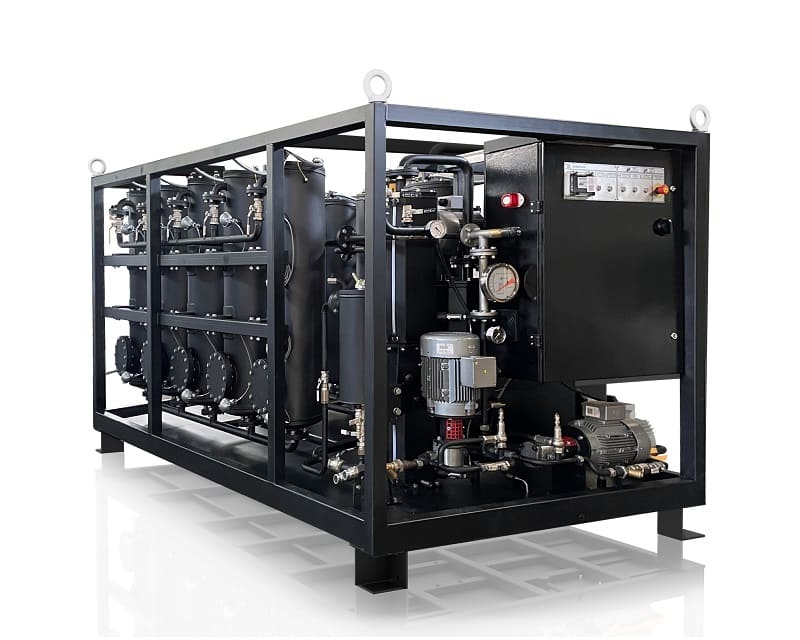
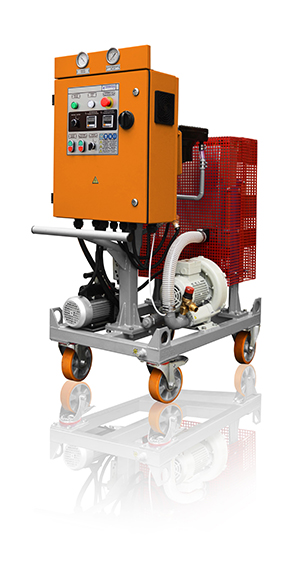
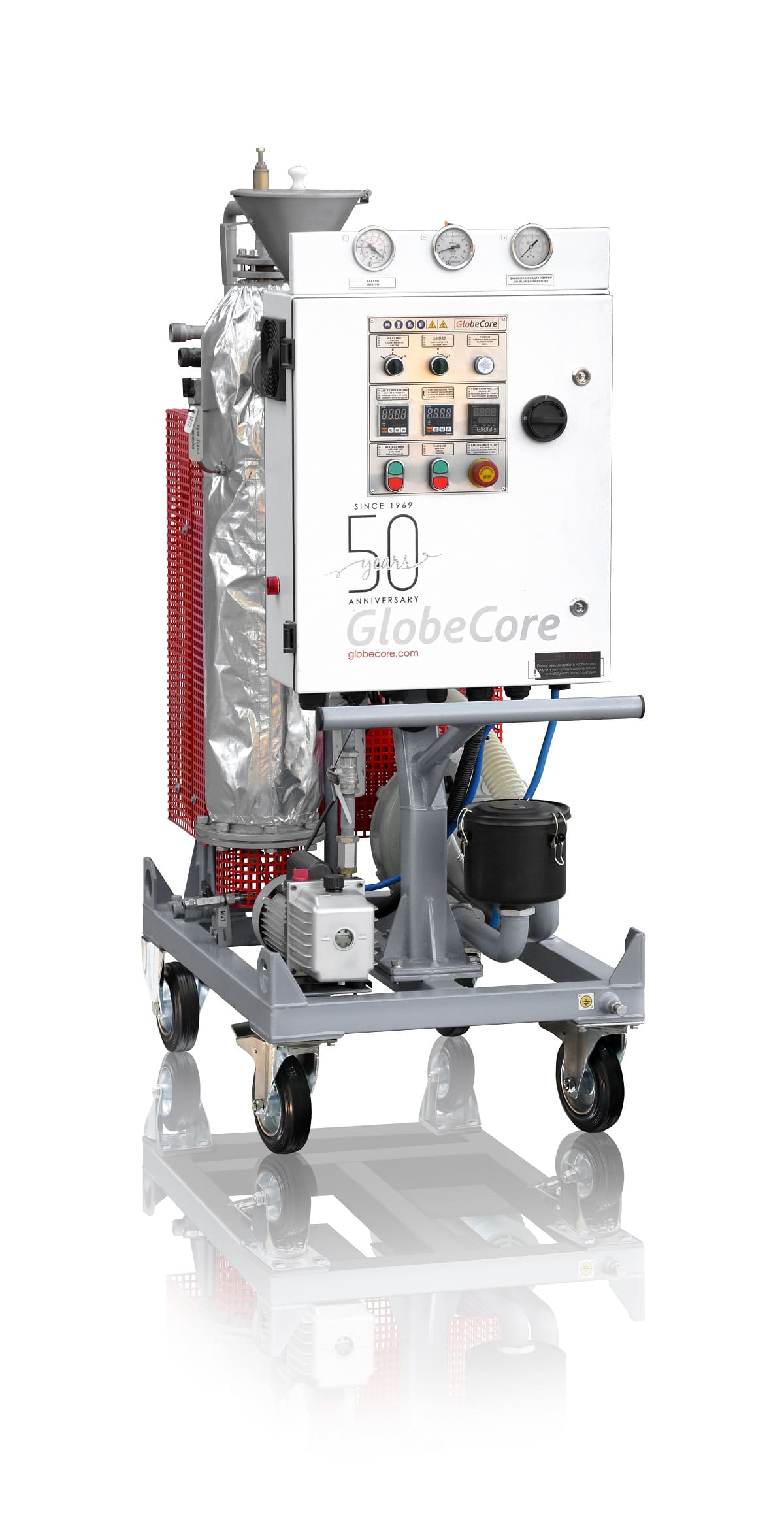
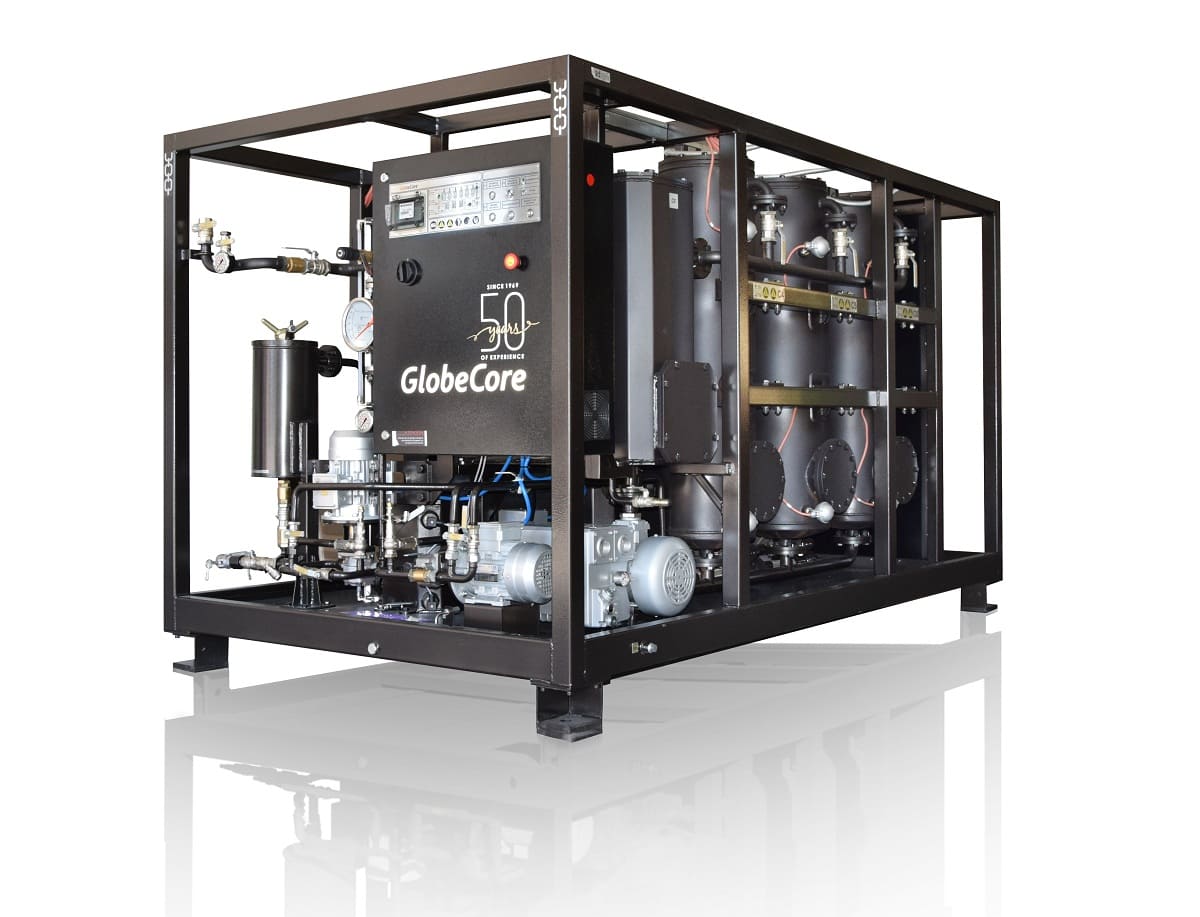
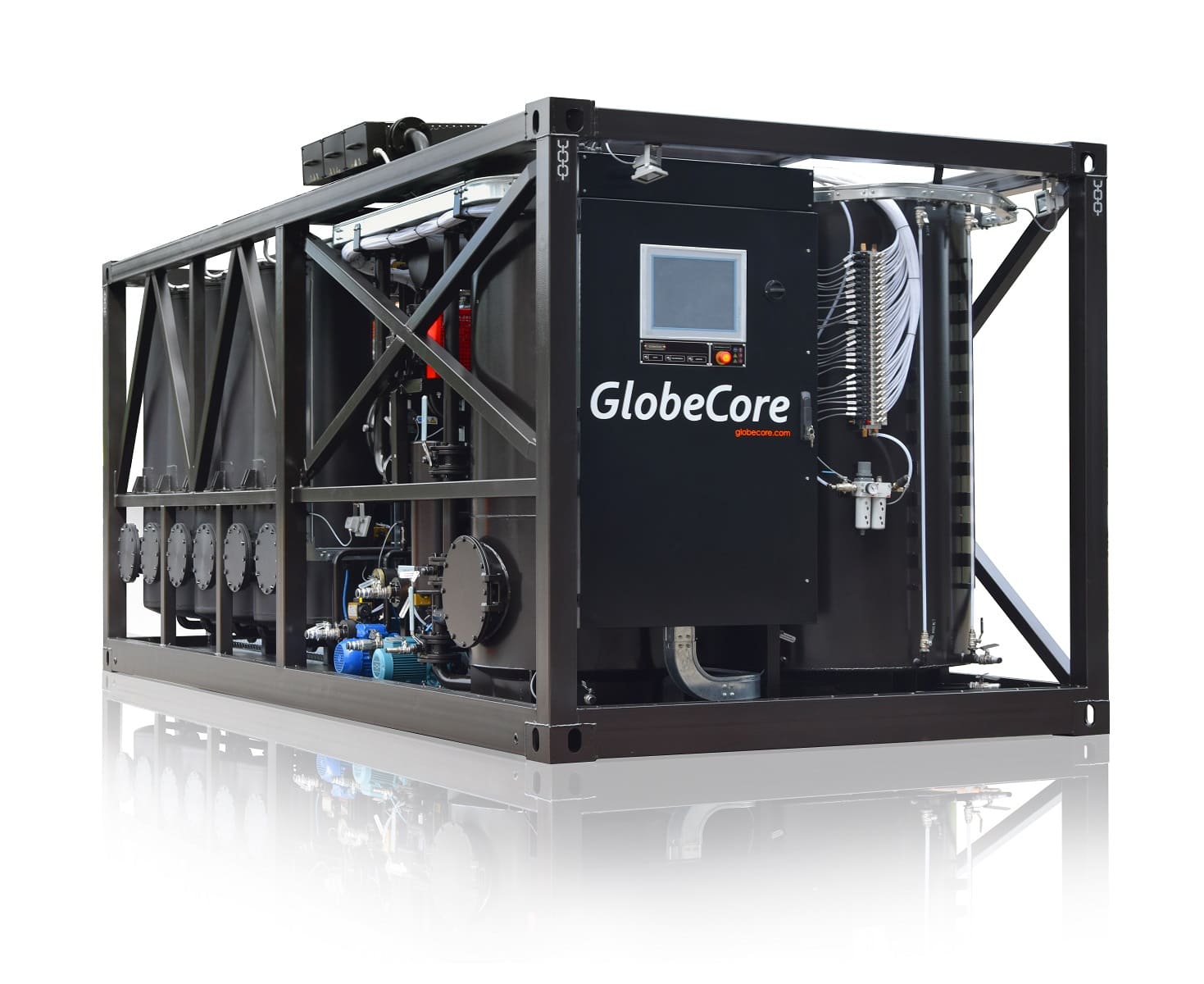
GlobeCore Company is one of the leading manufacturers and suppliers of equipment for purification and reclaiming of waste oil. Its office is located in the city of Oldenburg (Germany), and its sales geography includes more than 70 countries.

The use of GlobeCore oil reclaiming technology allows to:

  • Reduce the impact of waste oils on the environment in comparison with both primary production of fuels and lubricants, and incineration;
  • Achieve the quality of recovered product, which will be virtually identical to the quality of raw materials, obtained from primary production.

GlobeCore waste oil reclaiming processes provide high energy efficiency, productivity and versatility. One oil reclaiming plant can handle several types of waste oil (power transformer, turbine, industrial, transmission, etc.), which makes its application more advantageous.

GlobeCore equipment eliminates the necessity to allocate production space for waste oil storage and to spend money on its disposal. Oil reclaiming in place of consumption is really the best solution!

Interesting facts about oil reclaiming:

  • European oil reclaiming industry consists of 28 plants that process waste oil, and about 1,000-1,200 employees in the field of processing and 2000-2500 employees in the field of waste oil collection. 17 of these plants produce base oils. The industry has a total design capacity of 1,300,000 tons per year. Cumulative production of lubricating oil amounts to 400,000 tons per year and the production of other products, including fuel, asphalt, diesel, tar and so forth amounts to 500,000 tons. The total annual turnover is approximately EUR 200-250 million per year.
  • Oil reclaiming industry is an important part of the European fuels and lubricants production market, which occupies 1/3 of the European market volume (1.5-2 million tonnes of POL). Recycling of waste oil plays an important role in creating a competition for major POL manufacturers, as well as maintaining operability of small independent companies betting on re-use of oil;
  • European industry of oil reclaiming has received significant investment of about EUR 250 million to improve the quality of recycled oil, increase its efficiency and reduce environmental impact. Old systems are no longer functioning in Europe and processed oil quality is comparable to the original;
  • The barriers to oil reclaiming development are closely connected with the supply of waste oil, which is often used as cheap fuel.

    Leave Your Request


    • Home
    • Products
    • Dealers
    • Tech School
    • Contacts

    ® Copyright by - 2025 © GlobeCore

    GlobeCore, Sadovskogo 14, Poltava, Ukraine, 36034

    This website uses cookies to improve your experience. By continuing to browse, you agree to our use of cookies. Read more in our Privacy Policy.