

GlobeCore FAQ
I need equipment for asphalt modification with SBS polymer at about 10 m³/h. What equipment and technologies would you recommend?
- This topic has 3 replies, 4 voices, and was last updated 4 months ago by .
Answers
-
January 28, 2026 at 4:43 pm by Alberico Monicelli
For SBS polymer asphalt modification at ~10 m³/h, the most straightforward match in the GlobeCore line is a continuous modification unit designed for polymer-modified bitumen-specifically USB-3, rated at 12 m³/h and intended to work with all common modifiers, including SBS (granules/powder/liquid). It’s built around controlled heating, intensive mixing/circulation, and stable dosing so you can keep the binder uniform at production-scale flow.
-
June 4, 2026 at 6:57 am by Craig Price
For SBS-modified asphalt, the key challenge is not only achieving the required production capacity, but also ensuring proper polymer dispersion and swelling within the bitumen matrix. Poor temperature control, unstable dosing, or insufficient circulation can lead to uneven modification, viscosity fluctuations, and storage stability issues.
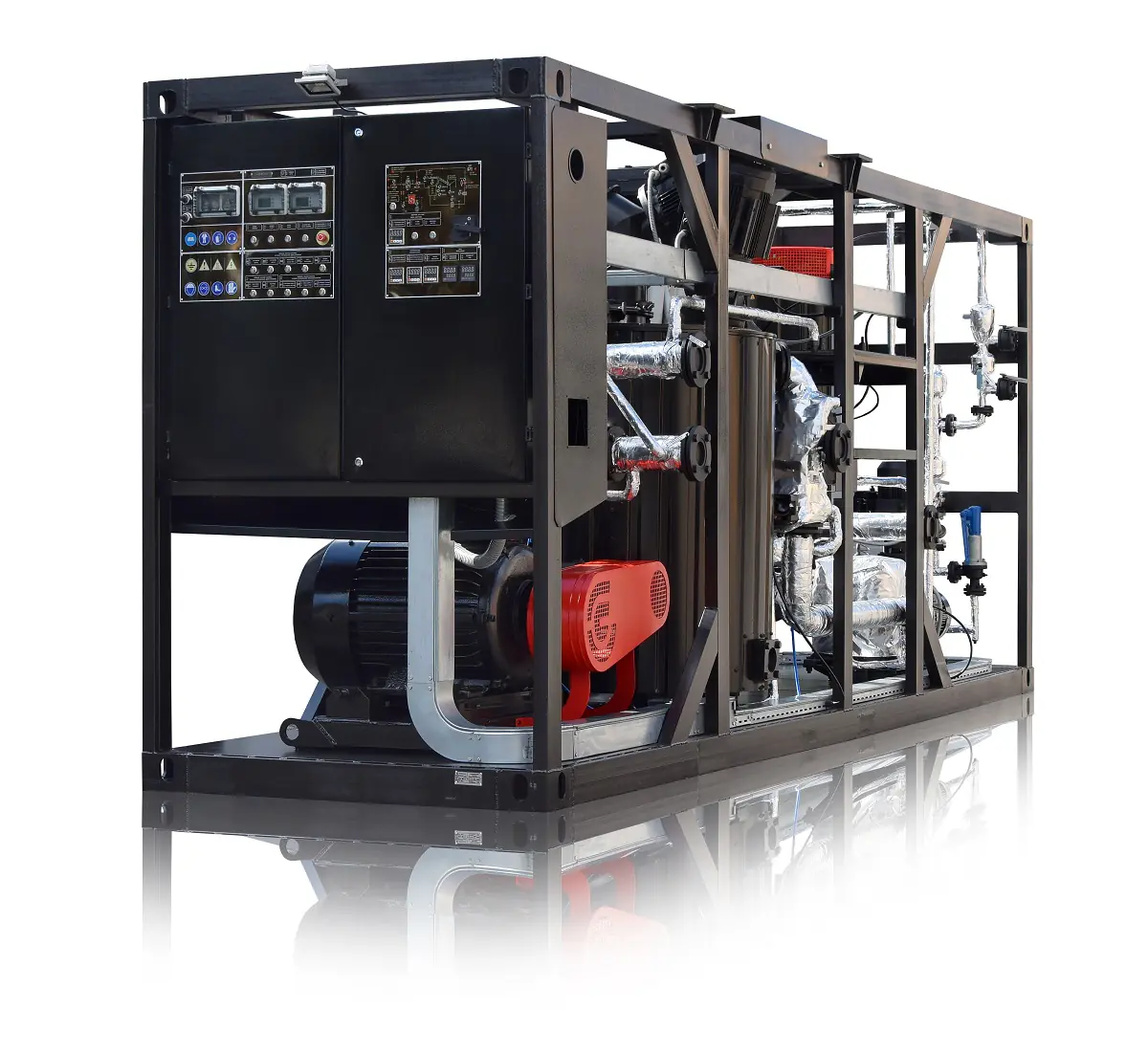
For a continuous 10 m³/h process, it is worth paying close attention to polymer feeding accuracy, mixing intensity, heating control, and the time available for polymer-bitumen interaction before the final product is transferred to storage or paving operations. The photo below shows a USB-3 Continuous Bitumen Modification Unit rated at 12 m³/h, which is designed for this type of polymer-modified bitumen production.Attachments:
-
June 4, 2026 at 7:03 am by Eric King
You’re absolutely right to flag dispersion, dosing and residence time as the gating issues for a continuous 10 m³/h SBS modification line. For that throughput the simplest, proven solution is a USB‑3 continuous bitumen modification unit (the 12 m³/h model covers a 10 m³/h process headroom). The USB‑3 line is built around metered polymer and bitumen feeding, controlled heating, an intermediate tank with a high‑speed mixer and a downstream mill for grinding/homogenization, and a PLC control cabinet where you set formulations and dosing. For reliable operation, specify the weighing/batcher and big‑bag hoist or feeders so polymer dosing is accurate and repeatable, and choose the mill option with mechanical seal/support for continuous service.
To minimize poor swelling/uneven dispersion and storage stability problems I strongly recommend pairing the USB‑3 with a colloid mill (CLM‑40.2) for SBS dispersion. The CLM‑40.2 is designed for high‑temperature operation, large throughputs (up to ~30 m³/h), and an adjustable rotor‑stator gap so you can achieve fine, delamination‑resistant polymer dispersion and shorten required interaction time in the tank. Also prioritize precise heating control, stable circulation/mixing intensity, and on‑line or frequent viscosity sampling so you can tune residence time and dosing in real time. If you like, I can help specify the CLM integration, recommend the feeder/weighting options, or discuss expected polymer dosages and practical residence‑time targets for your binder and paving schedule.