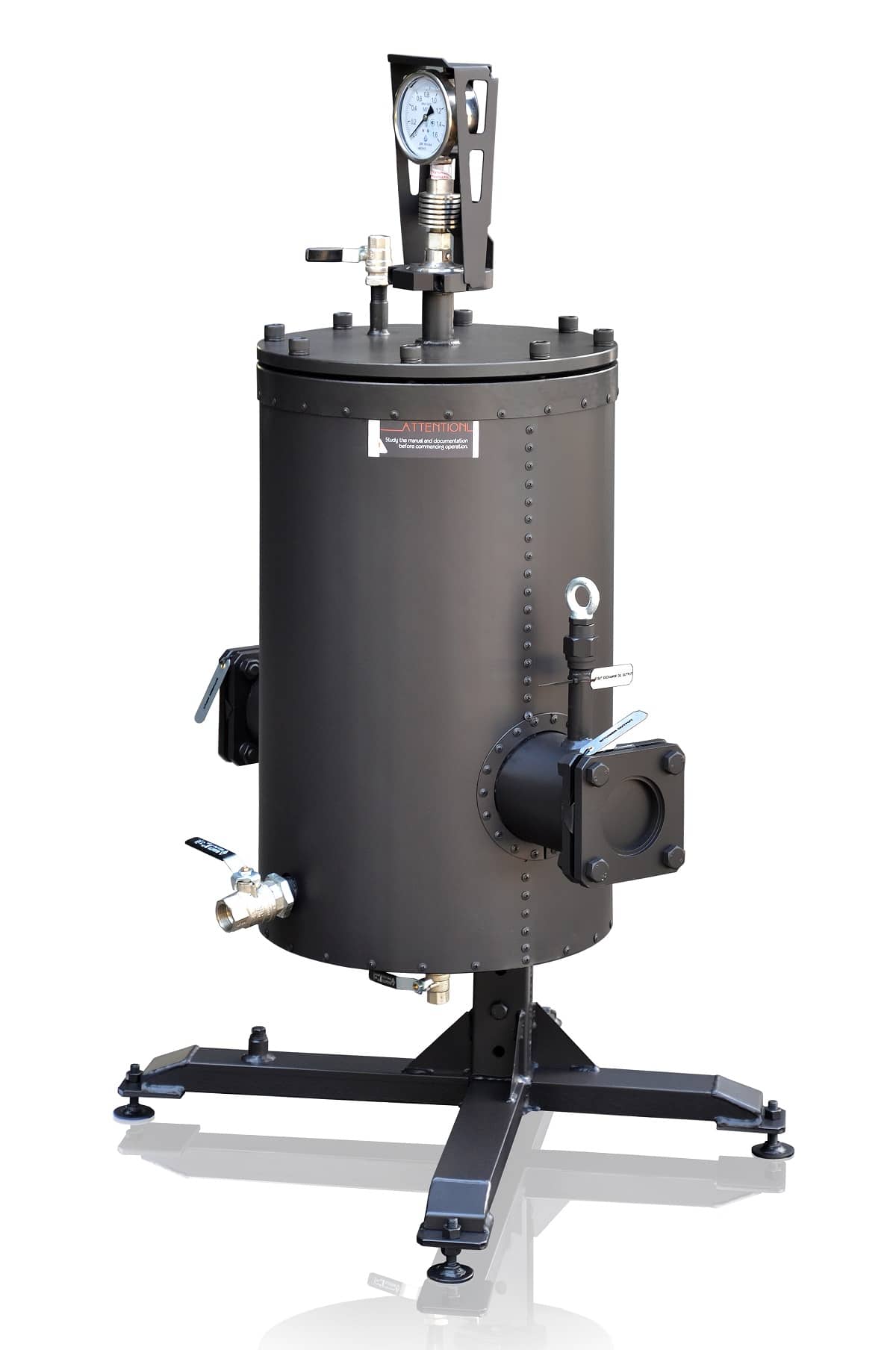
USB-2 Bitumen emulsion unit 2 m3/hour production capacity
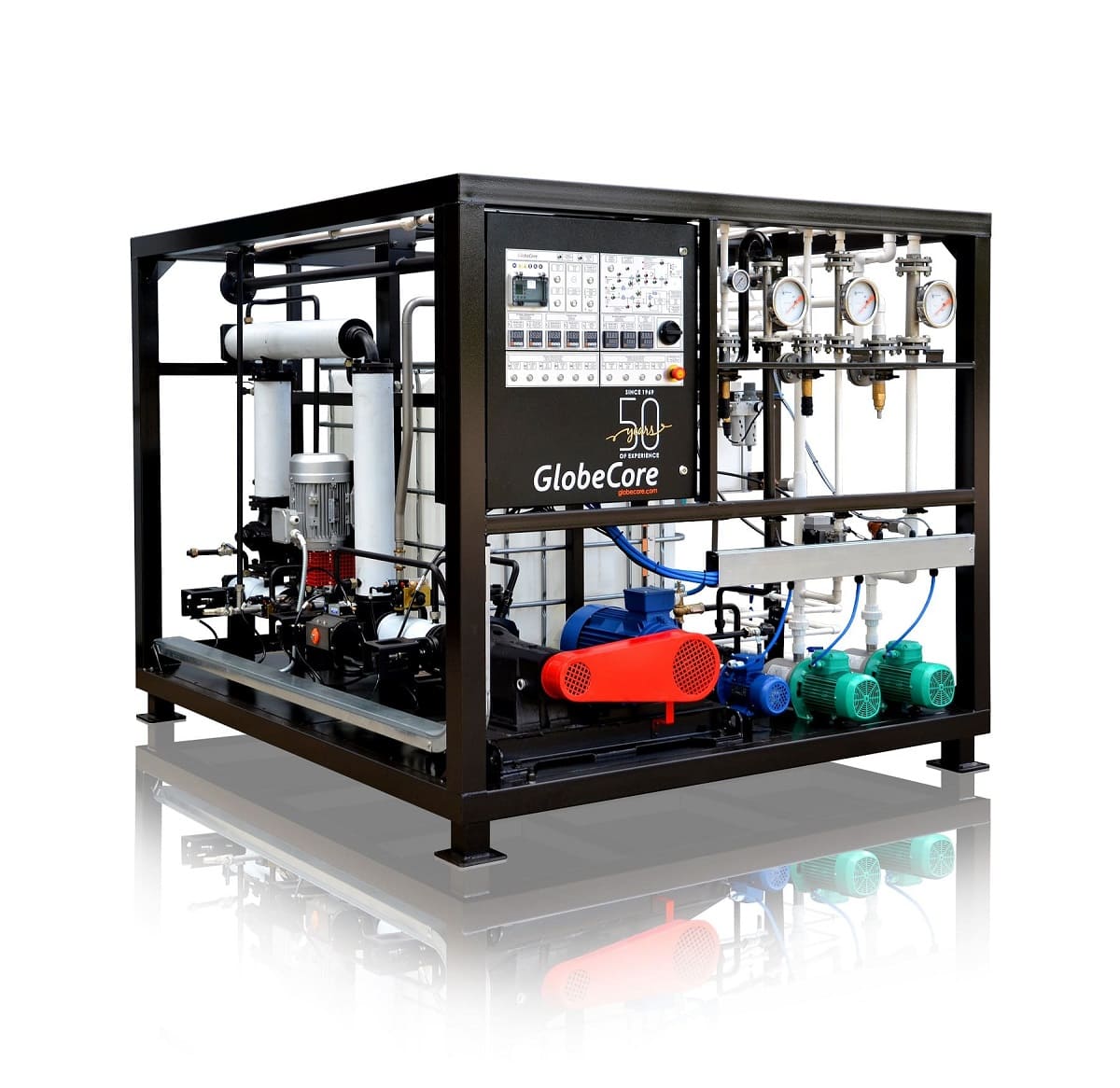
USB-2 Bitumen emulsion unit 2 m3/hour production capacity
Cap: 2000-3000 LPH | Bitumen emulsion | Small footprint | Simple
- Description
- Specification
- Advantages
- Application
- Configurator
- Payback period
- Video
- GALLERY
- Publications
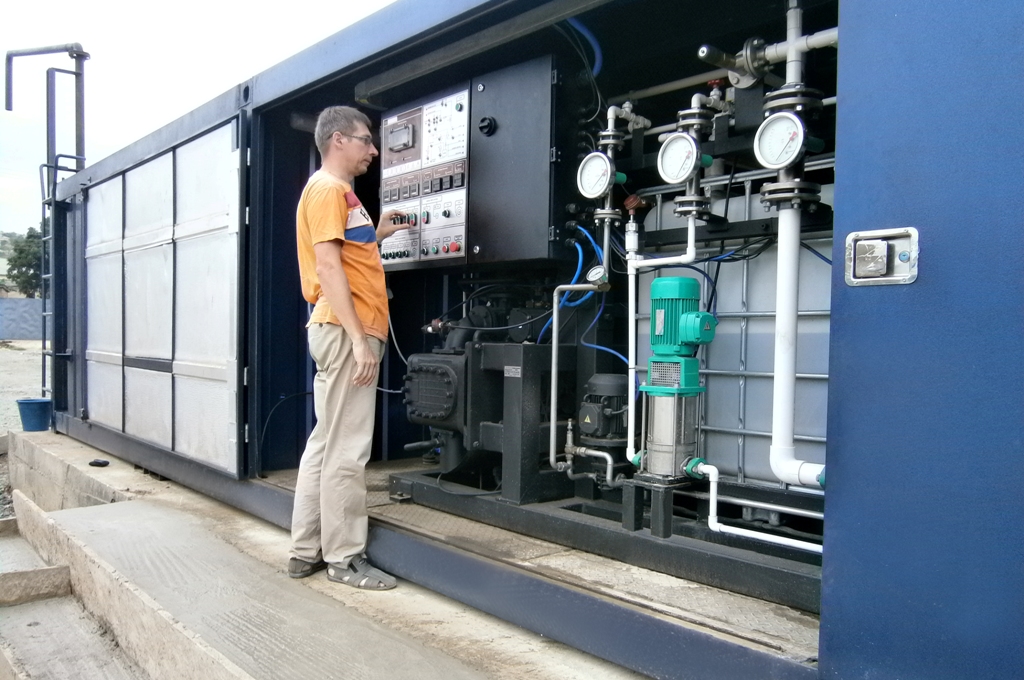
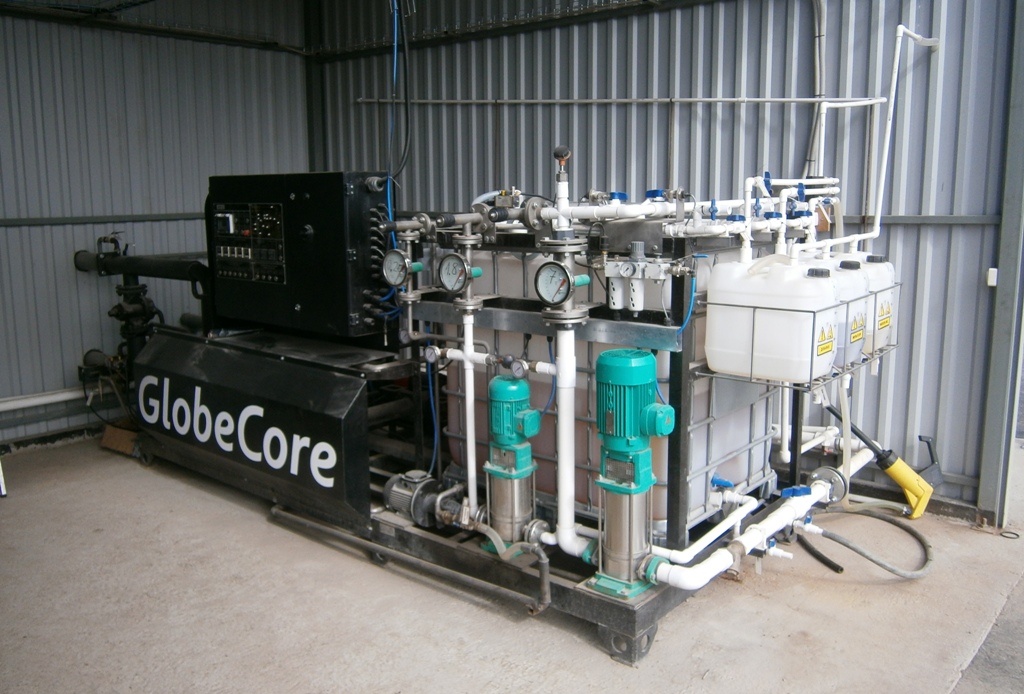
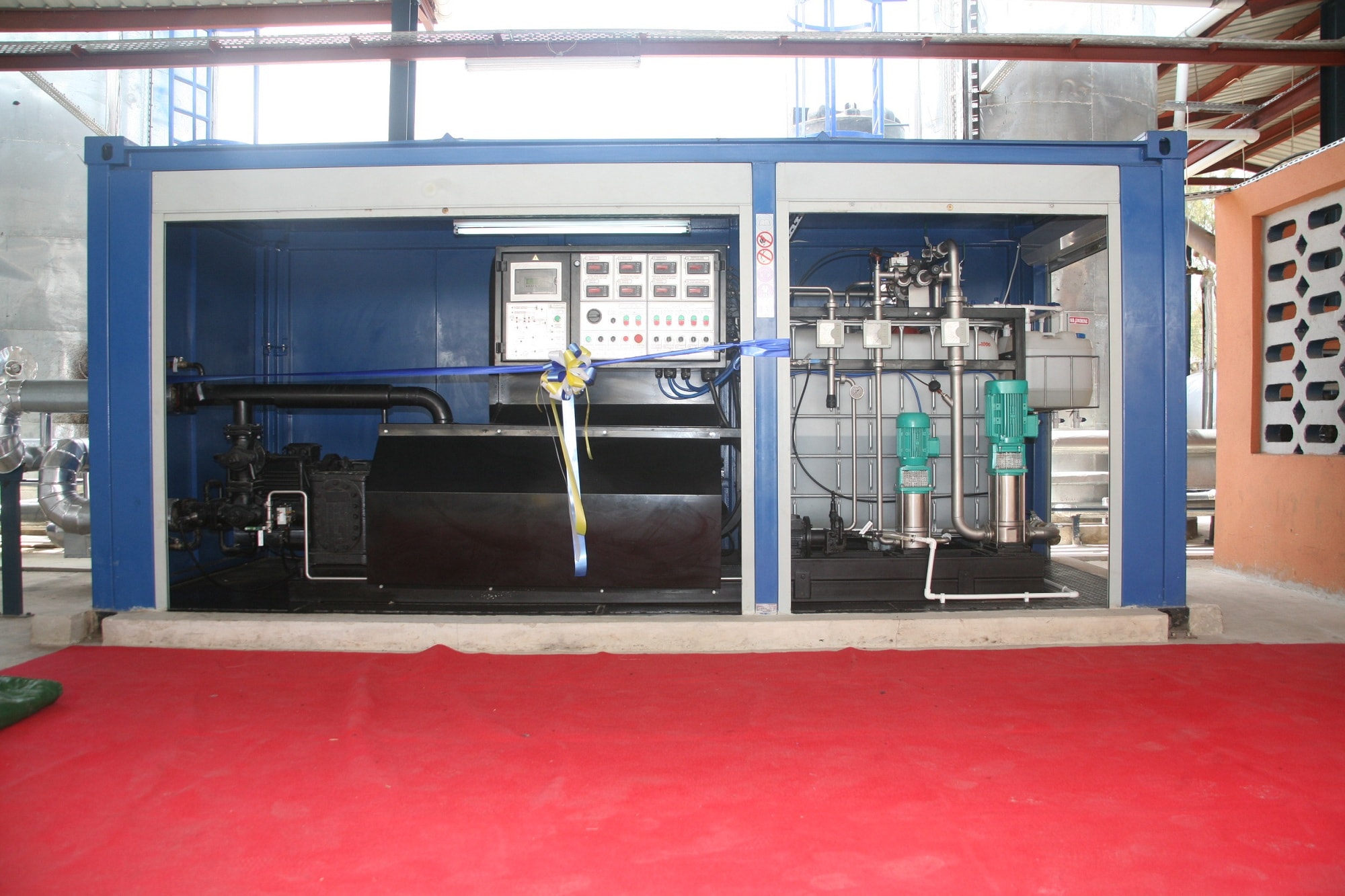
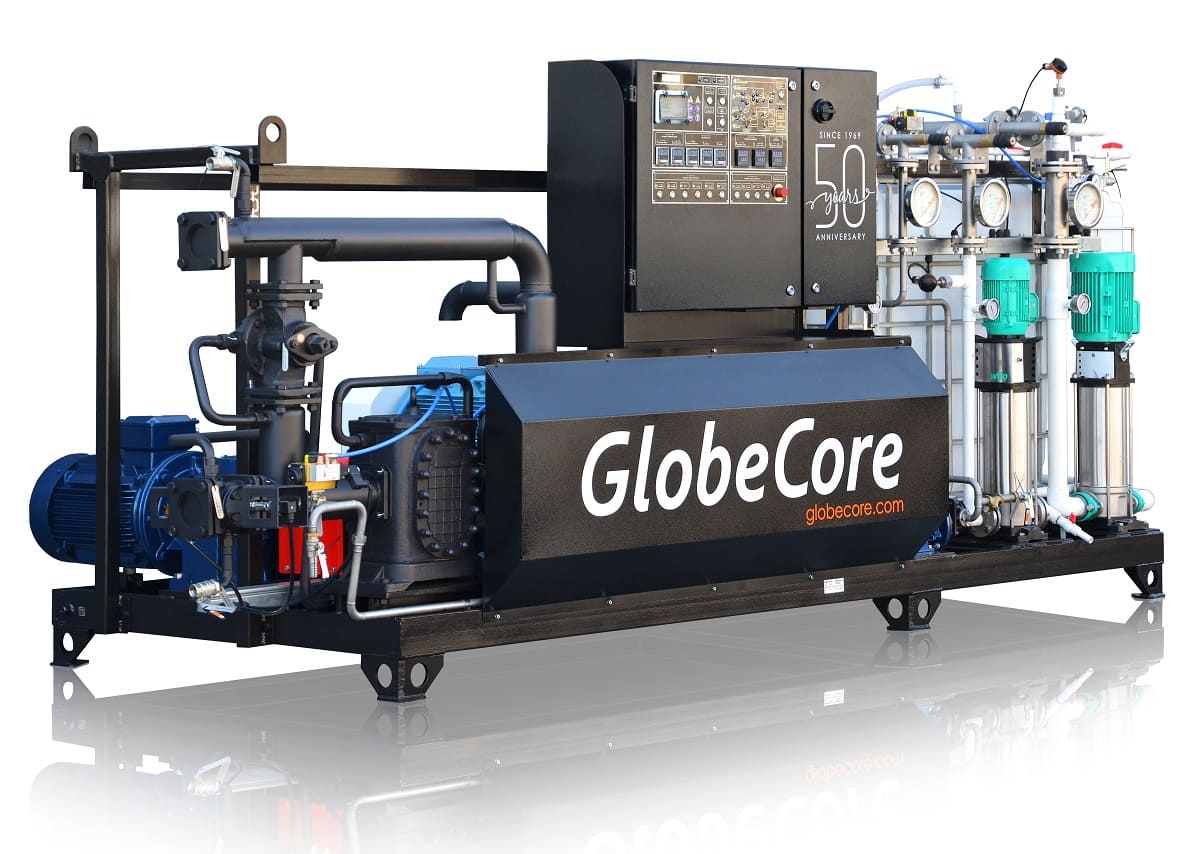
The bitumen emulsion1Bitumen emulsion is a blend of fine beads of bitumen and water. unit consecutively blends components in hydrodynamic mixers2The hydrodynamic mixer is designed for mixing drip liquids in the production process. at certain pressures and temperatures. Due to the unique design, the hydrodynamic mixer instantly blends component streams, which makes the unit compact and reduces energy consumption. The final stage of production of uniform water-bitumen emulsion occurs in a colloid mill3A colloid mill is a machine that is used to reduce the particle size of a solid in suspension in a liquid, or to reduce the droplet size in emulsions., which guarantees high quality of the product.
The unit features process control instrumentation which allows either manual or semi-automatic operation.
Water-bitumen emulsion is a dark brown liquid. Emulsion is made by dispersing bitumen4A bitumen is a sticky, black, and highly viscous liquid or semi-solid form of petroleum. in water with the addition of surfactants5Surfactants are compounds that lower the surface tension (or interfacial tension) between two liquids, between a gas and a liquid, or between a liquid and a solid..
Bitumen emulsions — Fields of application
- Road construction:
- surfacing emulsions;
- pothole patching;
- bonding of asphalt layers;
- using in Slurry Seal and Multimac technologies;
- ground and base stabilization;
- emulsions intended for reuse of asphalt materials (recycling);
- long-term storage emulsions (wintertime pothole patching mixtures);
- tackiness remover emulsions.
- Hydraulic engineering facilities:
- emulsions intended to arrange waterproof membranes for foundations, swimming pools, pipe and pile linings, etc.;
- emulsions are applied to the surface by jet method, single- or double-component method (to accelerate film formation).
- Roofing:
- emulsions intended to obtain waterproof membranes on the surface of roofs of various complexity. These emulsions are applied to the surface by jet method.
|
Specification |
Value |
| Maximum production capacity (preparation time included), m3/hour |
2-3 * |
| Minimum bitumen consumption, m3/hour |
1.8 |
| Water consumption, m3/hour |
0.6–2.0 * |
| Flux consumption, dm3/hour |
0–72 * |
| Acid consumption, dm3/hour |
5–20 * |
| Emulsifier consumption, dm3/hour |
5–20 * |
| Adhesion additive consumption, dm3/h |
1–20 * |
| Max bitumen input pressure, MPa |
0.2 |
| Bitumen to mixer pressure, MPa |
1.4–1.6 |
| Water phase to mixer pressure, MPa |
0.2 |
| Bitumen input temperature, °С |
140–160 |
| Water input temperature, °С |
40–60 * |
| Max emulsion output head, m |
15 |
| Max nominal power, kW |
18 |
| Power voltage at 50 Hz, V |
380 |
| Compressed air supply, bar |
4–6 |
| Air consumption, dm3/min |
250 |
| Dimensions (L/W/H), mm |
2080/2340/1934 |
| Max weight, kg |
1200 |
* Depending on process formula
- Production of high quality asphalt emulsion regardless of initial bitumen quality by adding plasticizers, adhesion additives and thinners;
- Production of all emulsion types, CRS, CMS and CSS-1,2, as well as anionic emulsion of corresponding types, including subtype h;
- Blend concentrate is diluted by water directly in the unit;
- Safety of operation (emergency interlocks in place);
- Emulsion complies with ASTM D 2397-98 and D977-98;
- Small footprint;
- Simple servicing and operation.
Application:


Webinars