Bitumen Modifiers For Roofing Applications

To improve properties of bitumen for roofing applications, three modifiers are used most often: atactic polypropylene (APP), styrene butadiene styrene (SBS) and ethylene-propylene-butene (EPB). Bitumen, modified with APP, does not have disadvantages characteristic to common bitumen materials: low flexibility at subzero temperatures and aging tendency. Atactic polypropylene is an elastic material with similar properties asRead More

Polymer Bitumen Roofing Mastic

The modern roofing material market is quite diverse. Nevertheless bitumen-polymer mastics attract attention among other materials. Physically, this compound is a liquid, viscous and uniform mass, which after surface application hardening becomes solid coating. Polymer bitumen roofing mastic is mostly used for construction and maintenance of roofs, as well as waterproofing. Depending on application mode,Read More

Cavitation reactors

Thanks to the combination of developments in acoustics, hydrodynamics and chemical kinetics, a new promising device is entering the market: the cavitation reactors, employed for processing of suspensions, emulsions and for intensification of chemical processes in solutions. These devices are can be used either separately (in laboratory test-benches) or in industrial mixing processes. In today’sRead More

Homogenizer vs Colloid Mill

Chemical, food, construction and many other industries cannot do without the preparation of different suspensions, emulsions and colloid solutions.  They include lubricating oil emulsions, fuel emulsions, polymer modified bitumen as well as a wide range of food fat emulsions.  Additionally, many kinds of gels, creams, and pastes are included in this list, so the listRead More

Development of bitumen emulsion production

A new age in road construction began on 9 May 1922. Hugh Alan McKey registered the first bitumen emulsion patent. Within several years the application of this new material significantly changed road construction. The amount of bitumen emulsions made in France in 1923 was several hundred tons. In 1924 it increased to 2500, and toRead More

Modified Bitumen: The Scheme of Production

There has been an increased amount of heavy load carrying vehicles using our main roadway systems. The heavy, and often overweight vehicles is one of the main reasons for the deformation of the bitumen/asphalt based road systems. The properties of bitumen are modified by the addition of special polymer additives. A “Modified Bitumen” product isRead More

How Does the Modern Colloid Mill Influence the Quality of Road Pavement?

Bitumen emulsions are used for road surface treatment, soil reinforcement, and ground stabilization as well as for the construction of roads and highways. Bitumen emulsion usually consists of bitumen (50-70%) and water (30-50%). A special component known as an emulsifier (acidol, naphtha soap, sulphate soap) is added to bitumen emulsion to make it stable. TheRead More

Emulsion Test Methods. Do We Need Them?

Asphalt emulsions have been in existence for almost 100 years in the United States and the rest of the world. They were first developed in the early 1900s, used in road applications in the 1920s, with continued growth due to World War II and the energy crisis of the 1970s. Asphalt emulsions have found theirRead More

Mustard Production Technology Using Colloid Mill

The history of mustard extends back a couple of millennia. Today it is one of the most popular spices used in the cuisines of many nations. In general, mustard is a mixture of mustard seeds, water, vinegar and various additives. The taste of mustard depends on additives and plant seeds (white, black, brown (saperda/Indian) orRead More

Methods of Preparing Bitumen Emulsion: The Aqueous Phase Block

Different types of bitumen emulsions are applied in different industrial processes. Some of the processes include: The priming of the old pavement before applying asphalt or concrete; To prepare cold asphalt mixes; To “surface treat” roadways; To provide thin protective coatings; For patching roads; For waterproofing building foundations and structures; and For installing and repairingRead More

Specifics of bitumen emulsion modification

Water-bitumen emulsion is a highly dispersed dark brown material made by atomization of bitumen in water solution of an emulsifier. Such methods of bitumen thinning as organic solutions and hot mastics are prohibited in several European countries due to environmental and health hazards. A better and more efficient method is emulsification. The process is becomingRead More

Bitumen emulsion reduces dust from dirt roads

Pit roads, crossings and driveways are by nature very dusty. In the general case, the amount of dust kicked up into the air depends on the surface of the road, its condition, weight and speed of vehicle movement. A large amount of dust in the air causes accelerated engine wear, limits visibility and causes seriousRead More

About functions and methods of the bitumen emulsions: block the aqueous phase

Different types of bituminous emulsions are mostly used in the construction industry. The main areas of application are following: priming of old pavement before applying asphalt; preparation of cold asphalt mixtures; surface treatment of road surfaces; thin protective layers; patching roads; waterproofing of structures; installation and repair of soft roofs. The main advantage of bitumenRead More

Biscuit and Cookie Production

In the production of pastry, the most promising direction is implementation of modern technology and equipment and improvement of the product range by using new flavors, alternative raw materials and new packaging materials. The main component of pastry, which significantly defines the quality of the dough is flour. Most of such products require flour withRead More

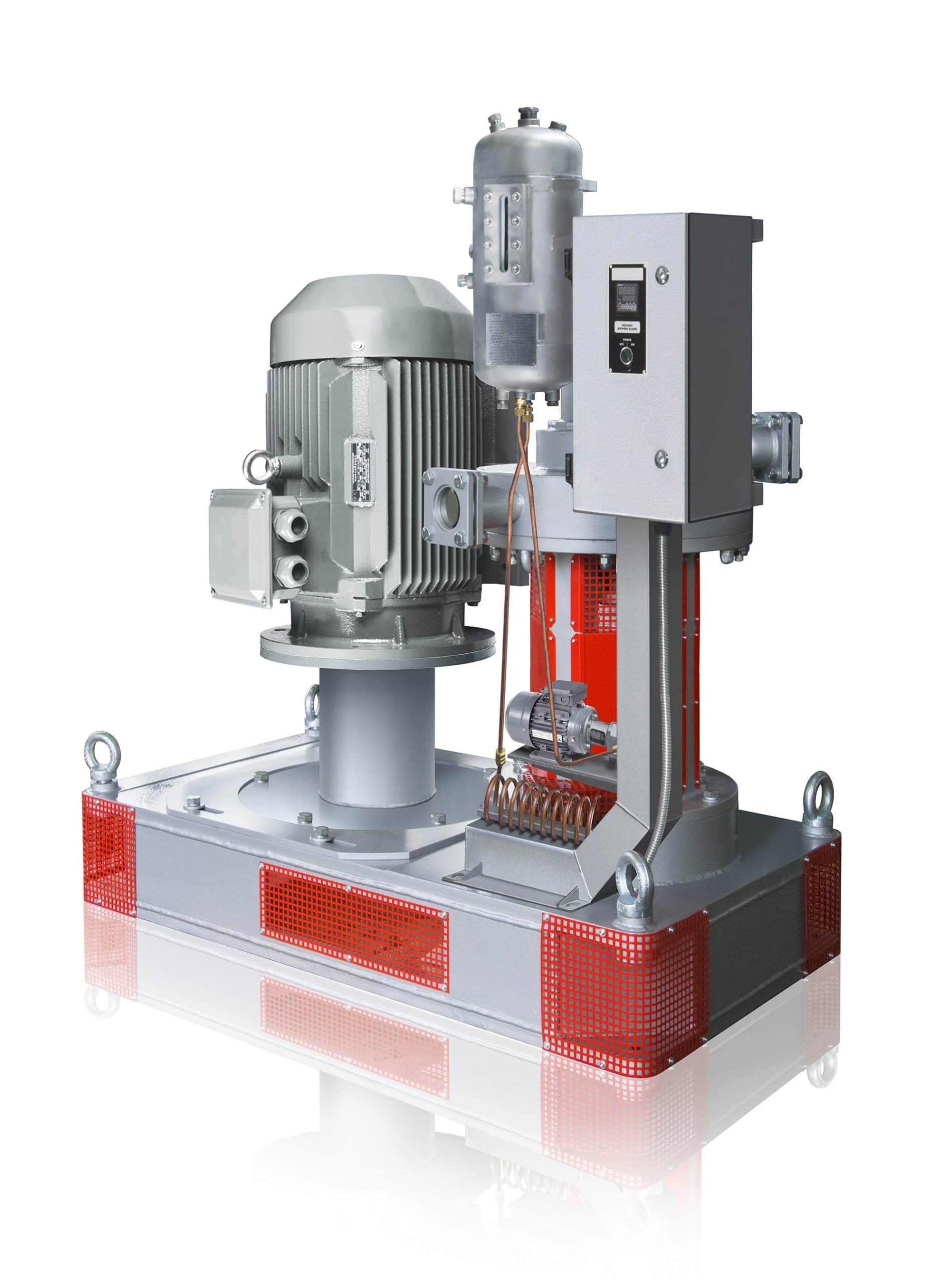
Colloid Mill for Bitumen Emulsion Production

Bitumen Emulsion Production. A colloid mill is a special device which performs superfine pulverization of materials. Using colloid mill allows to produce particles of one micron or even smaller. The first colloid mill was designed by K. Plausson in the first half of the 19th century. It consisted of a stator, a rotor and aRead More

Mixer, homogenizer and disperser: how do they compare?

A question that is often asked: why do we need a disperser, when we already have a mixer? First, let’s look at the definitions. A mixer is a device that is generally used in cooking for mixing food products. In fact, a mixer simply mixes the components in a container. As for a disperser, itRead More

Dispersed Systems and Equipment for Dispersion

Most substances used in households and industry are dispersed systems (solid particles or droplets suspended throughout another substance) or solutions, where mixing takes place at the molecular level. Examples of suspensions are mortar mixture, paint, white glue or bitumen emulsion used for waterproofing works. What is bitumen emulsion? Bitumen is a hydrocarbon resin (derived fromRead More

Bitumen Emulsions for Road Construction

The main objective of laying asphalt concrete mixtures as a road surface is to ensure its adhesion to the bottom layer. A practical solution to this problem is -using bitumen emulsions. Bitumen emulsion disperse system consists of: bitumen and water. Thus the smallest particles of bitumen are dispersed in water without being mixed with it.Read More

Mayonnaise Production Technology

There is a legend about the origin of mayonnaise. It says that this sauce was invented by a chef of the French garrison, which was locked by the British on the island of Menorca in the city Mahon (Mayon). The besieged experienced problems with food – there were only olive oil and turkey eggs, andRead More